Petroleum Refining
Pakistan Says Three New Refinery Projects to be Operational Within Three Years
Naveed Qamar, the Minister for Petroleum and Natural Resources, said that three refineries with a combined capacity of 465,000 barrels per day were to be commissioned in Pakistan in the ...
Released Wednesday, November 18, 2009
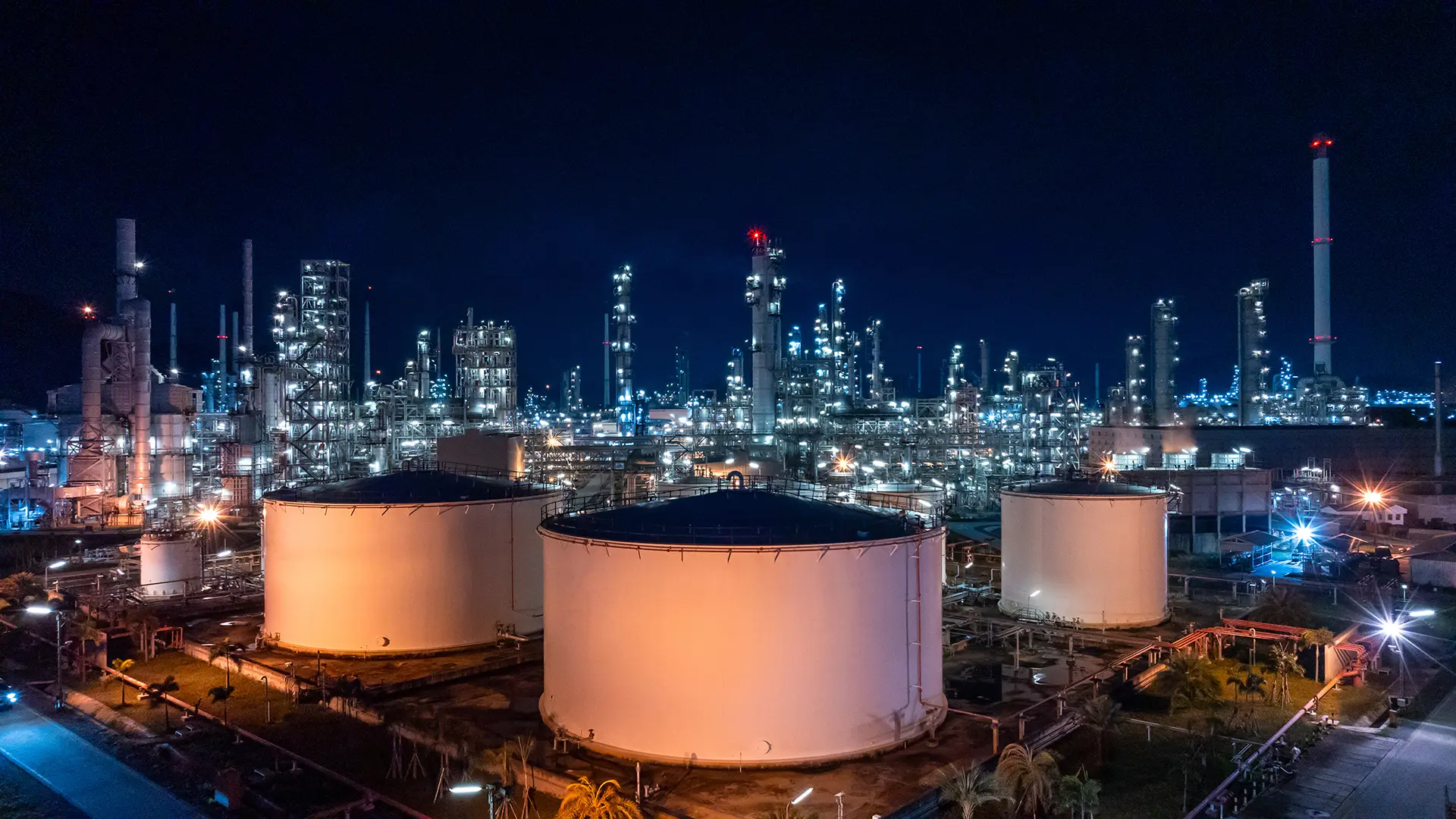
Researched by Industrial Info Resources (Sugar Land, Texas)--While addressing the National Assembly of Pakistan, Naveed Qamar, the Minister for Petroleum and Natural Resources, said that three refineries with a combined capacity of 465,000 barrels per day (BBL/d) were going to be commissioned in Pakistan in the next three years.
The proposed refineries are the 115,000-BBL/d facility of Bosicor Oil Pakistan Limited (KAR:BOSI) (Karachi, Pakistan); the 250,000-BBL/d Khalifa Coastal refinery; and the 100,000-BBL/d facility of TransAsia Refinery Limited (Dubai, United Arab Emirates). While the first two refineries will be set up at the city of Hub in Balochistan and are scheduled to be completed in 2010 and 2012, respectively, the third refinery will be set up at Port Qasim in Karachi and is to be operational beginning in 2011. With the completion of the three refineries, the total refining capacity of Pakistan will increase from the existing 248,500 BBL/d to 713,500 BBL/d. At present, there are seven operating refineries in Pakistan.
To attract both domestic and overseas investment, the existing petroleum policy of Pakistan does not require prior government approval for new refinery projects. Refineries also have been given the freedom to sell their products through their own marketing firms or through any other third party marketing firm. Concessionary duty and tax rates will be imposed on any equipment that is not manufactured in the country. As a further incentive, the government has announced that all new mega-projects with a minimum capacity of 100,000 BBL/d that are to be installed along the coast of Balochistan, especially at Gwadar, will be rewarded with an income tax holiday of 20 years. Subject to price economics, crude oil can be imported from any source after utilizing the domestic crude oil allocated, if any. The import parity price formula for the new oil refineries is linked to the Singapore mean free on board spot price.
The operations of all second-hand refineries that are imported into Pakistan will be governed by the terms and conditions outlined in the 2008-09 trade policy of the Ministry of Commerce. The sponsors of such projects must ensure that the design of the imported refinery is reviewed and verified by an independent engineering consultant that has proven experience in design engineering and refinery evaluation, including refinery relocation. All codes and standards outlined by international industry bodies such as the American National Standards Institute (Washington, D.C.), American Petroleum Institute (Washington, D.C.), and American Society of Mechanical Engineers (New York, New York) must be satisfied.
In 2007, Coastal Refinery Limited, Indus Refinery Limited (IRL) (Karachi, Pakistan) and TransAsia Refinery Limited announced plans to import second-hand refinery units from different countries. The upcoming Khalifa Coastal refinery is a second-hand refinery imported from North America, and it will process crudes from Abu Dhabi, Iran and Saudi Arabia. The Bosicor and TransAsia refineries are relocated refineries as well. The Bosicor refinery was purchased from Chevron Corporation (NYSE:CVX) (San Ramon, California), while the TransAsia refinery has been purchased from Italy. The 93,000-BBL/d IRL refinery was originally in Oakville and was owned by Petro-Canada, a company that is now a part of Suncor Energy, Incorporated (NYSE:SU) (Calgary, Canada). The refinery was scheduled to be commissioned this year, but because of financial uncertainties, the completion date has been postponed. The existing 30,000-BBL/d Bosicor refinery is also a second-hand refinery.
The biggest hurdle being faced by companies while trying to attract foreign investment has been the security and economic challenges that Pakistan has been facing. The frequently reported terror and violence has forced most investors to adopt a "wait and watch" approach. The scarcity of power is another major bottleneck faced by companies operating or planning to operate industries in Pakistan.
Industrial Info Resources (IIR) is the leading provider of global market intelligence specializing in the industrial process, heavy manufacturing and energy related markets. For more than 26 years, Industrial Info has provided plant and project opportunity databases, market forecasts, high resolution maps, and daily industry news.
/news/article.jsp
false
Want More IIR News Intelligence?
Make us a Preferred Source on Google to see more of us when you search.
Add Us On GoogleAsk Us
Have a question for our staff?
Submit a question and one of our experts will be happy to assist you.

Forecasts & Analytical Solutions
Where global project and asset data meets advanced analytics for smarter market sizing and forecasting.
Explore Our Solutions
Industrial Project Opportunity Database and Project Leads
Get access to verified capital and maintenance project leads to power your growth.
Discover Our DatabaseIndustry Intel
-
2026-2027 Investment Radar for Mexico, Central America & the CaribbeanPodcast Episode / May 29, 2026
-
Innovations Shaping the Next Era of Power GenerationPodcast Episode / May 22, 2026
-
The Role of Contract Manufacturing in Global Pharma GrowthPodcast Episode / May 8, 2026
-
2026 North American Labor OutlookPodcast Episode / Apr 24, 2026
-
2026 European Metals & Minerals Project Spending OutlookPodcast Episode / Apr 7, 2026