Power
OECD Report Looks at Leveling Playing Field for Grid Costs Between Dispatchables and Renewables
A report from the Organization for Economic Co-operation and Development's Nuclear Energy Agency observes that the widely differing costs of supplying electricity from different generating
Released Friday, December 07, 2012
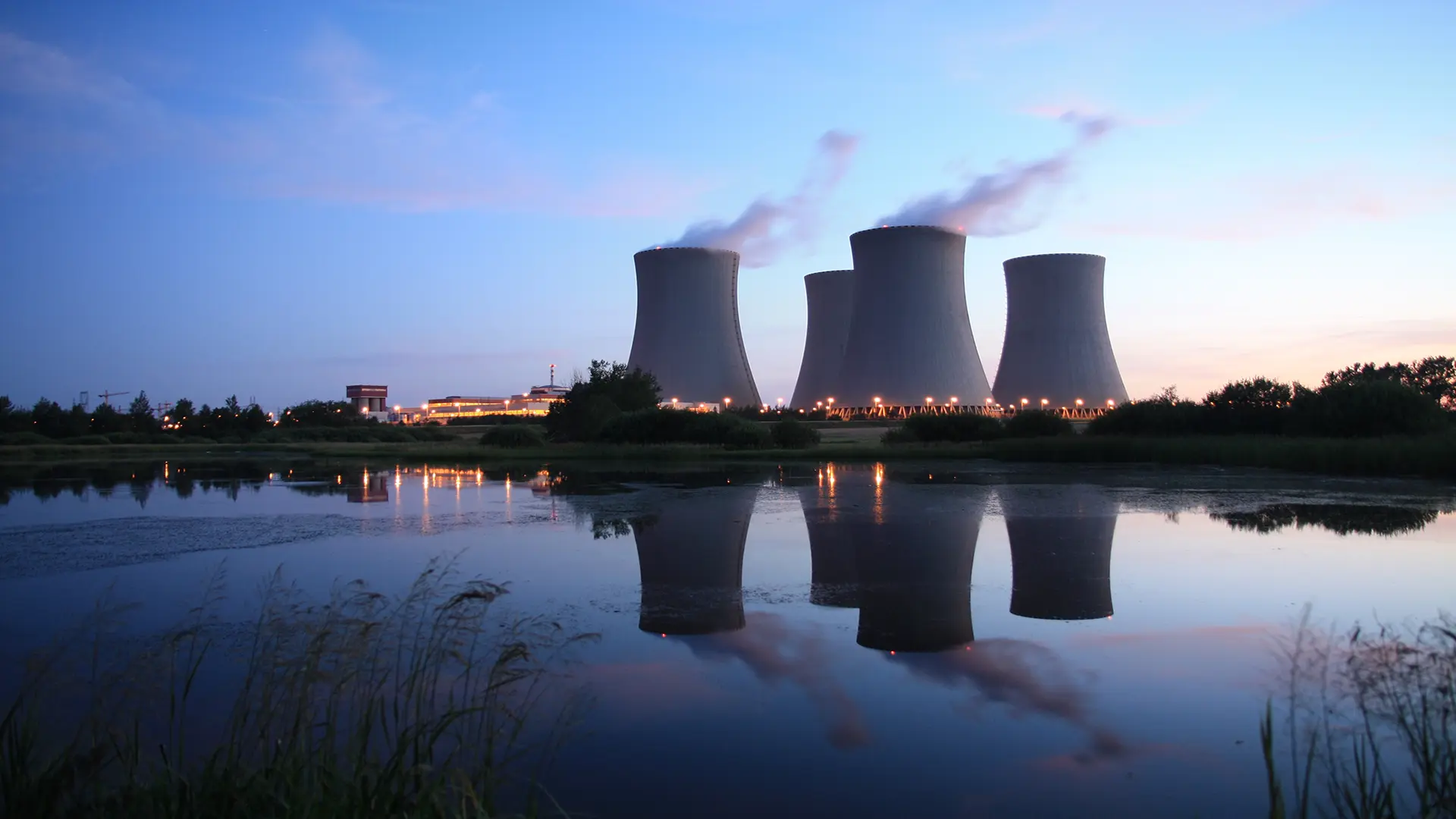
Written by Richard Finlayson, Senior International Editor for Industrial Info Resources (Sugar Land, Texas)--A report from the Organization for Economic Co-operation and Development's (OECD) Nuclear Energy Agency (NEA) says that the widely differing costs of supplying electricity from different generating options must play a part in future energy decisions, and must be internalized for each low-carbon generation option.
The way that variable renewable and so-called dispatchable energy technologies--specifically coal, gas and nuclear--interact in terms of their effects on electricity systems is the focus of the report, which is titled "Nuclear Energy and Renewable: System Effects in Low-carbon Electricity Systems."
All power generation technologies cause system effects, and by virtue of being connected to the same grid and delivering to the same market, they exert impacts on each other--for example, with dispatchable technologies needing to be brought into or out of play to balance variable input from renewables.
Grid-level system costs are the costs above plant-level to supply electricity to the grid. Broadly, these comprise costs for additional investments to extend and reinforce transport and distribution costs, as well as to connect new capacity, and costs for short-term balancing and maintenance of long-term secure electricity supplies.
Six technologies are considered in detail in the report: nuclear, coal, gas, onshore wind, offshore wind and solar. It finds that the so-called dispatchable technologies have system costs of less than $3 per megawatt hour. The system costs for renewable can reach up to $40 per megahertz for onshore wind, $45 per megahertz for offshore wind, and $80 per megahertz for solar. The costs for renewables vary depending on the country, technology and penetration levels, with higher system costs for greater penetration of renewables.
The report notes that these costs currently tend to be unacknowledged and are absorbed by consumers through high network charges, and by the producers of dispatchable energy through reduced margins and lower load factors.
Failing to account for systems' costs, the report says, can add "implicit subsidies to already-sizeable explicit subsidies for variable renewables." As long as this situation continues, dispatchable capacity will not tend to be replaced at the end of its operating life, and security of supply will thus be weakened further.
In the shorter term, nuclear can be expected to fare better than coal or gas because of its low variable costs. However, nuclear could find itself disproportionately penalized when investment decisions need to be made because of its high fixed costs. Paradoxically, the introduction of variable renewables in systems that currently use nuclear energy are likely to lead to a future increase in carbon emissions, as higher-emitting fossil fuel choices are more likely to be used as back-up.
The report recommends that system costs need to be made as transparent as possible to ensure that they are fully considered in future electricity planning and that regulatory frameworks should work to minimize system costs and ensure that they are internalized. The value of dispatchable low-carbon technologies (such as nuclear) in complementing the introduction of variable renewables needs to be more effectively recognized. Steps should be taken to ensure that nuclear and other low-carbon technologies remain economically sustainable. This could be achieved through a market-based framework, including a combination of capacity markets, long-term contracts and carbon taxes.
In conclusion, the report recommends that resources should be developed to enable flexibility in future low-carbon systems. This could include developing the load-following abilities of the dispatchable low-carbon technologies, such as nuclear; expanding storage capabilities; and increasing international interconnections.
Industrial Info observes that there are historically evolved subsidies embedded in the dispatchable field through regulatory decisions and tariff setting over decades, just as there is a sometimes blithe ignorance/denial of the full system audit in renewables. Industrial Info feels that the OECD report shakes things up and could lead to some solid benchmarking for policy decisions on the energy mix. After all, energy is a utility and a basic need. Think about it from your own point of view.
And, of course, the report came from the Nuclear Energy Agency. Capiche?
Industrial Info Resources (IIR), with global headquarters in Sugar Land, Texas, and eight offices outside of North America, is the leading provider of global market intelligence specializing in the industrial process, heavy manufacturing and energy markets. Industrial Info's quality-assurance philosophy, the Living Forward Reporting Principle, provides up-to-the-minute intelligence on what's happening now, while constantly keeping track of future opportunities.
/news/article.jsp
false
Want More IIR News Intelligence?
Make us a Preferred Source on Google to see more of us when you search.
Add Us On GoogleAsk Us
Have a question for our staff?
Submit a question and one of our experts will be happy to assist you.

Forecasts & Analytical Solutions
Where global project and asset data meets advanced analytics for smarter market sizing and forecasting.
Explore Our Solutions
Industrial Project Opportunity Database and Project Leads
Get access to verified capital and maintenance project leads to power your growth.
Discover Our DatabaseIndustry Intel
-
2026-2027 Investment Radar for Mexico, Central America & the CaribbeanPodcast Episode / May 29, 2026
-
Innovations Shaping the Next Era of Power GenerationPodcast Episode / May 22, 2026
-
The Role of Contract Manufacturing in Global Pharma GrowthPodcast Episode / May 8, 2026
-
2026 North American Labor OutlookPodcast Episode / Apr 24, 2026
-
2026 European Metals & Minerals Project Spending OutlookPodcast Episode / Apr 7, 2026