Production
Black & Veatch: Bright Future for U.S. Gas Industry, But Challenges Remain
Natural gas industry executives are concerned about safety and future economic growth, as well as gas supply reliability; rate and regulatory certainty; and access to and cost of capital...
Released Tuesday, December 11, 2012
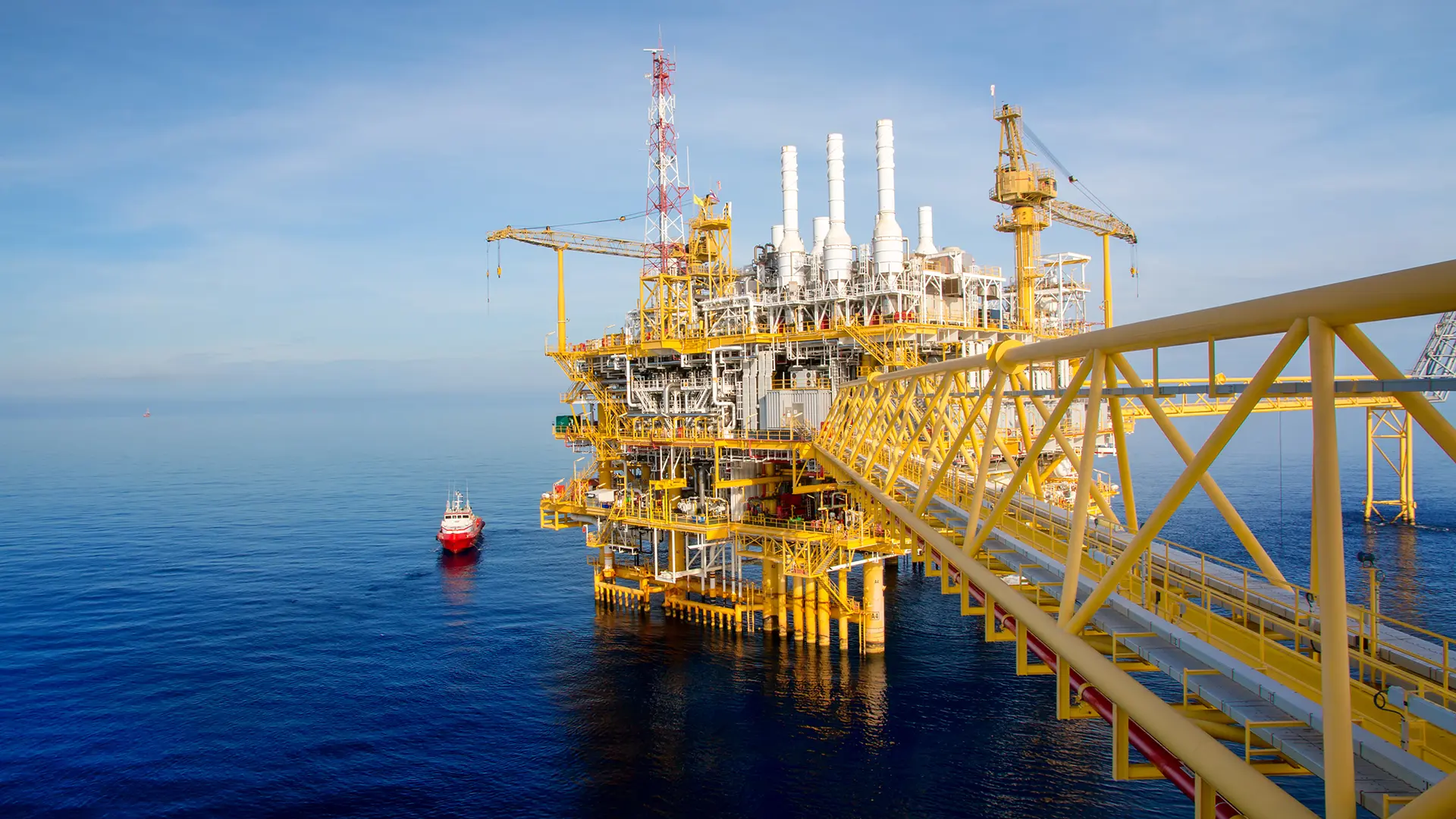
Written by John Egan for Industrial Info Resources (Sugar Land, Texas)--Natural gas has a bright future in the U.S., largely because of the shale gas revolution. But gas-industry executives are concerned about safety and future economic growth, among other things, according to a new study from Black & Veatch (B&V) (Overland Park, Kansas) titled "2012 Strategic Directions in the U.S. Natural Gas Industry." Other long-term issues that concern those surveyed include gas supply reliability; rate and regulatory certainty; and access to and cost of capital.
 Click the icon on the right to see a chart summarizing the top concerns of gas industry participants surveyed.
The study, B&V's first of the gas industry, draws on its survey of 311 industry participants, including producers, marketers, pipelines, storage companies, local distribution companies (LDCs) consumers, and professional services firms like law firms, consultants, and equipment suppliers.
B&V found "a prevailing optimism across all aspects of the industry. Vast and proven domestic reserves coupled with emerging exploration and production (E&P) technologies have produced low natural gas prices. This has, in turn, created an expectation for increasing demand, new markets, job creation and a belief that natural gas will have a central role in North America's economic recovery."
One reason for the optimism is the still-growing production from the Appalachian Basin, which includes the Marcellus Shale formation. This year, production will nearly double last year's production, exceeding 6 billion cubic feet per day (Bcf/d). That represents a five-fold increase in production in less than five years, "with no immediate signs of slowing," B&V said.
Bolstered by rising gas production levels in the Marcellus and other shale formations, 92% of those surveyed said they were optimistic or very optimistic about the industry's growth. This is a marked contrast to the prevailing view five years ago, when B&V said the industry was concerned about dwindling reserves, rising prices and market contraction.
The industry's confidence today stems in part from the number of shale formations located across North America. There is general agreement among those polled that North America has sufficient levels of economically recoverable reserves to meet demand through 2030.
Besides growing demand from electric generation, survey participants identified liquefied natural gas (LNG) exports, petrochemical production, natural gas vehicles and manufacturing as other sectors driving demand for natural gas by 2020.
Gas prices continue to be a double-edged sword, according to the B&V survey: Low prices stimulate greater demand from electric generators, LNG exporters, petrochemical companies and manufacturers. But prices below a certain level discourage new exploration and production.
"The general consensus is that gas prices are at unsustainable levels for all producers and must eventually rise from the sub-$3 per MMBtu [million British thermal units] range to between $4.50 and $6 per MMBtu by 2020," the study found. "Survey participants largely believe that gas demand for power generation, as well as an overall increase in demand, will be the primary drivers for higher gas price increases."
 Click the icon at right for a chart summarizing predictions about gas prices in 2020.
Rising demand from electric generation will be the most important factor driving future natural gas price increases, the survey found. Other drivers were generalized increase in demand, environmental regulations, LNG exports, and increased exploration and production costs. Respondents were asked to name the top three factors that will increase gas prices.
 Click the icon at right to see a summary of what forces respondents believe will drive gas prices higher.
"Perhaps the most relevant issue regarding natural gas price increases is the potential impact on the development of gas-fired power generation plants," the engineering and consulting firm continued, citing a separate analysis produced in mid-2012 which showed gas prices below $6.00 MMBtu "would continue to provide operators with capital and operating cost advantages over other power generation fuels and technologies."
While there are numerous reasons to feel good about the future of natural gas, the Black & Veatch study identified several challenges that must be met in order to realize that bright future. Two of the most significant challenges are safety and regulatory issues.
By a sizable margin, those surveyed said safety was the most important challenge facing the gas industry. Increased concerns about infrastructure safety are tied partly to aging infrastructure, which contributed to several natural-gas explosions in recent years. But safety also included the environmental impact of producing gas using hydraulic fracturing techniques.
The study said: "There is strong agreement among respondents that regulatory compliance will become more stringent, particularly as it relates to the use of hydraulic fracturing in the production of shale gas. Nearly half of respondents believe that compliance costs related to gas production will result in modest price increases, while a third believe costs of compliance could push prices substantially higher."
More and better-quality communications with key stakeholders is one important way to build confidence in the industry's commitment to safety, the report found. And there is a lot of work to be done: The B&V study cited an August 2012 survey by Gallup that ranked the Oil & Gas industry as having "the least positive public image among 25 industries and business sectors, finishing just behind the federal government. In order to overcome its image challenge, the natural gas industry must continue to come together to educate and build awareness and trust among key stakeholders. Numerous organizations and trade associations are promoting common themes around safety, environmental protection and economic benefits. Continued communication will help the industry overcome today's challenges, positioning it to realize its future promise."
"The gas industry has often been a fractious collection of upstream, midstream and downstream segments, each with its own public relations approach," B&V continued. "More recently, organizations and their various trade associations have coalesced to promote common themes around safety, environmental protection efforts and economic benefits. All of which will further help overcome today's challenges in order to realize the future promise of the industry."
Industrial Info Resources (IIR), with global headquarters in Sugar Land, Texas, and eight offices outside of North America, is the leading provider of global market intelligence specializing in the industrial process, heavy manufacturing and energy markets. Industrial Info's quality-assurance philosophy, the Living Forward Reporting Principle, provides up-to-the-minute intelligence on what's happening now, while constantly keeping track of future opportunities.
/news/article.jsp
false
Want More IIR News Intelligence?
Make us a Preferred Source on Google to see more of us when you search.
Add Us On GoogleAsk Us
Have a question for our staff?
Submit a question and one of our experts will be happy to assist you.

Forecasts & Analytical Solutions
Where global project and asset data meets advanced analytics for smarter market sizing and forecasting.
Explore Our SolutionsRelated Articles
-
Alberta Heralds Start of New CCS ProjectJune 08, 2026
-
Trans Mountain Pipeline Could Accommodate More Crude OilJune 08, 2026
-
Upstream Responded to War-Related Spike in Oil PricesJune 05, 2026

Industrial Project Opportunity Database and Project Leads
Get access to verified capital and maintenance project leads to power your growth.
Discover Our DatabaseIndustry Intel
-
2026-2027 Investment Radar for Mexico, Central America & the CaribbeanPodcast Episode / May 29, 2026
-
Innovations Shaping the Next Era of Power GenerationPodcast Episode / May 22, 2026
-
The Role of Contract Manufacturing in Global Pharma GrowthPodcast Episode / May 8, 2026
-
2026 North American Labor OutlookPodcast Episode / Apr 24, 2026
-
2026 European Metals & Minerals Project Spending OutlookPodcast Episode / Apr 7, 2026