Alternative Fuel
Construction of Major Large-Scale Industrial CCS Project Begins at ADM Ethanol Plant in Illinois
Construction of the first large-scale industrial carbon capture and sequestration project to be funded by the U.S. federal stimulus program began late...
Released Thursday, September 08, 2011
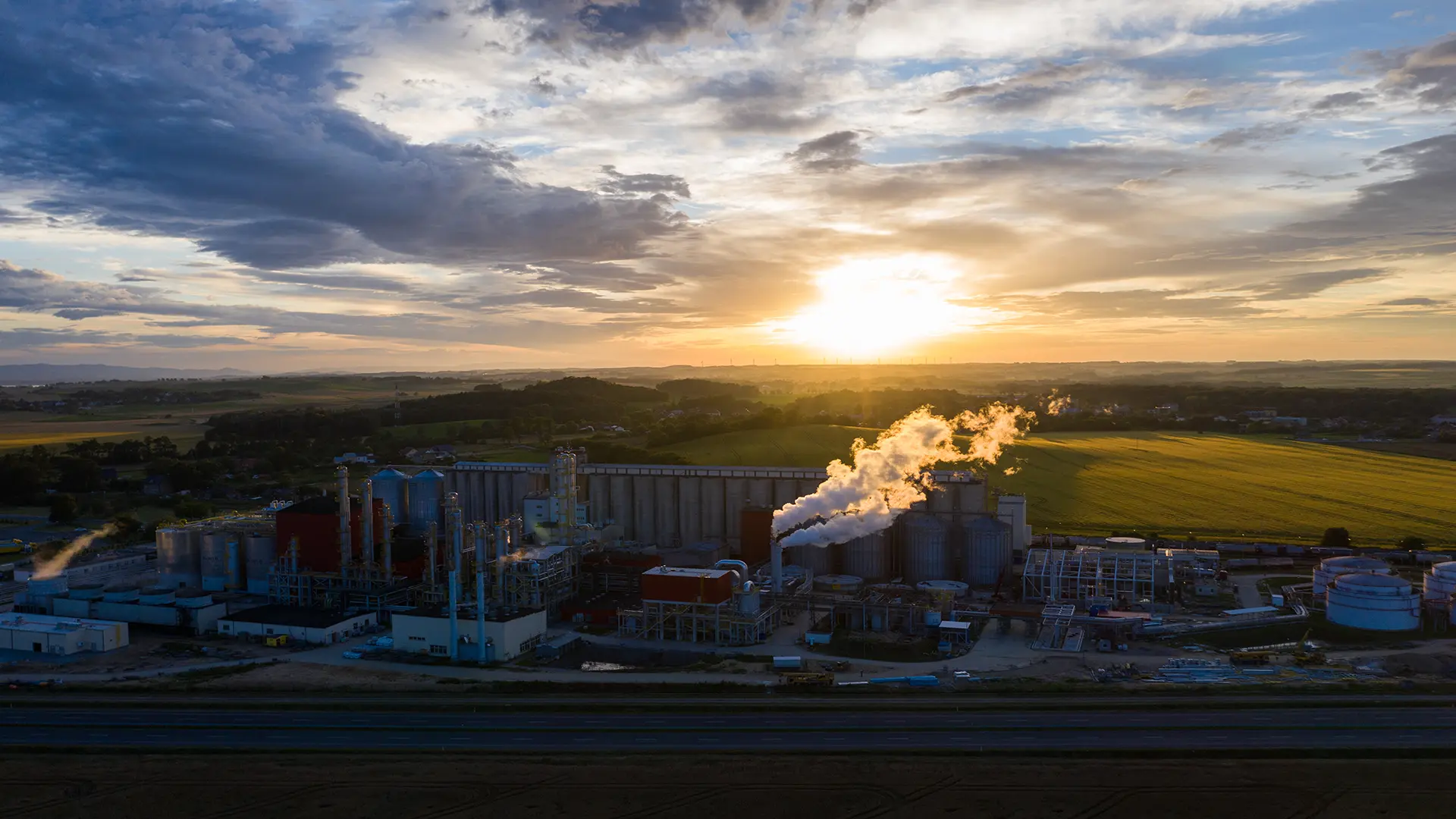
Written by John Egan for Industrial Info Resources (Sugar Land, Texas)--Construction of the first large-scale industrial carbon capture and sequestration (CCS) project to be funded by the U.S. federal stimulus program began late last month at an Illinois wet-corn mill that is operated by Archer Daniels Midland Company (NYSE:ADM) (ADM) (Decatur, Illinois). The $208 million project, scheduled to be operating in 2013, will receive $141.4 million in funding from the U.S. Department of Energy (DoE) (Washington, D.C.) under the 2009 American Recovery and Reinvestment Act. An additional $66.5 million will come from the project's private-sector participants.
The CCS project will be in Decatur, Illinois, about 180 miles south of Chicago. When it begins operating in about two years, it will sequester about 1 million metric tons of carbon dioxide (CO2) per year in a saline aquifer about 7,000 feet underground in the Illinois Basin. Researchers estimate that the aquifer, which is at the Mount Simon Sandstone formation, could store billions of tons of CO2. Industries operating in the Illinois Basin emit about 250 million tons of CO2 per year.
 Click on image at right for an aerial view of ADM's Agricultural Processing and Biofuels Plant in Decatur, Illinois, where construction has begun for an industrial CCS project.
"Illinois is at the forefront of helping to ensure the U.S. remains competitive in the global clean energy economy, creating new jobs while reducing carbon pollution," Energy Secretary Steven Chu said when the project broke ground August 24. "This first-of-its-kind project will bring jobs to Illinois, while advancing technology that the United States can sell around the world."
The CO2 to be injected is a byproduct from turning corn into fuel-grade ethanol at ADM's biofuels plant. Because all of the captured CO2 is produced from biologic fermentation, a significant feature of the project is its "negative carbon footprint," meaning that the sequestration results in a net reduction of atmospheric CO2, DoE said in a statement.
DoE's National Energy Technology Laboratory will manage the Illinois project. In addition to ADM, the project team includes Schlumberger Limited (NYSE:SLB) (Houston, Texas), the Illinois State Geological Survey and Richland Community College. That team was one of 12 industrial CCS projects selected by DoE in 2009 to receive Phase I funding for research and development activities. In June 2010, the energy agency selected the Decatur project as one of three projects to receive Phase II funding, which is geared to design, construction and operation of industrial CCS projects in order to more rapidly commercialize the technology.
U.S. industrial concerns emitted about 1.3 billion metric tons of CO2 in 2009. While DoE is working to pilot and demonstrate CCS projects at coal-fired power plants, the energy agency also is trying to demonstrate CCS technology at industrial facilities. DoE has committed to provide a total of $612 million to three Phase II industrial CCS projects. That sum will be matched by $368 million in private-sector funding.
"The work of our Illinois industrial CCS project will help move carbon capture and storage technologies closer to commercial deployment," said Scott McDonald, ADM's director of biofuels development. "The successful implementation of these advanced technologies will help significantly reduce carbon emissions by storing CO2 from manufacturing operations deep underground."
In addition to the Illinois project, DoE also is funding Phase II industrial CCS projects in Louisiana and Texas. The other two projects are located in:
- Lake Charles, Louisiana: A team composed of Leucadia National Corporation (NYSE:LUK) (New York, New York), Denbury Resources Incorporated (NYSE:DNR) (Plano, Texas), General Electric (NYSE:GE) (Fairfield, Connecticut), Black & Veatch (Overland Park, Kansas), Turner Industries Group (Baton Rouge, Louisiana), Haldor Topsoe A/S (Lyngby, Denmark) and the University of Texas (UT) Bureau of Economic Geology will capture and sequester 4.5 million tons of CO2 per year from a new methanol plant to be built in Lake Charles. The CO2 will be transported to a West Texas enhanced oil recovery (EOR) project. The Lake Charles project is scheduled to begin operating by April 2014.
- Port Arthur, Texas: Air Products & Chemicals Incorporated (NYSE:APD) (Allentown, Pennsylvania) will partner with Denbury, Valero Energy Corporation (NYSE: VLO) (San Antonio, Texas) and UT Bureau of Economic Geology to capture and sequester 1 million metric tons of CO2 per year from existing steam-methane reformers in Port Arthur. That project, scheduled to begin construction in November 2012, will transport the CO2 to an EOR project in eastern Texas.
The Illinois project includes the design, construction, and demonstration of a CO2 compression and dehydration facility as a precursor to CO2 storage and subsequent monitoring, verification and accounting of the stored CO2, according to DoE. When the facility is operating in two years, the Decatur project is expected to help the industry and DoE better understand long-term CO2 storage in saline formations.
DoE emphasized that an important part of the Illinois CCS project is the creation of an educational and training facility, the National Sequestration Education Center, which is set to be housed at nearby Richland Community College in Decatur. The center will contain classrooms, training, and laboratory facilities, and it will offer students associate degrees in sequestration technology.
View Plant Profile - 1052973 1036563
View Project Report - 2004256 200007277
Industrial Info Resources (IIR) is the leading provider of global market intelligence specializing in the industrial process, heavy manufacturing and energy markets. IIR's quality-assurance philosophy, the Living Forward Reporting Principle, provides up-to-the-minute intelligence on what's happening now, while constantly keeping track of future opportunities.
/news/article.jsp
false
Want More IIR News Intelligence?
Make us a Preferred Source on Google to see more of us when you search.
Add Us On GoogleAsk Us
Have a question for our staff?
Submit a question and one of our experts will be happy to assist you.

Forecasts & Analytical Solutions
Where global project and asset data meets advanced analytics for smarter market sizing and forecasting.
Explore Our SolutionsRelated Articles

Industrial Project Opportunity Database and Project Leads
Get access to verified capital and maintenance project leads to power your growth.
Discover Our DatabaseIndustry Intel
-
2026-2027 Investment Radar for Mexico, Central America & the CaribbeanPodcast Episode / May 29, 2026
-
Innovations Shaping the Next Era of Power GenerationPodcast Episode / May 22, 2026
-
The Role of Contract Manufacturing in Global Pharma GrowthPodcast Episode / May 8, 2026
-
2026 North American Labor OutlookPodcast Episode / Apr 24, 2026
-
2026 European Metals & Minerals Project Spending OutlookPodcast Episode / Apr 7, 2026