Petroleum Refining
Peak Oil Specter Controlled as Growth Backs China-Exxon-Aramco Petrochem JV
The Chinese venture provides a typical profile of many of the worlds petrochemical complex projects now in the execution or planning phase.
Released Friday, April 06, 2007
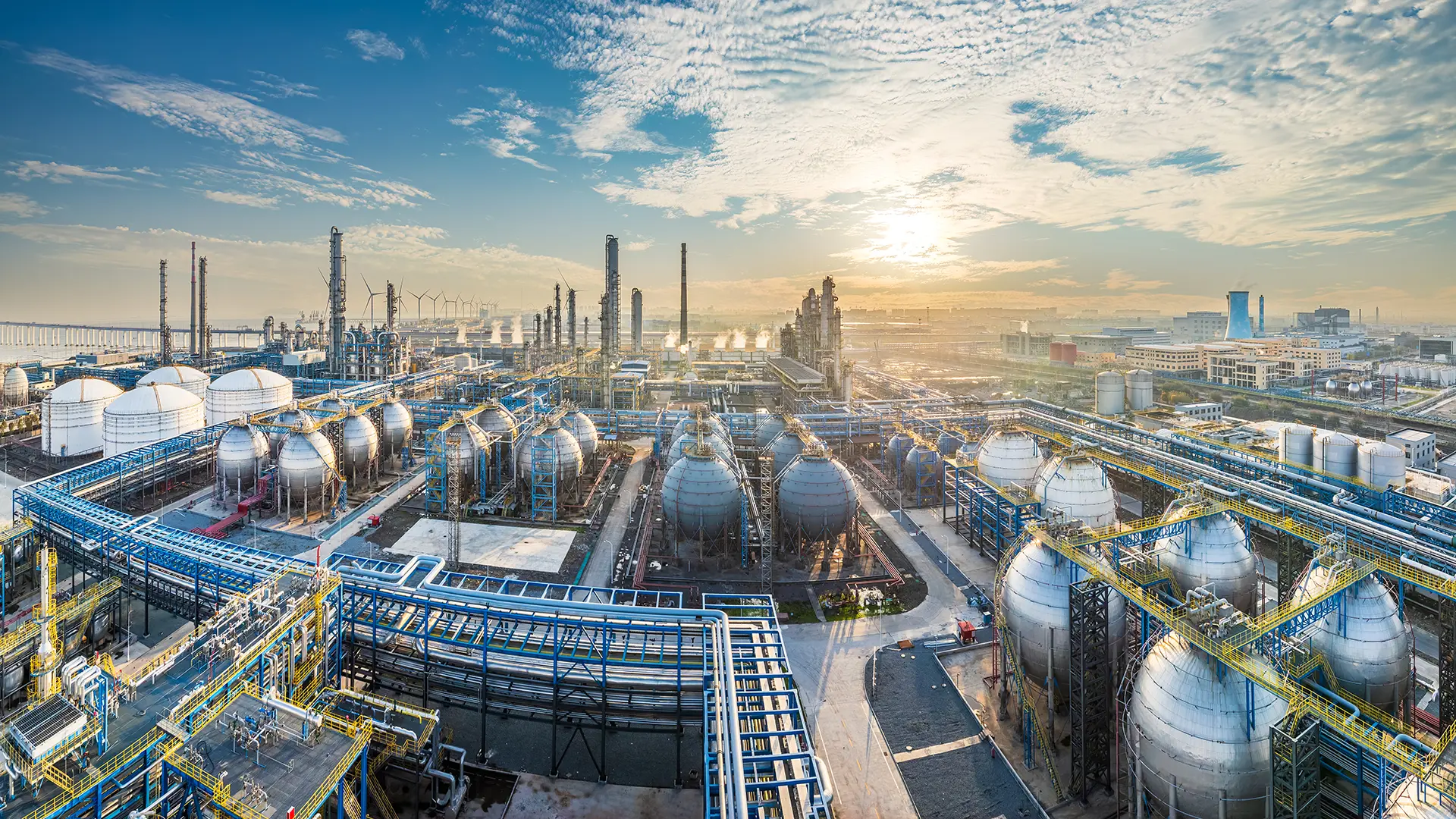
Written by Richard Finlayson, Senior Editor for Industrial Info Resources (Sugar Land, Texas). Two weeks before the $5 billion fully integrated refining, petrochemical and fuel marketing project between Sinopec (NYSE:SHI) (Shanghai, China), the Fujian province, ExxonMobil (NYSE:XOM) (Irving, Texas) and Saudi Aramco (Riyadh, Saudi Arabia) was announced in Beijing, China, ExxonMobil Chemical Senior Vice President, Sherman J Glass, said that the chemical industry was a growing business. Demand for chemicals, he said, was growing at about 2-3% above the world GDP and that the average growth rate of about 5-6% per annum was about triple the expected growth rate for energy.
The joint venture company Fujian Refining & Petrochemical Company will be owned by Fujian Petrochemical Company (50%), ExxonMobil China (25%) and Saudi Aramco Sino (25%). The project is scheduled for startup in early 2009.
The Fujian Fuels Marketing Joint Venture Project will manage and operate about 750 service stations and a network of terminals in Fujian. It will be owned by Sinopec (55%), ExxonMobil China (22.5%) and Saudi Aramco Sino (22.5%).
The estimated cost of the project has increased from $3.5 billion in 2005 to the current $5 billion. This increase is a result on the inclusion of working capital and the cost of acquiring the existing refinery in Fujian from China Petroleum. Prospects for the project, notwithstanding cost creep, remain positive with oil demand in China growing at 4.3% per annum over the next five years compared to the global average of 1.6%. Chinas petrochemical demand will account for 25% of the global total by 2015.
Some months ago, when cyclical concerns at the peaking of global oil resources and supplies were rife, Industrial Info asked whether the Middle Eastern, Chinese and other Asian builders of major petrochemical plants knew something the rest of us had missed. We surmised that with long term plans being put into effect they must have a hard-headed confidence and good information that the oil and hydrocarbon feeds for their plants were not going to whither away and turn the current project spree into a bad idea.
Sherman Glass begged the same question as to whether the earth contains enough oil to meet projected growth and concluded that the answer to the question was a simple yes. He said that according to US Geological Survey (USGS), the earth is estimated to have more than 3 trillion tons of recoverable, conventional oil. This estimate has grown steadily over the years as the oil industry has developed new, more sophisticated technologies to both find and produce these resources.
If we add estimated frontier resources such as heavy oil and shale oil, the recoverable volume rises to more than 4 trillion barrels. Considering to date, mankind has used about 1 trillion barrels of oil over our history, the outlook for future supplies is positive. But it will require [a] significant investment as well as access to many different regions of the world, Glass said. He went on to stress the growing importance of natural gas in the resource feed chain and quoted the International Energy Agencys estimates of a total investment of more than $8 trillion needed in the oil and gas sectors from 2005 to 2030.
Two separate perspectives on the oil production peak question became available at the end of March and the beginning of April. The American Association of Petroleum Geologists annual convention in Long Beach revealed that current consumption rates would result in the peak being reached in 15 to 25 years. As it peaks, the consumption rate will be 90 to 100 million bpd, which is only 10% to 20% higher than the rate in 2005. Depending on the uncertain level of oil resources, the peak condition could last 20 to 30 years before its ultimate decline. Estimates of 3.4 trillion to 5 trillion barrels of oil resources were said to fall in the optimistic range of published estimates. Recovery growth, not discoveries, has been the major contributor to global oil production in the last 25 years and 300 billion barrels of known oil (about a10 year supply) is currently underdeveloped or not in production, the convention was told.
Frederik Robelius at the Uppsala University in Sweden said that the dominance of giant fields in global oil production supported the thesis that they will be crucial to what future production will look like. These giant fields produce at least 500 million barrels of oil and comprise only about 1% of all oil fields in the world but account for more than 60% of total production. He said that unfortunately the trend in discovery of new giant fields is heading downwards both in terms of the number of fields and the volume of the fields located. The majority of the largest giant fields are found around the Persian Gulf and are more than 50 years old.
Robeliuss model analysis shows that the assumption of an annual rate of diminution in giant oilfields of between 6% and 16% is reasonable. He used both pessimistic and optimistic estimates and then combined the results from his model with field forecast for deep-water production, new finds, and oil sand in Canada and heavy oil in Venezuela to construct his forecasts.
All the case studies showed that global oil production will begin to drop off at roughly the same time as the giant fields. According to the most pessimistic scenario, the peak will be reached in 2008, whereas the most optimistic scenario, assumed to follow a 1.4 % annual increase in demand, places the peak in 2018.
So it seems that the next one and a half generations could expect a peak plateau and pass the question on for the next final answer in about 2040.
View Project Report 88000210
Industrial Info Resources (IIR) provides marketing communication services ranging from industrial database solutions to market forecasting, custom analytics, and specialty promotions that support high-level image campaigns.
/news/article.jsp
false
Want More IIR News Intelligence?
Make us a Preferred Source on Google to see more of us when you search.
Add Us On GoogleAsk Us
Have a question for our staff?
Submit a question and one of our experts will be happy to assist you.

Forecasts & Analytical Solutions
Where global project and asset data meets advanced analytics for smarter market sizing and forecasting.
Explore Our Solutions
Industrial Project Opportunity Database and Project Leads
Get access to verified capital and maintenance project leads to power your growth.
Discover Our DatabaseIndustry Intel
-
2026-2027 Investment Radar for Mexico, Central America & the CaribbeanPodcast Episode / May 29, 2026
-
Innovations Shaping the Next Era of Power GenerationPodcast Episode / May 22, 2026
-
The Role of Contract Manufacturing in Global Pharma GrowthPodcast Episode / May 8, 2026
-
2026 North American Labor OutlookPodcast Episode / Apr 24, 2026
-
2026 European Metals & Minerals Project Spending OutlookPodcast Episode / Apr 7, 2026