Written by Paul Wiseman for IIR News Intelligence (Sugar Land, Texas)
Summary
U.S. currently imports about 99% of its low-enriched uranium (LEU), used for traditional nuclear reactors, mostly from Canada, Australia and Kazakhstan, but the U.S. DOE is investing billions in domestic mining and processing to increase national security.As SMR Plans Rise, Uranium Demand Mushrooms
Data from the National Public Utilities Council (NPUC) and Industrial Info Resources show that the U.S. count of recently-announced small modular reactor (SMR) nuclear projects leads the world--and is more than three times that of its nearest competitor.NPUC's list shows the U.S. with 28 siting announcements, Canada in second with nine, Russia with five, and China, Finland, France, and Poland with four each.
Industrial Info Resources is tracking 50 SMR capital projects in the U.S. with a total investment value (TIV) of just over $130 billion. The Industrial Info Resources Global Market Intelligence (GMI) Power Project Database offers a list of the detailed project reports.
Industrial Info Resources is also tracking 93 uranium mining projects in the U.S. with a TIV of $8.45 billion. Most of those are in the Mountain West, Pacific Northwest and Texas.
DOE Invests in LEU Infrastructure
There are two steps to getting low-enriched uranium (LEU)--mining and refining. The Department of Energy (DOE) has announced a $2.7 billion investment to help develop LEU and high-assay low-enriched uranium infrastructure capabilities.For real energy security, however, mining it at home would be a significant step. Actually, mining any significant amount would be a gargantuan step, as the U.S. currently accounts for only about 1% of the world's uranium mining. The good news is, however, that starting small means exponential growth is easy.
The U.S. Energy Information Administration (EIA) in June reported that 2025's domestic production of triuranium octoxide (U3O8), or uranium concentrate, at 2.1 million pounds, is more than three times 2024's amount, which had been 657,000 pounds. U3O8 is the precursor to a multi-step process that leads to LEU and other end-use uranium levels.
The number and total footage of exploration and development holes drilled were the highest since 2013, the EIA said. Total investment was also up for 2025. "Expenditures for land, exploration, drilling, production, and reclamation totaled $234.7 million in 2025, up from $160.0 million in 2024 and the highest total expenditures since 2014," said the EIA.
In-situ Recovery Capacity
Part of the issue of uranium energy security is in-situ recovery (ISR), something else that is mostly done overseas. The EIA says 2025's domestic ISR capacity was actually down slightly, at 13.3 million pounds U3O8 per year, down from 14.1 million pounds in 2024.Five in-situ recovery plants were on standby as of the end of 2025 with a combined annual production capacity of 8.8 million pounds U3O8.
For SMRs, It's All About the Future
Currently, Industrial Info Resources data show there are only four operating SMRs in the world: One each in Weihai, Shandong, China; Kalpakkam, Tamil Nadu, India; Irbid, Jordan; and Pevek Chukolka, Russia. Each SMR has a capacity of 300 megawatts (MW) or less.None of those are in the U.S., so current domestic uranium demand by this sector is zero. Domestic mining activity is therefore focused on two visions.
One is for energy security for the traditional nuclear plants still operating; the other is for the future of SMRs, which is closely tied to data center demand.
Much of the data center demand is tied to the "S" in SMR--Small. With average output of 300 megawatts electric (Mwe), about one third the output of traditional nuclear reactors, SMRs are considered perfect for behind-the-meter powering of data centers. Several data center investors, including Amazon, Microsoft, Google, have contracted with SMR developers to provide behind-the-meter power for data centers in the next few years.
The Outlook for Mining
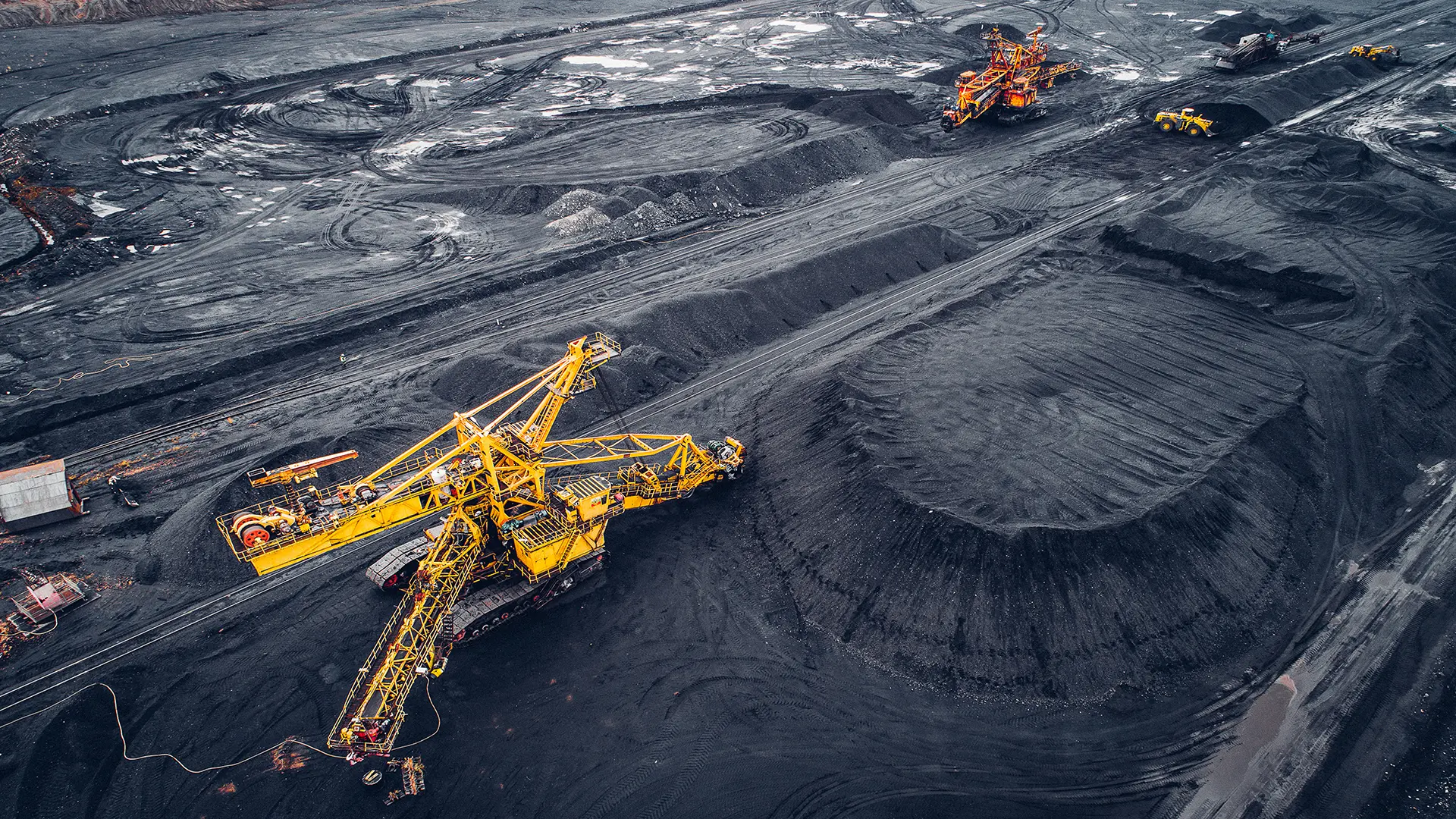
One case in point that demonstrates rising demand is in Wyoming, where Uranium Energy Corp is asking permission to expand its recently-restarted Christensen Ranch in-situ uranium wellfield mine in Wyoming. The company wants to increase production of ramp up production of U3O4, otherwise known as "yellowcake."In-situ mining involves drilling a series of holes into a shallow uranium-ore-containing aquifer, then injecting oxygenated water to dissolve the ore. The company then pumps that mixture to the surface and separates the ore in a treatment plant.
The Texas-based company has asked the Wyoming Department of Environmental Quality (WDEQ) to expand the current border of water quality exemptions in the K sandstone aquifer. Exemptions allow mining companies to inject fluids into underground water sources that are already unsuitable for human use due to salinity or other impurities.
According to state filings, the proposed action would add about 11% to the currently exempted area.
By the Numbers
- 28: Number of SMR siting announcements in the U.S., tops in the world
- 9: Number of SMR siting announcements in second-place Canada
- $2.7 billion: DOE-announced investment in low-enriched uranium mining and refining in U.S.
About Industrial Info Resources
Industrial Info Resources (IIR) is the leading provider of industrial market intelligence. Since 1983, IIR has provided comprehensive research, news and analysis on the industrial process, manufacturing and energy related industries. IIR's Global Market Intelligence (GMI) helps companies identify and pursue trends across multiple markets with access to real, qualified and validated plant and project opportunities. Across the world, Industrial Info Resources is tracking over 250,000 current and future projects worth $30.2 Trillion (USD).
/iirenergy/industry-news/article.jsp
false
Want More IIR News Intelligence?
Make us a Preferred Source on Google to see more of us when you search.
Add Us On GoogleAsk Us
Have a question for our staff?
Submit a question and one of our experts will be happy to assist you.

Explore Our EnergyLive Tools
EnergyLive Tools provide instant insight into new build, outages, maintenance, and capacity shifts across key energy sectors.
Explore Our ToolsRelated Articles
-
U.S. Metal Refiners Add Capacity to Process Rare-EarthsSeptember 23, 2026
-
Bolivia's Congress Approves US$1.9 Billion IMF DealSeptember 23, 2026
-
El Congreso boliviano aprueba un paquete del FMI por US$1.90...September 23, 2026
-
U.S. Precast Concrete Manufacturing Provides Steady Project ...September 22, 2026
-
Chile: 21 New Mining Projects Worth US$24.5 Billion Are Unde...September 22, 2026

Explore Our Enery Industry Reports
Gain the competitive edge with IIR Energy’s suite of energy market reports, designed for traders, analysts, and asset managers who rely on verified, real-time data.
View ReportsIndustry Intel
-
2026 US Data Center Outlook: Power, Land & CoolingPodcast Episode / Sep 18, 2026
-
2026 Global Power Demand Outlook: Gas, Nuclear & RenewablesPodcast Episode / Sep 18, 2026
-
2026 Oil & Gas CapEx Outlook: Middle East, LNG & PermianPodcast Episode / Sep 4, 2026
-
The Answer Age Starts with Trusted Data: Introducing IIR Envoy™ MCPPodcast Episode / Sep 1, 2026
-
European Chemicals and Transport Fuels OutlookPodcast Episode / Jul 10, 2026