Podcast Overview
Presenters


Video Language
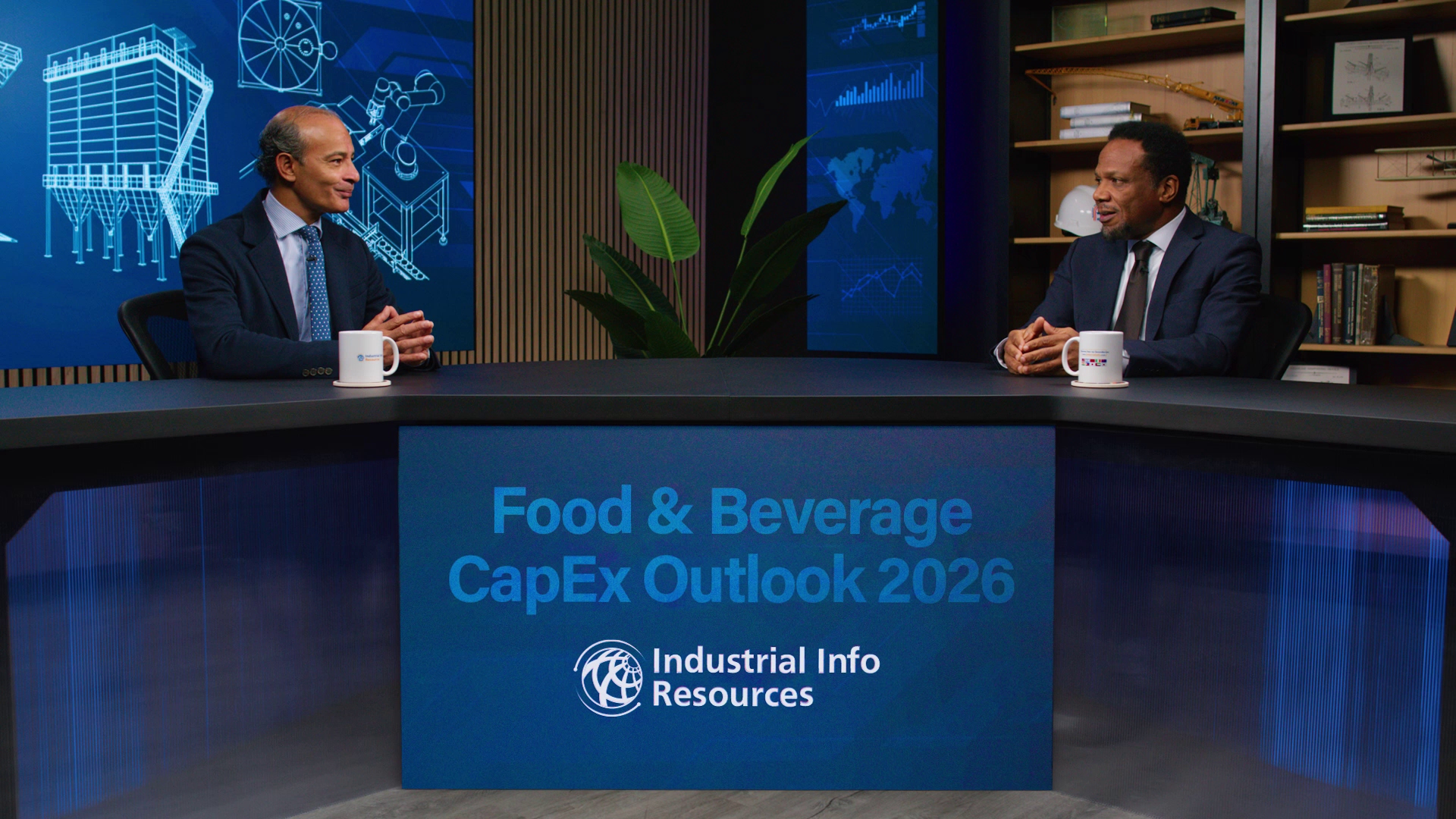
Good morning and welcome, my name is Shaheen Chohan. I am the Vice President of IIR's Global Analytics service and I'm based in our Dubai office. I have been with Industrial Info Resources for about 15 years now, and for those who regularly tune in to our market outlook discussions, you will have noticed that we have a slightly different look and feel to the previous market assessments — we are now hosting today's discussion from our brand new media suite. We've retooled our previous webinar format to really try and hone in on discussing those trends and developments in the market that are sitting very much at the front and center of everyone's minds.
And today, I'll be taking a look at some of the key themes and trends occurring across the food and beverage market. And to help me do that, I am delighted to be joined by Randy Godet, who is our Senior Vice President of Research for our Food and Beverage industry. Randy actually also wears a second hat, that being our global head of research for Pulp, Paper & Wood.
Now, before we get into our discussion, I would like to say a very big thank you to our podcast sponsors, Trane Rental Services, a division of Trane Technologies. They deliver scalable temporary power, HVAC and cold chain solutions to industries across the globe, including Food and Beverage, planned expansions, or production gaps. They provide advanced solutions that help maintain product quality, meet regulatory standards, and avoid costly downtime. Trane's temporary systems reduce the need for capital expenditures by giving you the flexibility to move forward or scale without permanent infrastructure.
Moving into our discussion — obviously, Randy, you and your researchers across the world have been tracking project activity that has been growing at a reasonable pace. And then obviously we kind of got COVID and, like all other industries, that spending kind of ground to a halt somewhat. We came out of COVID and your industry was then hit with this kind of post-COVID food inflation cost increase, right. I'm assuming that we are starting to see some degree of normalization. Is that right? What are some of the big trends that you're seeing in terms of capital and maintenance expenditures across the world that your researchers are tracking today?
Randy Godet (02:59):
Right. Well, Shaheen, first of all, thanks for the introduction. In terms of the outlook for the Food and Beverage industry, today we're seeing spending actually slowing down. Some of the large market drivers prior to 2025 are actually cooling off. And so we anticipate the year ahead to be one with a lower volume of project spend and the overall value of projects to be somewhat lower.
Shaheen Chohan (03:26):
With that trend in play, would you say that the current tariff outlook has had some kind of impact on the industry? I mean, we've noticed that the end consumer is very, very sensitive to any increases in end product prices. Food inflation is really high, obviously. So I can only assume that the current tariff outlook is adding a little bit of pressure on existing food prices and ultimately, will that be passed on to the end consumer, or will the actual food producers try and absorb that? And if they do absorb it, will that impact profitability and with it some of the commitments they'd like to make towards CAPEX?
Randy Godet (04:08):
A lot of questions — I'll answer as many as I possibly can. But the one I would certainly like to point out is that we do anticipate there will be a slowdown in spending first and foremost. Food inflation is very high. I don't think the average consumer has much of an appetite to absorb any additional price increases, and those price increases are certainly on their way in the form of tariffs — or tax, whatever you want to call it. It's certainly going to impact the bottom line and the outlook in terms of spending for the next year.
Shaheen Chohan (04:39):
So what are — when we break down the tariff picture, which is indeed very complex — what are the three kind of impacts that you expect to see on the industry? Where is that cost inflation going to come from?
Randy Godet (04:52):
So I think for the most part, the biggest impact or the most influence on the food and beverage industry is going to come in, number one, the cost to build — because there's an additional tax on steel and aluminum that went from 10% to 25%. So you could just imagine in a food and beverage manufacturing facility, stainless steel is everywhere — it's a requirement. The other thing too is going to be the higher cost of input costs — the higher cost of producing food products, meaning grains, commodities, as well as the packaging material for food products: aluminum, tin as it relates to canned beverages, soup cans, and things of that like. We're going to see some increased costs across the board.
Shaheen Chohan (05:42):
Yeah, so I guess some segments of your industry are going to kind of get that double whammy impact — one being the packaging costs associated with the packaging metals, but then also an additional layer of cost inflation for the ingredients, right?
Randy Godet (05:59):
Absolutely. Yeah.
Shaheen Chohan (05:59):
Now, taking a step back from the tariffs — we know that this is a disruption at the moment and hopefully we'll get some kind of resolution in, let's say, 90 days. Are there any market trends that may actually lead to a shift in the current trajectory? Let's look at some of the positives. I'd like to start firstly with the kind of composition of spending — so the type of capital spending that your researchers are tracking around the world. We pretty much categorize that as grassroots or greenfield spend, or in-plant CAPEX. I can also tell you that we were already seeing a slowdown in the number of new build, grassroots type activities. What we're seeing more of is companies looking at ways to actually improve their bottom line with the additional cost to build. We're seeing a growing trend in M&A activity — mergers and acquisitions — where it's much more creative to the bottom line to buy as opposed to building. So buying market share, as opposed to entering a new market or looking to increase your market share in a market that you may not have good penetration with. So rather than trying to build a new grassroots facility, buy the brand.
Randy Godet (07:13):
Absolutely. But then taking into account that building comes with the additional cost of steel construction, the time to get a permit, and all the other added expenditures that could push the project out of becoming viable to actually being canceled.
Shaheen Chohan (07:31):
So if grassroots developments that you're tracking around the world are starting to soften or at least stay relatively flat, are you seeing any interesting growth trends when it comes to the in-plant capital expenditures that your researchers are monitoring?
Randy Godet (07:47):
I think for most companies, the term that they're really focusing on is operational expenditures, or opex. These are small in-plant projects that have a higher return on investment and a shorter timeframe to develop, plan, build, construct, and complete. Those are the things that are going to be driving the market — as a matter of fact, those are the projects that we are seeing most of the automation being driven toward.
Shaheen Chohan (08:12):
And when you talk about automation, just define what kind of projects those would be.
Randy Godet (08:18):
So automation in a food and beverage processing plant really delivers the point of less human interaction — whether it's because of unreliable labor, unreliable skilled labor, or the high cost of labor. Using machinery, using AI, using computers, using data to actually process, produce, and package the product.
Shaheen Chohan (08:39):
And I guess that's really quite a big focus, bearing in mind that COVID saw a lot of the workforce and labor actually exit the market there.
Randy Godet (08:51):
Yeah, it's about really trying to produce as much, if not more, with fewer people.
Shaheen Chohan (08:57):
Absolutely. Okay. I would like to spend a little bit of time just to tease out from you some of the trending sectors that your researchers are tracking. Now, I know that when you and I have done a number of these webinars and had multiple conversations over the last few years, you always used to touch on alternative proteins. Is that still trending or have we seen that softening?
Randy Godet (09:19):
That's a really good question, Shaheen. The alternative protein market was a huge driver some years ago, and that market has fallen off sharply in terms of the investments. We're actually seeing some of those production lines that came online in the past few years go offline. So it is not a strong driver for the food and beverage industry any longer.
Shaheen Chohan (09:40):
Now, one other market that I know we used to discuss, which was certainly trending, was the biofuels market. I mean, we're seeing alternative fuels across the world, new refineries being built that pivot away from combustion engines to use greener transportation fuels. And obviously that was a big pull for the agricultural products. Is that still moving with some degree of momentum?
Randy Godet (10:08):
Shaheen, I hate to make it seem like it's all gloom and doom, but that's another sector of the two that you selected that is not going to be doing so well moving forward — and that's mainly due to some of the incentives given towards biofuels that have been removed. So the ag sector spend that was driven by the biofuel market is going to be flat.
Shaheen Chohan (10:26):
Randy, it's my job today to try and actually find out — are there any bright spots out there? You know, we're seeing a lot of focus on food security, we have growing populations, so there is certainly a momentum towards some of those CapEx expansions that you talked about from a sector perspective. Are there any trending sectors or growth markets that you think our listeners today should be honing in on and making sure they put on their radar?
Randy Godet (11:01):
I mean, when we talk about the food and beverage industry, it's hard to just speak from a holistic standpoint — meaning there are various sectors that drive the spend, and there are various sectors that are going to be contracting. I think on the more positive end, I would like to consider two things: the baking sector as well as the beverage sector. Ready-to-drink beverages has been a huge market for many companies across the globe, and that's going to be one of the strongest sectors moving forward. From a geographical standpoint, I would look into areas where food security or food insecurity is an issue — the Middle East, Southeast Asia, Africa, and certain countries in Latin America.
Shaheen Chohan (11:49):
Randy, as always, it's great to get some time with you and discuss some of the trends and get your insights and views today. Really appreciate the time that you've freed up. If any of you viewers who have joined us today have any questions about what we've discussed, then please reach out either to Randy or myself. And then all it leaves me to do is really say one final thanks to the folks over at Trane Rental Services — please do reach out to them if you'd like to find out a little bit more about the services that they offer. So with that, a very big thank you for joining us. I hope we've helped you a little bit navigate some of the currents of change that we're seeing today. Thank you.
Sponsored by
Recent Podcast Episodes

Data Centers
Latin America Data Center Outlook 2026: Power, Hubs & Growth
Can Latin America become the next data center hub? IIR experts unpack 2026 trends across São Paulo, Querétaro, Santiago, and grid limits.
Food & Beverage
Food and Beverage CapEx Outlook 2026: Tariffs, AI, Africa
Why are food producers spending cautiously despite strong demand? IIR experts unpack 2026 CapEx trends across ROI-driven budgets, AI and automation, and emerging markets.
Refining
North America Refining 2026: New Pipelines to PADD 5
Is North America's refining system built for what's coming? IIR experts unpack 2026 trends across PADD 5 pipelines, Canadian crude, and modular refineries.
Pharmaceutical & Biotech
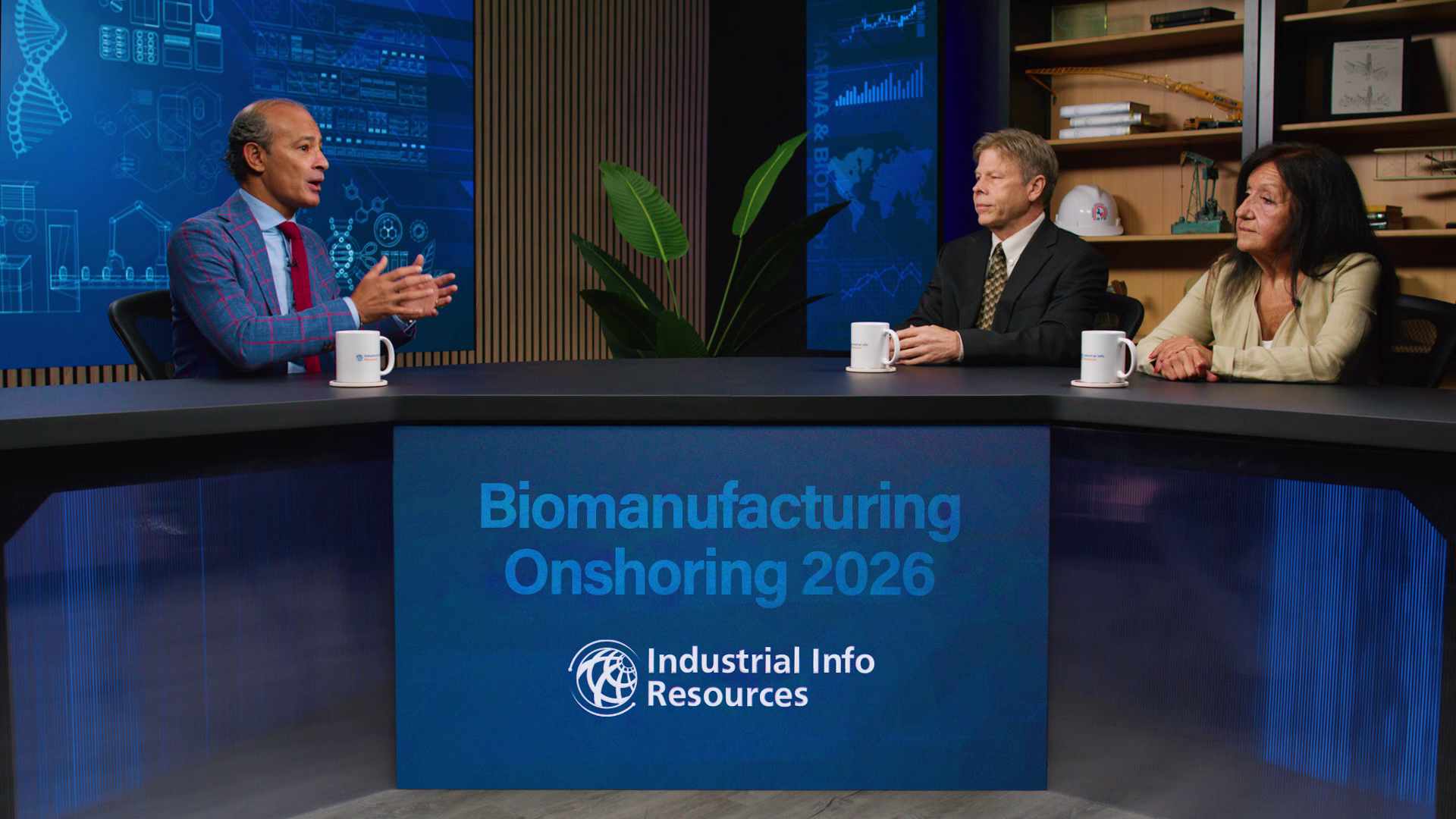
Biomanufacturing Onshoring 2026: GLP-1, CDMO and Reshoring
Could pharma's onshoring boom outlast the tariffs that sparked it? IIR experts unpack 2026 trends across GLP-1 manufacturing, CDMO growth, and biomanufacturing site selection.