Podcast Overview
Presenters


Video Language
Hello and welcome. This podcast is brought to you by Industrial Info Resources. Since 1983, we have been providing global market intelligence on the industrial and the energy markets. And through the combination of our trusted data, which is validated and qualified direct from source, and our analytics and forecasting tools and solutions, we help our customers stay connected and in tune with the latest project and investment opportunities and those trends occurring across the world. My name is Shaheen Chohan and I am the Vice President of Global Analytics at Industrial Info Resources. I'm based in our Dubai office, and I have been with the company now for almost 15 years.
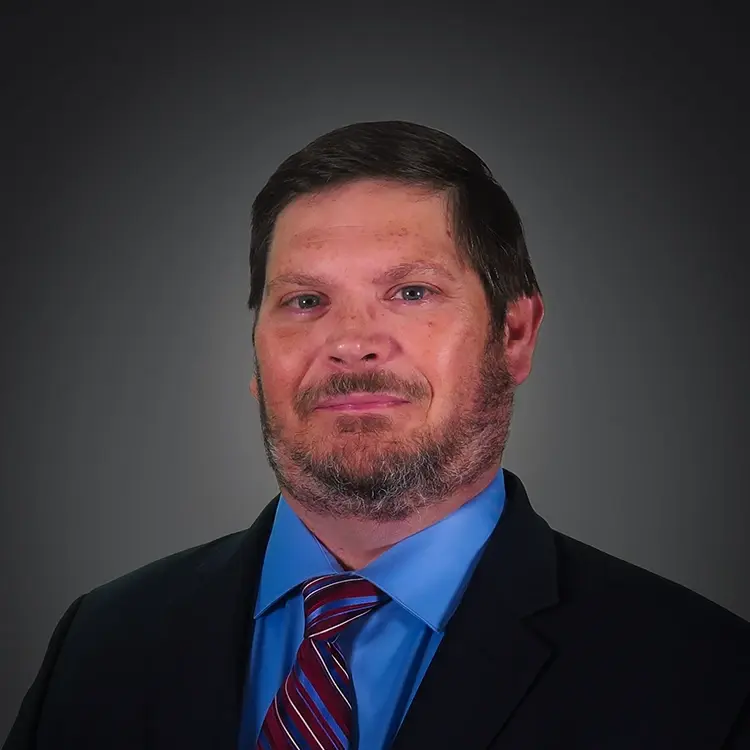
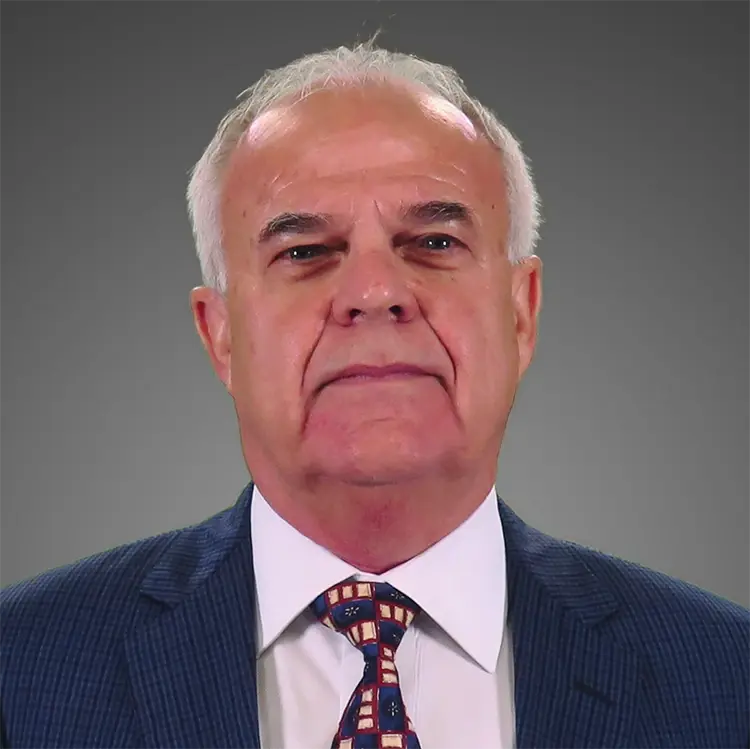
Today, to help unveil some of the trends that we are seeing from our global research, I am delighted to introduce not one, but two of our industry experts. We have Gordon Gorrie, who is our Senior Vice President of Oil and Gas Production Research, and we have Britt Burt, who is our Senior Vice President of Global Power Research. Welcome to you both.
Now, I am going to start with you, Gordon — put you on the spot. When we talk broadly about the energy markets, there's always talk about this sort of trilemma challenge, right — which is really about trying to balance what can often be three conflicting goals: energy security, energy affordability and cost, and finally, sustainability. It is always acknowledged that there can be a bit of a missed balance between these three objectives. What we have seen over the last few years is a very noticeable sway or focus on decarbonizing the energy system. And now it appears that — am I right in feeling that we are starting to see the traditional oil and gas companies now pivot back to what we could call the traditional hydrocarbon markets?
Gordon Gorrie (02:28):
Shaheen, yeah. To be honest, I'm not convinced that that was really the case. Perhaps there was a perception here in the Gulf of Mexico — or Gulf of America — around the hype that was going on as far as the shale oil boom, etc. But if you actually look at it from a worldwide perspective, I'm going to suggest that it was in the forefront of a lot of companies, a lot of businesses. And I'll say, you know, the Permian, offshore Brazil, offshore Guyana, West Africa, East Africa, Qatar — to name but a few. And perhaps some of the majors may have transferred some of their funds to the green energy. I'll accept that. But I think all in all, there's always been a focus. There are two ways of looking at that — there is the supply and the demand, and the demand is clearly on clean and green energies.
Shaheen Chohan (03:32):
But obviously, companies are profitable entities, right. Surely the upfront cost — just the sheer logistics of some of these offshore projects, and obviously the higher risk profile with deep offshore exploration and production — surely this is a major consideration for most oil and gas companies. Why would you go offshore?
Gordon Gorrie (03:56):
It is a very high entry level offshore business — not just from a cost but from a technology point of view, and obviously the risk. But where it differs from your traditional onshore drilling is the return that you get is extended over quite a long timeline as far as revenue is concerned. Many of the offshore projects, the revenue stream can be anything from 20, 30, 40 years. And with a payback time of as short as six years from their initial investment, and the higher production levels that you generally get from offshore — that is the area where the big boys play. And again, just in comparison, on the other extreme side of the production supply chain, that is very different to the profile of, let's say, production in the shales.
Shaheen Chohan (05:03):
Yes, very much so. I mean, the investments that we get from offshore are across the board. It's anything from your standard wellhead platform in shallow water, all the way to going into deep water or ultra-deep water, where you get anything from floating production units to FPSOs. But what I'm seeing, fairly recently — maybe over the last two years — is a major uptick in subsea tie-back systems. So in terms of the type of investments and projects we're starting, that's primarily where the CapEx is going.
Gordon Gorrie (05:52):
I think it is going there. There are two aspects to it. One is it maintains a platform that is beginning to mature — so if you can tie back to that platform, it enhances the life of the existing platform. But as far as subsea type systems are concerned, they're not new — they have been around. But what we're seeing now is longer-reach type systems. The longest so far here offshore in the Gulf of Mexico is 6 to 8 miles away from the receiving platform. Who would have thought? And in fact, we've got some — though they're maybe not as far away, maybe 30 miles away — but they're already sitting in production areas in 6,500 feet of water. Amazing what they can do these days.
We even have — and this is in the North Sea, the Norwegian sector of the North Sea — a producing subsea system that has compressors on the seabed, or on the sea floor. And it's controlled from onshore — no mother platform or anything like that, nothing above the water. It is controlled from onshore, 75 miles away. And again, these compressors are sitting in 2,500 to 2,800 feet of water. So basically an underwater compressor station. You can imagine — you've got the power to power the compressors and the compression to pump that gas onshore.
Shaheen Chohan (07:43):
Britt, before I get to you, I do want to talk a little bit about this new administration. My earlier question around whether the market is now pivoting towards offshore was primarily because we always reference the Gulf of America, right. The Biden administration kind of pulled back on a lot of the commitments to channel further investments into the offshore. Clearly, we have a very supportive new administration — "drill, baby, drill." Are we now actually seeing tangible steps to bring offshore back onto the agenda? Are we starting to see things happen specifically around accelerating permitting or anything like that from this new administration?
Gordon Gorrie (08:33):
Good question. And I think "drill, baby, drill" is fine to say, but you only drill baby drill if the price is right across the board. But let's go back slightly. Prior to the start of the year, all indications were that the Gulf of America — Gulf of Mexico, whatever you want to call it — the main CapEx spend was slated to take place from 2023 through 2027, averaging about $32 billion per annum. Just an average, of course. And that would include the exploration side of it, the production drilling, the infrastructure — including tie-back systems — as well as decommissioning of redundant equipment or redundant platforms. And all indications are that 2023 and 2024 were close to the $32 billion spend. So that didn't go away.
However, I've got to say that there's a question mark with the recent quite substantial drop in the oil price that could put a spanner in the works. I think the big telling point will be when the next Gulf of Mexico lease period comes up. When is that? I think it's June this year. Reportedly going to be a big one — and by that, the acreage available is possibly significant. So as far as I'm concerned, that will be a telling point and will tell you the appetite that these companies have to go further in the Gulf.
Shaheen Chohan (10:34):
Thanks, Gordon. Now, Britt — about time we got you to do a little bit of work here. Turning to offshore wind: wind continues to play a major role in decarbonizing the power market. I think we're tracking over $2.25 trillion worth of currently active wind-related projects around the world — that's what your researchers are tracking as of today. That is a colossal number of CapEx sitting in the pipeline. I mean, realistically, how much of that could typically go forward? And I know your researchers are tagging each individual project with a high, medium, and low kind of probability — so using that as a metric, of that $2.25 trillion, how much could we expect to see proceed?
Britt Burt (11:29):
Well, it is a difficult number to put my finger on. You talk about the total spend — if I look at it in terms of capacity, that equates to over 800GW of offshore wind capacity. So to put it in proper perspective: right now we have about 80GW of operating offshore wind capacity around the globe. IRENA — the International Renewable Energy Agency — had projected 492GW by the end of 2035. Recently, they have reduced that by about a third. So how much of that will actually move forward? It's hard to say. I think by the end of 2035, we're still going to be well below that 492GW number — it's probably going to be more in the 300GW range, or maybe a bit less than that.
With that being said, the drivers are still there. The largest ones are the movement overall towards decarbonization and the favorable government programs and incentives that are driving that. So I think the development is going to be aggressive, but that $2 trillion figure is a bit optimistic, to say the least.
Shaheen Chohan (13:01):
Now, what we're showing here is a kind of heat map, which is based on individual capital projects that your team is tracking around the world — so these are real numbers sitting underneath these. Clearly we can see the hotspot is in Europe. Is Europe still dependent on European or even country-level tax incentives, similar to what's been propelling and stimulating the US market? Are they still needed in Europe to a certain degree?
Britt Burt (13:29):
To a certain degree. But we're seeing more and more of those projects operate independently of the subsidies that are in place for them. And apart from Europe, of course, Asia is a big region of development as well — China, Taiwan, Japan. I don't think anything's really going to slow it down in Japan and Taiwan and some of the other regions in Asia. I think the costs are going to delay or possibly lead to the end of some of those projects. But that's what we're seeing right at the moment.
Shaheen Chohan (14:13):
Right. So cost — as in the impact from the current trade tariffs — I'm assuming that's going to be a consideration. I mean, these turbines, the bulk of the equipment is steel plus aluminum, correct?
Britt Burt (14:24):
So yeah, the steel and aluminum would be the key components that are affected by the tariffs.
Shaheen Chohan (14:38):
Absolutely right. Gordon, sticking with the whole tariff theme — all oil and gas infrastructure is based on steel, right? It's the primary input. Are we seeing oil and gas project owners take a pause and sit back, or are they not bothered?
Gordon Gorrie (14:58):
There are some times when it's really specialist steel which is limited in where you can get it from. So my honest answer is — tariffs will always have an effect, but to what extent I'm really not sure. As far as the oil and gas industry is concerned, especially offshore, I think the same could be said for the offshore wind industry as well. And just to be honest, the tariffs have been very much a moving target. It's hard to say with any certainty what effect they're going to have.
Shaheen Chohan (15:35):
Well, I think for your industry there is the 25% tariff on steel and aluminum — that's been in play for quite some time. It's this double whammy tariff that we may see on some of the turbine OEMs, right. I'm assuming a lot of the technology equipment and material inputs are made in Asia — would that be correct?
Britt Burt (16:02):
A lot of it is. And then a lot of the supporting equipment as well — the transformers, the inverters, and things such as that — a lot of that is made in Asia as well. I mean, in an offshore business, it always will be a worldwide procurement channel. Bits come from all countries all over the world, and as I say, there are specialist materials that you need. So very hard to judge the impact, to be honest. It's worldwide procurement. I'm not convinced that we could speculate here as to what the effect will be — my head either today or whatever changes next month.
Shaheen Chohan (16:47):
I guess one thing — I want to come back to some of the impediments that may rock the oil and gas pipeline going forward. Obviously with the current outlook there is certainly a degree of uncertainty in the market, and we've seen a number of crude analysts and forecasters reduce their projections for what oil prices could trend out to — both for Brent and WTI. We've seen analysts go sort of everything from around $62 a barrel for this year, maybe softening even further to $58 a barrel or thereabouts for next year. And then obviously we've got this breakeven cost to consider — we've got shale across a wide range, we've got the oil sands which typically has probably the highest breakeven costs, we've got the Middle East onshore down at around $27 or thereabouts. Where does the offshore sit? Because my view and assumption would be that it would be quite high, and we're going to need a fairly robust, supportive crude price to be able to support those projects. Would that be fair to say, and are we in the window?
Gordon Gorrie (17:57):
I think we are in the window, but I want to go back to one of those statements you made about the Middle East — the $27. That's for the project to break even, but not necessarily for the country. There's the fiscal budget — fiscal budgets rely on a good oil price. So you're not always comparing apples with apples when you look at that. I mean, the short answer is — and I think I mentioned before — is that the lower oil price at the moment may put caution on sanctioning something immediately. There may be more of a delay on it. So I still think we're in positive territory as far as offshore is concerned. But remember, offshore projects are long term, and so sometimes you can sort of ignore the short term where we are today, because you know that you're not going to be producing until four or five years from now. So not always a short-term vision on it.
Shaheen Chohan (19:03):
Now, Britt — honing in, so to speak, on your backyard, certainly on the US market: there were some pretty aggressive offshore wind targets announced underneath the previous Biden administration. Obviously, all of that was supported by some quite generous and favorable production and investment tax credits. We've kind of seen those wound back and a little bit of pressure on the Inflation Reduction Act. What's your view? And I guess a moratorium — would moratorium be the right word — to say actually no more support for offshore wind?
Britt Burt (19:31):
Well, one of the first things President Trump did shortly after he took the oath of office was sign an executive order that basically put a stall on releasing new offshore leases for wind farms. And then beyond that, a six-month review of the permitting process and the approvals that had been granted to that point. So yes, it has put a bit of a moratorium on these developments. Recently, as part of that permit review process, a project that was being developed called Empire off the coast of New York has had its permits stalled from moving forward any further. Also recently, we've seen RWE — not necessarily pull out of the market, but they have frozen their activity in the US offshore wind market. Prior to that, we had seen Orsted and some others that had kind of backed away from the US offshore wind market. So I don't expect to see aggressive development in the US for the next four years anyway.
There were some aggressive targets put out there — President Biden had suggested that we could build 30GW of offshore wind operating by the end of 2030, which was a very aggressive goal from the get-go because it took Europe 20 years to reach 30GW of that, and they have the vessels and the technology and are very good at implementing those projects. So I don't see us getting anywhere near that 30GW goal.
Shaheen Chohan (21:23):
You know, just on that point — you mentioned about having the vessels. There's a knock-on effect where putting these on hold also impacts the shipbuilding industry, which was relying on building new vessels to support that activity. So you've got to look wider sometimes when you look at these subject matters.
Britt Burt (21:45):
That's right.
Shaheen Chohan (21:51):
Well, look, in the interest of time — I think we could sit here and talk all day — but just to try and get some conclusion to this: your one takeaway, Gordon?
Gordon Gorrie (22:04):
From my own point of view, I mean, I got introduced to the offshore oil and gas market 50 years ago — 50 years ago. And here I am today, still talking about it, still get excited about it. So from a personal point of view: keep going with offshore.
Shaheen Chohan (22:25):
And Britt?
Britt Burt (22:25):
Yeah, I think we're going to see offshore wind certainly developed around the world. Europe is going to continue to do that. We're seeing development moving forward in Latin America — specifically Brazil — and Australia is still a ways down the road before we see that catch hold, but I think we'll see more development there, and certainly in Asia. What happens in the US — I believe it wouldn't surprise me to see us move forward with more of that activity, but I think it's going to be on hold for the next four years anyway. So we'll see how that all works out.
Shaheen Chohan (22:58):
Okay. Well look, thank you, gentlemen — that actually brings us to the conclusion of our podcast. A very, very big thank you — really enjoyed the conversation and the discussion. If any of you who have tuned in have any further questions on either the wind markets or indeed the oil and gas markets, then please, you can see our contact details here — do get in touch with either myself, Gordon, or Britt. Thank you again for everybody who's joined us today. I hope we have helped you better navigate some of the currents of change that we're seeing today. Thank you.
Recent Podcast Episodes
Data Centers
Latin America Data Center Outlook 2026: Power, Hubs & Growth
Can Latin America become the next data center hub? IIR experts unpack 2026 trends across São Paulo, Querétaro, Santiago, and grid limits.
Food & Beverage
Food and Beverage CapEx Outlook 2026: Tariffs, AI, Africa
Why are food producers spending cautiously despite strong demand? IIR experts unpack 2026 CapEx trends across ROI-driven budgets, AI and automation, and emerging markets.
Refining
North America Refining 2026: New Pipelines to PADD 5
Is North America's refining system built for what's coming? IIR experts unpack 2026 trends across PADD 5 pipelines, Canadian crude, and modular refineries.
Pharmaceutical & Biotech
Biomanufacturing Onshoring 2026: GLP-1, CDMO and Reshoring
Could pharma's onshoring boom outlast the tariffs that sparked it? IIR experts unpack 2026 trends across GLP-1 manufacturing, CDMO growth, and biomanufacturing site selection.