Resumen del podcast
Presentadores

Idioma del video
The mining industry in Latin America is at a crucial moment. The energy transition, the demand for critical minerals and environmental requirements are transforming investments in the region. In a time marked by geopolitical tensions, market volatility and new regulations, we ask ourselves: how do these factors impact investments in Latin America?
To analyze these topics, we welcome you to a new podcast from Industrial Info Resources, Navigating the Currents of Change. With over 40 years of experience in industrial market research, at Industrial Info we provide verified, reliable and up-to-date information on more than 12 industrial sectors worldwide, including project opportunities, plant profiles, and equipment.
Ximena Juárez (00:40):
My name is Ximena Juárez, and I am the assistant VP regional for the Pharmaceutical and Biotechnology Industry at Industrial Info. And today I am joined by Renzo Castillo, assistant VP responsible for the Metals and Minerals industry in Latin America, to explore the main trends impacting the mining industry in Latin America.
Renzo, after what we analyzed last year, how has the level of spending by companies in the sector evolved?
Renzo Castillo (01:18):
Thank you for the introduction, Ximena, and that's an excellent starting point. The Latin American mining industry is currently experiencing a period of stability in terms of investment pace. As we've discussed on other occasions, there is a clear plateau in the amount of spending by mining companies. We're even seeing a decrease in the percentage of projects that actually manage to move forward to the construction stage. I see this more as a reconfiguration of the sector, where there have been notable advances in several countries.
The investment structure has remained steady. Chile, Brazil and Peru continue to lead as the main mining markets in Latin America, both in terms of the number of projects and investment volume. They are followed by markets with increasing dynamism, such as Argentina, Mexico and Colombia. Currently, the data we have allows us to monitor more than $100 billion in active investments, with possible construction start dates between 2025 and 2026.
Factors such as electrification and the demand for critical materials like lithium for battery manufacturing, as well as the need to adapt supply chains after the pandemic, have driven numerous projects in the region, some of which are already in operation today. Countries such as Chile, Peru, Brazil and Argentina especially benefited from this momentum.
However, today the situation is different. Various geopolitical circumstances are affecting mining activity. This year, for example, the trade war driven by the imposition of tariffs by the US administration has created uncertainty and forced a reassessment of project costs, triggering a chain reaction throughout the sector.
Ximena Juárez (03:14):
Interesting, because that reassessment of costs is also seen in other industries. In fact, this has been a point mentioned in our podcast — we've seen how tariffs have delayed or even halted several investments. It's clear that companies have been forced to delay investments in order to reinvent themselves in this context. What other opportunities do you see are currently open in the market?
Renzo Castillo (03:40):
Excellent observation. On one hand, the impact of other industries directly affects metals and minerals. Our research team also analyzes markets such as steel, cement and glass. These sectors were driven in previous years thanks to the surge in investments in other industries, such as the automotive or food industries. A clear example was steel production in Mexico, which grew strongly thanks to phenomena like nearshoring and demand from the automotive industry, leading to investments in grassroots plants and expansions. Currently, we are seeing a slowdown in that demand, so if we see less construction activity in plants and factories, this cools down investments in sectors tied to construction, such as cement and steel.
As for new opportunities, we are seeing increased mining exploration activity, especially in critical minerals like lithium in Argentina, Chile, Bolivia and even Brazil. Although these projects are still in their early stages, this shows the market's growing interest. Another relevant trend is the continuation of commercial agreements and mergers between mining companies — a strategic move to gain faster access to critical minerals.
Ximena Juárez (04:53):
Are you referring to investments or acquisitions? Because we've seen mergers and commercial agreements between companies, such as the case of SQM and Codelco in Chile, which allows Codelco to enter the Chilean lithium market. And if so, what would be the reason for this?
Renzo Castillo (05:07):
Exactly. Purchases and mergers between companies, driven by the interest in critical minerals, are a clear example of the new opportunities currently being created in the market. Recently, we have analyzed the case of the company Rio Tinto, which, thanks to its commercial agreements in Chile, has entered the global lithium market. This shows the strategies of large mining corporations that do not have lithium projects — they acquire companies that already have them, instead of starting a project from scratch. This reduces time and risk, since developing projects from the exploration stage can take many years.
Ximena Juárez (05:49):
And this is something we have discussed and analyzed in other sessions as well, and it shows the continuity.
Renzo Castillo (05:55):
Furthermore, these are not just commercial agreements between companies, but also geopolitical agreements. We have witnessed the growth of lithium production in Argentina, thanks to commercial agreements between nations and companies to secure exclusive lithium supply.
Ximena Juárez (06:06):
In this case, undoubtedly then, the rising costs of projects combined with inflation have led these sectors globally to respond with the strategies you mentioned. I wonder what is happening in other sectors of the industry — for example, we could talk about a current topic like rare earths, and what stage it is at in the region.
Renzo Castillo (06:21):
Without a doubt, the issue of rare earths is very current and has been at the center of the trade tensions between the United States and China. To put this situation into context, China maintains almost absolute control not only over the production, but also the refining of rare earths. Currently, it processes between 80 and 90% of these materials globally, which of course gives it a key strategic position in the supply chains for clean technologies, electric vehicles and even electronic devices.
Although rare earths are geologically abundant in other regions, the real bottleneck lies especially in the refining and separation of these elements, and this explains why many countries are seeking to diversify their sources and reduce their dependence, in this case on China. It also shows why powers like the United States and the European Union have launched policies and incentives to develop alternative value chains.
Ximena Juárez (07:25):
So, given this international context, what role does our region play, and what does the Industrial Info database reveal about it?
Renzo Castillo (07:30):
In our region, we have active investments mainly in Chile and Brazil. Currently, Industrial Info is monitoring over $2 billion in investments in rare earth projects. It is important to note that these projects are in the initial or exploration phase. Given this outlook, there is an opportunity to enter the international market, and what better places than these two countries, which have extensive mining experience and infrastructure. However, bringing rare earth projects to fruition can take years and may not even materialize, since the environmental approval process is very lengthy and operating costs are very high.
Ximena Juárez (08:09):
And here we can relate this to what we discussed about partnerships — it would be important for the region to reach agreements with the main world powers, or even leading companies, to secure the supply of these critical elements.
Renzo Castillo (08:21):
Precisely.
Ximena Juárez (08:22):
You mentioned environmental issues, and this allows us to bring a topic to the table. I understand that the mining industry has been showing for some time now a transition towards a more sustainable activity. What ESG initiatives or projects do we currently have in the region? I imagine, for example, the use of green energy.
Renzo Castillo (08:44):
Without a doubt, mining companies are seeking to reduce their carbon footprint through renewable electricity supply agreements, rather than by directly investing in their own infrastructure to generate solar or wind energy, for example.
Ximena Juárez (08:57):
Yes, in the case of very remote operations, where connecting to the power grid can be very complex.
Renzo Castillo (09:02):
Companies choose to build their own power plants, mainly using renewable technology and also adapting to storage technology. We have other types of investments in the region — for example, replacing mining equipment that runs on diesel with electric equipment, such as electric mining trucks. In Chile, we also have trolley assist conversion projects, where an internal electric line is installed, mainly to move the trucks.
It is a fact that there is increasing government pressure for the sustainable use of water, highlighting the use of seawater and agreements with suppliers of desalinated water. This marks a shift in trend, since in previous years mining companies themselves built their own desalination plants, whereas now they choose to sign commercial agreements to secure a supply of desalinated water.
There is also a growing interest in addressing social challenges and improving relationships with local communities, since these issues can lead to project delays or even cancellations. For example, in Peru, efforts are underway to transform the environmental approval system into one that is much more efficient and transparent for the communities.
Ximena Juárez (09:56):
So to recap, ESG requirements are a trend that will continue in line with the global agenda. But now it's not just investors, governments, and even clients themselves who are demanding that projects be sustainable, transparent and inclusive. In Latin America, especially in major mining countries, stricter regulatory changes are expected — you were just mentioning this issue: a greater demand for consultation and community involvement, as well as increased requirements for reporting and compliance with international standards, right?
Renzo Castillo (10:43):
That's right. And it's also important to highlight that all of this is happening in a context of price volatility for metals and minerals, which increases risk and the need to be much more flexible, both operationally and financially.
Ximena Juárez (10:57):
To wrap things up, what other significant expectations can we realistically look at for the upcoming year of 2026?
Renzo Castillo (11:05):
In the coming years, the Latin American mining industry will deepen its focus on so-called critical minerals such as lithium, copper, nickel, among others, which will be essential for the transition to cleaner economies. These minerals are at the heart of national strategic plans and global supply chains, which is driving competition to develop new deposits and control the region's production.
In response to this demand, mining companies will need to redouble their efforts in operational efficiency. They will need to emphasize the adoption of technologies to optimize extraction and processing, thereby reducing costs and achieving energy efficiency. Recycling initiatives for metals and their mining products are expected to increase, both to reduce dependence on raw materials and to achieve sustainability goals.
Ximena Juárez (11:54):
Well, relating what you've just mentioned to the situation in other industries, access to financing remains a critical issue, especially for projects in their early stages, such as new explorations, and for these to eventually reach development, which is essential to ensure the future supply of strategic minerals.
Renzo Castillo (12:14):
And additionally, the international environment will continue to be marked by strong geopolitical tensions. The imposition of trade tariffs, mainly by the United States, the concentration of rare earths and other minerals in Asia, and the pursuit of strategic autonomy by major economies create scenarios of uncertainty, but they also open the door to new alliances and partnerships in the region. Many countries and even companies will seek to diversify their trading partners.
In summary, Latin American mining will become increasingly competitive, sustainable and technological, but it will face the constant challenge of quickly adapting to commercial, regulatory, social and geopolitical pressures, while capitalizing on the opportunities arising from the strategic role the region will play in the global energy transition.
Ximena Juárez (13:05):
Excellent conclusion. Thank you very much for your contribution, Renzo. And if you would like to delve deeper into any of the topics we discussed today, please don't hesitate to contact us by email or at the phone number shown on screen. We appreciate your time and hope that this information has been valuable in supporting your international business decisions and strategies. Thank you for joining us, and see you in the next edition of Navigating the Currents of Change.
Episodios Recientes del Podcast
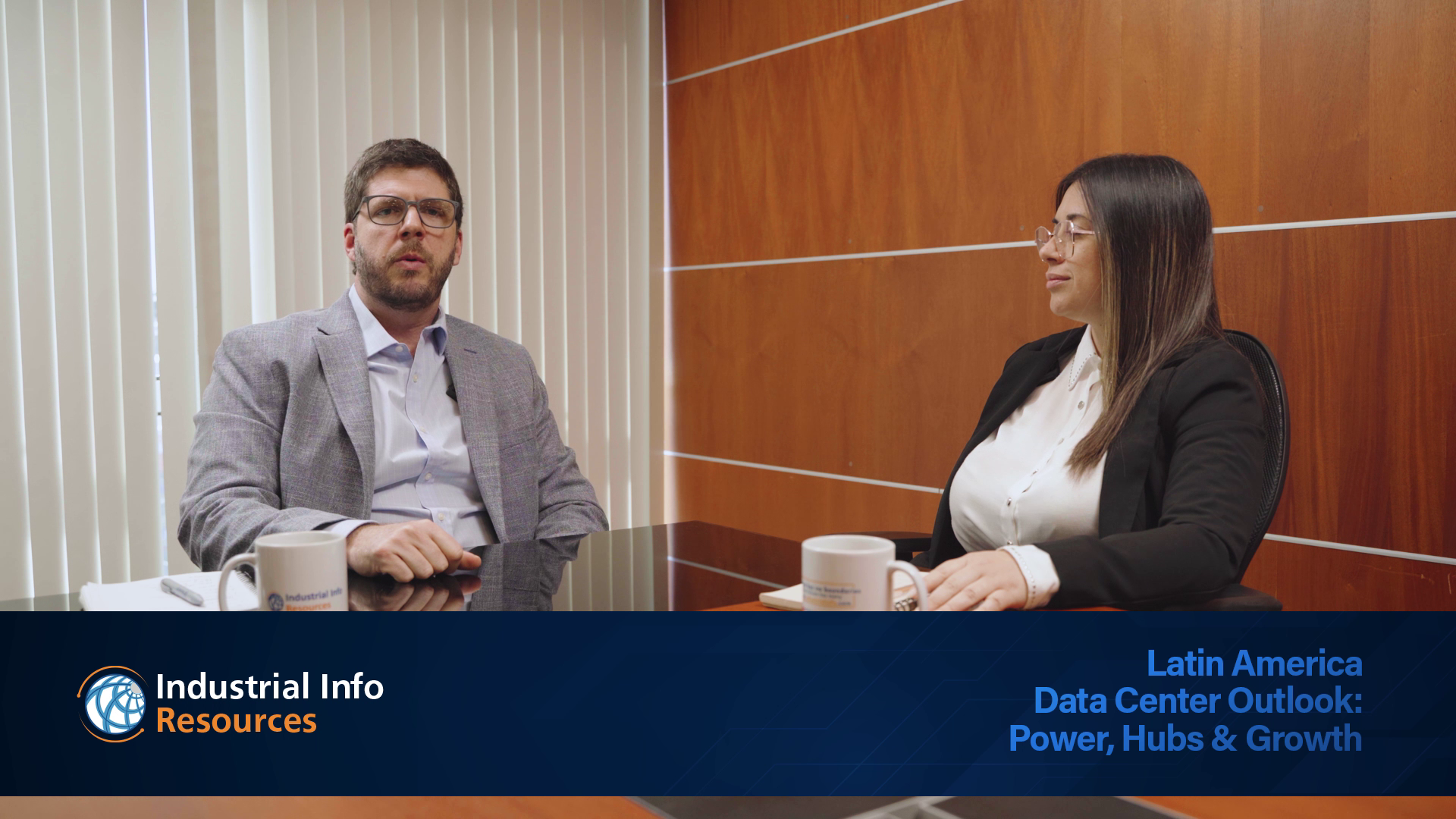
Data Centers
Latin America Data Center Outlook 2026: Power, Hubs & Growth
Can Latin America become the next data center hub? IIR experts unpack 2026 trends across São Paulo, Querétaro, Santiago, and grid limits.
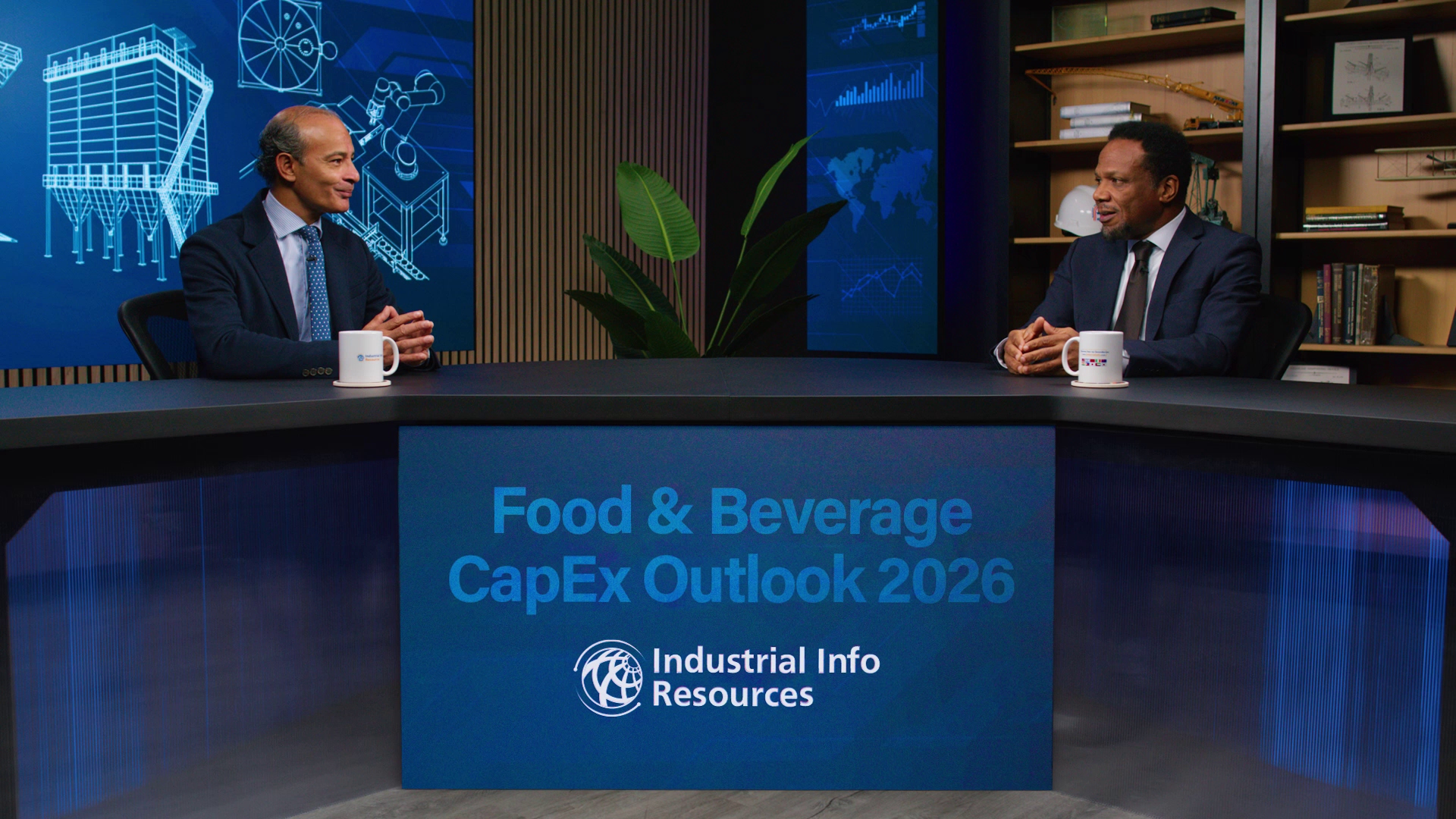
Food & Beverage
Food and Beverage CapEx Outlook 2026: Tariffs, AI, Africa
Why are food producers spending cautiously despite strong demand? IIR experts unpack 2026 CapEx trends across ROI-driven budgets, AI and automation, and emerging markets.
Refining
North America Refining 2026: New Pipelines to PADD 5
Is North America's refining system built for what's coming? IIR experts unpack 2026 trends across PADD 5 pipelines, Canadian crude, and modular refineries.
Pharmaceutical & Biotech
Biomanufacturing Onshoring 2026: GLP-1, CDMO and Reshoring
Could pharma's onshoring boom outlast the tariffs that sparked it? IIR experts unpack 2026 trends across GLP-1 manufacturing, CDMO growth, and biomanufacturing site selection.