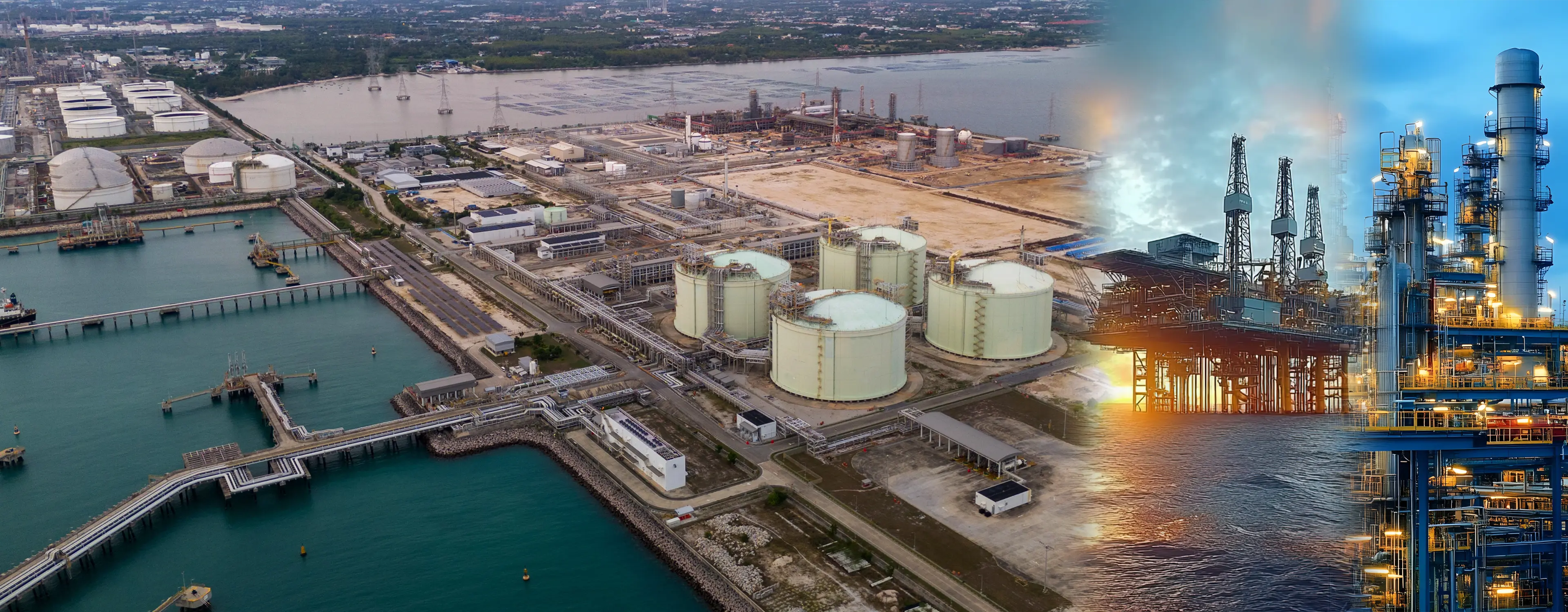
Written by Daniel Graeber for Industrial Info Resources (Sugar Land, Texas)
Summary The European Union (EU) likely switched from an overdependence on piped Russian gas to an overdependence on U.S.-sourced liquefied natural gas (LNG), though longer-term trends point to a gradual decline in the regional use of fossil fuels.
A study released Thursday by the Institute for Energy Economics and Financial Analysis (IEEFA) found that U.S. supplies of LNG took a 57% market share in the European economy during the first half of the year. Germany alone relied on U.S. supplies for 95% of its LNG imports during the period.
Prior to the 2022 invasion of Ukraine, Russia was the primary supplier of natural gas to the European economy. LNG, primarily from the U.S., served as a safety net, though the IEEFA found deliveries were highly volatile. But U.S. deliveries increased 21% annually during the first half of 2025.
"European countries risk over-relying on one supplier if they commit to long-term U.S. LNG contracts," analysts wrote.
By the numbers
The IEEFA added that long-term supply deals are not a guarantee for energy security, as buyers under longer-term contracts face upside risks related to profitability.
Meanwhile, LNG in the U.S. energy sector is in a growth spurt, with U.S. President Donald Trump sanctioning a handful of new facilities since his return to office in January. Creating a council for energy dominance, the president signed executive action that led to a surge in permits for LNG exports.
Commenting on third-quarter results, Kinder Morgan Incorporated (Houston, Texas) said this is clearly the era of U.S. LNG, with exports on pace for a 7% year-on-year expansion by 2026.
But over-dependence may be short-lived. The International Energy Agency (IEA) (Paris, France) last month said a looming oversupply situation could eat into LNG prices and reduce the appetite for future investments. Beyond 2030, global LNG demand won't absorb all the new supplies coming online.
The IEEFA added that if renewable energy gains traction, if non-Russian gas supplies become cheaper than LNG and if demand falters, European economies will avoid some of the trade risks associated with over-dependence.
Based on current market trends, meanwhile, forecasters at the IEEFA said gas demand from Central and Eastern European markets is on pace to decline 24% from current levels by 2050, to 13.2 billion cubic feet per day.
"Central and Eastern European countries have diversified their sources of gas supply," analysts added. "Gas has flowed to demand points even after the end of Russian pipeline gas transit via Ukraine on January 1, 2025."
Key takeaways
About Industrial Info Resources
Industrial Info Resources (IIR) is the leading provider of industrial market intelligence. Since 1983, IIR has provided comprehensive research, news and analysis on the industrial process, manufacturing and energy related industries. IIR's Global Market Intelligence (GMI) platform helps companies identify and pursue trends across multiple markets with access to real, qualified and validated plant and project opportunities. Across the world, IIR is tracking more than 200,000 current and future projects worth $17.8 trillion (USD).
Summary The European Union (EU) likely switched from an overdependence on piped Russian gas to an overdependence on U.S.-sourced liquefied natural gas (LNG), though longer-term trends point to a gradual decline in the regional use of fossil fuels.
From Russia to the U.S.
With the U.S. leading the world in exports of super-cooled gas, an international study found its European customers may have switched their heavy dependency from Russia to U.S. supplies.A study released Thursday by the Institute for Energy Economics and Financial Analysis (IEEFA) found that U.S. supplies of LNG took a 57% market share in the European economy during the first half of the year. Germany alone relied on U.S. supplies for 95% of its LNG imports during the period.
Prior to the 2022 invasion of Ukraine, Russia was the primary supplier of natural gas to the European economy. LNG, primarily from the U.S., served as a safety net, though the IEEFA found deliveries were highly volatile. But U.S. deliveries increased 21% annually during the first half of 2025.
"European countries risk over-relying on one supplier if they commit to long-term U.S. LNG contracts," analysts wrote.
By the numbers
- 7% expansion expected in U.S. LNG exports by next year
- 24% decline in European demand for gas by 2050
- 21% increase in annual LNG deliveries to EU from the U.S. in the first half of 2025
The IEEFA added that long-term supply deals are not a guarantee for energy security, as buyers under longer-term contracts face upside risks related to profitability.
Meanwhile, LNG in the U.S. energy sector is in a growth spurt, with U.S. President Donald Trump sanctioning a handful of new facilities since his return to office in January. Creating a council for energy dominance, the president signed executive action that led to a surge in permits for LNG exports.
Commenting on third-quarter results, Kinder Morgan Incorporated (Houston, Texas) said this is clearly the era of U.S. LNG, with exports on pace for a 7% year-on-year expansion by 2026.
But over-dependence may be short-lived. The International Energy Agency (IEA) (Paris, France) last month said a looming oversupply situation could eat into LNG prices and reduce the appetite for future investments. Beyond 2030, global LNG demand won't absorb all the new supplies coming online.
The IEEFA added that if renewable energy gains traction, if non-Russian gas supplies become cheaper than LNG and if demand falters, European economies will avoid some of the trade risks associated with over-dependence.
Based on current market trends, meanwhile, forecasters at the IEEFA said gas demand from Central and Eastern European markets is on pace to decline 24% from current levels by 2050, to 13.2 billion cubic feet per day.
"Central and Eastern European countries have diversified their sources of gas supply," analysts added. "Gas has flowed to demand points even after the end of Russian pipeline gas transit via Ukraine on January 1, 2025."
Key takeaways
- U.S. LNG filled the Russian void in European markets
- There could be an oversupply situation after 2030
- European markets are diversifying
About Industrial Info Resources
Industrial Info Resources (IIR) is the leading provider of industrial market intelligence. Since 1983, IIR has provided comprehensive research, news and analysis on the industrial process, manufacturing and energy related industries. IIR's Global Market Intelligence (GMI) platform helps companies identify and pursue trends across multiple markets with access to real, qualified and validated plant and project opportunities. Across the world, IIR is tracking more than 200,000 current and future projects worth $17.8 trillion (USD).
/iirenergy/industry-news/article.jsp
Want More IIR News?
Make us a Preferred Source on Google to see more of us when you search.
Add Us On Google
Loading...
Refer This Article
Ask Us
Have a question for our staff?
Submit a question and one of our experts will be happy to assist you.

Explore Our EnergyLive Tools
EnergyLive Tools provide instant insight into new build, outages, maintenance, and capacity shifts across key energy sectors.
Learn MoreRelated Articles

Explore Our Enery Industry Reports
Gain the competitive edge with IIR Energy’s suite of energy market reports, designed for traders, analysts, and asset managers who rely on verified, real-time data.
Learn MoreIndustry Intel
-
From Data to Decisions: How IIR Energy Helps Navigate Market VolatilityOn-Demand Podcast / Nov. 18, 2025
-
Navigating the Hydrogen Horizon: Trends in Blue and Green EnergyOn-Demand Podcast / Nov. 3, 2025
-
ESG Trends & Challenges in Latin AmericaOn-Demand Podcast / Nov. 3, 2025
-
2025 European Transportation & Biofuels Spending OutlookOn-Demand Podcast / Oct. 27, 2025
-
2025 Global Oil & Gas Project Spending OutlookOn-Demand Podcast / Oct. 24, 2025