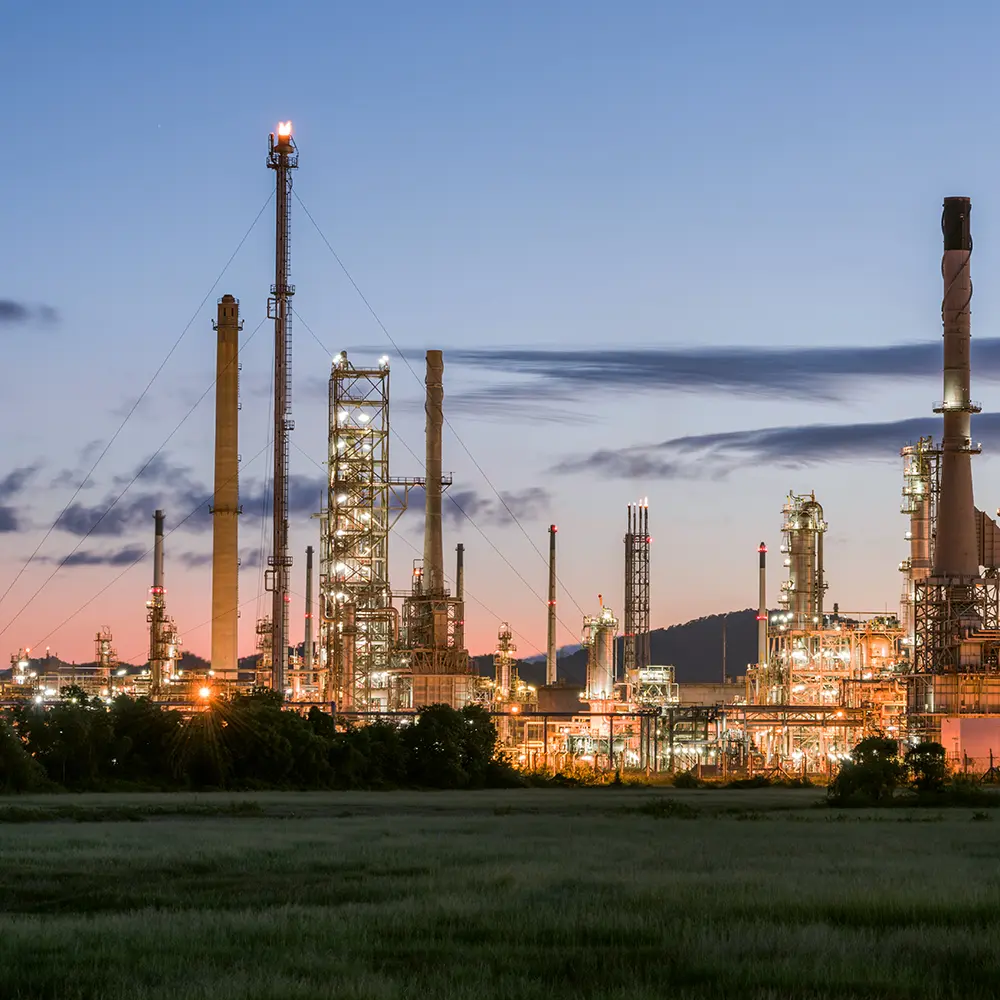
Podcast Overview
What’s driving new investment across Argentina, Chile, and Uruguay, and how is each economy carving out its own role in the global investment landscape? In this episode of Navigating the Currents of Change, Renzo Castillo, Assistant VP for Metals & Minerals in Latin America, is joined by Leandro Londero, Assistant VP for Oil & Gas in the region, to unpack the trends reshaping the Southern Cone.
They explore how Argentina’s RIGI regime is unlocking Vaca Muerta and copper megaprojects, how Chile’s renewable energy boom is powering a new wave of mining and data center investment, and why mining and power generation remain the region’s two dominant industries. They close by looking ahead to how the balance of investment across the three countries could shift in the years to come.
One thing is clear: mining and power will keep anchoring the region, but the mix around them is changing.
Presenters

Video Language
Renzo Castillo (00:00):
The global industry is going through a process of change. The energy transition, the development of new technologies, the search for alternative fuels, and the need to diversify supply chains are changing the way companies decide where to invest. Additionally, there is an increasingly clear trend: reducing global concentrated dependence on markets like China and developing strategic alliances. In this scenario, new regions are emerging that are capable of providing energy, minerals, food and essential raw materials.
Today, in a new Industrial Info podcast, we analyze the Southern Cone region: Argentina, Chile and Uruguay. Three countries with very different economies and industrial skills, but that can find new opportunities in this new global map. At Industrial Info, reliable industrial intelligence has been the core of our work for the last 40 years. Built through human research, telephone verification, and updates throughout the life of every project.
My name is Renzo Castillo, Assistant VP for the Latin American region in the Metals and Minerals industry, and today I have the pleasure of being joined by Leandro Londero, Assistant VP for the Oil and Gas industry in the region, where together we will analyze the trends and projections for the Southern Cone region. Leandro, when we are preparing this podcast, there was something that quickly caught our attention. Chile and Argentina concentrate a large part of the project activity in the region, not only because of the volume of their investments, but also because of the scale and diversity of their investments.
Now, if we look at where that investment is going, some fairly clear trends emerge where the metals and minerals industry and the power generation industry take the top spots, followed by the manufacturing and oil and gas industries. In fact, nearly two thirds of the investment we are tracking in the region is concentrated in just two sectors, which are the mining sector and the power generation sector. But when we drill down to each country, that is where some interesting differences start to appear. So I would like to start the conversation, Leandro, by having you tell us about Argentina, about this country's projections and what the main trends being observed are.
Leandro Londero (02:25):
Perfect. Well, in Argentina. The clearest trend that has been dominating the market over these last 2 or 3 years is mainly oriented or rather, is focused on the reorientation of investments toward industrial activities that have export capacity and can generate new foreign currency to enter the country. This goes hand in hand, of course, as a key instrument that this government is adding to the RIGI, right.
The RIGI incentive regime for large investments, which focuses on strategic industrial activities for the country, such as metals and minerals, and the extraction and production of oil and natural gas. Also within the general RIGI portfolio, other industries are included, such as power generation, infrastructure, and port logistics. Just to mention one example, we have within the portfolio of projects already approved in the RIGI, the Timbers Terminal project in Santa Fe, which is aimed at improving the efficiency of the Paraguay-Paraná waterway, one of the main export routes, especially for the country's grain trade.
Particularly for the oil and gas sector, investments within the RIGI are aimed at improving or boosting the production capacity of Vaca Muerta, especially with logistics infrastructure projects that aim to unblock those bottlenecks that exist, to be able to really take advantage of the production potential of the unconventional field. Among the approved projects, we find, for example, the VMOS or Vaca Muerta South Pipeline, which is already under construction and is a pipeline that crosses that starts in Neuqué. To be able to carry crude from the Neuquén basin to the Rio to the Rio Negro coast for export.
This, which will start operating now in December 2026, creates a new crude export route in Argentina that previously did not exist, right? However, we also have to keep in mind that not all crude investments are aimed at export. We also see cases of some internal private players in the country who are betting on the readaptation or upgrading of their refineries, to be able to adapt the recipe of these plants to the reception of this light crude that comes from Neuquén.
Among other projects recently announced for the RIGI, we also have to mention the San Matias gas pipeline, not just the pipeline, but actually the entire investment portfolio comprising the Southern Energy Consortium, which plans to start exporting LNG starting in 2027 with a first floating liquefaction unit with an estimated capacity of 3.3 Mtpa, 3 million metric tons per year, and a second floating liquefaction unit that would be added starting in 2028. But in general, the export capacity outlook seen today for Argentina is much broader, if we take into account the Argentina LNG project led by YPF, which does not yet have final investment approval but has a goal of reaching an export capacity of 30 Mtpa by the end of the decade.
Renzo Castillo (05:23):
Excellent. And if we look deeper into the RIGI, currently, the RIGI has 23 approved projects, of which the vast majority are oriented towards the mining portfolio. Now, if we look at the projects that are awaiting approval by the RIGI, the portfolio is oriented towards the oil and gas industry, which is perhaps the trend you are telling us about today, where the oil and gas industry would move to take first place, let's say, in the investment ranking.
And this brings up a question about the RIGI. These projects we see today in Argentina. Are they here thanks to the RIGI? Or were they already part of the country's portfolio and that of Argentina's main players?
Leandro Londero (05:59):
In general, we see a combination of scenarios for both cases you mentioned. Both for projects already approved within the RIGI portfolio and those still under evaluation. Some projects are emerging due to the implementation of this RIGI, especially those linked to the country's gas chain, mainly plants dedicated to fractionation of natural gas liquids for the production of LPG, ethane, propane, and others. But the bulk of the investment is focused on projects that already existed in the portfolios of the country's major players, which hadn't yet moved off the drawing board or reached advanced engineering stages due to pre-feasibility, lack of funding or permits, among other things.
Renzo Castillo (06:46):
In the mining industry, we see a dynamic quite similar to what you mentioned in Oil and Gas, where many projects now linked to the RIGI were already part of the country's portfolio, and now find through this tool, a way to move forward in the in the process or the project's lifespan. In copper, one of the most significant moves in the country is the Vicuna project, which has also been around for a long time, but was recently boosted by BHP's arrival in partnership with Lundin Mining, aiming to develop two deposits, Jose Maria and Filo del Sol, under a new structure. And this structure has the potential to transform the copper projects in Argentina.
To give you some context, this investment in the Vicuna project is said to be an initial $9 billion, with the potential to double that amount. In parallel, lithium continues to be one of the main investment focuses in the country. In recent years, for example, we've seen companies arrive in the country like South Korea's Posco with its Sal de Oro project, or even Rio Tinto's arrival through the acquisition of Arcadium Lithium and the Rincon project. Now, these projects I'm mentioning are also already included under the RIGI or awaiting approval for expansion stages.
So all this indicates that for both lithium and copper, interest in these minerals will continue. And the country's challenge will no longer just be attracting new investment or expanding its project, portfolio. But ensuring these projects, as you said, move past the plant planning stage and reach engineering or even construction stages. Leandro. Colloquially, in Argentina, people are talking today about a new RIGI or the super RIGI. What information do you have on that?
Leandro Londero (08:24):
Well, the super RIGI is still just a bill. So far, it only has partial approval. Officially, its name is the Incentive Regime for Large Investments in New Industries. Right? And the goal of this bill is to be able to replicate the success story we saw in the RIGI for industries like mining and oil and gas, but for industrial sectors that don't have development within Argentina yet.
For example, they're talking about investments for data centers, investments for semiconductor production, nuclear energy, nuclear reactors. And an interesting point also connected to what you are telling us about investments for lithium extraction. It's expected that with the arrival of the Super RIGI, projects can be added to the Argentine portfolio related to lithium refining and the production of modules, cells and packs for the production of lithium storage batteries within the country.
Here I would like to clarify that although these projects are being considered within the RIGI, we shouldn't confuse them with investments related to energy storage plants exclusively for energy storage, which is an industrial sector that's starting to gain momentum in Argentina. An industrial sector in growth with the AlmaGBA and AlmaSADI tenders, which seek to incorporate energy storage plants in the country's strategic nodes to be able to fortify Argentina's distribution network.
But I think I consider that the incorporation of the super RIGI, if the bill gets approved, could bring new investments to the sector, which is still a sector, well, in a growth stage, right? If we compare it with other sectors, perhaps, or with other economies that already have more experience or that have a more mature energy infrastructure, as is the case of Chile, for energy storage. Within the Industrial Info Resources database, we registered 87 projects that have BESS requirements for Argentina. On the other hand, if we compare it with Chile, which as I mentioned, is much more mature, the projects amount to more than 300.
Renzo Castillo (10:37):
And this is directly linked to the fact that Chile has consolidated itself as one of the most active markets in the region in terms of renewable generation.
Those 300 projects you mentioned with BESS requirements are associated with more than 460 renewable generation projects, with a clear predominance of solar generation, followed by wind. Now, this trend in Chile doesn't only respond to the growth of generation or the growth of a greater electricity supply, but it's also linked to a greater demand for energy by other industries. Industries that we've been discussing today, such as mining, data centers or even chemical plants where more and more capacity, more stability, is needed. But above all, having greater availability of the electricity supply.
Within this same energy transformation process, green hydrogen also appears where Chile was one of the pioneers, one of the region's pioneer countries in driving this type of investment in adopting this type of investment, and it still continues to concentrate the largest number of projects in the Southern Cone portfolio. To give you some context. Currently in the Southern Cone, we're tracking 86 green hydrogen projects, and Chile accounts for 52.
Leandro Londero (11:45):
I think that when we started talking about the green hydrogen investment boom, with the emergence of the technology, Chile, within the region, not just the Southern Cone, but all of Latin America, was one of the first countries to adapt to that investment trend. Today, when we talk about the flourishing of new markets, data centers are always mentioned like data centers in general. How do you see the investments for this sector within the country?
Renzo Castillo (12:14):
Well, currently, investments in the manufacturing industry account for 10% of the country's total investment. Within the manufacturing industry, we include data center investments. Investments in data centers in Chile today are being driven by two factors. On one hand, there's the National Data Center plan, which seeks better connectivity for the country. And on the other hand, we have the installation of a new submarine cable named Humboldt, which not only seeks efficiency in the country, but also connection with the region and connection with the world.
In the data center sector, investment is not only oriented towards the search for new installed capacity, but also towards the expansion or efficiency of existing capacity. We're seeing greater relevance of projects in operational efficiency, in improving energy and water consumption, in improving cooling systems, and having greater infrastructure availability throughout the country. Currently, we already have some large project investments such as the Buin Alto project, which includes the construction of four hyperscale data centers, and we even already record investments from international companies such as Amazon or Scala data centers.
Leandro Londero (13:16):
Chile has always been a leader in the region for investments in the mining sector. How are the projections for the industry advancing?
Renzo Castillo (13:26):
Chile is going through a renewal stage. It's a stage of change and its mining industry. To give you some context. The challenge for the Chilean mining industry is no longer just about looking for new deposits or generating a new project portfolio, but the challenge is about sustaining production levels, particularly of copper, necessary to supply local and global demand, which for obvious reasons, due to the drivers we've been talking about today that global demand is increasing.
At the same time, Chile needs to extend the useful life of its mines, of its mature mines, to be able to sustain these production levels, which, with the decrease in mineral grades, require more and more infrastructure, greater investment, and also greater processing capacity. In this context, what we're seeing is that partnerships between companies are becoming more important. In the copper mining industry in Chile, we have the example of the Nuevo Unión project, where two major projects, El Relincho and Moro, were unified. They partnered up a single structure was created to achieve better costs and have higher production.
Recently, we've seen this trend gain relevance with the partnership between the company Codelco and the company Pucobre, which formalized a new partnership to develop the Tovaku copper project. In lithium, we see a similar dynamic. We also hope that new strategic partnerships and new arrivals of new companies in the country can provide greater continuity and further development for the industry.
Leandro Londero (14:54):
When you mention lithium, and especially considering the current global scenario where the the demand for lithium is growing more and more. Do you see Chile's production balance potentially shifting more towards lithium, or at least reaching a certain diversification within the investment portfolio?
Renzo Castillo (15:16):
Well, on one hand, I don't see Chile's mining balance shifting towards lithium, at least in the short term. Copper will continue to be, by a wide margin, the leader, the engine of the country's mining industry. If we look at the investment portfolio of Industrial Info Resources, the copper projects represent almost six times more than lithium investments in the country. And this is also due to a structural difference that the Chilean mining industry is an industry developed over decades, which has great infrastructure, massive operations, and a fully consolidated global demand that is also growing due to, for example, the energy transition.
What can be expected, as you mentioned, is a greater diversification of the country's mining portfolio, where lithium has an important space to continue gaining market share. And one of the moves, one of the strategic partnerships I mentioned earlier in copper. We also see in lithium is the partnership between the company Codelco and SQM to develop the Salar de Atacama, to develop the potential of the Salar de Atacama.
This partnership, which has already been formed but only takes effect starting in 2031, is when we will really see the start, the new stage of lithium development, probably in the country. Now, the diversification of the matrix can go even much further than lithium. We're starting to see opportunities linked to rare earths, where the Penco project is the absolute leader. The benchmark today in the country.
But this will probably bring more investment in exploration and also for the development of new projects. And this takes on a special relevance currently in the global situation where governments, where companies seek to diversify precisely the supply chains for these minerals.
Leandro Londero (16:55):
Well, thank you very much, Renzo. And now, well, having analyzed the investment landscape for Argentina and Chile, we move on to Uruguay, which certainly presents a much smaller economy and with a much more selective industrial scale. But it certainly presents some similarities when we talk about investment trends, right? Uruguay's small internal market necessarily forces investments to be oriented towards an export capacity.
And the trends that have been leading investments within the country in recent years are linked to strengthening the country's energy matrix, reducing fuel imports from Argentina, and achieving greater autonomy in terms of its agricultural and livestock industry. In addition, new investment sectors are emerging, such as the alternative fuels industry with the manufacture of SAF, HVO, biodiesel and other biofuels, where the project to repurpose the La Teja unit, the La Teja refinery for the production of biofuels, stands out.
And also an interesting point here is that it's already being considered. There's already talk of the possibility of La Teja operating solely from organic materials for production. An interesting case, because it would be one of the first refineries in the entire continent to be fully converted. For now, in any case, this is just a project that is in the evaluation stages.
But anyway, Renzo, to wrap up today's broadcast and also to share a more concrete look at investments with the listeners, what is the outlook that is expected or that we observe within Industrial Info Resources for the Southern Cone from now until the end of the year and 2027?
Renzo Castillo (18:46):
Well, as we mentioned at the beginning, they are very different economies. Therefore, the analysis we can make is a very global analysis. It's a very particular region. And if we look towards 2027, we are talking about investments exceeding $240 billion that have a predicted start of construction in this time period between 2026 and 2027. But now, if we focus on only projects that have a high probability of starting construction in this period, this number is reduced to $23 billion and is distributed across 600 projects.
The composition of the portfolio in this period is going to remain quite structured, as we have been discussing, with the main sectors always at the head. Both mining and power generation. But it is important to highlight how industries, such as the manufacturing industry driven by data centers, oil and gas, driven by the demand that you have mentioned very well, particularly from Argentina, and with the tax benefits that the country is promoting for that industry, are going to drive investments towards 2026, towards the remainder of 2026 and 2027.
Leandro Londero (19:58):
Perfect. Yes. It's also interesting for Argentina just to offer a conclusion or a more general look at what's happening with the market in that country. It's a combination of factors. On one hand, we have the RIGI, the inclusion of the RIGI, and on the other hand, also timing that was correctly taken advantage of. We've been talking lately about how global geopolitical tensions and the escalation of wars in different parts of the world have considerably raised the price of crude oil, natural gas, and LNG, and Argentina has managed to position itself correctly in this landscape, taking advantage of the price hike to increase its production and accelerating investments to capitalize on the margin window currently observed.
This is also closely linked to what we shared at the beginning of this podcast, right? Geopolitics is also playing an increasingly relevant and important role in industrial investments, where competition for critical minerals, energy, and access to new supply sources is modifying investment decisions and also forcing companies and governments to create new agreements, new investment rules, regimes to promote them, and so on.
Renzo Castillo (21:07):
Let me interrupt you, Leandro. This year, a partial trade treaty was signed between the European Union and Mercosur and moving beyond the Southern Cone. But since this could affect the economies of Argentina and Uruguay, do you think this will bring some boost to investments for Mercosur, or particularly for Argentina and Uruguay?
Leandro Londero (21:29):
What was signed this year, in January of this year and came into effect in May 2026, is an interim agreement for the treaty between the European Union and Mercosur. We must also keep in mind that this is a treaty that has been under discussion for many years. What was achieved starting in May of this year is a phased reduction of tariffs. Also limited to tariff quotas for various industrial sectors. But the main boost or benefit is aimed at the entire agricultural and livestock sector for both Uruguay and Argentina.
Renzo Castillo (22:01):
I imagine that the European Union's overall import capacity under the Mercosur treaty will largely depend on the specific processing potential and the level of added value that they can successfully develop within Europe in this particular case. Could this enable the import of hydrocarbons, fuels, or even critical minerals from Argentina, for example?
Leandro Londero (22:28):
Particularly for the critical minerals sector, there's already a tariff authorization. The import tax for the European Union is already being reduced for critical minerals like lithium. We also have to keep in mind that, for example, copper was never taxed for import from the European Union. Lithium was. We've already gone from 5.5 to about 4.5%. And it's expected that in January of next year, 2027, the next reduction will be applied, and the tariff tax will continue to be reduced until it reaches 0% in 2030, which will give Argentina more competitiveness compared to other producing countries in the region like Chile, where they already have this 0% tax benefit for exports to the European Union.
But well, here we also have to take into account what the import capacity is. And as you were saying, of processing that raw material from the European Union, only 80% of imports are concentrated in Chile. They are concentrated in the Chilean market. That is to say that the production capacity itself of the European Union is not that much. What the Mercosur agreement could at some point aim for is to attract the expertise of European Union investors to extra capital activities, to extra intensive extraction activities within Mercosur, particularly in Argentina, perhaps in Brazil.
Renzo Castillo (23:48):
With this, we conclude this edition of Navigating the Currents of Change. Thank you, Leandro, once again for all your participation and comments as we move towards the Answer Age at Industrial Info, we believe that reliable intelligence begins with researched, verified, and updated data. Artificial intelligence can change the way in which we access data, but the quality of its response will always depend on the quality of the data that supports it.
Thank you very much again to our listeners for being present today. In case you want to address any of the data or reports of what we have discussed today, you can consult the data on the screen. We'll see you in the next podcast.
Recent Podcast Episodes
Metals & Minerals
Mining Capital Spending 2026: Copper, Rare Earths, Aluminum
Is a new mining supercycle underway? IIR experts unpack 2026 trends across copper, critical minerals, and Middle East aluminum.
All Industries
US Craft Labor Outlook 2026: Wages, Per Diems, Data Centers
Why are wages and per diems still climbing across US construction? IIR experts unpack 2026 craft labor trends across data centers, per diems, and apprenticeships.
Metals & Minerals
Brazil Critical Minerals 2027: Rare Earths, Lithium, Copper
Is Brazil's mining story still just about iron ore? IIR experts break down 2027 trends across rare earths, lithium, and government financing.
Food & Beverage
Food and Beverage CapEx Outlook 2026: Tariffs, AI, Africa
Why are food producers spending cautiously despite strong demand? IIR experts unpack 2026 CapEx trends across ROI-driven budgets, AI and automation, and emerging markets.