Production
Bakken Formation: Hydrocarbon Infrastructure Can't Keep Up with Rising Production
Hydrocarbon producers in the Bakken Formation are battling a shortage of transportation infrastructure to get their crude oil, natural gas and natural gas liquids (NGLs) to market, speakers told a conference in Denver last week.
Released Tuesday, November 01, 2011
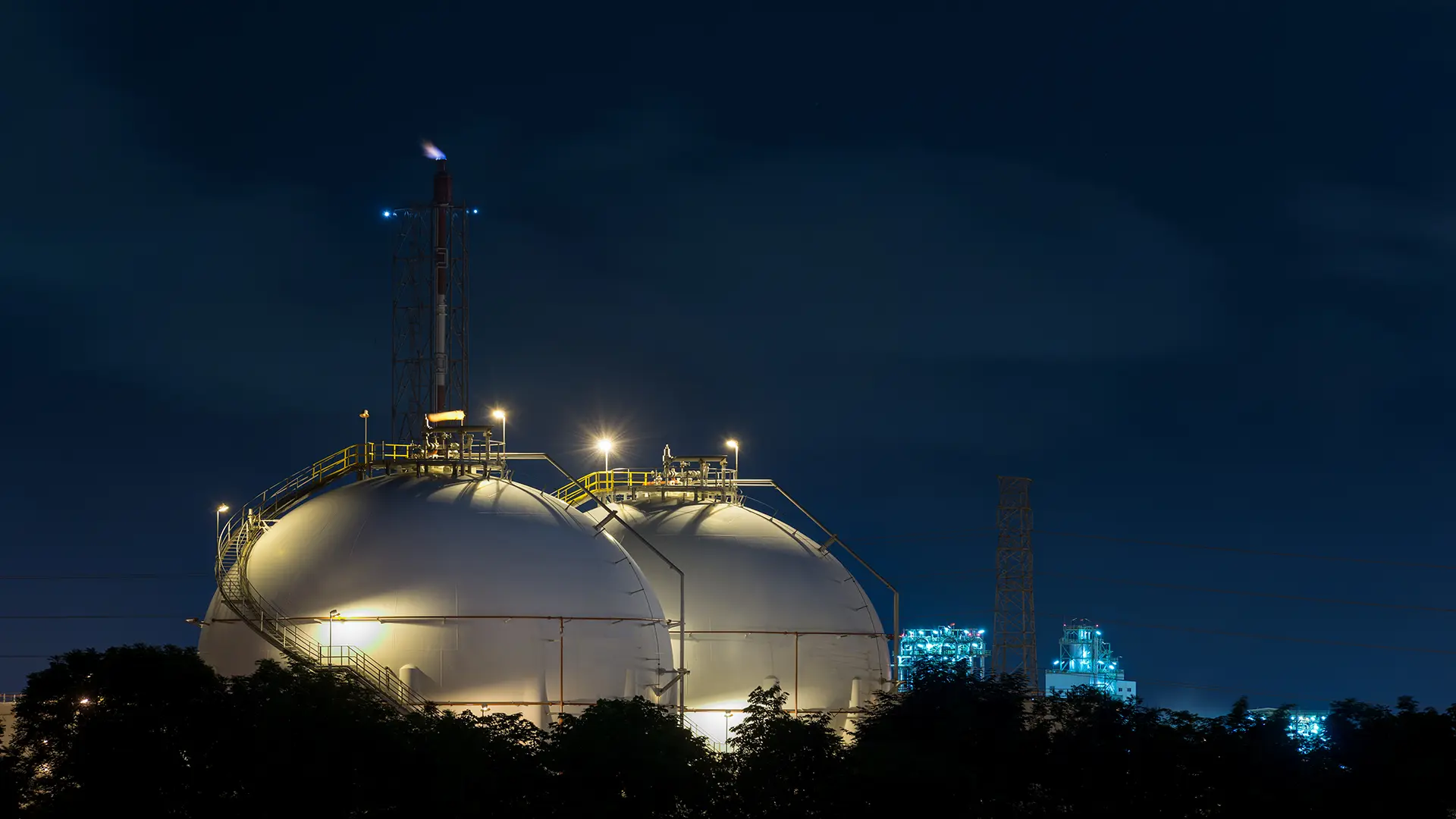
Written by John Egan for Industrial Info Resources (Sugar Land, Texas)--Hydrocarbon producers in the Bakken Formation are battling a shortage of transportation infrastructure to get their crude oil, natural gas and natural gas liquids (NGLs) to market, speakers told a conference in Denver last week. The shortfall is being gradually addressed by a bevy of construction projects, but speakers and conference attendees predicted that the region's production of crude oil, natural gas and NGLs will continue to exceed its processing and transportation capacity for the next two to three years.
"The economics of operating in the Bakken are driven by midstream processing capacity and connectivity to end markets," Jodi Quinnell, a senior energy analyst at BENTEK Energy LLC (Evergreen, Colorado), told about 350 attendees at Infocast's 2nd Annual Bakken Infrastructure Finance & Development Summit. "These constraints are limiting the economic attractiveness of the Bakken," though the region still offers producers attractive returns, she added. For more on the opportunities and the infrastructure needs of the Bakken, see October 26, 2011, article - Bakken Formation Has More Oil and Gas Than Prudhoe Bay, CEO Claims; October 27, 2011, article - North Dakota's Electric Grid Strained by Dramatic Growth of Oil & Gas Drilling, and October 28, 2011, article - Oil & Gas Drilling Boom Creates 'Gold Rush' in North Dakota's Bakken Formation.
Quinnell pointed out that an inadequate hydrocarbon processing and transportation infrastructure is causing Bakken producers to flare nearly 30% of their natural gas production each year. Across the nation, producers flare about 1% of their natural gas per year.
"That's what happens when you focus on production without also focusing on infrastructure--you put the cart before the horse," observed Ed Metz, a vice president at PennWell Corporation (Tulsa, Oklahoma). The mismatch between the region's hydrocarbon production and its processing/transportation infrastructure is one reason why he called the Bakken "the most challenged of all unconventional plays."
Four natural gas-processing plants with total capacity of 225 million cubic feet per day (MMCF/d) are scheduled to come online this year in the Bakken, increasing the area's gas-processing capacity by nearly 50%, Metz told conference attendees. Three additional projects totaling 350 MMCF/d are scheduled to come online in 2012 and 2013, which will bring the region's gas processing capacity to about 1 billion cubic feet per day (BCF/d). At that point, the area's gas-production capabilities and gas-processing capacity should be balanced, he predicted.
Currently there is a better match between production capabilities and pipeline capacity for natural gas liquids (NGLs) in the Bakken. But Metz and Quinnell noted that three NGL pipelines are scheduled to be built in the area over the next two years, which could result in excess pipeline capacity vis-à-vis NGL production levels.
NGL pipeline projects proposed by ONEOK Incorporated (NYSE:OKE) (Tulsa, Oklahoma) and Mistral Energy Incorporated (Calgary, Alberta) are scheduled to be operating by this time next year. They would add about 105,000 barrels per day (BBL/d) of new capacity to the area's existing 25,000 BBL/d of NGL pipeline capacity. These two projects would ease the current pinch on NGL out-bound transportation capacity. Both projects have the option of expanding by a total of 65,000 additional BBL/d.
If a proposed third NGL pipeline, the Alliance-Hess project, is built as scheduled, it would add an additional 20,000 BBL/d of out-bound transportation capacity by the end of 2013. "If all of these proposed projects come online as scheduled, there will be an overbuild of NGL pipelines," Quinnell said.
Turning to crude oil, PennWell's Metz told conference attendees, "The Bakken's existing crude oil pipeline system has been insufficient to take advantage of the recent explosive growth in oil production. In the early years of the Bakken boom, local politicians were skeptical of the need for new infrastructure" because they remembered previous oil booms that went bust, leaving cities like Williston on the hook for unneeded infrastructure.
The current shortfall of crude oil pipeline capacity is being remedied by construction of new pipelines. Three crude oil pipelines with a total capacity of 117,000 BBL/d are scheduled to come online this year. Two additional pipelines totaling 125,000 BBL/d are scheduled to begin operating next year. And three more crude oil pipelines with capacity totaling 345,000 BBL/d are scheduled to come online in 2013.
But today, there is a 50,000-BBL/d gap between crude oil pipeline capacity and the region's crude oil production. That has forced producers to use trucks and trains to transport some portion of their oil to storage terminals and transshipment points. "Oil pipeline capacity will remain tight through 2013 until projects under development come online," said BENTEK's Quinnell. "This will force increased near-term reliance on transport by rail and truck. Even given planned oil pipeline additions over the 2013-16 period, we see little slack in the transportation capacity going forward, as production volumes are scheduled to rise sharply over the next five years."
Insufficient crude oil pipeline capacity out of the Bakken has been one factor behind a hefty price penalty imposed on Bakken producers in recent years, Quinnell continued. In recent years, Bakken crude has sold for $8-$17 less per barrel compared to West Texas Intermediate (WTI), though she and other speakers acknowledged that the lack of outbound crude oil pipeline capacity out of Cushing, Oklahoma, is also partly to blame for the price penalty.
"Other prolific unconventional hydrocarbon plays are benefitting from either close proximity to existing processing and transportation infrastructure, like the Eagle Ford and Haynesville formations, or are located near demand centers, which is the case for the Marcellus," Metz said. "Unfortunately, this has not been the case with the Bakken."
View Plant Profile - 3010610 3013665 1027244 1051202 3013665
View Project Report - 300016646 300020041 31000375 300012647 300020041
Industrial Info Resources (IIR), with global headquarters in Sugar Land, Texas, and eight offices outside of North America, is the leading provider of global market intelligence specializing in the industrial process, heavy manufacturing and energy markets. Industrial Info's quality-assurance philosophy, the Living Forward Reporting Principle, provides up-to-the-minute intelligence on what's happening now, while constantly keeping track of future opportunities.
Want More IIR News Intelligence?
Make us a Preferred Source on Google to see more of us when you search.
Add Us On GoogleAsk Us
Have a question for our staff?
Submit a question and one of our experts will be happy to assist you.

Forecasts & Analytical Solutions
Where global project and asset data meets advanced analytics for smarter market sizing and forecasting.
Explore Our SolutionsRelated Articles
-
Both Coasts of Canada Enjoying Energy Sector SuccessJune 22, 2026
-
Canada Set New Record in Crude Oil Production in 2025June 19, 2026

PECWeb Global Market Intelligence Platform
Identify opportunities, anticipate change, and execute with confidence. PECWeb connects the industrial intelligence you need, from projects and assets to operational events, all in one platform.
Discover PecwebIndustry Intel
-
Brazil: Efficiency, Innovation, and Opportunities in the Food & Beverage IndustryPodcast Episode / Jun 12, 2026
-
2026-2027 Investment Radar for Mexico, Central America & the CaribbeanPodcast Episode / May 29, 2026
-
Innovations Shaping the Next Era of Power GenerationPodcast Episode / May 22, 2026
-
The Role of Contract Manufacturing in Global Pharma GrowthPodcast Episode / May 8, 2026
-
2026 North American Labor OutlookPodcast Episode / Apr 24, 2026