Production
Ambani Brothers' Dispute About Gas Prices Could Cost India $820 Million
In one of India's longest-lasting succession rows, Mukesh and Anil Ambani continue to battle against each other in several business sectors, creating...
Released Friday, July 10, 2009
Researched by Industrial Info Resources (Sugar Land, Texas)--In one of India's longest-lasting succession rows, Mukesh and Anil Ambani continue to battle against each other in several business sectors, creating ripples in the country's economy. Ever since the demerger of the parent Reliance Group, the siblings have confronted each other on various subjects and business arrangements, the latest of which has been the dispute about the pricing and supply of gas to Reliance Natural Resources Limited (BSE:532709) (RNRL) (Mumbai).
In 2006, the two brothers had divided the Reliance petrochemical and oil business by means of a family settlement. According to the deal, Reliance Industries Limited (BSE:500325) (RIL) (Mumbai), led by Mukesh Ambani, would develop the gas source at the Krishna-Godavari (KG) basin off the Kakinada coast in the state of Andhra Pradesh, while Anil Ambani's RNRL was ensured a gas supply for a period of 17 years at a standard price of $2.34 per million British thermal units (Btu) for its power plant ventures. RNRL also retained the right to refuse purchase of up to 40% of gas if total production exceeded 53 million standard cubic meters per day, with any extra gas linked to the U.S. consumer price index.
However, based on current market trends, the discovery price of gas at the KG basin was subsequently fixed at $4.2 per million Btu, which is about 79.5% higher than the price quoted in the agreement. The pricing difference has sparked a dispute, with RIL rallying for a higher price. The court battle on the issue has been settled in favor of RNRL, with the Mumbai High Court recently ruling that RNRL is entitled to its share of 28 million standard cubic meters per day of gas at the lower price that was previously agreed. The High Court also directed both the parties to decide other specifics through mutual out-of-court talks.
The variation in gas prices has impacted a few other sectors that are dependant on gas supplies from the KG basin. RIL has already entered into sale-purchase agreements with fertilizer and power companies for the supply of 15 million standard cubic meters per day and 12 million standard cubic meters per day, respectively, at $4.20 per million Btu. Furthermore, RIL is also bound by a production-sharing contract with the government of India, under which it plays the role of a contractor for the KG basin venture, facilitating maximum returns to the Indian State. With the High Court ruling in place, the fertilizer ministry is also keen on obtaining gas at lower prices.
The Indian government, on the other hand, is struggling to strike a balance on optimizing the gas price as well as its revenues. The government is entitled to a royalty of 5% on the KG basin earnings for a period of seven years. If the High Court ruling is not challenged, the Indian exchequer will stand to lose up to $820.17 million, depending on the actual sales price of the natural gas. Any move on the part of the government to enforce a controlled price regime is also bound to affect foreign players operating in the country, including BG Group plc (OTC:BRGYY) (Reading, United Kingdom), BP plc (NYSE:BP) (London, United Kingdom) and Chevron Corporation (NYSE:CVX) (San Ramon, California).
Based on the ruling, RIL would have to supply 28 million standard cubic meters per day of the first block of 40 million standard cubic meters per day of gas, which has been committed to fertilizer and power projects. However, the feasibility of implementing the decision seems remote, since RNRL at present does not have any gas-fired power projects under operation. Its 7,000 MW Dadri project is still in the early conceptual stages and according to the deal, RNRL will not be able to sell the gas to outsiders.
RIL has since moved to the Supreme Court, challenging the High Court directive to supply gas to RNRL at 46% less than the price fixed by the government. Amidst disputes, the company has also started pumping natural gas from the D-6 field in the KG basin. Peak production of 80 million standard cubic meters per day is expected to be attained by the end of this year.
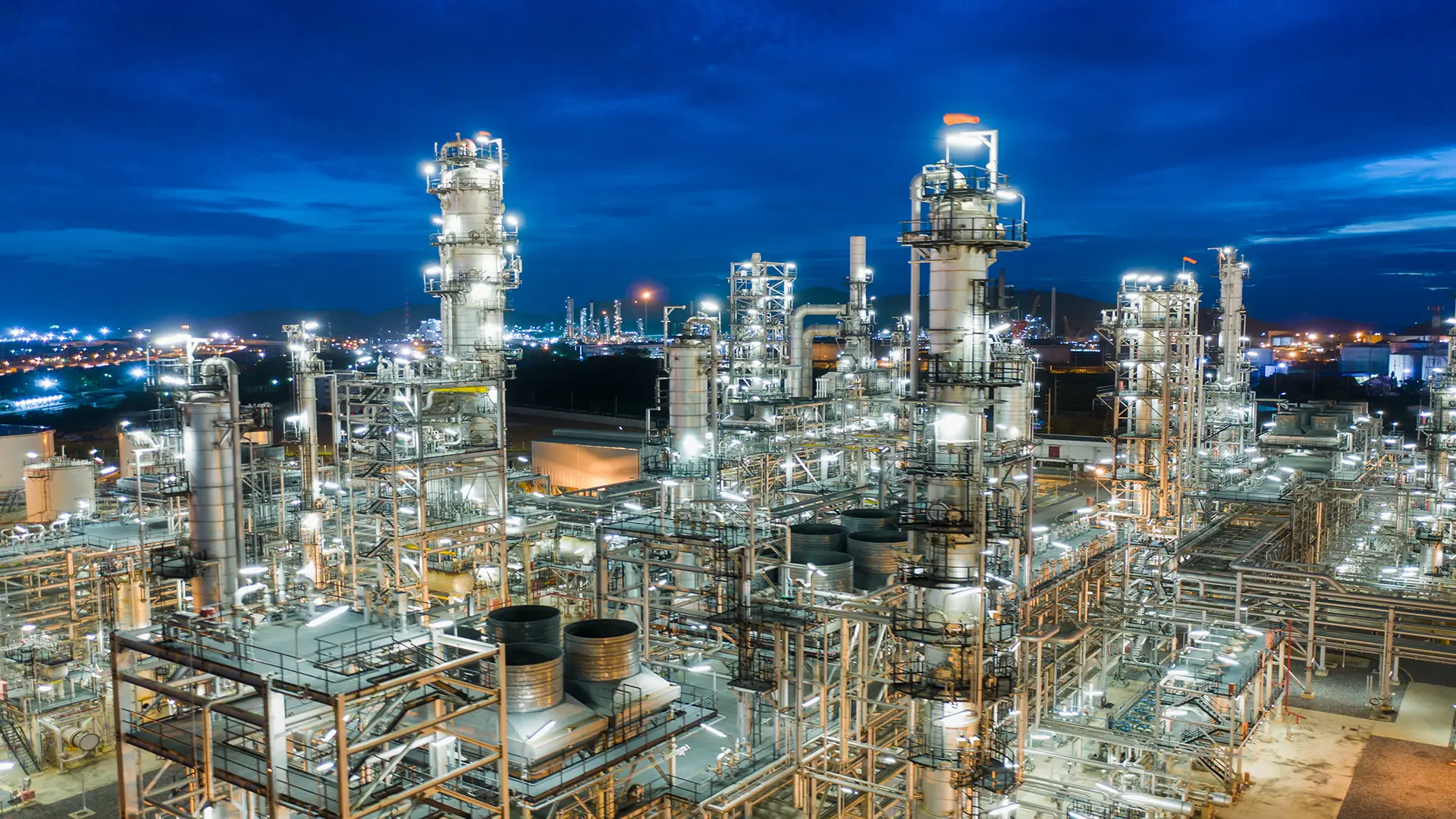
Following the splitting apart of the Reliance Group, Mukesh Ambani took charge of RIL, which primarily deals with petrochemicals and textiles, while businesses pertaining to communication, energy and natural resources were taken over by Anil Ambani under the banner of the Reliance-Anil Dhirubhai Ambani Group (R-ADAG). RIL owns an integrated petrochemical refinery complex in Jamnagar, Gujarat, apart from managing operations at the newly found KG basin gas reserves. Although the other businesses function in a mutually independent manner, the oil and petrochemical sector has remained a bone of contention among the siblings, with the energy business being controlled by one and the fuel sector by the other. Also, the communication sector, originally developed by Mukesh, is now under the control of Anil Ambani's R-ADAG.
Industrial Info Resources (IIR) is the leading provider of global market intelligence specializing in the industrial process, heavy manufacturing and energy related markets. For more than 26 years, Industrial Info has provided plant and project opportunity databases, market forecasts, high resolution maps, and daily industry news.
/news/article.jsp
false
Want More IIR News Intelligence?
Make us a Preferred Source on Google to see more of us when you search.
Add Us On GoogleAsk Us
Have a question for our staff?
Submit a question and one of our experts will be happy to assist you.

Forecasts & Analytical Solutions
Where global project and asset data meets advanced analytics for smarter market sizing and forecasting.
Explore Our SolutionsRelated Articles
-
Canadian Energy Trade Still Tied to U.S. EconomyMay 29, 2026
-
Canada's Ksi Lisims LNG a Slam Dunk, Premier SaysMay 28, 2026

Industrial Project Opportunity Database and Project Leads
Get access to verified capital and maintenance project leads to power your growth.
Discover Our DatabaseIndustry Intel
-
2026-2027 Investment Radar for Mexico, Central America & the CaribbeanPodcast Episode / May 29, 2026
-
Innovations Shaping the Next Era of Power GenerationPodcast Episode / May 22, 2026
-
The Role of Contract Manufacturing in Global Pharma GrowthPodcast Episode / May 8, 2026
-
2026 North American Labor OutlookPodcast Episode / Apr 24, 2026
-
2026 European Metals & Minerals Project Spending OutlookPodcast Episode / Apr 7, 2026