Metals & Minerals
BHP Billiton Consortium to Resume Negotiations on Newcastle Port Congestion Crisis
BHP Billiton Limited (NYSE:BHP) (Melbourne, Australia) has indicated that Newcastle Coal Industry Group (NCIG) is committed to resolving the congestion crisis at the Newcastle. ...
Released Wednesday, September 09, 2009
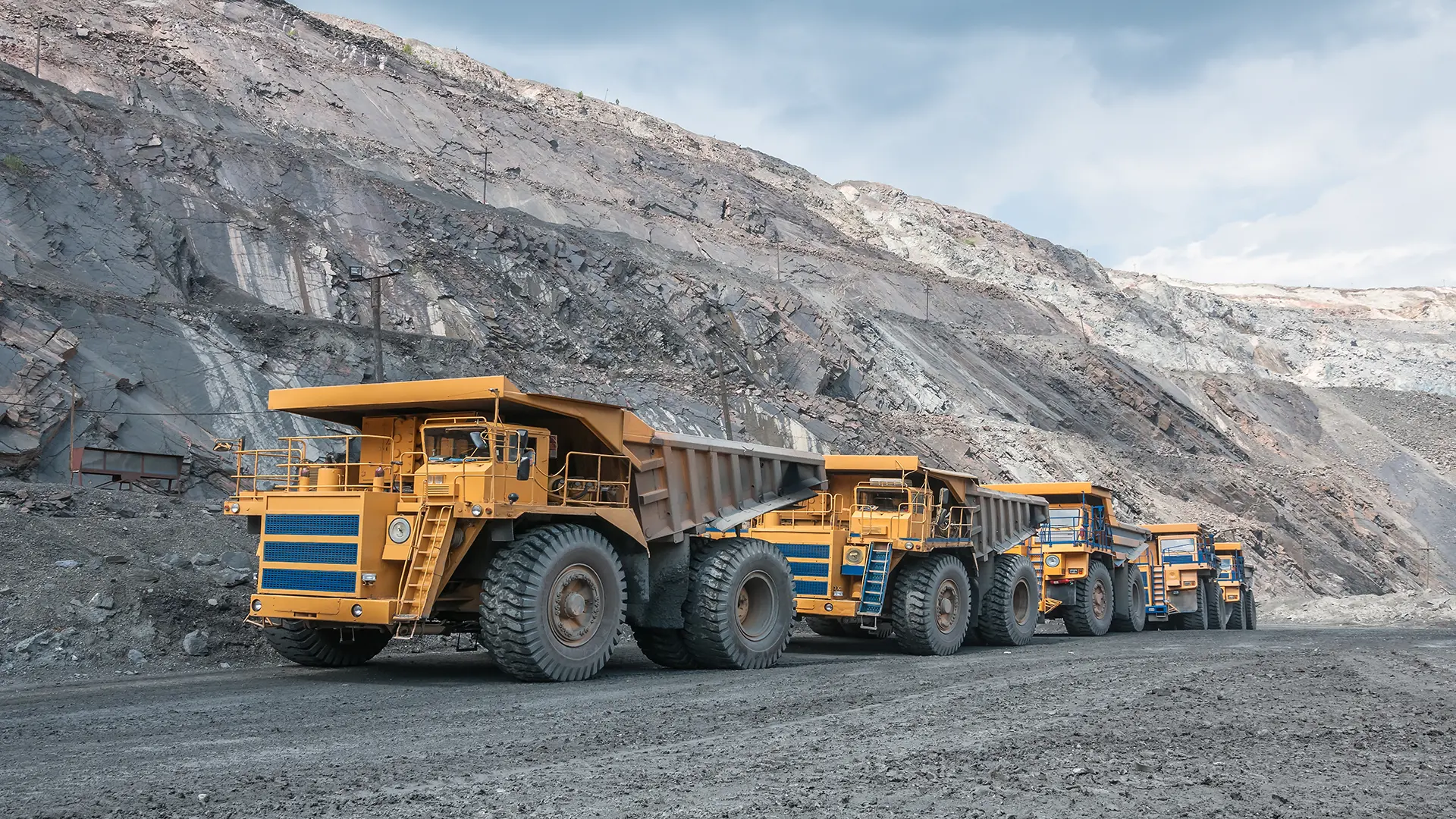
Researched by Industrial Info Resources (Sugar Land, Texas)--BHP Billiton Limited (NYSE:BHP) (Melbourne, Australia) has indicated that Newcastle Coal Industry Group (NCIG), a consortium of Australian coal mining firms, is committed to resolving the congestion crisis at the Newcastle coal port in Australia. The announcement was made after negotiations among BHP Billiton-led NCIG, New South Wales government officials, and port authorities fell through. The consortium is working on an acceptable methodology to share the port's limited shipping capacity. Felix Resources Limited (ASX:FLX) (Brisbane, Australia), WhiteHaven Coal Limited (ASX:WHC) (Queensland, Australia), Centennial Coal Limited (ASX:CEY) (Sydney, Australia), Donaldson Coal Pty Limited (Sydney, Australia), and Peabody Energy Australia (Brisbane, Australia) are the other members of NCIG.
Newcastle, which is one of the world's largest coal ports, has been facing issues related to congestion of vessels and shipments. Following consultation with the state government and other regulatory bodies, the port authorities decided to implement an interim quota system, which would allot space to all coal exporters using the port. This step was taken to make the shipping process quicker and easier. The allocation system was put in place after discussions with the competition regulator of Australia, since it involved competing companies. The proposal, which was then put forth to the NGIC, was thrown into disarray after the consortium missed the August 31 deadline to agree to and comply with the conditions. The proposed interim system will allot quota on a prorated basis at the port, based on the coal producer's production capacity.
The competition regulator was then forced to withdraw the antitrust immunity, which had been offered for the temporary quota system. Experts indicate that this could lead to a surge in the number of ships docked at the port, which could in turn impact the demurrage on coal. On its part, NCIG has stated that it is doing its best to resolve the critical issues relating to the proposal. The group plans to hold talks with the port and state government authorities shortly.
In the long run, the port plans to operate on a "take-or-pay" method, which will ensure that the port's loading and shipping capacity is optimally utilized. Coal-mining companies will have to pay for excess capacity that has been allotted but not utilized. This will ensure that coal producers book excess capacities only after careful consideration and planning. The long-term plan will require cooperation and support from all parties, especially NCIG, which is proposing to build a new loading facility. BHP Billiton is investing about $390 million on the feasibility study for the project.
However, there have been allegations and counter-allegations from both sides regarding the interim and long-term solutions. The port and government authorities have lashed out at NCIG, stating that the consortium is going back on its commitment to the long-term solutions. NCIG on its part considers the proposal to be one-sided and a risky proposition for coal-producing companies. The agreement also requires NCIG to commit to investment and construction of the second phase of the loading facility. BHP Billiton says that it is difficult to agree to this clause since neither the feasibility study nor the related funding arrangements for the second phase of expansion is in place. The group also states that the memorandum of understanding did not stipulate that the deal had to be signed by August 31.
In the meantime, the absence of a quota system could lead to coal producers rushing to export as much coal as possible from the Newcastle port. This is expected to put the port, which is already working at nearly full capacity, in a state of chaos. Freight rates are expected to surge and the queuing of ships is expected to cross the two-year high of 41. On a positive note, port officials are confident that with autumn approaching in the Northern Hemisphere, seasonal demand for coal is expected to decrease. This will reduce both exports and pressure on the port's facilities.
It is critical for coal producers to reach an agreement soon. The absence of a system at the port could lead to confusion regarding how much coal can be exported. This is expected to adversely impact sales targets and mining expansion programs from 2010. BHP Billiton has stated that it will work toward solving the issues in the proposed system. A feasible solution has become imperative for the Newcastle port to resolve the problems and constraints it has faced over the years. This also has adversely affected Australian coal exports, especially during the boom period. Industry experts state that there can be two scenarios at present:
- NCIG and the port and government authorities iron out differences in the present proposal. This will help reinstate the interim quota system immediately and take care of operational issues at the port.
- If an agreement is not reached immediately between the parties, a short-term interim system is to be put in place jointly by the port authorities, NCIG and the New South Wales government. This will help regulate loading and shipping activities at the port. This also will give time for NCIG to resume talks and for parties to reach a mutually acceptable and amicable long-term solution. It also will take care of congestion at the port.
For related news item see July 24, 2009 - Queue at Newcastle Port Increases as Coal Supply Chain Clogs.
Industrial Info Resources (IIR) is the leading provider of global market intelligence specializing in the industrial process, heavy manufacturing and energy related markets. For more than 26 years, Industrial Info has provided plant and project opportunity databases, market forecasts, high resolution maps, and daily industry news.
/news/article.jsp
false
Want More IIR News Intelligence?
Make us a Preferred Source on Google to see more of us when you search.
Add Us On GoogleAsk Us
Have a question for our staff?
Submit a question and one of our experts will be happy to assist you.

Forecasts & Analytical Solutions
Where global project and asset data meets advanced analytics for smarter market sizing and forecasting.
Explore Our Solutions
Industrial Project Opportunity Database and Project Leads
Get access to verified capital and maintenance project leads to power your growth.
Discover Our DatabaseIndustry Intel
-
2026-2027 Investment Radar for Mexico, Central America & the CaribbeanPodcast Episode / May 29, 2026
-
Innovations Shaping the Next Era of Power GenerationPodcast Episode / May 22, 2026
-
The Role of Contract Manufacturing in Global Pharma GrowthPodcast Episode / May 8, 2026
-
2026 North American Labor OutlookPodcast Episode / Apr 24, 2026
-
2026 European Metals & Minerals Project Spending OutlookPodcast Episode / Apr 7, 2026