Written by John Egan for IIR News Intelligence (Sugar Land, Texas)
Summary
Sharply higher costs for gasoline and diesel fuel, a result of the war with Iran, drove up inflation to its highest level in two years, the U.S. Department of Labor reported last Friday.War Drives Up Energy Costs, Inflation
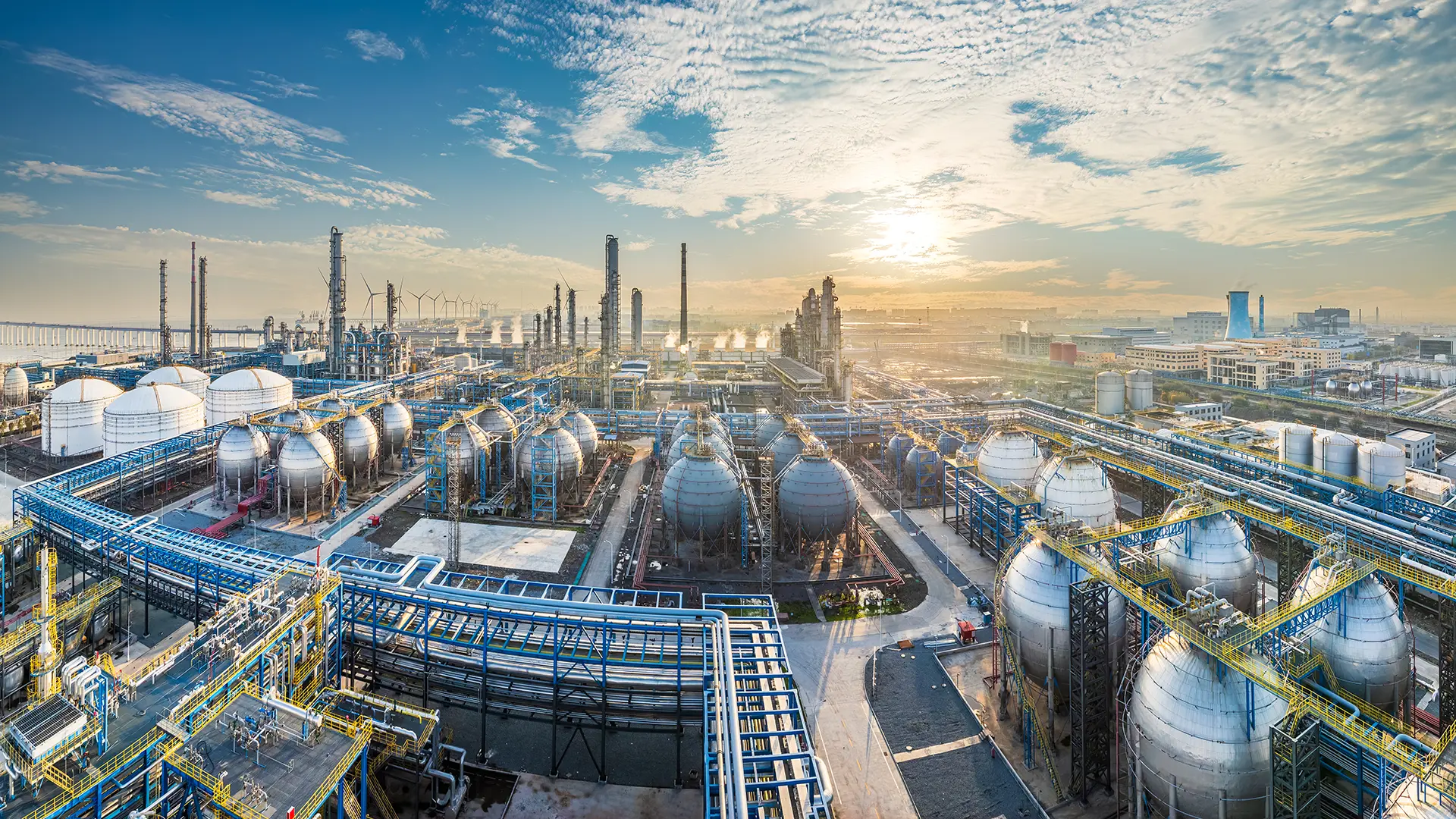
The U.S. Consumer Price Index (CPI) rose 3.3% over the last 12 months, its fastest growth in two years, driven by sharply higher energy costs from the first month of the U.S.-Israeli war with Iran, the U.S. Department of Labor (DOL) reported last Friday. The March seasonally adjusted inflation gain was 0.9% over February's inflation, the department said.According to Industrial Info Resources data, there are 252 operational Petroleum Refining facilities in the United States as well as more than 1,000 active refinery projects, worth $27 billion. Subscribers to the Industrial Info Resources Global Marketing Intelligence (GMI) Petroleum Refining project and plant databases can view the lists of detailed project reports and plant profiles.
The CPI report, the first to measure the economic impact from that war, was grim: The index for energy rose 10.9% last month, the largest monthly increase since September 2005. The gasoline index increased 21.2% in March, the largest monthly increase since the series was first published in 1967, the DOL added. Those numbers reflect seasonal adjustments. The war with Iran began February 28.

Fuel Prices Rise, No Short-Term Relief in Sight
Next-month contract prices for West Texas Intermediate (WTI) crude oil futures have risen about 52% since the war began, to slightly over $102 per barrel in mid-day trading Monday. At the start of the war, stocks initially plummeted but recovered when a two-week ceasefire was announced April 7 by President Donald Trump. The S&P 500 Index was going sideways on Monday after the collapse of weekend peace talks.The average price for all grades of gasoline across the U.S. was about $4.12 per gallon on Monday, a $1 per gallon increase over the last year, reported the American Automobile Association (AAA). But gasoline costs are substantially higher in the West, Alaska and Hawaii, the group added. Residents of Washington state were paying an average of $5.39 for gas while Californians are paying an average of $5.89 per gallon on Monday, AAA said.
Across the nation, motorists paid an average of $5.65 per gallon for diesel on Monday, up about 57% over the $3.59 they paid a year ago, the group added.
News reports have focused on the pain motorists are feeling at the pump. Woes there are adding to concerns over the high cost of food and shelter and job insecurity due to artificial intelligence (AI).
On April 7, the U.S. Energy Information Administration reported that crude oil and refined petroleum product prices rose sharply in the first quarter of 2026, particularly since the start of the war: Brent crude oil, the international benchmark, was up approximately 63% between the start of the war and the end of the first quarter while WTI, the U.S. marker, had risen about 39%. See the EIA chart below on rising crude oil prices for the first quarter.

Trump Abandons Effort to Soothe Anxieties
For most of the seven-week conflict, Trump has tried to downplay the war-driven surge in gas prices as a "short-term increase" that would end once the war ended. In a nationwide address April 1, he tried to reassure the public, predicting the Strait of Hormuz, through which passes about 20% of the world's oil and natural gas, would open up "naturally" when the war ended, bringing down fuel prices.But that hasn't happened: after the president's address, Iran imposed an embargo on ships traveling through the strait. Then, over the weekend, after peace talks between Iran and the U.S. collapsed over, among other things, control of the Strait of Hormuz, Trump imposed a quarantine on ships traveling into or out of the strait, which went into effect Monday.
In an interview Sunday with Fox News' Maria Bartorimo, Trump was less upbeat about the future direction of fuel prices. He suggested that elevated gasoline prices in the U.S. might not fall before the November midterm elections. He added that while he hoped gas and oil costs would drop before the midterms, prices "should be around the same" in November--and might be "a little bit higher."
Transportation fuels were not the only casualty of the Mideast war. Farmers are angry over the rising cost of fertilizer, much of which uses natural gas as a feedstock. Consumers have complained of higher food costs, which stem from increased costs for transportation fuel and fertilizer. Semiconductor manufacturers have warned that without a reliable supply of helium, about one-third of which comes through the Strait of Hormuz, they can't make the chips that power computers, servers and artificial intelligence (AI).
Compared to the U.S., Asian countries are far more dependent on oil and gas that comes through the Strait of Hormuz. Through 2024, according to the EIA, the U.S. imported about 500,000 barrels of crude oil per and condensate day through the strait, accounting for roughly 7% of total U.S. crude imports and 2% of overall domestic petroleum liquids consumption.
By contrast, roughly 89% of the oil and condensate that travels through the strait goes to Asian nations. Asian nations took roughly 80% of liquefied natural gas (LNG) exports that traversed that waterway in 2024, industry sources estimated.
Key Takeaways
- Sharply higher energy prices drove up inflation for March. The Consumer Price Index rose 3.3% over the last year, 0.9% since the prior month.
- This reading was the first taken since the Mideast war began February 29.
- Front-month contracts for WTI are up about 52% since the war began seven weeks ago, to about $102 per barrel on mid-day trading Monday.
- Retail prices for gasoline and diesel also have soared across the nation.
About Industrial Info Resources
Industrial Info Resources (IIR) is the leading provider of industrial market intelligence. Since 1983, IIR has provided comprehensive research, news and analysis on the industrial process, manufacturing and energy related industries. IIR's Global Market Intelligence (GMI) helps companies identify and pursue trends across multiple markets with access to real, qualified and validated plant and project opportunities. Across the world, Industrial Info Resources is tracking over 250,000 current and future projects worth $30.2 Trillion (USD).
/iirenergy/industry-news/article.jsp
false
Want More IIR News Intelligence?
Make us a Preferred Source on Google to see more of us when you search.
Add Us On GoogleAsk Us
Have a question for our staff?
Submit a question and one of our experts will be happy to assist you.

Explore Our EnergyLive Tools
EnergyLive Tools provide instant insight into new build, outages, maintenance, and capacity shifts across key energy sectors.
Learn MoreRelated Articles
-
Energy Reforms Delayed in VenezuelaApril 13, 2026
-
Europe Bracing for 'Prolonged Fuel Disruption'April 13, 2026
-
Nigeria's Refining Sector Undergoing Major TransformationApril 13, 2026

Explore Our Enery Industry Reports
Gain the competitive edge with IIR Energy’s suite of energy market reports, designed for traders, analysts, and asset managers who rely on verified, real-time data.
Learn MoreIndustry Intel
-
2026 Regional Chemical Processing OutlookOn-Demand Podcast / Mar. 2, 2026
-
From Data to Decisions: How IIR Energy Helps Navigate Market VolatilityOn-Demand Podcast / Nov. 18, 2025
-
Navigating the Hydrogen Horizon: Trends in Blue and Green EnergyOn-Demand Podcast / Nov. 3, 2025
-
ESG Trends & Challenges in Latin AmericaOn-Demand Podcast / Nov. 3, 2025
-
2025 European Transportation & Biofuels Spending OutlookOn-Demand Podcast / Oct. 27, 2025