
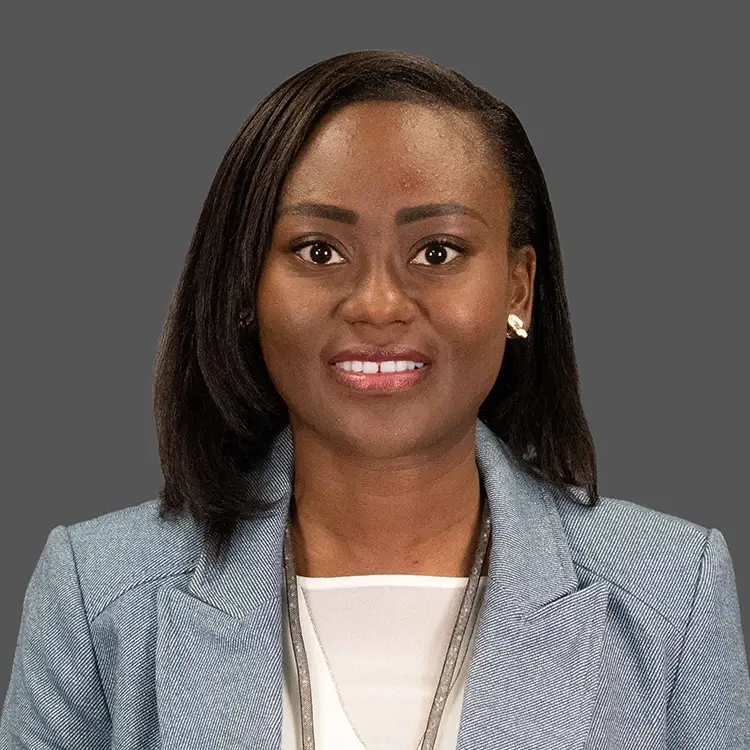
Is the U.S. data center boom a growing wave, a bubble waiting to burst, or the new norm? In this episode, Shaheen Chohan (Sr. VP of Global Analytics) sits down with Foluso Nwanguma (VP of Research – Data Centers, NA) to unpack why the U.S. is doubling down on its lead in global data center investment, moving from megawatt to gigawatt-scale buildouts.
They explore the diverging fortunes of Virginia and Texas, the shift from "chasing dirt to chasing electrons," and why power strategy now outweighs land availability in site selection. The conversation digs into behind-the-meter power solutions, the rise of liquid cooling for high-density racks, and how modular construction is accelerating build timelines amid labor and tariff pressures. They also break down the tension between community pushback and developer education efforts, and what it will take for developers to build the next generation of AI-ready infrastructure.
What it comes down to: in this next wave, power strategy, not land, will decide who gets to build.
They explore the diverging fortunes of Virginia and Texas, the shift from "chasing dirt to chasing electrons," and why power strategy now outweighs land availability in site selection. The conversation digs into behind-the-meter power solutions, the rise of liquid cooling for high-density racks, and how modular construction is accelerating build timelines amid labor and tariff pressures. They also break down the tension between community pushback and developer education efforts, and what it will take for developers to build the next generation of AI-ready infrastructure.
What it comes down to: in this next wave, power strategy, not land, will decide who gets to build.
Shaheen Chohan (00:00):
Data centers have stopped being just a construction story. They're becoming an economic force in their own right. And the ripple effect, as more capacity gets developed and planned, is having an impact across energy supply chains, commodities, critical inputs needed and labor supply and demand dynamics. But the big question is whether this is a wave that will continue to grow, a bubble waiting to burst, or indeed, is it the new norm?
Shaheen Chohan (00:47):
Welcome to Navigating the Currents of Change, where we bring together over four decades of trusted, researched data and industry insights. Built for the answer age. Let's dive in.
My name is Shaheen Chohan and I lead Global Analytics here at Industrial Info Resources, and to help me unpick some of the trends that we're seeing and put some answers to those questions, I'm delighted to be joined by Foluso Nwanguma, who is IIR's North America head of Data Center Research. Now Foluso, when we last met on our podcast last year, I think this is the exact same time the US was sitting very squarely as the world's center of data center capital spending. Is that still the case?
Foluso Nwanguma (01:31):
Absolutely. If anything at all, I feel that the US has strengthened its position as the global leader for data center investments. We are seeing developers move from megawatt scale facilities to gigawatt scale campuses. And of course, this is translating to capital investments being increased in the sector. In addition to that, we are also noticing that there's a lot of players in the field now adding to the investments being made to support data center infrastructure buildout.
Shaheen Chohan (01:58):
So can you just recap a little bit why the US in particular has secured such a position? What makes the US such an attractive market?
Foluso Nwanguma (02:16):
Well, over decades the US has been able to gain its dominance in this sector because of the fiber optic network, the maturity of the financial sector, and just global maturity in so many different markets. So that lead has always been there. But now we also see policy starting to align with that lead and helping to shore up that lead for North America and the United States specifically.
Shaheen Chohan (02:35):
Now, when we look at the distribution of where the capital spending is, Virginia is a well-established leader of the world's data center market right now. That's where a lot of the current operational capacity and new build capacity is starting to be deployed. But we're also seeing Texas, I guess, rapidly gain some momentum and become something of a major development hub. What are some of the factors that are driving this continued capital investment momentum, specifically to those two centers?
Foluso Nwanguma (03:10):
Aha. So Virginia has always been the data center capital market globally. And that again is because of the fiber optic connectivity, cloud platforms, and just a lot of maturity for the ecosystem in Virginia. Also, the fact that it's very closely seated to the head of government in the United States — so there's a lot of maturity in that area. And a lot of the hyperscalers have data centers that are already built in Virginia, so naturally, when they gravitated towards that area, the other developers also did the same. Now, Texas, on the other hand, is a new emerging market. And what Texas has that Virginia doesn't have is the room to scale. Virginia is land constrained and is facing a lot of zoning issues, predominantly in the past — the red carpet was laid out for them to just develop without any regulations whatsoever, or very limited regulations. Now that is not the case. Texas has vast amounts of land and vast amounts of natural gas also. So with power being a constraint, Texas is solidifying itself as a new market for data center development and will continue to do so. Very different markets, but both very, very important in the new wave of AI buildout.
Shaheen Chohan (04:24):
And I guess at some point, capacity and all of that access to infrastructure and land gets kind of exhausted after a while. Are you seeing any other markets which are showing higher levels of new build activity?
Foluso Nwanguma (04:43):
Oh yes, we have Georgia, Ohio, all showing a lot of market activity. What we are starting to see is that the idea of traditional data center markets is being blurred a little now. What developers are doing is going where the power is, where the permitting is easier, where they already have vast amounts of land. So Virginia will continue to see a lot of investment. But again, there's a lot of land constraints. What we will start to see in Virginia, though, is expansions of existing campuses. But the other states will see more new build activity going on.
Shaheen Chohan (05:19):
Now, obviously, much of this data center capacity development is squarely aligned with artificial intelligence and the growth and adoption rates of that. And as that intensifies, what do you see as some of the biggest implications for economic growth, energy demand — all of that upstream, downstream digital infrastructure? What do you see as the interplay, and how that's going to play out over the next few years?
Foluso Nwanguma (05:48):
Massive implications. AI and data center infrastructure is intersecting with a lot of industries and markets, from construction to cooling, technology providers to energy providers — they all have a play in this. And as the spending on investments in AI and data centers goes up, of course that translates to massive investments everywhere else too. And then on the digital infrastructure side of things, you have newer technologies coming online now being driven by AI. So semiconductor chips are getting more specialized, cooling technology is being tweaked for higher rack densities — it's a lot of moving parts, and the spending in data centers is translated to all the other sectors also.
Shaheen Chohan (06:39):
Now, you touched on one of the key KPIs or drivers of data center development being availability of land. Obviously in the past, or even currently, data center development is traditionally operated on a real estate driven kind of model. I guess as the market evolves, what other factors are now starting to weigh in — beyond the previous traditional considerations, site selection and those development decisions? What's driving that now beyond just availability of land?
Foluso Nwanguma (07:17):
So a decade ago you would find hyperscalers just land banking like crazy. But over the years we've gone from chasing dirt to chasing electrons. It's all about the power. Without the power, a data center building is just an empty shell — it does nothing. Without the semiconductors, also, it does nothing. So power is the new real estate, and electrons are the new currency for that.
Shaheen Chohan (07:42):
Now, beyond the traditional data center developers, what role do you see coming from the nontraditional partners that are involved in building this next generation of data center campuses?
Foluso Nwanguma (07:54):
So data centers used to be a very simple real estate story — a shell building, put the servers in the racks, and we're good to go. Now we are talking about data centers being more of an infrastructure story. So we have cooling technology providers, we have power providers, we have utilities all coming to the table together now, making discussions well ahead of time, before this data center even breaks ground on the first building. And this is helping the speed to market, because if everybody can come to the table at once and agree on these things and make plans that are much easier to implement, it makes development go a whole lot faster.
Shaheen Chohan (08:33):
I'm going to look at some headwinds — you know, we can't continue to see this momentum continue, or maybe we can. But I'd like to focus the discussion around some of the Trump administration's considerations around expanding tariffs, and more particularly on semiconductor imports. The US relies quite heavily on imports of foreign-made chips. Do you think that if these tariffs get put in place, that could slow down some of the data center development? I know the US is trying to construct its own domestic semiconductor infrastructure and ecosystem — do you think the two things are working hand in hand, at the same pace?
Foluso Nwanguma (09:25):
Certainly. Now, the tariffs are not something to be overlooked. They're certainly there, and they will provide some challenges. However, just like you mentioned, a few years ago after Covid, the US has been reshoring a lot of semiconductor manufacturing back here. So on that front, it might not be an immediate effect, but in a few years we will reduce our reliance on foreign chips. That being said, there's other equipment — servers and racks — to be considered also. And the truth is that the priorities driving AI investments, I feel, are too immense for these things to actually play a significant role. So while we might see projects being strategically realigned in certain ways, it is not going to slow down development in any way at all. This genie is out of the box.
Shaheen Chohan (10:20):
When we look at our numbers and the research that you and your team are doing, it is an enormous capital spending wave that we're seeing. And I think there's probably going to be not one, not two, but many, many waves to come going forward. But do you think this mega wave of data center spending that you and your team are tracking right now is sustainable? Would it be right to assume that the US data center project outlook is maybe at something of a midpoint? And do you think that as we build this first wave of capacity, the composition or type of spending for second or third generation data center development may look slightly different to what it does today?
Foluso Nwanguma (11:05):
Okay, so I think we need to look at this more from a long-term and short-term perspective. In the short term, yes, we are at a point where spending has increased and we are close to a peak, possibly, or if not, at the peak of that. But I think that peak is going to be sustained for quite a bit. Now, in the long term, even though we might not be spending so much in new capital investments for AI data centers, what's going to happen is we're going to move from capacity investments to optimization — just keeping speed with what AI is requiring from the market.
Shaheen Chohan (11:45):
So I guess that's going to be less on the physical big infrastructure, which we are primarily talking about in this phase, and then that second or third generation is more around the rack densities, the performance of the technology and the chip powering.
Foluso Nwanguma (12:06):
Exactly. Correct.
Shaheen Chohan (12:06):
Now I want to come back to that point you talked about — power provision. Obviously that remains a major concern. We've started to see some states push back and say, look, we just can't handle this big load, this additional big load on our state. How are developers responding to this? And are we starting to see a kind of divergence between projects — those who can come with power move forward, those who still haven't secured it are possibly going to struggle to move their projects forward. What are your views on that?
Foluso Nwanguma (12:45):
So any developer right now who is not already thinking about the power strategy ahead of time, even before they think about land and fiber — if they're not already working that into the conversation, they're approaching this wrong. So what developers are doing now is — the old model used to be, you get the land, you build a data center, you secure the grid connection, and that worked for decades. Now we are seeing that the power conversation has to happen well ahead of time. So developers are implementing that now, and there's a lot of behind-the-meter solutions being considered now by most developers. If you don't have a power strategy, it's not going to work. So we're seeing two classifications of projects just like you said: developers with projects that already have the grid connection or have a behind-the-meter solution, working with an energy provider — those projects are moving forward. And then the other side, where there's no grid connection, no power strategy — those projects have been stalled or outright canceled altogether.
Shaheen Chohan (13:44):
Now I want to stay with that theme, the behind-the-meter theme. I guess there isn't one size fits all, and every developer is looking to find their most optimum solution to coming to the table with that power provision. Can you talk us through a few of the options you're seeing developers try to deploy?
Foluso Nwanguma (14:10):
Yes. So, like you mentioned, nationally in the US it's not a one size fits all, and also globally it's not a one size fits all solution. We have solutions like natural gas, battery energy storage — which is very popular in the US right now, given that the uptick on electric autos wasn't as good as expected, so there's a lot of production going on with batteries that can be diverted to data centers. There's also talk of nuclear, but that's more of a long-term solution given the environmental things that need to go on behind the scenes for that. And then there's also renewable energy sources. And, like I mentioned, globally this is also not a one size fits all, because in places like Europe, for example, behind-the-meter solutions are being considered, but there's also a lot of environmental regulation that they need to consider that probably in the US we are not diving too heavily into.
Shaheen Chohan (15:01):
Another consideration as we start to see these data centers scale, but also the workload that they've got to accommodate, certainly intensifies, AI and high performance computing continues to push the limits of traditional cooling systems. These things are hot environments and energy intensive as well. How is liquid cooling — the new technologies being developed — transforming the design, the operation, and the sustainability of these next generation data centers?
Foluso Nwanguma (15:45):
So a few decades ago — 10 or 7 years ago — the typical rack density was 7 to 15kW a rack. Now we're looking at upwards of 100, 150 per rack. So obviously there's a lot of heat being generated that air cooling just can't handle. So now we have liquid cooling being mainstreamed in data centers. It started off as a niche technology that was being deployed by the hyperscalers, but many more developers are using it now, and it's also helping to mitigate the issues that data center developers have with communities, around water cooling and the resources they're taking up. Liquid cooling does not require that much water — when you look at closed loop cooling, it's one batch of water and it's just recycled, or when you look at immersion cooling, these racks are being immersed in glycol-based solutions or direct-to-chip cooling. So it helps with the environmental issues also, plus it's a whole lot more efficient, a whole lot more sustainable, and just easier for the environment. On the design side of things, what we're also noticing is that because liquid cooling doesn't require the air and the raised floor space, it's changing the design of the data center infrastructure itself. So all of these have to be worked into the plans, and this is where modular solutions and constructions also help to mitigate some of that.
Shaheen Chohan (17:09):
It seems like there's a phenomenal list of challenges for anybody trying to develop a new data center, through that early phase of feasibility, through permitting, etc. With those challenges in place, do you think we may see some developers swing some of their CapEx commitments back towards expansions at existing operational data centers, as an additional or supplementary way to bring the much needed new processing capacity to market?
Foluso Nwanguma (17:40):
We are certainly already seeing that. And the truth is that developers need that capacity to market fast. Existing campuses can already provide that, because all the zoning approvals, the permitting approvals, all the necessary back work has already been done, as long as they're not land constrained, for the most part, they can certainly do the expansions, or the capacity can come online a whole lot quicker. However, we are not going to see grassroot construction take a back burner on this — it's going to continue, it's just going to complement what we already have. In addition to that, we're also seeing a lot of Bitcoin mining facilities that already had access to power and land pivoting towards AI and high performance computing, because the land is already there, everything is already there for them, so it makes it a whole lot easier to get that capacity to market quicker.
Shaheen Chohan (18:46):
Now, you mentioned modularization, and I know you've talked about this in the past as a really good way to shorten the timeline for construction activity. Can you dig a little deeper and explain what this new form of construction is, specific to data centers?
Foluso Nwanguma (19:02):
Okay, so not to oversimplify, I like to describe this in terms of Legos. You have Lego bricks that are standardized, and they're put together to make one big piece — it's the same way with data center construction. Again, these are very complex solutions and very complex moving facets, but if they can be manufactured offsite and manufacturing can be controlled, it also helps the construction timelines. Then everything is shipped to the site and just put together. It helps the speed to market, it helps make sure it's scalable, and it also assists with labor constraints.
Shaheen Chohan (19:47):
Okay, in closure, I guess the rapid expansion of data centers has ushered in a brand new economic paradigm — certainly lots of economic opportunities, both downstream and upstream. How are regulators and developers working to find that fine balance between supporting growth but also addressing some of the local issues or objections that many states and counties are now seeing?
Foluso Nwanguma (20:20):
Unfortunately, over several decades, data centers have become the bad boys of the industry, and a lot of communities are starting to push back. However, developers are also learning to go into those communities early and educate people — it's really just an education issue. Honestly, most communities, once they find out what data centers are really about — because we live in a technological world right now, everybody has their phones, everybody has social media — most of these people protesting at data center meetings don't understand that they need data centers for all of that stuff, and their protest platforms are also on social media. So once the education is done and communities understand, it's a whole lot easier. Now, that's not to say there won't still be issues, because we have a lot of states now trying to enact regulations and moratoriums on zoning, sound, and all of that. And all of this is good, because we still want data centers to be good neighbors, but both developers and communities need to work hand in hand, in tandem, to make this work. And it can work — it will work. It's an inevitable part of our lives right now. AI is going to move forward, data centers will move forward — there's nothing we can do about that. We just need to work together.
Shaheen Chohan (21:36):
That brings us to the end of our discussion. I guess it is fair to say that the outlook right now looks like one that will continue to see wave after wave of data center construction. But, we should also expect to see some friction. And what is most likely is that those projects that can come with a guaranteed power provision may be the ones that find the smoothest path to permitting and ultimately come to construction. So that leaves me just to say a very big thanks to you, Foluso, for sharing your insights and perspectives today — I really enjoyed the conversation. If any of you who have joined us today have any further questions about any of the points discussed, please do reach out to myself or Foluso via our contact details that you can see here. And finally, a very big thanks to all of you who have joined us today. I hope we have helped you all better navigate some of the currents of change that we are seeing. Welcome to the Answer Age.
Data centers have stopped being just a construction story. They're becoming an economic force in their own right. And the ripple effect, as more capacity gets developed and planned, is having an impact across energy supply chains, commodities, critical inputs needed and labor supply and demand dynamics. But the big question is whether this is a wave that will continue to grow, a bubble waiting to burst, or indeed, is it the new norm?
Shaheen Chohan (00:47):
Welcome to Navigating the Currents of Change, where we bring together over four decades of trusted, researched data and industry insights. Built for the answer age. Let's dive in.
My name is Shaheen Chohan and I lead Global Analytics here at Industrial Info Resources, and to help me unpick some of the trends that we're seeing and put some answers to those questions, I'm delighted to be joined by Foluso Nwanguma, who is IIR's North America head of Data Center Research. Now Foluso, when we last met on our podcast last year, I think this is the exact same time the US was sitting very squarely as the world's center of data center capital spending. Is that still the case?
Foluso Nwanguma (01:31):
Absolutely. If anything at all, I feel that the US has strengthened its position as the global leader for data center investments. We are seeing developers move from megawatt scale facilities to gigawatt scale campuses. And of course, this is translating to capital investments being increased in the sector. In addition to that, we are also noticing that there's a lot of players in the field now adding to the investments being made to support data center infrastructure buildout.
Shaheen Chohan (01:58):
So can you just recap a little bit why the US in particular has secured such a position? What makes the US such an attractive market?
Foluso Nwanguma (02:16):
Well, over decades the US has been able to gain its dominance in this sector because of the fiber optic network, the maturity of the financial sector, and just global maturity in so many different markets. So that lead has always been there. But now we also see policy starting to align with that lead and helping to shore up that lead for North America and the United States specifically.
Shaheen Chohan (02:35):
Now, when we look at the distribution of where the capital spending is, Virginia is a well-established leader of the world's data center market right now. That's where a lot of the current operational capacity and new build capacity is starting to be deployed. But we're also seeing Texas, I guess, rapidly gain some momentum and become something of a major development hub. What are some of the factors that are driving this continued capital investment momentum, specifically to those two centers?
Foluso Nwanguma (03:10):
Aha. So Virginia has always been the data center capital market globally. And that again is because of the fiber optic connectivity, cloud platforms, and just a lot of maturity for the ecosystem in Virginia. Also, the fact that it's very closely seated to the head of government in the United States — so there's a lot of maturity in that area. And a lot of the hyperscalers have data centers that are already built in Virginia, so naturally, when they gravitated towards that area, the other developers also did the same. Now, Texas, on the other hand, is a new emerging market. And what Texas has that Virginia doesn't have is the room to scale. Virginia is land constrained and is facing a lot of zoning issues, predominantly in the past — the red carpet was laid out for them to just develop without any regulations whatsoever, or very limited regulations. Now that is not the case. Texas has vast amounts of land and vast amounts of natural gas also. So with power being a constraint, Texas is solidifying itself as a new market for data center development and will continue to do so. Very different markets, but both very, very important in the new wave of AI buildout.
Shaheen Chohan (04:24):
And I guess at some point, capacity and all of that access to infrastructure and land gets kind of exhausted after a while. Are you seeing any other markets which are showing higher levels of new build activity?
Foluso Nwanguma (04:43):
Oh yes, we have Georgia, Ohio, all showing a lot of market activity. What we are starting to see is that the idea of traditional data center markets is being blurred a little now. What developers are doing is going where the power is, where the permitting is easier, where they already have vast amounts of land. So Virginia will continue to see a lot of investment. But again, there's a lot of land constraints. What we will start to see in Virginia, though, is expansions of existing campuses. But the other states will see more new build activity going on.
Shaheen Chohan (05:19):
Now, obviously, much of this data center capacity development is squarely aligned with artificial intelligence and the growth and adoption rates of that. And as that intensifies, what do you see as some of the biggest implications for economic growth, energy demand — all of that upstream, downstream digital infrastructure? What do you see as the interplay, and how that's going to play out over the next few years?
Foluso Nwanguma (05:48):
Massive implications. AI and data center infrastructure is intersecting with a lot of industries and markets, from construction to cooling, technology providers to energy providers — they all have a play in this. And as the spending on investments in AI and data centers goes up, of course that translates to massive investments everywhere else too. And then on the digital infrastructure side of things, you have newer technologies coming online now being driven by AI. So semiconductor chips are getting more specialized, cooling technology is being tweaked for higher rack densities — it's a lot of moving parts, and the spending in data centers is translated to all the other sectors also.
Shaheen Chohan (06:39):
Now, you touched on one of the key KPIs or drivers of data center development being availability of land. Obviously in the past, or even currently, data center development is traditionally operated on a real estate driven kind of model. I guess as the market evolves, what other factors are now starting to weigh in — beyond the previous traditional considerations, site selection and those development decisions? What's driving that now beyond just availability of land?
Foluso Nwanguma (07:17):
So a decade ago you would find hyperscalers just land banking like crazy. But over the years we've gone from chasing dirt to chasing electrons. It's all about the power. Without the power, a data center building is just an empty shell — it does nothing. Without the semiconductors, also, it does nothing. So power is the new real estate, and electrons are the new currency for that.
Shaheen Chohan (07:42):
Now, beyond the traditional data center developers, what role do you see coming from the nontraditional partners that are involved in building this next generation of data center campuses?
Foluso Nwanguma (07:54):
So data centers used to be a very simple real estate story — a shell building, put the servers in the racks, and we're good to go. Now we are talking about data centers being more of an infrastructure story. So we have cooling technology providers, we have power providers, we have utilities all coming to the table together now, making discussions well ahead of time, before this data center even breaks ground on the first building. And this is helping the speed to market, because if everybody can come to the table at once and agree on these things and make plans that are much easier to implement, it makes development go a whole lot faster.
Shaheen Chohan (08:33):
I'm going to look at some headwinds — you know, we can't continue to see this momentum continue, or maybe we can. But I'd like to focus the discussion around some of the Trump administration's considerations around expanding tariffs, and more particularly on semiconductor imports. The US relies quite heavily on imports of foreign-made chips. Do you think that if these tariffs get put in place, that could slow down some of the data center development? I know the US is trying to construct its own domestic semiconductor infrastructure and ecosystem — do you think the two things are working hand in hand, at the same pace?
Foluso Nwanguma (09:25):
Certainly. Now, the tariffs are not something to be overlooked. They're certainly there, and they will provide some challenges. However, just like you mentioned, a few years ago after Covid, the US has been reshoring a lot of semiconductor manufacturing back here. So on that front, it might not be an immediate effect, but in a few years we will reduce our reliance on foreign chips. That being said, there's other equipment — servers and racks — to be considered also. And the truth is that the priorities driving AI investments, I feel, are too immense for these things to actually play a significant role. So while we might see projects being strategically realigned in certain ways, it is not going to slow down development in any way at all. This genie is out of the box.
Shaheen Chohan (10:20):
When we look at our numbers and the research that you and your team are doing, it is an enormous capital spending wave that we're seeing. And I think there's probably going to be not one, not two, but many, many waves to come going forward. But do you think this mega wave of data center spending that you and your team are tracking right now is sustainable? Would it be right to assume that the US data center project outlook is maybe at something of a midpoint? And do you think that as we build this first wave of capacity, the composition or type of spending for second or third generation data center development may look slightly different to what it does today?
Foluso Nwanguma (11:05):
Okay, so I think we need to look at this more from a long-term and short-term perspective. In the short term, yes, we are at a point where spending has increased and we are close to a peak, possibly, or if not, at the peak of that. But I think that peak is going to be sustained for quite a bit. Now, in the long term, even though we might not be spending so much in new capital investments for AI data centers, what's going to happen is we're going to move from capacity investments to optimization — just keeping speed with what AI is requiring from the market.
Shaheen Chohan (11:45):
So I guess that's going to be less on the physical big infrastructure, which we are primarily talking about in this phase, and then that second or third generation is more around the rack densities, the performance of the technology and the chip powering.
Foluso Nwanguma (12:06):
Exactly. Correct.
Shaheen Chohan (12:06):
Now I want to come back to that point you talked about — power provision. Obviously that remains a major concern. We've started to see some states push back and say, look, we just can't handle this big load, this additional big load on our state. How are developers responding to this? And are we starting to see a kind of divergence between projects — those who can come with power move forward, those who still haven't secured it are possibly going to struggle to move their projects forward. What are your views on that?
Foluso Nwanguma (12:45):
So any developer right now who is not already thinking about the power strategy ahead of time, even before they think about land and fiber — if they're not already working that into the conversation, they're approaching this wrong. So what developers are doing now is — the old model used to be, you get the land, you build a data center, you secure the grid connection, and that worked for decades. Now we are seeing that the power conversation has to happen well ahead of time. So developers are implementing that now, and there's a lot of behind-the-meter solutions being considered now by most developers. If you don't have a power strategy, it's not going to work. So we're seeing two classifications of projects just like you said: developers with projects that already have the grid connection or have a behind-the-meter solution, working with an energy provider — those projects are moving forward. And then the other side, where there's no grid connection, no power strategy — those projects have been stalled or outright canceled altogether.
Shaheen Chohan (13:44):
Now I want to stay with that theme, the behind-the-meter theme. I guess there isn't one size fits all, and every developer is looking to find their most optimum solution to coming to the table with that power provision. Can you talk us through a few of the options you're seeing developers try to deploy?
Foluso Nwanguma (14:10):
Yes. So, like you mentioned, nationally in the US it's not a one size fits all, and also globally it's not a one size fits all solution. We have solutions like natural gas, battery energy storage — which is very popular in the US right now, given that the uptick on electric autos wasn't as good as expected, so there's a lot of production going on with batteries that can be diverted to data centers. There's also talk of nuclear, but that's more of a long-term solution given the environmental things that need to go on behind the scenes for that. And then there's also renewable energy sources. And, like I mentioned, globally this is also not a one size fits all, because in places like Europe, for example, behind-the-meter solutions are being considered, but there's also a lot of environmental regulation that they need to consider that probably in the US we are not diving too heavily into.
Shaheen Chohan (15:01):
Another consideration as we start to see these data centers scale, but also the workload that they've got to accommodate, certainly intensifies, AI and high performance computing continues to push the limits of traditional cooling systems. These things are hot environments and energy intensive as well. How is liquid cooling — the new technologies being developed — transforming the design, the operation, and the sustainability of these next generation data centers?
Foluso Nwanguma (15:45):
So a few decades ago — 10 or 7 years ago — the typical rack density was 7 to 15kW a rack. Now we're looking at upwards of 100, 150 per rack. So obviously there's a lot of heat being generated that air cooling just can't handle. So now we have liquid cooling being mainstreamed in data centers. It started off as a niche technology that was being deployed by the hyperscalers, but many more developers are using it now, and it's also helping to mitigate the issues that data center developers have with communities, around water cooling and the resources they're taking up. Liquid cooling does not require that much water — when you look at closed loop cooling, it's one batch of water and it's just recycled, or when you look at immersion cooling, these racks are being immersed in glycol-based solutions or direct-to-chip cooling. So it helps with the environmental issues also, plus it's a whole lot more efficient, a whole lot more sustainable, and just easier for the environment. On the design side of things, what we're also noticing is that because liquid cooling doesn't require the air and the raised floor space, it's changing the design of the data center infrastructure itself. So all of these have to be worked into the plans, and this is where modular solutions and constructions also help to mitigate some of that.
Shaheen Chohan (17:09):
It seems like there's a phenomenal list of challenges for anybody trying to develop a new data center, through that early phase of feasibility, through permitting, etc. With those challenges in place, do you think we may see some developers swing some of their CapEx commitments back towards expansions at existing operational data centers, as an additional or supplementary way to bring the much needed new processing capacity to market?
Foluso Nwanguma (17:40):
We are certainly already seeing that. And the truth is that developers need that capacity to market fast. Existing campuses can already provide that, because all the zoning approvals, the permitting approvals, all the necessary back work has already been done, as long as they're not land constrained, for the most part, they can certainly do the expansions, or the capacity can come online a whole lot quicker. However, we are not going to see grassroot construction take a back burner on this — it's going to continue, it's just going to complement what we already have. In addition to that, we're also seeing a lot of Bitcoin mining facilities that already had access to power and land pivoting towards AI and high performance computing, because the land is already there, everything is already there for them, so it makes it a whole lot easier to get that capacity to market quicker.
Shaheen Chohan (18:46):
Now, you mentioned modularization, and I know you've talked about this in the past as a really good way to shorten the timeline for construction activity. Can you dig a little deeper and explain what this new form of construction is, specific to data centers?
Foluso Nwanguma (19:02):
Okay, so not to oversimplify, I like to describe this in terms of Legos. You have Lego bricks that are standardized, and they're put together to make one big piece — it's the same way with data center construction. Again, these are very complex solutions and very complex moving facets, but if they can be manufactured offsite and manufacturing can be controlled, it also helps the construction timelines. Then everything is shipped to the site and just put together. It helps the speed to market, it helps make sure it's scalable, and it also assists with labor constraints.
Shaheen Chohan (19:47):
Okay, in closure, I guess the rapid expansion of data centers has ushered in a brand new economic paradigm — certainly lots of economic opportunities, both downstream and upstream. How are regulators and developers working to find that fine balance between supporting growth but also addressing some of the local issues or objections that many states and counties are now seeing?
Foluso Nwanguma (20:20):
Unfortunately, over several decades, data centers have become the bad boys of the industry, and a lot of communities are starting to push back. However, developers are also learning to go into those communities early and educate people — it's really just an education issue. Honestly, most communities, once they find out what data centers are really about — because we live in a technological world right now, everybody has their phones, everybody has social media — most of these people protesting at data center meetings don't understand that they need data centers for all of that stuff, and their protest platforms are also on social media. So once the education is done and communities understand, it's a whole lot easier. Now, that's not to say there won't still be issues, because we have a lot of states now trying to enact regulations and moratoriums on zoning, sound, and all of that. And all of this is good, because we still want data centers to be good neighbors, but both developers and communities need to work hand in hand, in tandem, to make this work. And it can work — it will work. It's an inevitable part of our lives right now. AI is going to move forward, data centers will move forward — there's nothing we can do about that. We just need to work together.
Shaheen Chohan (21:36):
That brings us to the end of our discussion. I guess it is fair to say that the outlook right now looks like one that will continue to see wave after wave of data center construction. But, we should also expect to see some friction. And what is most likely is that those projects that can come with a guaranteed power provision may be the ones that find the smoothest path to permitting and ultimately come to construction. So that leaves me just to say a very big thanks to you, Foluso, for sharing your insights and perspectives today — I really enjoyed the conversation. If any of you who have joined us today have any further questions about any of the points discussed, please do reach out to myself or Foluso via our contact details that you can see here. And finally, a very big thanks to all of you who have joined us today. I hope we have helped you all better navigate some of the currents of change that we are seeing. Welcome to the Answer Age.
Please Select A Language
*This episode is brought to you by Industrial Info's Latin American Office in Argentina.