The Answer Age Starts with Trusted Data: Introducing IIR Envoy™ MCP
Video Language
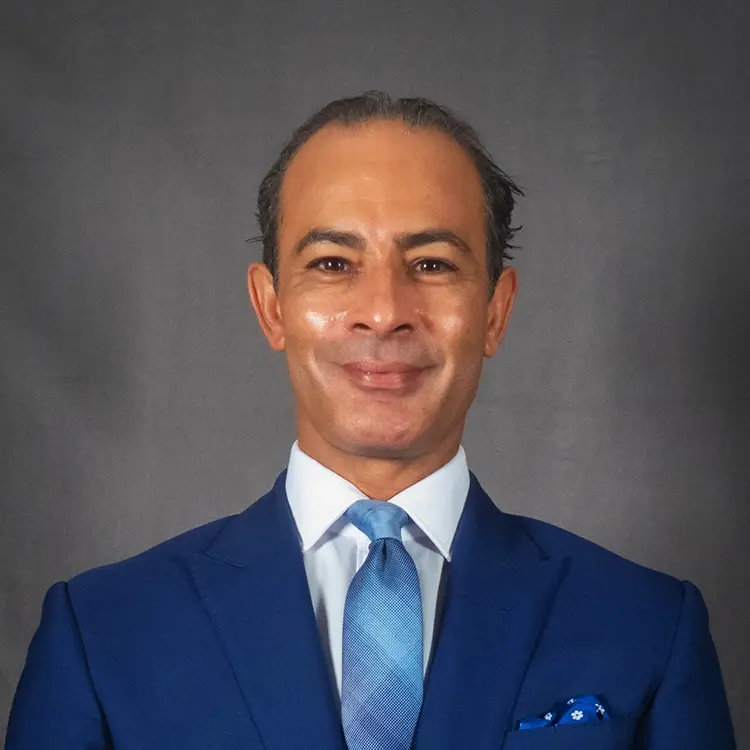


Everyone is using AI. But can you trust what it tells you? When a single hallucination can derail a trading position or a capital project, the quality of the answer matters most. The data behind that answer is what separates trustworthy AI-driven decisions from costly mistakes. In this episode, IIR CEO and Founder Ed Lewis and VP of Infrastructure & AI Systems John Farmer join host Shaheen Chohan to explore how the industrial sector is entering a new era: the Answer Age, where phone-verified, continuously updated data converges with enterprise AI to deliver instant, reliable intelligence. Together they unpack Industrial Info's newly launched IIR Envoy™ MCP, a Model Context Protocol product that connects clients' in-house AI agents directly to IIR's proprietary industrial database, with no extra logins and no compromises on data integrity.
[Intro] Shaheen Chohan (00:17):
I'm delighted to be joined by Ed Lewis, CEO and founder of Industrial Info Resources, and also by my colleague John Farmer, who is IIR's Vice President of Infrastructure and AI Systems. And together today, we're going to be talking about some of the really exciting new innovations that we have made recently in the AI space and certainly the impact this will make to the market and the end users that we serve. Now we're in an interesting period of time. We are clearly now in the midst of a, I guess, a new paradigm shift, a new technological age. Many say that we are now entering a new sixth one, the AI age. We look at this, however, I think in a slightly different way, and I think Ed, I'd really just like to start with you. Explain what the AI age means to you.
Ed Lewis (01:15):
Well, I call it the knowledge age. And I think the advent of moving into the knowledge age includes AI, because AI is about taking data and converting it to knowledge. Whereas in the past, the information age was about collecting, disseminating, and working with data on the web. But now you can use that data to convert that to knowledge. And so it's an exciting era, and it's really creating new opportunities and new products to get to a much more advanced part of the knowledge age.
Shaheen Chohan (01:54):
For me, the AI adoption rates are increasing exponentially. Right, John? I mean, everyone now is really looking to, you know, implement AI into their workflows, their processes. And I think, you know, increasingly, folks are starting to use it now for strategy and planning. What do you think are some of the potential risks and challenges of how you use and how much you end up relying on AI models today?
John Farmer (02:23):
I think the major risk for a company like ours is where we typically do things where the data is verified over the phone, so our clients expect that human network to obtain the data. Whereas AI is being used to obtain data with other companies. As far as adoption goes for us, we try to use it in a way where it allows the clients to get the answers from us, not in a way where we obtain the data.
Shaheen Chohan (02:58):
I guess, Ed, this goes back to the core principles. And it kind of all goes back to our research methodology, right?
Ed Lewis (03:03):
Yes. And I think people need to understand that, you know, AI is a new technology, but we innovated trusted data 40 years ago. When I started the company, I decided to only deliver information that was phone-verified and continuously updated. So, you know, trusted data’s been here for a long time. And combining that with the new technology, it's incredibly exciting the things we can do with it and what our clients can do with it.
Shaheen Chohan (03:36):
I want to keep with that phrase you just used there Ed, trusted data. The reality is so many people out there in the market now are using this phrase of trusted data. Guys, what does trusted data mean to us?
John Farmer (03:47):
To me, trusted data means phone-verified, quality-controlled data. Data that cannot be replicated by a single scrape. It has relationships, it has joints, it has history, decades of history. And I think that's what makes our data truly trusted.
Ed Lewis (04:07):
I’d like to add on that, Shaheen. To me, trusted data is there's degrees of trusted data. Everybody uses the term. But when you think about it, it really falls into two categories. It's either trustable data or trusted data. Trustable data is relying on vendors that have a reputation and a name in the market to subscribe to data that they provide, they have that reputation. Trusted data is a little bit different. It's a more stringent, a requirement to have trusted data. We feel that if it's not phone-verified and continuously updated throughout the life of the event, then it can't be really considered trusted. So everything we do is around the methodology that we started 40 years ago.
Shaheen Chohan (05:01):
I guess, John, that's now really essential for anybody who's utilizing AI, is trying to feed their large language model with content. I guess trusted data is the sort of nirvana to get to, right?
John Farmer (05:14):
Right. You can't truly trust the answer from your AI unless the source is verified. And that's what we offer.
Ed Lewis (05:24):
So, you know, unfortunately, people, when they started understanding that there was a new technology and they were spending billions of dollars to bring this technology in, it sort of exposed the weakness in their company. And that was really the underlying database that supported their AI activities. And because of that, they're sort of caught in between two paradigms. And a lot of people, if you look at some surveys, 70% of the people are not happy with the results they're getting. And it really goes back to the data that they're using in order to feed the AI.
Shaheen Chohan (06:01):
Yeah, I agree with that 100% Ed. I mean, for me, when I look at the capabilities, and I like to think that, you know, from a data perspective, we are kind of fit for purpose for this sort of AI kind of era. And what I mean by that is; because our data is dynamic, it's constantly changing. So those constant changes are feeding constantly, almost real time, into AI models. But the other interesting fact is the interconnectedness between our different data sets, right? The hierarchy of connections. So if we see one part of a data set updated, it does have a connection to other associated data. John, maybe you can do a better job of explaining that.
John Farmer (06:45):
Sure. We have very structured data. Take an example. If you look up a project, the Samsung Wafer project in Taylor, Texas, it's a, you know, multi-billion dollar project. It spans multiple phases, ten phases, 40,000,000 man-hours of labor. And that labor is split among several different crafts. And those crafts, you know, there's a deficit in those crafts that we track in the labor forecast. And all of these points are all connected inside our data.
Shaheen Chohan (07:20):
Yeah, points of connection between multiple different data sets. Right?
John Farmer (07:25):
Right.
Shaheen Chohan (07:26):
So, John, I know you've been kind of leading us through this AI journey from an innovation perspective. Maybe you could just share with folks some of the recent innovations. What have we done this year?
John Farmer (07:35):
We've had Ask AiVA this year. It's a search tool that you use plain English to access PECWeb and the data inside PECWeb. We've had project results commentary. It allows you to chat with the results of your project searches and your search results on other entities as well. And we’re working towards our IIR Envoy MCP.
Shaheen Chohan (08:00):
So these are productivity tools for folks who are actually trying to do search, query, analysis, and assessment of the data sets. But this is within our core PECWeb platform. Correct?
Ed Lewis (08:12):
Correct. Can I add to that, Shaheen? I think if you look at what we have with AiVA, we've embedded our LLM inside PECWeb to give more augmented insights based on the information that we provide. That's the first step. And the second step was to provide a solution through the Envoy MCP product to give our clients a way to access our database, our proprietary database, directly from their in-house AI agent, in order to ask a question and get the answer.
Shaheen Chohan (08:47):
John, maybe folks who've tuned in probably a little less familiar with what MCP means, and maybe explain a little bit about IIR's new offering, Envoy.
John Farmer (09:00):
So MCP is the model context protocol. It allows AI assistants to access authorized external tools and data sources within their LLM. Without these, your LLM is restricted to training data and web searches and whatever you upload manually. So what our MCP offers is structured data that's been verified via phone. So one way to look at it is if you have an LLM client, it's basically like a smart person that's read all these books inside a building. If you want to know what's going on at a plant, the MCP connection will allow you to talk to our data that has verified phone information.
Shaheen Chohan (09:50): So it's a clients LLM, in effect, talking or communicating with our LLM. Correct?
John Farmer (09:58):
Right. Straight to our database and in real time.
Ed Lewis (10:01):
This allows people to use their tools that they're comfortable with without stopping long enough to log in to our PECWeb and get the answers they're looking for, so that it can be done through the environment that they're comfortable with. Now, that's not to say that PECWeb is not important. There are certain things that MCP can’t do that PECWeb can do and vice versa. But we're giving more versatility to our clients to how they want to use our database.
John Farmer (10:32):
Absolutely. It's just another channel to get our data, but it does allow our clients to access multiple channels at the same time and have these LLMs pull from not just our data, but whatever data pool they have via CRM or Slack or contact list at the same time.
Ed Lewis (10:50):
It also allows our customers to use MCP to MCP connection with other information vendors so they not only get our data directly, but they can get other people's data at the same time. So it becomes a multiple solution to providing our clients with multiple connections to multiple databases. And I think that's really significant because most people don't just use one database, they use multiple databases to get their business done.
Shaheen Chohan (11:16):
John, why do you think it's so important? And what I'm getting at here is like the timing of doing this. Now, why is it so important?
John Farmer (11:27):
I think part of the reason is because this has been adopted so quickly between all the LLMS, not just ChatGPT or Claude, but also Copilot, Gemini. It's been one of those protocols that's been adopted quickly, and it offers so much as far as ease of installment for clients. It's often set up in a day, you know, it's a very easy tool and it integrates well with tools that they already have.
Shaheen Chohan (11:52):
I think it's absolutely - the timing's absolutely never been more essential. If we look at what the world looks like today. Right? We've got two major conflicts around the world. We've got a lot of volatility. Markets are very complex. They're very interconnected. So you see an event or a or an occurrence of an event happening in one part of the world. It has a ripple effect and a knock on effect elsewhere in the world. And for anybody who's in strategy and planning, being able to stay connected to all of these different trends and changes that are constantly happening, and you also have bias in the marketplace, you have to be able to try and find truthful data, truthful information. And I think it must be really difficult to be someone who is operating in a role of strategy and planning to try and make really sound business decisions at the moment, because there is just too much noise out there. You find it very difficult to try and work out which data or information you should trust. And I think for me, the immediacy of being able to connect people to the raw data and the answer in a much more condensed time and space, which you've delivered with MCP and all of that being grounded on truth, on trusted data. I think the timing of this is really essential.
John Farmer (13:12):
Yeah, I agree.
Shaheen Chohan (13:14):
Ed, you've in the past talked about the knowledge age, and I think we're all in agreement that we're starting to see an awful lot of momentum now as we move quite quickly into the answer age. It'd be great just to get your perspectives and your definition around and views of what you see as this new paradigm, this new era, this answer age.
Ed Lewis (13:40):
Well, I think because of the AI movement that's in place right now, it's moving us to a much higher level in the knowledge age. And with the advent of using MCP as a distribution channel to get the data to the client, it's opening up new opportunities. And with John's development with our IIR Envoy MCP, it allows a customer within their own internal agent to ask a question and get the answer. I call that the answer age. It's where structured information converges with non-structured information.
John Farmer (14:13):
Yeah, I couldn't agree more. I think the answer age truly isn't here until you can get the right answer from the AI. And I think when you rely on phone-verified, quality-controlled information from trusted sources, then you're getting the right answer. And that's the answer age.
Shaheen Chohan (14:31):
I like that statement you made, Ed, about the convergence between the structured and the unstructured, and how MCP now is enabling that kind of blending to happen. Is that how you see it?
John Farmer (14:50):
Absolutely. We've always had 20 years of structured data that we've kept connected and joined through not just personal relationships and phone calls, but interconnected products such as labor and plants and projects that have led us to this point.
Ed Lewis (15:11):
You know, I think that's an exciting place to be because I've been trying to get to the answer age for 20 years. And really, what's been a sort of a stumbling block is really having the right technology to be able to deliver that answer. And now we have that technology and the answer age really is a higher level of the knowledge age. The way I see it, because as we continue to evolve, it'll evolve to something much more than this. But the answer age is going to bring a lot of people into the fold with the LLM technology.
Shaheen Chohan (15:45):
Ed, I just want to pick up on that. I know, I know, you spend a lot of time visioning. What do you see potentially as the next era?
Ed Lewis (15:58):
Yeah, I can't really expand too much on it. But, you know, people talk about the deep learning age that's coming. And as we get more LLM connectivity where LLMs are talking to LLMs and MCPs are talking to MCPs, we are going to be in the age of deep learning. And that's not here yet. Sort of a scary era to even think about. But the opportunities that the MCP technology opens up is to get easy access to proprietary data through your own internal AI. And I think that's going to generate a lot more market share for the AI technology.
Shaheen Chohan (16:30):
John, some practicalities. Obviously, not all customers are going to have, you know, the kind of technical skills or resources internally, I guess, to implement something like an MCP. In reality, how difficult is it to deploy and what do they need to have in place for that to happen?
John Farmer (16:56):
Fortunately, it's been one of the easier setups that we've had for our clients. Really, all you need is an LLM client, but most people have an IT department with things like Copilot or Office 365 that has the integration already ready to go. So the only thing you would need is a URL from us and a seat from us in order to get started.
Ed Lewis (17:16):
So this sort of opens up the opportunities for smaller companies that don't want to invest in all this technology internally to take advantage of some of the things off the shelf that will help them get into the answer age quicker.
John Farmer (17:31):
Absolutely. It definitely feels like something that could level the playing field for the smaller companies.
Ed Lewis (17:36):
So, John, how much support do we give our clients? Is it all through an agent that's answering questions and there's nobody really human that's really taking care of this? Or do we humanly get involved?
John Farmer (17:48):
No, we get involved. We call the clients. We call the IT company. We have meetings. We make sure that they know the privacy policies, the security policies, and the ease of getting this into place at their organization.
Shaheen Chohan (18:00):
You touched on security there, John. I guess there are different types of LLM. I mean, I have a personal ChatGPT account. I'm assuming these are sort of enterprise-to-enterprise LLMs. Right?
John Farmer (18:20):
Right, yeah. We prefer not to be put on any type of personal LLM account because there is data sharing enabled by default that you cannot disable with personal LLM accounts. So that's one of the things that we have in place when we do a client setup to make sure these policies follow what we need in order to keep everything secure.
Ed Lewis (18:44):
Yeah, I think most businesses like ours that do have proprietary and very highly specialized data, and our domain primarily serves the industrial and energy market. We really need to have highly specialized training on the LLM to really support the needs of the client. And I think we've made a lot of strides. I mean, I know we have at least 200,000 questions already programmed into the PECWeb solutions that gives people instant information about things that they're trying to make inquiries on, and that's pretty important.
Shaheen Chohan (19:12):
So John, with MCP, how does an end user engage in interact with the MCP connector?
John Farmer (19:19):
So one of the things I like about the MCP connection is that you can just use it on your phone, you can use it on your computer, but you ask the question in plain English and you get the answer back, not just from our data set, but from whatever other data sets that you're already connected to. And so I think that's one thing that's really important, is that the answer that comes back is not shared between these connections. It's a scoped connection between these two data sets that you might be accessing.
Shaheen Chohan (19:57):
And just picking up another point, John, is it only in English or can I use other languages?
John Farmer (20:02):
You can use other languages, any language you want.
Shaheen Chohan (20:08):
There we go. How does IIR Envoy MCP differentiate from others? Why are we different guys?
Ed Lewis (20:15):
Well I think the importance is it directly connects to the proprietary data behind the AI. Because when you're making a call directly into the database, you're getting the prominence, the past, present and future picture of everything that's happened. And it's constantly updated and continually moving forward. That's the significance. And you could do that through the in-house agents that you use in your own shop, without having to stop long enough to log in to another app in order to get our information, and then go back to your internal AI to do your work. So I think that's the significance.
Ed Lewis (20:52):
I think it's about collaboration because it allows people to collaborate across the whole enterprise, and there's a lot of people that are going to need all these tools. They're going to need our web to do their business. Depending on what they're doing with it, they're definitely going to need the MCP connector that we've developed, the IIR Envoy MCP product that we just released. I think it's really exciting because it gives people ways to work our data into their day to day workflow, which has been a problem for us in the past.
John Farmer (21:26):
So when I think about trusted data, I pull up my phone and I pull up my MCP connection and I ask, show me an outage in Texas that's been phone verified and it pulls up something like Sandy Creek offline in April because of a turbine vibration problem. Phone verified at this time. Quality controlled at this time. You know how far behind schedule is it? To me, that's the power of our MCP.
Ed Lewis (22:00):
It's starting, I think, with what John said. It's building this importance of people that have proprietary data as a service to provide that data to the LLMS that people use because they want to get that phone-verified data for accuracy. And that's the most important thing about this.
Shaheen Chohan (22:21):
Yeah, I kind of back you up on that. I mean, if I had to say it in a shorter sentence, I can I think the key differentiator for us is because our MCP is based on trusted data, period.
Ed Lewis (22:34):
I think in closing for me is that, you know, it started with the human. It always starts with the human, with us. We're not trying to alleviate the human element. We want to keep the human in the loop in the process. It absolutely has to stay in the process. Our clients want that. A lot of people are concerned that we're using AI to scrape data to provide the data that we that they're used to getting. We're not doing that. We're empowering our users or workers to use AI technology to help increase the productivity that they have in gleaming the information. But everything has got a human in the loop process, including customer service. With the knowledge age, it's moved us to a higher level, with people trying to acquire data from other sources and integrate that with their internal information, and with the Envoy MCP connector that IIR has brought to market recently, it allows people to get easy access to our data, proprietary data, through their internal AI agent. And it's not really a question about how good the question is. It should be more focused today, with the answer age upon us, on how good is the answer? Because there's different qualities of the answer. And if it's phone-verified, you're going to get a much more accurate use of the data as opposed to something that's just gleamed through scraping, and other means. So I really feel that the answer age is about getting qualified data easily. And I think that's what we're working to do for our clients.
I'm delighted to be joined by Ed Lewis, CEO and founder of Industrial Info Resources, and also by my colleague John Farmer, who is IIR's Vice President of Infrastructure and AI Systems. And together today, we're going to be talking about some of the really exciting new innovations that we have made recently in the AI space and certainly the impact this will make to the market and the end users that we serve. Now we're in an interesting period of time. We are clearly now in the midst of a, I guess, a new paradigm shift, a new technological age. Many say that we are now entering a new sixth one, the AI age. We look at this, however, I think in a slightly different way, and I think Ed, I'd really just like to start with you. Explain what the AI age means to you.
Ed Lewis (01:15):
Well, I call it the knowledge age. And I think the advent of moving into the knowledge age includes AI, because AI is about taking data and converting it to knowledge. Whereas in the past, the information age was about collecting, disseminating, and working with data on the web. But now you can use that data to convert that to knowledge. And so it's an exciting era, and it's really creating new opportunities and new products to get to a much more advanced part of the knowledge age.
Shaheen Chohan (01:54):
For me, the AI adoption rates are increasing exponentially. Right, John? I mean, everyone now is really looking to, you know, implement AI into their workflows, their processes. And I think, you know, increasingly, folks are starting to use it now for strategy and planning. What do you think are some of the potential risks and challenges of how you use and how much you end up relying on AI models today?
John Farmer (02:23):
I think the major risk for a company like ours is where we typically do things where the data is verified over the phone, so our clients expect that human network to obtain the data. Whereas AI is being used to obtain data with other companies. As far as adoption goes for us, we try to use it in a way where it allows the clients to get the answers from us, not in a way where we obtain the data.
Shaheen Chohan (02:58):
I guess, Ed, this goes back to the core principles. And it kind of all goes back to our research methodology, right?
Ed Lewis (03:03):
Yes. And I think people need to understand that, you know, AI is a new technology, but we innovated trusted data 40 years ago. When I started the company, I decided to only deliver information that was phone-verified and continuously updated. So, you know, trusted data’s been here for a long time. And combining that with the new technology, it's incredibly exciting the things we can do with it and what our clients can do with it.
Shaheen Chohan (03:36):
I want to keep with that phrase you just used there Ed, trusted data. The reality is so many people out there in the market now are using this phrase of trusted data. Guys, what does trusted data mean to us?
John Farmer (03:47):
To me, trusted data means phone-verified, quality-controlled data. Data that cannot be replicated by a single scrape. It has relationships, it has joints, it has history, decades of history. And I think that's what makes our data truly trusted.
Ed Lewis (04:07):
I’d like to add on that, Shaheen. To me, trusted data is there's degrees of trusted data. Everybody uses the term. But when you think about it, it really falls into two categories. It's either trustable data or trusted data. Trustable data is relying on vendors that have a reputation and a name in the market to subscribe to data that they provide, they have that reputation. Trusted data is a little bit different. It's a more stringent, a requirement to have trusted data. We feel that if it's not phone-verified and continuously updated throughout the life of the event, then it can't be really considered trusted. So everything we do is around the methodology that we started 40 years ago.
Shaheen Chohan (05:01):
I guess, John, that's now really essential for anybody who's utilizing AI, is trying to feed their large language model with content. I guess trusted data is the sort of nirvana to get to, right?
John Farmer (05:14):
Right. You can't truly trust the answer from your AI unless the source is verified. And that's what we offer.
Ed Lewis (05:24):
So, you know, unfortunately, people, when they started understanding that there was a new technology and they were spending billions of dollars to bring this technology in, it sort of exposed the weakness in their company. And that was really the underlying database that supported their AI activities. And because of that, they're sort of caught in between two paradigms. And a lot of people, if you look at some surveys, 70% of the people are not happy with the results they're getting. And it really goes back to the data that they're using in order to feed the AI.
Shaheen Chohan (06:01):
Yeah, I agree with that 100% Ed. I mean, for me, when I look at the capabilities, and I like to think that, you know, from a data perspective, we are kind of fit for purpose for this sort of AI kind of era. And what I mean by that is; because our data is dynamic, it's constantly changing. So those constant changes are feeding constantly, almost real time, into AI models. But the other interesting fact is the interconnectedness between our different data sets, right? The hierarchy of connections. So if we see one part of a data set updated, it does have a connection to other associated data. John, maybe you can do a better job of explaining that.
John Farmer (06:45):
Sure. We have very structured data. Take an example. If you look up a project, the Samsung Wafer project in Taylor, Texas, it's a, you know, multi-billion dollar project. It spans multiple phases, ten phases, 40,000,000 man-hours of labor. And that labor is split among several different crafts. And those crafts, you know, there's a deficit in those crafts that we track in the labor forecast. And all of these points are all connected inside our data.
Shaheen Chohan (07:20):
Yeah, points of connection between multiple different data sets. Right?
John Farmer (07:25):
Right.
Shaheen Chohan (07:26):
So, John, I know you've been kind of leading us through this AI journey from an innovation perspective. Maybe you could just share with folks some of the recent innovations. What have we done this year?
John Farmer (07:35):
We've had Ask AiVA this year. It's a search tool that you use plain English to access PECWeb and the data inside PECWeb. We've had project results commentary. It allows you to chat with the results of your project searches and your search results on other entities as well. And we’re working towards our IIR Envoy MCP.
Shaheen Chohan (08:00):
So these are productivity tools for folks who are actually trying to do search, query, analysis, and assessment of the data sets. But this is within our core PECWeb platform. Correct?
Ed Lewis (08:12):
Correct. Can I add to that, Shaheen? I think if you look at what we have with AiVA, we've embedded our LLM inside PECWeb to give more augmented insights based on the information that we provide. That's the first step. And the second step was to provide a solution through the Envoy MCP product to give our clients a way to access our database, our proprietary database, directly from their in-house AI agent, in order to ask a question and get the answer.
Shaheen Chohan (08:47):
John, maybe folks who've tuned in probably a little less familiar with what MCP means, and maybe explain a little bit about IIR's new offering, Envoy.
John Farmer (09:00):
So MCP is the model context protocol. It allows AI assistants to access authorized external tools and data sources within their LLM. Without these, your LLM is restricted to training data and web searches and whatever you upload manually. So what our MCP offers is structured data that's been verified via phone. So one way to look at it is if you have an LLM client, it's basically like a smart person that's read all these books inside a building. If you want to know what's going on at a plant, the MCP connection will allow you to talk to our data that has verified phone information.
Shaheen Chohan (09:50): So it's a clients LLM, in effect, talking or communicating with our LLM. Correct?
John Farmer (09:58):
Right. Straight to our database and in real time.
Ed Lewis (10:01):
This allows people to use their tools that they're comfortable with without stopping long enough to log in to our PECWeb and get the answers they're looking for, so that it can be done through the environment that they're comfortable with. Now, that's not to say that PECWeb is not important. There are certain things that MCP can’t do that PECWeb can do and vice versa. But we're giving more versatility to our clients to how they want to use our database.
John Farmer (10:32):
Absolutely. It's just another channel to get our data, but it does allow our clients to access multiple channels at the same time and have these LLMs pull from not just our data, but whatever data pool they have via CRM or Slack or contact list at the same time.
Ed Lewis (10:50):
It also allows our customers to use MCP to MCP connection with other information vendors so they not only get our data directly, but they can get other people's data at the same time. So it becomes a multiple solution to providing our clients with multiple connections to multiple databases. And I think that's really significant because most people don't just use one database, they use multiple databases to get their business done.
Shaheen Chohan (11:16):
John, why do you think it's so important? And what I'm getting at here is like the timing of doing this. Now, why is it so important?
John Farmer (11:27):
I think part of the reason is because this has been adopted so quickly between all the LLMS, not just ChatGPT or Claude, but also Copilot, Gemini. It's been one of those protocols that's been adopted quickly, and it offers so much as far as ease of installment for clients. It's often set up in a day, you know, it's a very easy tool and it integrates well with tools that they already have.
Shaheen Chohan (11:52):
I think it's absolutely - the timing's absolutely never been more essential. If we look at what the world looks like today. Right? We've got two major conflicts around the world. We've got a lot of volatility. Markets are very complex. They're very interconnected. So you see an event or a or an occurrence of an event happening in one part of the world. It has a ripple effect and a knock on effect elsewhere in the world. And for anybody who's in strategy and planning, being able to stay connected to all of these different trends and changes that are constantly happening, and you also have bias in the marketplace, you have to be able to try and find truthful data, truthful information. And I think it must be really difficult to be someone who is operating in a role of strategy and planning to try and make really sound business decisions at the moment, because there is just too much noise out there. You find it very difficult to try and work out which data or information you should trust. And I think for me, the immediacy of being able to connect people to the raw data and the answer in a much more condensed time and space, which you've delivered with MCP and all of that being grounded on truth, on trusted data. I think the timing of this is really essential.
John Farmer (13:12):
Yeah, I agree.
Shaheen Chohan (13:14):
Ed, you've in the past talked about the knowledge age, and I think we're all in agreement that we're starting to see an awful lot of momentum now as we move quite quickly into the answer age. It'd be great just to get your perspectives and your definition around and views of what you see as this new paradigm, this new era, this answer age.
Ed Lewis (13:40):
Well, I think because of the AI movement that's in place right now, it's moving us to a much higher level in the knowledge age. And with the advent of using MCP as a distribution channel to get the data to the client, it's opening up new opportunities. And with John's development with our IIR Envoy MCP, it allows a customer within their own internal agent to ask a question and get the answer. I call that the answer age. It's where structured information converges with non-structured information.
John Farmer (14:13):
Yeah, I couldn't agree more. I think the answer age truly isn't here until you can get the right answer from the AI. And I think when you rely on phone-verified, quality-controlled information from trusted sources, then you're getting the right answer. And that's the answer age.
Shaheen Chohan (14:31):
I like that statement you made, Ed, about the convergence between the structured and the unstructured, and how MCP now is enabling that kind of blending to happen. Is that how you see it?
John Farmer (14:50):
Absolutely. We've always had 20 years of structured data that we've kept connected and joined through not just personal relationships and phone calls, but interconnected products such as labor and plants and projects that have led us to this point.
Ed Lewis (15:11):
You know, I think that's an exciting place to be because I've been trying to get to the answer age for 20 years. And really, what's been a sort of a stumbling block is really having the right technology to be able to deliver that answer. And now we have that technology and the answer age really is a higher level of the knowledge age. The way I see it, because as we continue to evolve, it'll evolve to something much more than this. But the answer age is going to bring a lot of people into the fold with the LLM technology.
Shaheen Chohan (15:45):
Ed, I just want to pick up on that. I know, I know, you spend a lot of time visioning. What do you see potentially as the next era?
Ed Lewis (15:58):
Yeah, I can't really expand too much on it. But, you know, people talk about the deep learning age that's coming. And as we get more LLM connectivity where LLMs are talking to LLMs and MCPs are talking to MCPs, we are going to be in the age of deep learning. And that's not here yet. Sort of a scary era to even think about. But the opportunities that the MCP technology opens up is to get easy access to proprietary data through your own internal AI. And I think that's going to generate a lot more market share for the AI technology.
Shaheen Chohan (16:30):
John, some practicalities. Obviously, not all customers are going to have, you know, the kind of technical skills or resources internally, I guess, to implement something like an MCP. In reality, how difficult is it to deploy and what do they need to have in place for that to happen?
John Farmer (16:56):
Fortunately, it's been one of the easier setups that we've had for our clients. Really, all you need is an LLM client, but most people have an IT department with things like Copilot or Office 365 that has the integration already ready to go. So the only thing you would need is a URL from us and a seat from us in order to get started.
Ed Lewis (17:16):
So this sort of opens up the opportunities for smaller companies that don't want to invest in all this technology internally to take advantage of some of the things off the shelf that will help them get into the answer age quicker.
John Farmer (17:31):
Absolutely. It definitely feels like something that could level the playing field for the smaller companies.
Ed Lewis (17:36):
So, John, how much support do we give our clients? Is it all through an agent that's answering questions and there's nobody really human that's really taking care of this? Or do we humanly get involved?
John Farmer (17:48):
No, we get involved. We call the clients. We call the IT company. We have meetings. We make sure that they know the privacy policies, the security policies, and the ease of getting this into place at their organization.
Shaheen Chohan (18:00):
You touched on security there, John. I guess there are different types of LLM. I mean, I have a personal ChatGPT account. I'm assuming these are sort of enterprise-to-enterprise LLMs. Right?
John Farmer (18:20):
Right, yeah. We prefer not to be put on any type of personal LLM account because there is data sharing enabled by default that you cannot disable with personal LLM accounts. So that's one of the things that we have in place when we do a client setup to make sure these policies follow what we need in order to keep everything secure.
Ed Lewis (18:44):
Yeah, I think most businesses like ours that do have proprietary and very highly specialized data, and our domain primarily serves the industrial and energy market. We really need to have highly specialized training on the LLM to really support the needs of the client. And I think we've made a lot of strides. I mean, I know we have at least 200,000 questions already programmed into the PECWeb solutions that gives people instant information about things that they're trying to make inquiries on, and that's pretty important.
Shaheen Chohan (19:12):
So John, with MCP, how does an end user engage in interact with the MCP connector?
John Farmer (19:19):
So one of the things I like about the MCP connection is that you can just use it on your phone, you can use it on your computer, but you ask the question in plain English and you get the answer back, not just from our data set, but from whatever other data sets that you're already connected to. And so I think that's one thing that's really important, is that the answer that comes back is not shared between these connections. It's a scoped connection between these two data sets that you might be accessing.
Shaheen Chohan (19:57):
And just picking up another point, John, is it only in English or can I use other languages?
John Farmer (20:02):
You can use other languages, any language you want.
Shaheen Chohan (20:08):
There we go. How does IIR Envoy MCP differentiate from others? Why are we different guys?
Ed Lewis (20:15):
Well I think the importance is it directly connects to the proprietary data behind the AI. Because when you're making a call directly into the database, you're getting the prominence, the past, present and future picture of everything that's happened. And it's constantly updated and continually moving forward. That's the significance. And you could do that through the in-house agents that you use in your own shop, without having to stop long enough to log in to another app in order to get our information, and then go back to your internal AI to do your work. So I think that's the significance.
Ed Lewis (20:52):
I think it's about collaboration because it allows people to collaborate across the whole enterprise, and there's a lot of people that are going to need all these tools. They're going to need our web to do their business. Depending on what they're doing with it, they're definitely going to need the MCP connector that we've developed, the IIR Envoy MCP product that we just released. I think it's really exciting because it gives people ways to work our data into their day to day workflow, which has been a problem for us in the past.
John Farmer (21:26):
So when I think about trusted data, I pull up my phone and I pull up my MCP connection and I ask, show me an outage in Texas that's been phone verified and it pulls up something like Sandy Creek offline in April because of a turbine vibration problem. Phone verified at this time. Quality controlled at this time. You know how far behind schedule is it? To me, that's the power of our MCP.
Ed Lewis (22:00):
It's starting, I think, with what John said. It's building this importance of people that have proprietary data as a service to provide that data to the LLMS that people use because they want to get that phone-verified data for accuracy. And that's the most important thing about this.
Shaheen Chohan (22:21):
Yeah, I kind of back you up on that. I mean, if I had to say it in a shorter sentence, I can I think the key differentiator for us is because our MCP is based on trusted data, period.
Ed Lewis (22:34):
I think in closing for me is that, you know, it started with the human. It always starts with the human, with us. We're not trying to alleviate the human element. We want to keep the human in the loop in the process. It absolutely has to stay in the process. Our clients want that. A lot of people are concerned that we're using AI to scrape data to provide the data that we that they're used to getting. We're not doing that. We're empowering our users or workers to use AI technology to help increase the productivity that they have in gleaming the information. But everything has got a human in the loop process, including customer service. With the knowledge age, it's moved us to a higher level, with people trying to acquire data from other sources and integrate that with their internal information, and with the Envoy MCP connector that IIR has brought to market recently, it allows people to get easy access to our data, proprietary data, through their internal AI agent. And it's not really a question about how good the question is. It should be more focused today, with the answer age upon us, on how good is the answer? Because there's different qualities of the answer. And if it's phone-verified, you're going to get a much more accurate use of the data as opposed to something that's just gleamed through scraping, and other means. So I really feel that the answer age is about getting qualified data easily. And I think that's what we're working to do for our clients.
Please Select A Language
*This episode is brought to you by Industrial Info's Latin American Office in Argentina.