
Food and beverage producers are holding tight to cautious budgets, but is spending really slowing, or just changing shape?
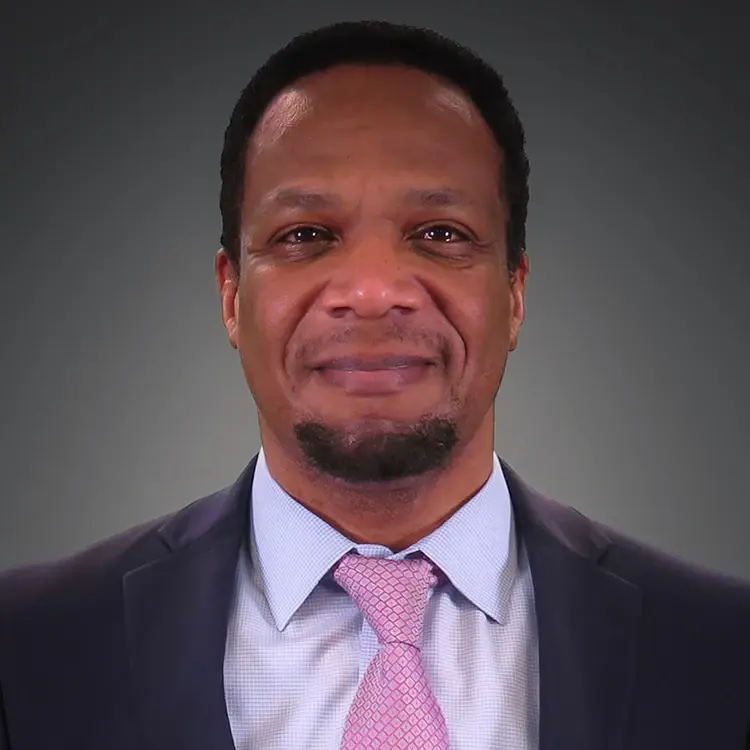
In this episode of Navigating the Currents of Change, Randy Godet (SVP of Food and Beverage Research) joins Shaheen Chohan to break down the $322 billion in global CapEx expected from 2025 to 2027, and why the war in the Middle East and US midterm uncertainty are making manufacturers more selective about projects of $100 million or more.
Together they cover why in-plant upgrades are taking a bigger share of spend, how AI and automation are reshaping production, why ROI has replaced ESG as the deciding factor in budget approvals, and why Africa and Southeast Asia are emerging as the growth hotspots. They also unpack tariff-driven cost escalation and what's behind the slowdown in plant-based protein investment.
The reality: it's not whether food producers keep spending; it's whether a project can prove its return.
In this episode of Navigating the Currents of Change, Randy Godet (SVP of Food and Beverage Research) joins Shaheen Chohan to break down the $322 billion in global CapEx expected from 2025 to 2027, and why the war in the Middle East and US midterm uncertainty are making manufacturers more selective about projects of $100 million or more.
Together they cover why in-plant upgrades are taking a bigger share of spend, how AI and automation are reshaping production, why ROI has replaced ESG as the deciding factor in budget approvals, and why Africa and Southeast Asia are emerging as the growth hotspots. They also unpack tariff-driven cost escalation and what's behind the slowdown in plant-based protein investment.
The reality: it's not whether food producers keep spending; it's whether a project can prove its return.
Shaheen Chohan (00:00):
The food and beverage market sits very close to the shifting tides of economic activity and consumer spending and sentiment. Right now, those signals are weak to moderate at best, and come at a time when consumers are being hit with higher food cost inflation. So the big question is, are food and beverage producers sitting tight with their capital budgets, or are we still seeing capital spending being announced and moving forward? And if so, where and in what sectors?
Shaheen Chohan (00:46):
Welcome to Navigating the Currents of Change, where we bring together over four decades of trusted researched data and industry insights. Built for the answer age. Let's dive in. My name is Shaheen Chohan and I lead Global Analytics here at Industrial Info Resources, and to help me unpick some of those trends and put some answers to those questions, I am delighted to be joined by Randy Godet, who is IIR’s Senior Vice President of Food and Beverage Research. Welcome, Randy.
Randy Godet (01:17):
Thank you, Shaheen. Thanks for the warm welcome,
Shaheen Chohan (01:20):
Randy. We are seeing only relatively modest, I guess, increases in capital spending through the course of certainly the first half of this year. Certainly compared to what we saw last year. So am I right in assuming it appears that FMB producers are possibly opting to take a more cautious stance on committing to some of these big projects this year? And would that be correct to say that we're seeing slightly moderated levels of spend?
Randy Godet (01:49):
I think that's a pretty fair assessment, given that if we want to consider what a large project would be, let's just go with the terms of an investment that's 100 million or more. And so manufacturers are definitely more cautious, more considerate of those capital projects in that range. And I think the biggest reason, the most obvious reason for that, is the war in the Middle East. The war in the Middle East is influencing global supply chains. Everything from energy, fertilizer, finished product, aluminum, plastics. And so obviously, with concerns of how long this could potentially last, I think the outlook for large capital deployment is one that we could see some recalibration as the year goes forward. Manufacturers are definitely being more cautious about future spending plans. Obviously, the headline of the day is the conflict, the war in Iran in the Middle East, and the influence that that is having on supply chain disruptions.
But that's not the only issue that could influence spending in the food and beverage industry. Here in the US, we have the midterm elections coming up, which could actually trigger some policy changes that not just affect the food and beverage industry here in North America, but around the world. And so manufacturers are keen on the potential that their spending plans could see some recalibration, depending on those two factors.
Shaheen Chohan (03:27):
So what does that recalibration, as you call it, look like in terms of the, I guess, the composition of the type of capital projects that are still being committed to?
Randy Godet (03:36):
Right. So I think let me just give you some basis for what we consider to be a large project, and then we'll get into the different project types. So essentially most of the larger investment projects are ones that are grassroot in nature. So let's consider a project that's valued at $100 million. Typically, if we look at the spend from 2025 to 2027 is about $322 billion in capital around the world. 41% of that is attributed to large projects. And so there's still a fair amount of large investments, regardless to the cautious outlook. There's still a fair amount of investments that are going to carry those large values, whether it be grassroots. But I think the more important thing to take away from all of that is that when we look at the global span over a five year period, between 2020 and 2025, the average spend was just shy of $130 billion, topping out at $141 billion last year. So our modeling, our forecast, suggests that between 2026 to 2027, as cautious as the outlook may be, we still anticipate a healthy round to spend maybe $140 billion or somewhere within that range.
Shaheen Chohan (04:55):
So, Randy, would it be correct to say that we should expect to see possibly a bigger swing now more towards implant capital spending? And why would that be the case?
Randy Godet (05:07):
So I do anticipate a larger portion of the actual spend or planned spending going towards in-plant CapEx, mainly when we consider what your typical annual spend would be, 41% of that generally is attributed to grassroot construction. Now we're seeing fewer grassroot opportunities and more implant type projects, mainly driven by AI, operational efficiencies, energy improvements and the like.
Shaheen Chohan (05:39):
Randy, if I could just come back to that statement you made about AI. I'm going to assume that AI is now a increasingly big part of budgets and also front of mind for many owners and operators, both of not only new build projects, but also operational assets. Would that be correct?
Randy Godet (05:58):
Yes, that would be. Actually more manufacturers are integrating AI modeling into the entire food production process. Everything from data collection, product development, production volumes, ultimately leading to capital outlays. I mean, that's what we're talking about is how is AI going to impact the actual CapEx that we see that our clients that are our clients are interested in. And it is becoming a very critical part of not only the production process, but as well as the overall market outside of the manufacturing facility.
Shaheen Chohan (06:40):
Now, I would assume that a component of that is also going to be around robotics, automation control, correct?
Randy Godet (06:47):
Yes. Robotics, automation control, AI, line production, everything that would touch the food production process even before the manufacturing plant. And what I'm referring to by that is you have data coming in from from the field, from farms for the crops to the storage facilities all the way to the end of the production line.
Shaheen Chohan (07:09):
Now, I know that sustainability is always a key theme in all, you know, food produce that gets produced. Are you still seeing generous or healthy levels of, let's call it, ESG-related capital investments being announced, and are they moving forward?
Randy Godet (07:27):
So for the most part, the ESG level of spin has tapered off. I mean, we saw a high runup in project announcements, mainly geared towards energy conservation, things of that sort, maybe 2 to 3 years ago. But that is not really a headline when it comes to food and beverage spending today.
Shaheen Chohan (07:49):
So I'll assume that there is much tighter considerations when budgets are being approved. And I know you've used a phrase in the past - produces are really focusing hard on projects which deliver the ROI.
Randy Godet (08:04):
Absolutely.
Shaheen Chohan (08:05):
Could you just explain a little bit about that?
Randy Godet (08:07):
So, I mean, the ROI has to be defensible, ultimately stating that if we invest $10 million, what is the timeline? It has to have a shorter timeline for them to get their return on their investment. In terms of the construction of the facility, the operational aspect of it, and the volumes and output related to that new product.
Shaheen Chohan (08:29):
I'd just like to shift gears a little bit. Are there any particular geographies that are now showing higher levels of capital commitment and certainly projects moving forward? So that momentum from announced projects coming through the planning, engineering, and now into construction. From a geographical perspective, where are the hotspots?
Randy Godet (08:50):
So I would like to first start off with probably one of the least expected, but probably one of the hottest and fastest-growing markets, which is in the continent of Africa. And I say that because, you know, that's been considered a new frontier for years. However, due to infrastructure challenges, satellite communication, roads, water utilities, all those have been mostly mitigated. I mean, there's still some challenges, but it is now much easier for a manufacturer to produce a product and ship it, transport it to various markets across the continent.
One thing we have to also keep in mind is that as a continent, they have one of the fastest and largest growing urban populations, which, you know, is everyone's target market, obviously. And we're beginning to see some of the largest global players construct facilities across the continent within various sectors, from milling to meat processing to packaged foods, and especially in the beverage segment. That is one of the strongest markets for beverage consumption.
Other markets that we see a strong growth trend are areas like Southeast Asia, particularly like Indonesia, Vietnam. Vietnam is trending very strong lately. Much of the activity that we're seeing there tends to trend around grassroot construction as well. So there are some hotspots around the world. Obviously here in North America, it's a very mature market. So opportunities lie well beyond North America, Europe, and Latin America, which are considered to be very mature markets.
Shaheen Chohan (10:31):
Coming back to the profile of the types of companies which are proposing and announcing, you know, new projects in those emerging markets. You mentioned Asia and Africa. Are they only going to be international brands, sort of the household brands that we’re most familiar with? Or are we seeing a kind of a new tier or a new generation of domestic producers coming to the forefront as well?
Randy Godet (10:58):
So that's a great question. I think what we see that's sort of twofold. We see the large world players with the international brands taking, establishing a footprint within local markets. And in some cases, they ultimately end up acquiring some of the local brands and then those local brands, whether they retain the brand name or they carry the name of their global company, become larger.
Shaheen Chohan (11:25):
Now, for much of last year, tariffs were kind of sitting front of mind of most project owners, right? They played a bigger role in influencing many of I guess, the broader food and beverage trends that we saw. And now what we're seeing is this, and those tariffs haven't really necessarily gone away, in fact, it's kind of intensified a little bit more even through the course of this year, now that we've got through the midpoint.
But now we're seeing a new, you know, driver or influencer in the market. And that is cost escalation. You know, you talked a little bit and touched on it about we're seeing higher fertilizer prices because a lot of urea and fertilizers are now hemmed in, and can't get out of the Middle East. That's almost coming like a double whammy for some of these producers right now.
First of all, what is driving this general cost escalation for project owners, and is it having a negative impact? Are we expecting to see a shift or a change in the kind of the size of spending for this year? Will we see slippage into next?
Randy Godet (12:29):
So to begin with, the demand side fundamentals suggest or strongly indicate that demand for food products outweigh the higher input cost. And it's almost like tariffs have become a new normal within the past few years. And so manufacturers are building in the higher cost of those materials that are required for the end product, whether it's to build a facility in terms of aluminum, stainless steel or for packaging materials. Obviously, you know, oil coming out of the Middle East, coming out of the Strait of Hormuz, is not just for fuel. It goes well into packaging materials, which, you know, ultimately end up for food production. And so along the entire supply chain, these disruptions are having an impact. But again, the demand side fundamentals outweigh the high cost regime. And so we're still seeing those capital projects get developed, get engineered, and actually constructed.
Shaheen Chohan (13:33):
And I guess there's a dual impact on production costs at the moment. Firstly, we've got the higher costs for the foodstuffs themselves, right? We're getting higher fertilizer prices. We've got tariffs on certain ingredients and inputs to making those final packaged, you know, food products. But also what kind of impact is it on the packaging side? You know we're seeing tariffs still on aluminum and steel, which is not just on the packaging but also on the equipment that goes into it. Is that having a negative impact and influencing shape of spending going forward?
Randy Godet (14:13):
We're not really seeing that at this time. I think I mentioned that manufacturers are sort of building in the additional cost to higher cost to build, to manufacture, to produce those products. I don't see a strong trend in terms of alternative materials. I mean, you can only put beverages in either plastics or aluminum, and they're both being taxed. So, it's not having that much of an impact on the spend.
Shaheen Chohan (14:42):
With the likelihood that tariffs, as you said, is now the new norm and are not going to go away, we're going to have to, you know, operate under this sort of tariff tariff levels for, I guess for some time now. And also the US is a big market. Hence, do you think we may see more reshoring of production and processing capacity into the US market?
Randy Godet (15:05):
So number one, the US is a net exporter of food and beverage products. Most of what's imported are raw materials. Products that are not widely available here or are much more cost effective to import. And so reshoring is not something that we see much of in terms of food and beverage production.
Shaheen Chohan (15:26):
Randy, how are the continuously shifting consumer behaviors now affecting capital spending that is getting deployed? I ask this because when you and I have had conversations in the past, you know, plant based protein was the kind of the hot spot. And I guess that's sort of softened a little bit. Are there any new sorts of trends or themes that are emerging, which food producers are having to very quickly respond to from a capital deployment perspective?
Randy Godet (15:54):
Right. So obviously, food and beverage products are very consumer driven, very much the directive that our manufacturers respond to, and those products and trends can change very quickly, which is, again, why AI is becoming an integral part of the actual food production process, to track those trends, consumer trends and changes, and habits. Manufacturers are able to respond very quickly because of that to develop new products to produce them. I think probably one of the most advantageous parts of the AI models that drive production are ones that lend itself to not just producing a product, but also producing a product that perhaps may only have a short shelf life, and the ability to switch products on a production line very, very quickly.
Shaheen Chohan (17:02):
Randy, just coming back to that previous hotspot of alternative proteins and plant based proteins. Has it actually disappeared? Was I correct or is it still spending?
Randy Godet (16:57):
It was very close to disappearing. I mean, the investments just dwindled overnight. I think they're beginning to gain some traction, but most of what we see there is the demand for that product, or those sorts of products are mainly geared towards geography. For example, here in the US, here in North America, plant-based products are not as popular as they are in places like Europe. And so some of the investments that we see are more small CapEx that are market-driven, that are tailored to certain markets and certain types of food. We don't anticipate seeing the growth or the injection of capital that we saw in past years for alternative products. Even though there are some regulations that are being pushed through that could open the door and trigger some more spending in the near future.
Shaheen Chohan (17:56):
Randy, that gets us to the close of our discussion. 30,000-foot takeaways. What do you expect to see or what are some of the big themes for the next 12 to 24 months?
Randy Godet (18:08):
So for the next 12 to 24 months, I think the playbook will be as far as CapEx will be similar to the one that we're seeing right now, which is very cost-restrictive spending, values based on high ROI, obviously, consumer demand, cutting cost in terms of the actual manufacturing process, whether it's the cost to build, the cost to maintain. More attention is given towards upgrading facilities as opposed to building new facilities. And I think that has a lot to do with actual higher cost, even though we still will see some new construction.
If I were to consider where the outlook for CapEx is in the next 12 to 24 months, I would say, first of all, look at regional spend in the products within those regions. As I mentioned, certain countries are more prone to invest in beverage products. I would also look at the types of regulations that are impacting the overall economies of those regions, and how they would influence the types of products. So we anticipate a relatively similar trend in grassroot construction, number one. But again, the majority of expenditures that take place on an annual basis are those small in-plant CapEx to remodel a facility, upgrade a production line, add a new line, add packaging equipment, improve the infrastructure and operational efficiency of the facilities. Those are going to rule the day moving forward, but I still anticipate a fair amount of large CapEx, those projects that are $100 million and more.
Shaheen Chohan (19:53):
That brings us to the end of our discussion. I guess it is fair to say that the outlook right now looks like one of cautious optimism and certainly targeted capital spending, especially on those types of projects which will yield the biggest ROI. So all that leaves me to do is say a very big thanks to you, Randy. Thanks for sharing your insights and perspective today. If any of you who have joined us have any further questions about any of the topics that we've discussed today, then please do reach out to myself or Randy via our contact details that you can see here.
And finally, a big thanks to all of you who've taken time out to join us today. I hope we have helped you all better navigate some of the currents of change that we're seeing. Welcome to the Answer Age.
The food and beverage market sits very close to the shifting tides of economic activity and consumer spending and sentiment. Right now, those signals are weak to moderate at best, and come at a time when consumers are being hit with higher food cost inflation. So the big question is, are food and beverage producers sitting tight with their capital budgets, or are we still seeing capital spending being announced and moving forward? And if so, where and in what sectors?
Shaheen Chohan (00:46):
Welcome to Navigating the Currents of Change, where we bring together over four decades of trusted researched data and industry insights. Built for the answer age. Let's dive in. My name is Shaheen Chohan and I lead Global Analytics here at Industrial Info Resources, and to help me unpick some of those trends and put some answers to those questions, I am delighted to be joined by Randy Godet, who is IIR’s Senior Vice President of Food and Beverage Research. Welcome, Randy.
Randy Godet (01:17):
Thank you, Shaheen. Thanks for the warm welcome,
Shaheen Chohan (01:20):
Randy. We are seeing only relatively modest, I guess, increases in capital spending through the course of certainly the first half of this year. Certainly compared to what we saw last year. So am I right in assuming it appears that FMB producers are possibly opting to take a more cautious stance on committing to some of these big projects this year? And would that be correct to say that we're seeing slightly moderated levels of spend?
Randy Godet (01:49):
I think that's a pretty fair assessment, given that if we want to consider what a large project would be, let's just go with the terms of an investment that's 100 million or more. And so manufacturers are definitely more cautious, more considerate of those capital projects in that range. And I think the biggest reason, the most obvious reason for that, is the war in the Middle East. The war in the Middle East is influencing global supply chains. Everything from energy, fertilizer, finished product, aluminum, plastics. And so obviously, with concerns of how long this could potentially last, I think the outlook for large capital deployment is one that we could see some recalibration as the year goes forward. Manufacturers are definitely being more cautious about future spending plans. Obviously, the headline of the day is the conflict, the war in Iran in the Middle East, and the influence that that is having on supply chain disruptions.
But that's not the only issue that could influence spending in the food and beverage industry. Here in the US, we have the midterm elections coming up, which could actually trigger some policy changes that not just affect the food and beverage industry here in North America, but around the world. And so manufacturers are keen on the potential that their spending plans could see some recalibration, depending on those two factors.
Shaheen Chohan (03:27):
So what does that recalibration, as you call it, look like in terms of the, I guess, the composition of the type of capital projects that are still being committed to?
Randy Godet (03:36):
Right. So I think let me just give you some basis for what we consider to be a large project, and then we'll get into the different project types. So essentially most of the larger investment projects are ones that are grassroot in nature. So let's consider a project that's valued at $100 million. Typically, if we look at the spend from 2025 to 2027 is about $322 billion in capital around the world. 41% of that is attributed to large projects. And so there's still a fair amount of large investments, regardless to the cautious outlook. There's still a fair amount of investments that are going to carry those large values, whether it be grassroots. But I think the more important thing to take away from all of that is that when we look at the global span over a five year period, between 2020 and 2025, the average spend was just shy of $130 billion, topping out at $141 billion last year. So our modeling, our forecast, suggests that between 2026 to 2027, as cautious as the outlook may be, we still anticipate a healthy round to spend maybe $140 billion or somewhere within that range.
Shaheen Chohan (04:55):
So, Randy, would it be correct to say that we should expect to see possibly a bigger swing now more towards implant capital spending? And why would that be the case?
Randy Godet (05:07):
So I do anticipate a larger portion of the actual spend or planned spending going towards in-plant CapEx, mainly when we consider what your typical annual spend would be, 41% of that generally is attributed to grassroot construction. Now we're seeing fewer grassroot opportunities and more implant type projects, mainly driven by AI, operational efficiencies, energy improvements and the like.
Shaheen Chohan (05:39):
Randy, if I could just come back to that statement you made about AI. I'm going to assume that AI is now a increasingly big part of budgets and also front of mind for many owners and operators, both of not only new build projects, but also operational assets. Would that be correct?
Randy Godet (05:58):
Yes, that would be. Actually more manufacturers are integrating AI modeling into the entire food production process. Everything from data collection, product development, production volumes, ultimately leading to capital outlays. I mean, that's what we're talking about is how is AI going to impact the actual CapEx that we see that our clients that are our clients are interested in. And it is becoming a very critical part of not only the production process, but as well as the overall market outside of the manufacturing facility.
Shaheen Chohan (06:40):
Now, I would assume that a component of that is also going to be around robotics, automation control, correct?
Randy Godet (06:47):
Yes. Robotics, automation control, AI, line production, everything that would touch the food production process even before the manufacturing plant. And what I'm referring to by that is you have data coming in from from the field, from farms for the crops to the storage facilities all the way to the end of the production line.
Shaheen Chohan (07:09):
Now, I know that sustainability is always a key theme in all, you know, food produce that gets produced. Are you still seeing generous or healthy levels of, let's call it, ESG-related capital investments being announced, and are they moving forward?
Randy Godet (07:27):
So for the most part, the ESG level of spin has tapered off. I mean, we saw a high runup in project announcements, mainly geared towards energy conservation, things of that sort, maybe 2 to 3 years ago. But that is not really a headline when it comes to food and beverage spending today.
Shaheen Chohan (07:49):
So I'll assume that there is much tighter considerations when budgets are being approved. And I know you've used a phrase in the past - produces are really focusing hard on projects which deliver the ROI.
Randy Godet (08:04):
Absolutely.
Shaheen Chohan (08:05):
Could you just explain a little bit about that?
Randy Godet (08:07):
So, I mean, the ROI has to be defensible, ultimately stating that if we invest $10 million, what is the timeline? It has to have a shorter timeline for them to get their return on their investment. In terms of the construction of the facility, the operational aspect of it, and the volumes and output related to that new product.
Shaheen Chohan (08:29):
I'd just like to shift gears a little bit. Are there any particular geographies that are now showing higher levels of capital commitment and certainly projects moving forward? So that momentum from announced projects coming through the planning, engineering, and now into construction. From a geographical perspective, where are the hotspots?
Randy Godet (08:50):
So I would like to first start off with probably one of the least expected, but probably one of the hottest and fastest-growing markets, which is in the continent of Africa. And I say that because, you know, that's been considered a new frontier for years. However, due to infrastructure challenges, satellite communication, roads, water utilities, all those have been mostly mitigated. I mean, there's still some challenges, but it is now much easier for a manufacturer to produce a product and ship it, transport it to various markets across the continent.
One thing we have to also keep in mind is that as a continent, they have one of the fastest and largest growing urban populations, which, you know, is everyone's target market, obviously. And we're beginning to see some of the largest global players construct facilities across the continent within various sectors, from milling to meat processing to packaged foods, and especially in the beverage segment. That is one of the strongest markets for beverage consumption.
Other markets that we see a strong growth trend are areas like Southeast Asia, particularly like Indonesia, Vietnam. Vietnam is trending very strong lately. Much of the activity that we're seeing there tends to trend around grassroot construction as well. So there are some hotspots around the world. Obviously here in North America, it's a very mature market. So opportunities lie well beyond North America, Europe, and Latin America, which are considered to be very mature markets.
Shaheen Chohan (10:31):
Coming back to the profile of the types of companies which are proposing and announcing, you know, new projects in those emerging markets. You mentioned Asia and Africa. Are they only going to be international brands, sort of the household brands that we’re most familiar with? Or are we seeing a kind of a new tier or a new generation of domestic producers coming to the forefront as well?
Randy Godet (10:58):
So that's a great question. I think what we see that's sort of twofold. We see the large world players with the international brands taking, establishing a footprint within local markets. And in some cases, they ultimately end up acquiring some of the local brands and then those local brands, whether they retain the brand name or they carry the name of their global company, become larger.
Shaheen Chohan (11:25):
Now, for much of last year, tariffs were kind of sitting front of mind of most project owners, right? They played a bigger role in influencing many of I guess, the broader food and beverage trends that we saw. And now what we're seeing is this, and those tariffs haven't really necessarily gone away, in fact, it's kind of intensified a little bit more even through the course of this year, now that we've got through the midpoint.
But now we're seeing a new, you know, driver or influencer in the market. And that is cost escalation. You know, you talked a little bit and touched on it about we're seeing higher fertilizer prices because a lot of urea and fertilizers are now hemmed in, and can't get out of the Middle East. That's almost coming like a double whammy for some of these producers right now.
First of all, what is driving this general cost escalation for project owners, and is it having a negative impact? Are we expecting to see a shift or a change in the kind of the size of spending for this year? Will we see slippage into next?
Randy Godet (12:29):
So to begin with, the demand side fundamentals suggest or strongly indicate that demand for food products outweigh the higher input cost. And it's almost like tariffs have become a new normal within the past few years. And so manufacturers are building in the higher cost of those materials that are required for the end product, whether it's to build a facility in terms of aluminum, stainless steel or for packaging materials. Obviously, you know, oil coming out of the Middle East, coming out of the Strait of Hormuz, is not just for fuel. It goes well into packaging materials, which, you know, ultimately end up for food production. And so along the entire supply chain, these disruptions are having an impact. But again, the demand side fundamentals outweigh the high cost regime. And so we're still seeing those capital projects get developed, get engineered, and actually constructed.
Shaheen Chohan (13:33):
And I guess there's a dual impact on production costs at the moment. Firstly, we've got the higher costs for the foodstuffs themselves, right? We're getting higher fertilizer prices. We've got tariffs on certain ingredients and inputs to making those final packaged, you know, food products. But also what kind of impact is it on the packaging side? You know we're seeing tariffs still on aluminum and steel, which is not just on the packaging but also on the equipment that goes into it. Is that having a negative impact and influencing shape of spending going forward?
Randy Godet (14:13):
We're not really seeing that at this time. I think I mentioned that manufacturers are sort of building in the additional cost to higher cost to build, to manufacture, to produce those products. I don't see a strong trend in terms of alternative materials. I mean, you can only put beverages in either plastics or aluminum, and they're both being taxed. So, it's not having that much of an impact on the spend.
Shaheen Chohan (14:42):
With the likelihood that tariffs, as you said, is now the new norm and are not going to go away, we're going to have to, you know, operate under this sort of tariff tariff levels for, I guess for some time now. And also the US is a big market. Hence, do you think we may see more reshoring of production and processing capacity into the US market?
Randy Godet (15:05):
So number one, the US is a net exporter of food and beverage products. Most of what's imported are raw materials. Products that are not widely available here or are much more cost effective to import. And so reshoring is not something that we see much of in terms of food and beverage production.
Shaheen Chohan (15:26):
Randy, how are the continuously shifting consumer behaviors now affecting capital spending that is getting deployed? I ask this because when you and I have had conversations in the past, you know, plant based protein was the kind of the hot spot. And I guess that's sort of softened a little bit. Are there any new sorts of trends or themes that are emerging, which food producers are having to very quickly respond to from a capital deployment perspective?
Randy Godet (15:54):
Right. So obviously, food and beverage products are very consumer driven, very much the directive that our manufacturers respond to, and those products and trends can change very quickly, which is, again, why AI is becoming an integral part of the actual food production process, to track those trends, consumer trends and changes, and habits. Manufacturers are able to respond very quickly because of that to develop new products to produce them. I think probably one of the most advantageous parts of the AI models that drive production are ones that lend itself to not just producing a product, but also producing a product that perhaps may only have a short shelf life, and the ability to switch products on a production line very, very quickly.
Shaheen Chohan (17:02):
Randy, just coming back to that previous hotspot of alternative proteins and plant based proteins. Has it actually disappeared? Was I correct or is it still spending?
Randy Godet (16:57):
It was very close to disappearing. I mean, the investments just dwindled overnight. I think they're beginning to gain some traction, but most of what we see there is the demand for that product, or those sorts of products are mainly geared towards geography. For example, here in the US, here in North America, plant-based products are not as popular as they are in places like Europe. And so some of the investments that we see are more small CapEx that are market-driven, that are tailored to certain markets and certain types of food. We don't anticipate seeing the growth or the injection of capital that we saw in past years for alternative products. Even though there are some regulations that are being pushed through that could open the door and trigger some more spending in the near future.
Shaheen Chohan (17:56):
Randy, that gets us to the close of our discussion. 30,000-foot takeaways. What do you expect to see or what are some of the big themes for the next 12 to 24 months?
Randy Godet (18:08):
So for the next 12 to 24 months, I think the playbook will be as far as CapEx will be similar to the one that we're seeing right now, which is very cost-restrictive spending, values based on high ROI, obviously, consumer demand, cutting cost in terms of the actual manufacturing process, whether it's the cost to build, the cost to maintain. More attention is given towards upgrading facilities as opposed to building new facilities. And I think that has a lot to do with actual higher cost, even though we still will see some new construction.
If I were to consider where the outlook for CapEx is in the next 12 to 24 months, I would say, first of all, look at regional spend in the products within those regions. As I mentioned, certain countries are more prone to invest in beverage products. I would also look at the types of regulations that are impacting the overall economies of those regions, and how they would influence the types of products. So we anticipate a relatively similar trend in grassroot construction, number one. But again, the majority of expenditures that take place on an annual basis are those small in-plant CapEx to remodel a facility, upgrade a production line, add a new line, add packaging equipment, improve the infrastructure and operational efficiency of the facilities. Those are going to rule the day moving forward, but I still anticipate a fair amount of large CapEx, those projects that are $100 million and more.
Shaheen Chohan (19:53):
That brings us to the end of our discussion. I guess it is fair to say that the outlook right now looks like one of cautious optimism and certainly targeted capital spending, especially on those types of projects which will yield the biggest ROI. So all that leaves me to do is say a very big thanks to you, Randy. Thanks for sharing your insights and perspective today. If any of you who have joined us have any further questions about any of the topics that we've discussed today, then please do reach out to myself or Randy via our contact details that you can see here.
And finally, a big thanks to all of you who've taken time out to join us today. I hope we have helped you all better navigate some of the currents of change that we're seeing. Welcome to the Answer Age.
Please Select A Language
*This episode is brought to you by Industrial Info's Latin American Office in Argentina.