
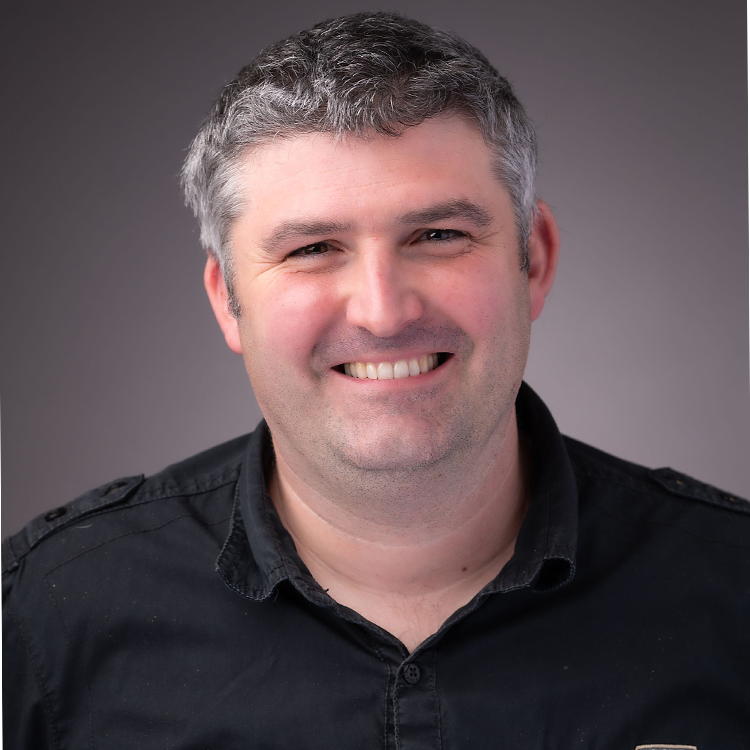
Is Europe's chemical sector facing a structural reset, or a temporary slowdown? As Middle East supply disruptions tighten feedstock availability and energy costs squeeze margins, the investment pipeline is shifting in ways that will define the sector for decades. In this episode, IIR's Shaheen Chohan (Senior VP of Global Analytics) sits down with Jean-Baptiste Mauduit (European Research Manager – Alternative Fuels, Chemical Processing) to analyze what IIR's latest data reveals about European chemicals and transportation fuels. They address petrochemical market contraction, green hydrogen as an e-fuel enabler, biomethane's growth and revenue potential, and fertilizer price pressures with green ammonia's long-term potential.
[Intro] Shaheen Chohan (00:00):
If you've been trying to understand whether the current supply disruption associated with transportation fuels and chemicals coming out of the Middle East, and whether this has lent more support for active planned capital investments currently being tracked within European Chemicals and Transportation fuels, then this conversation will help you connect the dots.
Shaheen Chohan (00:40):
Welcome to Navigating the Currents of Change. My name is Shaheen Chohan and I lead Market Analytics and Industrial Info Resources, a global provider of energy and industrial infrastructure market intelligence, for more than 40 years. In our podcast, we will take a closer look at some of the key themes and trends being seen as Europe continues to forge ahead with its goal of decarbonizing the transportation and chemical sectors. And to help me dissect some of these, I am delighted to be joined by Baptiste Mauduit, who leads our European research for alternative fuels and chemical processing. Welcome, Baptiste. Very nice to see you in all of our analysis and discussion.
Points covered today are according to Industrial Info Resources data and is sourced from our global Market Intelligence Project database. Now, Baptiste, if we could just kick off the discussion by talking a little bit about market sentiment, clearly at a time when the petrochemical sector in particular has been a little oversupplied, and clearly we're seeing a lot of price volatility, supply disruptions for many of the feedstocks required by the chemical sector. What is the general sentiment, and are we seeing the industry? Is it in a phase of kind of capacity expansion, or is it sort of a period of stabilization, or is it — or is it indeed, unfortunately, in a state of contraction?
Baptiste Mauduit (02:06):
As you can guess, Shaheen, at the moment, the European chemical market is extremely soft and you can see that not only in a basic petrochemical but in different areas, like the plastic recycling, which was expected to be a growing segment with demand and high energy cost feedstock and competition from newer and cheaper capacity push margin really low. And from my head, I think in the last two years we have closed four ethylene crackers in Europe. I think one in conventional ExxonMobil, one in Scotland, one in Italy and Sabic in the Netherlands. And the pressure is now extending into plastic recycling. Eastman Chemical Company has delayed its flagship chemical recycling project in Port Jérome. While Vilhena has already shut its Avonmouth facility after only two years of operation. So to answer you very directly, the sector is clearly in a phase of contraction and we see more capacity being shut or mothballed than added.
Shaheen Chohan (03:17):
Now, Baptiste, we really can't have a conversation today without talking about issues in the Middle East. Firstly, though, does Europe and the European chemical sector — does it receive oil and gas feedstock for its chemical production from the Middle East? And if so, will this — the current conflict — will this have some kind of impact on the current pipeline of projects across Europe?
Baptiste Mauduit (03:47):
Yeah, Shaheen, you're right. Europe does import part of its oil and gas from the Middle East — roughly around 25%. It's a quarter. So we have some exposure, but it's much less dependent than Asia and far less than it used to be from the Russian gas. The main risk isn't that Europe runs out of supply. The main risk is in prices — a lot of the world's oil and LNG passes through that region. So if anything happens, prices go up quickly for European chemical producers. That adds pressure on top of already high energy costs. Margin gets even more squeezed. And that's where we start to see projects being delayed, scaled back or even canceled.
But it's not a new trend line. We were talking about it back in August. It just sped it up. Europe is moving away from big commodity projects to what more specialized, lower carbon ones.
Shaheen Chohan (04:44):
So Baptiste, without secure supply of oil and gas coming out of the Middle East, obviously we're going to need to see a little bit more US LNG coming into the chemical sector. Is that supply still guaranteed? And more importantly, as you said, can it be obtained at the right price?
Baptiste Mauduit (05:04):
With us, it's not about supply, it's about cost. As you can guess, the US and others like Norway can cover European needs, but it's expensive and Europe has to compete with Asia. So it keeps things running. But gas stays costly. So that continues to shape the project pipeline.
Shaheen Chohan (05:23):
Baptiste, over the last few years, much of the spending that you and your researchers have been tracking is associated with green chemical projects. What's the big policy framework in place that is shaping the decarbonization of the chemical sector?
Baptiste Mauduit (05:43):
Most of the investments in Europe right now is policy driven, and the main framework is the EU Fit for 55 package — it aims to cut emissions by at least 55% by 2030 and reach climate neutrality by 2050. One key part of that is Refuel Aviation, which is directly driving green hydrogen projects. From 2025, fuel suppliers at EU airports have to blend sustainable aviation fuel into their jet fuel, starting at 2%. It's rising to, I think, 20% by 2035 and up to 70% by 2050. Within that, synthetic fuels made from green hydrogen and captured CO2 become increasingly important, reaching around 35% by 2050. So green hydrogen, as you can imagine, is a key enabler.
And the industry was on track — if I remember correctly — to meet the 2% target. But the final compliance data is still pending.
Shaheen Chohan (06:47):
So, Baptiste, maybe we could just inject a little bit of reality into all of this, though. Green projects typically have higher costs, the end consumer may not be that willing to pay for the additional premium for green products. And obviously when we look at technologies — I mean, last time we had a conversation, there was a shortage of electrolyzers to make that green hydrogen, and the supply chains were a little uncertain. Are these still issues for green projects? Are we starting to see some of them stall? Are we saying the pipeline is now wide open and we're seeing momentum, or are projects still being pushed out? Which is it?
Baptiste Mauduit (07:26):
It's more nuanced than that, Shaheen. We clearly see a wave of delays and cancellations in green hydrogen, as we already highlighted in our last podcast in August. We were tracking at this time around 800 projects — only six months after we tracked 700 projects. And in total, I think for the last two years we have had 180 projects that have been canceled. So initially, many of these projects were focused on replacing gray hydrogen in refining or positioning hydrogen as a fuel on its own for power or mobility. What we are seeing now is not a full retreat — it's a burst of the bubble. As we mentioned, it's becoming much more selective and capital is shifting to hydrogen derivatives, and mainly as a fuel because the demand is much stronger.
That shift has been accelerated by policies like the ReFuelEU, which creates guaranteed demand. As a result, we are seeing large scale electrolyzer projects being scaled back or even canceled, but smaller and more targeted projects being developed, and a stronger focus, of course, on fuel and synthetic aviation fuel. So overall, instead of having a rapid boom like people were saying, what we see is more a ramp-up increasingly linked to fuel, or to some extent green ammonia for fertilizer.
Shaheen Chohan (08:55):
So are you actually seeing any new trending sectors that are possibly showing more spending momentum than others? What are some of the new or emerging spending hotspots?
Baptiste Mauduit (09:08):
Biomethane remains a very strong driver in Europe, and the trend is becoming even clearer. As we highlighted in our podcast last August, the CO2 capture from the biomethane process itself is as well gaining a bit more momentum, as pilot projects are being taken very seriously. I talk a lot with directors from major chemical companies, and there is a clear interest not only in the biomethane, but also in integrating the biogenic CO2 into applications like e-methanol or synthetic aviation fuel.
What I like particularly about biomethane is it generates multiple revenue streams — in addition to reliable gas that can be injected into the grid, or the CO2 into synthetic aviation fuel or methanol, we can use the digestate as a bio fertilizer and return it into agricultural land. This is a fast moving sector. If I remember, back in August we were tracking around 300 projects worth 6 to $7 billion. And right now, six months after, we are tracking around 400 projects worth 8 to $9 billion.
Shaheen Chohan (10:12):
Baptiste, where are you seeing new capacity still being planned from? I guess either grassroots developments or indeed new unit additions.
Baptiste Mauduit (10:25):
We are seeing new capacity being planned both in grassroots and unit additions, made mainly for fuel and particularly synthetic aviation fuel or e-methanol — that's largely driven by policies like ReFuelEU that we discussed earlier. Right now, we are tracking over 150 projects and more than 130 planned units, representing roughly around $30 billion in investment, and it's across e-methanol and synthetic aviation fuel. Around half is focusing on SAF, with most of the remainder in methanol, either for maritime fuel or as an intermediate for alcohol-to-jet fuel. And as we mentioned earlier, many of the large green hydrogen projects we initially saw are now being scaled down or refocused, with hydrogen increasingly directed to high-value fuel production rather than standalone uses.
Shaheen Chohan (11:15):
Now, Baptiste, we're coming into that key part of the year, the crop planting season. What is the outlook for European ag chemicals and in particular, fertilizer spending?
Baptiste Mauduit (11:28):
The key thing in Europe right now is that we are not running out of fertilizer. It's a story about how expensive it's getting, because Europe relies heavily on imported energy. When something like the Strait of Hormuz is disrupted, prices here move very quickly. We can already see it in the numbers — nitrogen fertilizer prices have jumped again and now are really well above pre-crisis levels. That's why the Commission is stepping in to ease the pressure on farmers.
Longer term, this should support investment in things like green ammonia — producing fertilizer locally using clean hydrogen instead of imported gas. But there is a catch, Shaheen — high prices also make green ammonia expensive, so it doesn't solve the problem just overnight. What it really does is shift the direction. Each crisis pushes Europe towards the same conclusion: producing its own clean fuel and fertilizer isn't just about climate anymore — it's about security.
Shaheen Chohan (12:40):
So that brings us to the conclusion of our podcast. A very big thanks to you, Baptiste, for sharing your insights and your perspective today. Thank you very much, very much appreciated. And a very big thanks to all of you who tuned in. If any of you have any further questions about any of the discussion points that we raised today, then please do reach out to myself or Baptiste via the contact details that you can see here. All of the data and insights generated during our discussion are according to Industrial Info Resources data sourced from our global Market Intelligence Project database. Thanks everyone for joining us. I hope we have helped you all better navigate some of those currents of change that we're seeing.
If you've been trying to understand whether the current supply disruption associated with transportation fuels and chemicals coming out of the Middle East, and whether this has lent more support for active planned capital investments currently being tracked within European Chemicals and Transportation fuels, then this conversation will help you connect the dots.
Shaheen Chohan (00:40):
Welcome to Navigating the Currents of Change. My name is Shaheen Chohan and I lead Market Analytics and Industrial Info Resources, a global provider of energy and industrial infrastructure market intelligence, for more than 40 years. In our podcast, we will take a closer look at some of the key themes and trends being seen as Europe continues to forge ahead with its goal of decarbonizing the transportation and chemical sectors. And to help me dissect some of these, I am delighted to be joined by Baptiste Mauduit, who leads our European research for alternative fuels and chemical processing. Welcome, Baptiste. Very nice to see you in all of our analysis and discussion.
Points covered today are according to Industrial Info Resources data and is sourced from our global Market Intelligence Project database. Now, Baptiste, if we could just kick off the discussion by talking a little bit about market sentiment, clearly at a time when the petrochemical sector in particular has been a little oversupplied, and clearly we're seeing a lot of price volatility, supply disruptions for many of the feedstocks required by the chemical sector. What is the general sentiment, and are we seeing the industry? Is it in a phase of kind of capacity expansion, or is it sort of a period of stabilization, or is it — or is it indeed, unfortunately, in a state of contraction?
Baptiste Mauduit (02:06):
As you can guess, Shaheen, at the moment, the European chemical market is extremely soft and you can see that not only in a basic petrochemical but in different areas, like the plastic recycling, which was expected to be a growing segment with demand and high energy cost feedstock and competition from newer and cheaper capacity push margin really low. And from my head, I think in the last two years we have closed four ethylene crackers in Europe. I think one in conventional ExxonMobil, one in Scotland, one in Italy and Sabic in the Netherlands. And the pressure is now extending into plastic recycling. Eastman Chemical Company has delayed its flagship chemical recycling project in Port Jérome. While Vilhena has already shut its Avonmouth facility after only two years of operation. So to answer you very directly, the sector is clearly in a phase of contraction and we see more capacity being shut or mothballed than added.
Shaheen Chohan (03:17):
Now, Baptiste, we really can't have a conversation today without talking about issues in the Middle East. Firstly, though, does Europe and the European chemical sector — does it receive oil and gas feedstock for its chemical production from the Middle East? And if so, will this — the current conflict — will this have some kind of impact on the current pipeline of projects across Europe?
Baptiste Mauduit (03:47):
Yeah, Shaheen, you're right. Europe does import part of its oil and gas from the Middle East — roughly around 25%. It's a quarter. So we have some exposure, but it's much less dependent than Asia and far less than it used to be from the Russian gas. The main risk isn't that Europe runs out of supply. The main risk is in prices — a lot of the world's oil and LNG passes through that region. So if anything happens, prices go up quickly for European chemical producers. That adds pressure on top of already high energy costs. Margin gets even more squeezed. And that's where we start to see projects being delayed, scaled back or even canceled.
But it's not a new trend line. We were talking about it back in August. It just sped it up. Europe is moving away from big commodity projects to what more specialized, lower carbon ones.
Shaheen Chohan (04:44):
So Baptiste, without secure supply of oil and gas coming out of the Middle East, obviously we're going to need to see a little bit more US LNG coming into the chemical sector. Is that supply still guaranteed? And more importantly, as you said, can it be obtained at the right price?
Baptiste Mauduit (05:04):
With us, it's not about supply, it's about cost. As you can guess, the US and others like Norway can cover European needs, but it's expensive and Europe has to compete with Asia. So it keeps things running. But gas stays costly. So that continues to shape the project pipeline.
Shaheen Chohan (05:23):
Baptiste, over the last few years, much of the spending that you and your researchers have been tracking is associated with green chemical projects. What's the big policy framework in place that is shaping the decarbonization of the chemical sector?
Baptiste Mauduit (05:43):
Most of the investments in Europe right now is policy driven, and the main framework is the EU Fit for 55 package — it aims to cut emissions by at least 55% by 2030 and reach climate neutrality by 2050. One key part of that is Refuel Aviation, which is directly driving green hydrogen projects. From 2025, fuel suppliers at EU airports have to blend sustainable aviation fuel into their jet fuel, starting at 2%. It's rising to, I think, 20% by 2035 and up to 70% by 2050. Within that, synthetic fuels made from green hydrogen and captured CO2 become increasingly important, reaching around 35% by 2050. So green hydrogen, as you can imagine, is a key enabler.
And the industry was on track — if I remember correctly — to meet the 2% target. But the final compliance data is still pending.
Shaheen Chohan (06:47):
So, Baptiste, maybe we could just inject a little bit of reality into all of this, though. Green projects typically have higher costs, the end consumer may not be that willing to pay for the additional premium for green products. And obviously when we look at technologies — I mean, last time we had a conversation, there was a shortage of electrolyzers to make that green hydrogen, and the supply chains were a little uncertain. Are these still issues for green projects? Are we starting to see some of them stall? Are we saying the pipeline is now wide open and we're seeing momentum, or are projects still being pushed out? Which is it?
Baptiste Mauduit (07:26):
It's more nuanced than that, Shaheen. We clearly see a wave of delays and cancellations in green hydrogen, as we already highlighted in our last podcast in August. We were tracking at this time around 800 projects — only six months after we tracked 700 projects. And in total, I think for the last two years we have had 180 projects that have been canceled. So initially, many of these projects were focused on replacing gray hydrogen in refining or positioning hydrogen as a fuel on its own for power or mobility. What we are seeing now is not a full retreat — it's a burst of the bubble. As we mentioned, it's becoming much more selective and capital is shifting to hydrogen derivatives, and mainly as a fuel because the demand is much stronger.
That shift has been accelerated by policies like the ReFuelEU, which creates guaranteed demand. As a result, we are seeing large scale electrolyzer projects being scaled back or even canceled, but smaller and more targeted projects being developed, and a stronger focus, of course, on fuel and synthetic aviation fuel. So overall, instead of having a rapid boom like people were saying, what we see is more a ramp-up increasingly linked to fuel, or to some extent green ammonia for fertilizer.
Shaheen Chohan (08:55):
So are you actually seeing any new trending sectors that are possibly showing more spending momentum than others? What are some of the new or emerging spending hotspots?
Baptiste Mauduit (09:08):
Biomethane remains a very strong driver in Europe, and the trend is becoming even clearer. As we highlighted in our podcast last August, the CO2 capture from the biomethane process itself is as well gaining a bit more momentum, as pilot projects are being taken very seriously. I talk a lot with directors from major chemical companies, and there is a clear interest not only in the biomethane, but also in integrating the biogenic CO2 into applications like e-methanol or synthetic aviation fuel.
What I like particularly about biomethane is it generates multiple revenue streams — in addition to reliable gas that can be injected into the grid, or the CO2 into synthetic aviation fuel or methanol, we can use the digestate as a bio fertilizer and return it into agricultural land. This is a fast moving sector. If I remember, back in August we were tracking around 300 projects worth 6 to $7 billion. And right now, six months after, we are tracking around 400 projects worth 8 to $9 billion.
Shaheen Chohan (10:12):
Baptiste, where are you seeing new capacity still being planned from? I guess either grassroots developments or indeed new unit additions.
Baptiste Mauduit (10:25):
We are seeing new capacity being planned both in grassroots and unit additions, made mainly for fuel and particularly synthetic aviation fuel or e-methanol — that's largely driven by policies like ReFuelEU that we discussed earlier. Right now, we are tracking over 150 projects and more than 130 planned units, representing roughly around $30 billion in investment, and it's across e-methanol and synthetic aviation fuel. Around half is focusing on SAF, with most of the remainder in methanol, either for maritime fuel or as an intermediate for alcohol-to-jet fuel. And as we mentioned earlier, many of the large green hydrogen projects we initially saw are now being scaled down or refocused, with hydrogen increasingly directed to high-value fuel production rather than standalone uses.
Shaheen Chohan (11:15):
Now, Baptiste, we're coming into that key part of the year, the crop planting season. What is the outlook for European ag chemicals and in particular, fertilizer spending?
Baptiste Mauduit (11:28):
The key thing in Europe right now is that we are not running out of fertilizer. It's a story about how expensive it's getting, because Europe relies heavily on imported energy. When something like the Strait of Hormuz is disrupted, prices here move very quickly. We can already see it in the numbers — nitrogen fertilizer prices have jumped again and now are really well above pre-crisis levels. That's why the Commission is stepping in to ease the pressure on farmers.
Longer term, this should support investment in things like green ammonia — producing fertilizer locally using clean hydrogen instead of imported gas. But there is a catch, Shaheen — high prices also make green ammonia expensive, so it doesn't solve the problem just overnight. What it really does is shift the direction. Each crisis pushes Europe towards the same conclusion: producing its own clean fuel and fertilizer isn't just about climate anymore — it's about security.
Shaheen Chohan (12:40):
So that brings us to the conclusion of our podcast. A very big thanks to you, Baptiste, for sharing your insights and your perspective today. Thank you very much, very much appreciated. And a very big thanks to all of you who tuned in. If any of you have any further questions about any of the discussion points that we raised today, then please do reach out to myself or Baptiste via the contact details that you can see here. All of the data and insights generated during our discussion are according to Industrial Info Resources data sourced from our global Market Intelligence Project database. Thanks everyone for joining us. I hope we have helped you all better navigate some of those currents of change that we're seeing.
Please Select A Language
*This episode is brought to you by Industrial Info's Latin American Office in Argentina.