Petroleum Refining
Uganda to Build First Domestic Oil Refinery with Iran
Uganda has announced plans to build its first domestic oil refinery with assistance from Iran. The announcement came during Ugandan President Yoweri...
Released Tuesday, June 02, 2009
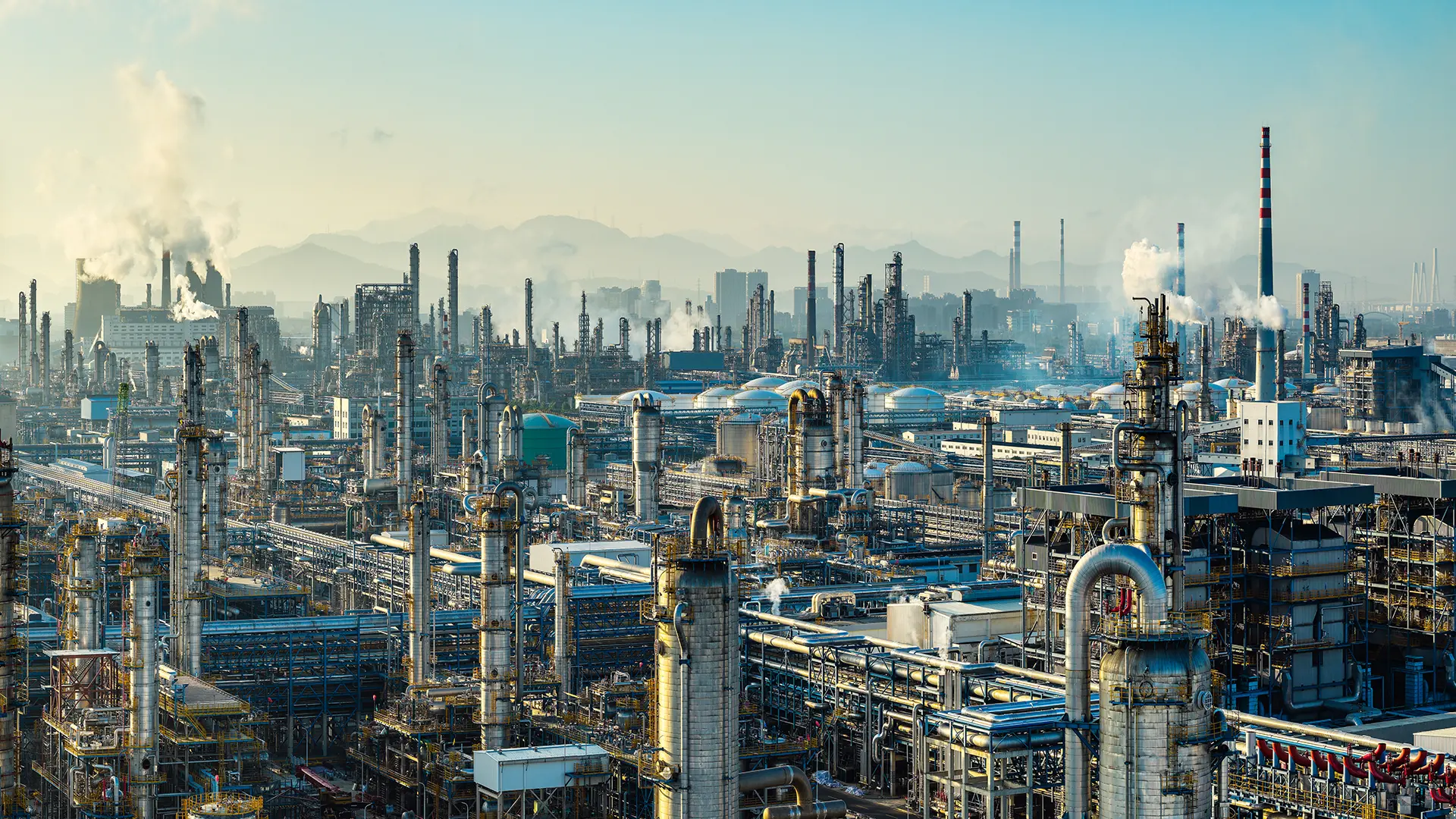
Researched by Industrial Info Resources (Sugar Land, Texas)--Uganda has announced plans to build its first domestic oil refinery with assistance from Iran. The announcement came during Ugandan President Yoweri Musevini's recent three-day visit to Tehran, where he held discussions with his Iranian counterpart President Mahmoud Ahmadinejad. Iran has agreed to invest in Uganda's petroleum refining industry to increase the value proposition of this business, which is still in its preliminary stages.
Iran and Uganda signed a cooperation agreement to construct the refinery, and to improve oil and gas infrastructure in Uganda. The countries hope to strengthen bilateral ties by collaborating in the industrial, investment, agro-processing, commercial, agricultural, mining, vocational training, information and communication technology, foreign relations, public sector, banking and energy sectors. Iran will provide technical training to Ugandans in petroleum studies at the University of Petroleum Studies and affiliated institutions in Iran.
The decision comes at a time when international oil companies have been aggressively urging Uganda to construct a 1,300-kilometer pipeline from oil fields near Kampala to Mombasa so that unprocessed crude petroleum can be exported. Heritage Oil Limited (LSE:HOIL) (Jersey, Channel Islands) and Tullow Oil Plc (LSE:TLW) (London), in particular, have been advocating for crude oil exports after the recent discovery of oil reserves in the Lake Albertine Graben basin. The region is estimated to have reserves of more than 600 million barrels of commercially viable crude oil. Tullow and Heritage were keen on exporting crude if they discovered more than 300 million barrels of oil in the region.
The Ugandan government has faced a lot of criticism in recent months for depending entirely on fuel imported from Kenya to meet domestic demand. Kenya is not an oil producer but imports crude for processing and then exports it to neighboring countries such as Uganda. Oil supplies to Uganda, a landlocked nation, were adversely disrupted last year following political riots in Kenya. This has led to Uganda firmly adhering to its stance of constructing a domestic refinery against crude oil exports. The oil wells discovered are slated to begin production by either 2011 or 2012.
According to Hillary Onek, Uganda's Minister of Energy, the development of a refinery has the potential to stimulate the economy as it would attract foreign investments, create jobs and help the country save money on imports. Upon commissioning, the oil fields and refineries are expected to generate revenues of about $2 billion-$5 billion per year. However, Brian Smith, Vice President for Oil Exploration and Production at Heritage, said Uganda's estimated oil production is not sufficient to sustain operations at the planned refinery. The government is currently making plans for a refining capacity of 100,000 barrels per day (BBL/d) for the proposed plant. International consulting majors in the field of oil exploration also believe that crude export in the initial stages is an easier way for Uganda to realize profits. It will also give the country time to determine the right capacity for a large refinery based on the results of ongoing exploration activities and allow Uganda to analyze the demand for refined products in the regional market.
In January 2008, Uganda had initiated plans to build a mini-refinery, known as a topping plant, with a designed refining capacity of 4,000 BBL/d to produce 32,000 tons per year of white products, such as kerosene and diesel, and 156,000 tons per year of fuel oil. However, the government shelved plans after sequential discoveries of oil reserves with high commercial feasibility at the exploration blocks allotted to Tullow Oil and Heritage Oil. With the government reviving plans to construct a refinery, Uganda would be able to meet a part of its total consumption of 840,000 tons per year of refined petroleum products. For related information, see May 18, 2009, news article - Uganda Revives Plans for Mini-Refinery after Oil Discoveries by Tullow and Heritage Oil.
Industrial Info Resources (IIR) is the leading provider of global market intelligence specializing in the industrial process, heavy manufacturing and energy related markets. For more than 26 years, Industrial Info has provided plant and project opportunity databases, market forecasts, high resolution maps, and daily industry news.
/news/article.jsp
false
Want More IIR News Intelligence?
Make us a Preferred Source on Google to see more of us when you search.
Add Us On GoogleAsk Us
Have a question for our staff?
Submit a question and one of our experts will be happy to assist you.

Forecasts & Analytical Solutions
Where global project and asset data meets advanced analytics for smarter market sizing and forecasting.
Explore Our SolutionsRelated Articles
-
U.S. Consumers Mull EVs Amid Higher Gasoline PricesMay 15, 2026
-
Vessel Seized in UAE WatersMay 14, 2026

Industrial Project Opportunity Database and Project Leads
Get access to verified capital and maintenance project leads to power your growth.
Discover Our DatabaseIndustry Intel
-
The Role of Contract Manufacturing in Global Pharma GrowthPodcast Episode / May 8, 2026
-
2026 North American Labor OutlookPodcast Episode / Apr 24, 2026
-
2026 European Metals & Minerals Project Spending OutlookPodcast Episode / Apr 7, 2026
-
The Age of Critical Minerals in the AmericasPodcast Episode / Mar 20, 2026
-
2026 Regional Chemical Processing OutlookPodcast Episode / Mar 6, 2026