Chemical Processing
China Hits Small and Dirty Petrochem Plants and Fast Tracks Large New Projects
The spate of large and very large petrochemical projects under construction and planned in China is balanced, to a certain extent, by a directive contained in a circular issued by the countrys National Development and Reform Commission (NDRC) which says that projects and plants...
Released Tuesday, June 01, 2004
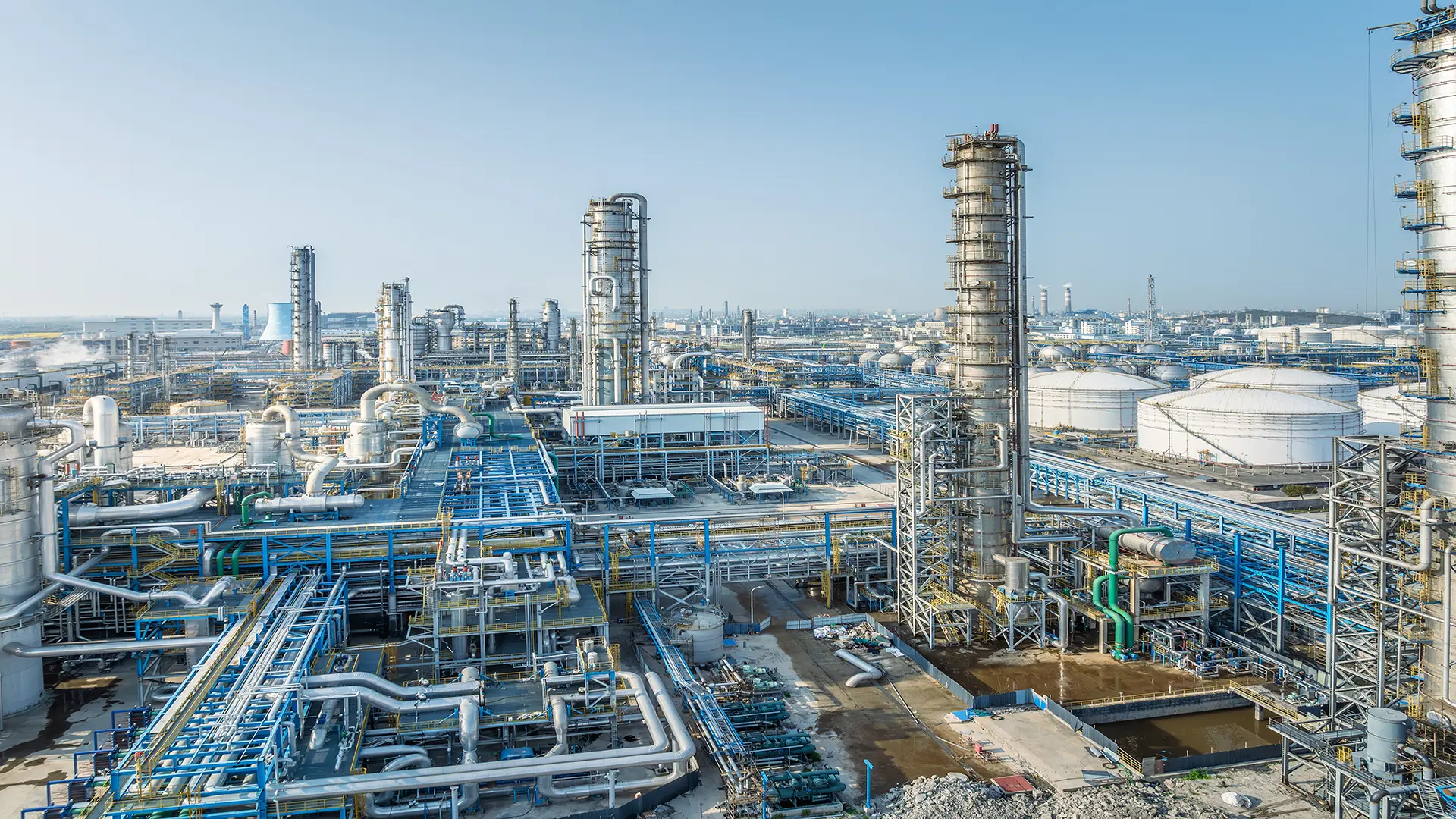
Researched by Industrialinfo.com (Industrial Information Resources Incorporated; Houston, Texas). The spate of large and very large petrochemical projects under construction and planned in China is balanced, to a certain extent, by a directive contained in a circular issued by the countrys National Development and Reform Commission (NDRC) which says that projects and plants which fall below specified capacities or which employ technologies viewed as environmentally damaging will be subject to a review which could lead to cancellations.
Small ferroalloy plants and privateer aluminum smelters have had curbs put on them in the past and the authorities are attempting to put a brake on the headlong rush of steel production projects. The move on existing petrochemical projects is part of the effort to cool the countrys economy and reduce lending risks. It is also aimed at stopping the widespread building of projects which do not meet industry standards and criteria.
The NDRC circular, issued in conjunction with the Peoples Bank of China and the China Banking Regulatory Commission, said that the new curbs will also apply to the textile, steel, aluminum, building materials, machinery, leather, salt, printing and pharmaceutical industries. The relevant authorities and financial institutions at all levels have been ordered by the NDRC to examine existing production facilities and new projects. Building work on projects will be stopped while reviews are carried out and funding must be stopped at the same time. Plants which have already been constructed, but now fall foul of the directives, will be given deadlines to shut down.
Specifications for the banning and restrictions of new and existing plants in the petrochemical industry include a stopper on acetylene units which have a capacity of less than 10,000 tons per year (tpy)and which utilize open-concept furnaces that are environmentally harmful. Any further construction of refineries with capacities of less than 7.5 million bpy is banned. Other specifications on the list of over 20 plant restriction categories include: catalytic reforming units with capacities less than 500,000 tpy; hydrocrackers 800,000 tpy; polypropylene units 70,000 tpy; polyethylene units 200,000 tpy; polystyrene units 100,000 tpy; ethylene dichloride (EDC)-based polyvinyl chloride (PVC) units 200,000 tpy and methanol based acetic acid units of less than150,000 tpy.
At the other big end of new petrochemical projects in China, PetroChina (NYSE:PTR) (HK:0857) (Beijing, China) is planning a $2.4 billion ethylene plant with a one million ton per year capacity. This will be part of a complex to be developed in Dushanzi in the countrys remote northwest Xinjiang province that will feed off crude oil brought in from Kazahkstan. The framework deal for construction of the 1,240-kilometer pipeline was signed between Kazakhstan and China in the last week of May. Initial capacity of the pipeline will be 75 million barrels of crude oil a year. The petrochemical complex project is being fast-tracked through the feasibility phase as Beijing wishes to speed up investment in the underdeveloped western region.
PetroChina is also planning to boost its refining capacity at the existing Dushanzi refinery to 75 million barrels a year from the current 34 million. It is estimated that the ethylene plant, situated in the distant interior with long winters, will take three years to complete after the construction starting date.
Another $2.4 billion ethylene project awaiting Beijings approval to complete the feasibility study phase is the one million ton per year plant in Ningbo city in Zhejiang province in the center of East Chinas booming Yangtze River Delta where one of the countrys largest oil terminals and storage facilities are sited. Ningbo has a cluster of petrochemical plants in operation or under construction.
The plant will be built by Zhenhai Refining and Chemical Co (HK:1128) (Beijing, China) and is scheduled for completion in 2010 and will have a large component of domestic sourced financing. Beijing has indicated a move from straight 50/50 joint ventures with foreign companies as it feels the petrochemical industry is now capable in both technology and management. This shift in emphasis does not rule out participation by foreign investors and the incorporation of some foreign proprietary technology.
Another project at Daxie Island is the $310 million (PEC 88000650) purified terephthalic acid (PTA) plant that will be built by Japans Mitsubishi Heavy Industries (TOKYO:7011). The 600,000 tpy plant will be complete in September 2006. Mitsubishi seems to have slid under the new home ownership bar with a 61% stake in the Ningbo Mitsubishi Chemical Co joint venture. The balance will be held by Mitsubishi Corp, Itochu Corp and Chinas CITIC financial group.
China currently imports 60% of its petrochemical needs. In the next five years it is aiming to up ethylene production capacity by more than 80% to over 10 million tpy. China accounts for 40% of Asias PTA market and the domestic market is growing at a rate of 10% per annum.
/news/article.jsp
false
Want More IIR News Intelligence?
Make us a Preferred Source on Google to see more of us when you search.
Add Us On GoogleAsk Us
Have a question for our staff?
Submit a question and one of our experts will be happy to assist you.

Forecasts & Analytical Solutions
Where global project and asset data meets advanced analytics for smarter market sizing and forecasting.
Explore Our SolutionsRelated Articles
-
Green Light for Humber Green Hydrogen Plant in U.K.May 06, 2026
-
Phillips 66 Advances Major Global Growth ProjectsMay 05, 2026

Industrial Project Opportunity Database and Project Leads
Get access to verified capital and maintenance project leads to power your growth.
Discover Our DatabaseIndustry Intel
-
The Role of Contract Manufacturing in Global Pharma GrowthPodcast Episode / May 8, 2026
-
2026 North American Labor OutlookPodcast Episode / Apr 24, 2026
-
2026 European Metals & Minerals Project Spending OutlookPodcast Episode / Apr 7, 2026
-
The Age of Critical Minerals in the AmericasPodcast Episode / Mar 20, 2026
-
2026 Regional Chemical Processing OutlookPodcast Episode / Mar 6, 2026