Power
Two Thousand Megawatt Iraq Shortfall as New Power Feeds Give Hope in Dim Supply Scene.
Abhar Maurhof, Director General of Projects at the Electricity Ministry, told the local Daily Star that the real extent of the shortage is obscured by the near zero demand from industry,...
Released Monday, August 09, 2004
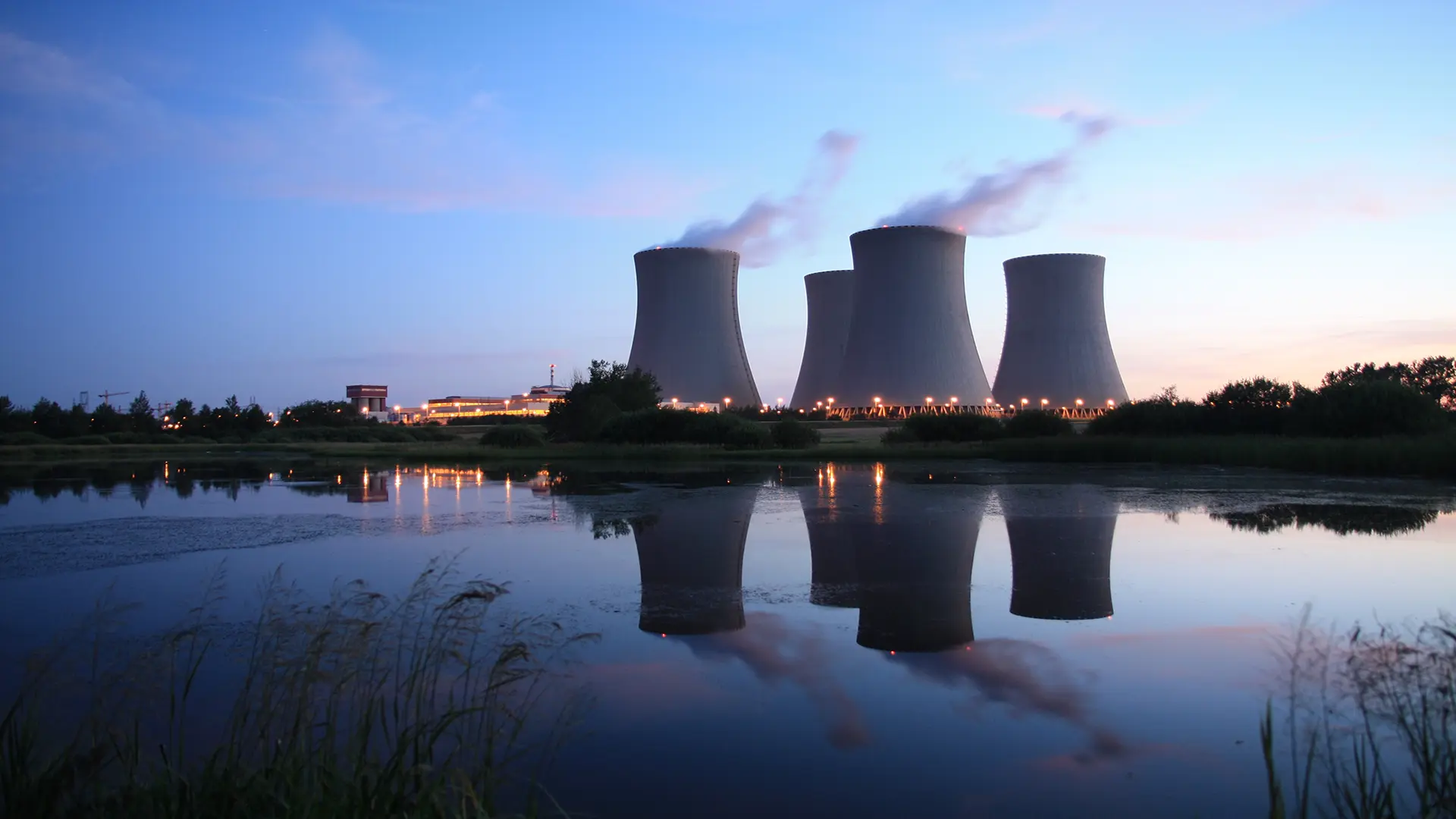
Researched by Industrialinfo.com (Industrial Information Resources, Incorporated; Houston, Texas). With current electrical output estimated at 4,800 MW, Iraq's citizens can expect 10 to 12 hours on intermittent power a day at best. The government has started rationing power on a three hours on, three hours off basis, with the worst-hit city being Baghdad, where only 50% of demand is being met. The U.S. led coalition handed over power to the new Iraqi interim government at the end of June, without being able to reach its targeted 6,500 MW a day. In summer, when temperatures can exceed 50C (120F), peak demand is over 6,000 MW.
Abhar Maurhof, Director General of Projects at the Electricity Ministry, told the local Daily Star that the real extent of the shortage is obscured by the near zero demand from industry, beaten into the ground by international sanctions and war. "If we have industrial demand coming, another 30% of electricity would be required, which at present is unavailable," he said.
Maurhof, despite working under the current debilitating conditions, still refers to plans to generate more than 20,000 MW in the next five years, and says that power distribution is much more evenly distributed across the country today, with many areas enjoying more electricity than at pre-war levels. He accused Saddam Hussein of sucking supplies from the north to the south of the country.
Two events in the first week of August demonstrated that there is forward movement in the development prospects of the power system, although it has been a case of one step forward and two steps backwards, with existing contractors abandoning projects or stalling work as the security situation has worsened.
The first positive news was the signing of an agreement in Amman, Jordan, between the Iraqi energy minister, Ayham Al Samarrai, and Bel Korchani, deputy chairman of Elbe Maschinenbau (EM) (Hamburg, Germany), for the German company to build three power plants in Iraq. Power plants of 550 MW and 100 MW are planned, with EM having an option on a further 240 MW unit.
The second glimmer came with the addition of 20 MW of power coming online from the generator at the Bayji Power Plant in the north central region of the country. This generator is the first one of a number of new power units scheduled to start up in August. The U.S. Army Corps of Engineers Restore Iraqi Electricity Directorate is working with local Iraqis and has added an additional 1,392 MW to the national grid over the course of a year.
In addition to security worries, which have temporarily curtailed power projects involving companies such as Siemens (NYSE:SI) (Munich Germany) and GE (NYSE:GE) (Fairfield, Connecticut) other companies, such as Russia's Technoexport (Moscow) and India's BHEL (Bharat Heavy Electricals) (Bombay), have withdrawn from existing project agreements. A lack of local funding added to the negative mix.
No delivery date has been given for the EM units, which may enable them to fit and turn an attainable future target date. Wartsila Oyj (HELSINKI:WRTAF)(Helsinki, Finland), which signed a $450 million deal in March for two 341 MW oil-fired plants in the Baghdad area for the Iraqi ministry of electricity, has delivery dates of 2004 and 2005 for the units, which will be built and delivered from the companys factory in Trieste, Italy. Maybe, with some just-in-time logistics and with an eye on the situation on the ground, they will still make the delivery window.
Sadouin al-Dulaimi, Executive Director of the private Iraq Center for Research and Strategic Studies (ICRSS) told The Daily Star that faster privatization and the opening up of the sector to bidders from other countries would assist in tackling generation and grid problems, which have been exacerbated by an inability to transfer power smoothly from the north and south along a decaying national grid, which never recovered from Desert Storm bombing in 1991 and subsequent looting. "Let there be faster privatization. There is hardly a policy initiative on this issue, despite its being the most frustrating part of Iraq," he said.
Looking towards a more virtuous circle of power supply and service Dulaimi concluded that improved supply would also subdue the insurgency. "Darkness hides the ugly and the pretty," he said.
View Project Report- 96000001 96000002
/news/article.jsp
false
Want More IIR News Intelligence?
Make us a Preferred Source on Google to see more of us when you search.
Add Us On GoogleAsk Us
Have a question for our staff?
Submit a question and one of our experts will be happy to assist you.

Forecasts & Analytical Solutions
Where global project and asset data meets advanced analytics for smarter market sizing and forecasting.
Learn MoreRelated Articles
-
BlackRock Stands by Solar, Wind as U.S. Energy Demand GrowsApril 15, 2026
-
European Union Probes EDF's $84 Billion Nuclear Power PlanApril 14, 2026

Industrial Project Opportunity Database and Project Leads
Get access to verified capital and maintenance project leads to power your growth.
Learn MoreIndustry Intel
-
2026 Regional Chemical Processing OutlookOn-Demand Podcast / Mar. 2, 2026
-
From Data to Decisions: How IIR Energy Helps Navigate Market VolatilityOn-Demand Podcast / Nov. 18, 2025
-
Navigating the Hydrogen Horizon: Trends in Blue and Green EnergyOn-Demand Podcast / Nov. 3, 2025
-
ESG Trends & Challenges in Latin AmericaOn-Demand Podcast / Nov. 3, 2025
-
2025 European Transportation & Biofuels Spending OutlookOn-Demand Podcast / Oct. 27, 2025