Petroleum Refining
Venezuela Sends 2 Billion Barrels of Crude Oil to India
Venezuelas state owned oil company, PDVSA, agreed with Indias government to send 2 billion crude oil barrels to the country as a result of a negotiation process that started in 2000
Released Monday, May 15, 2006
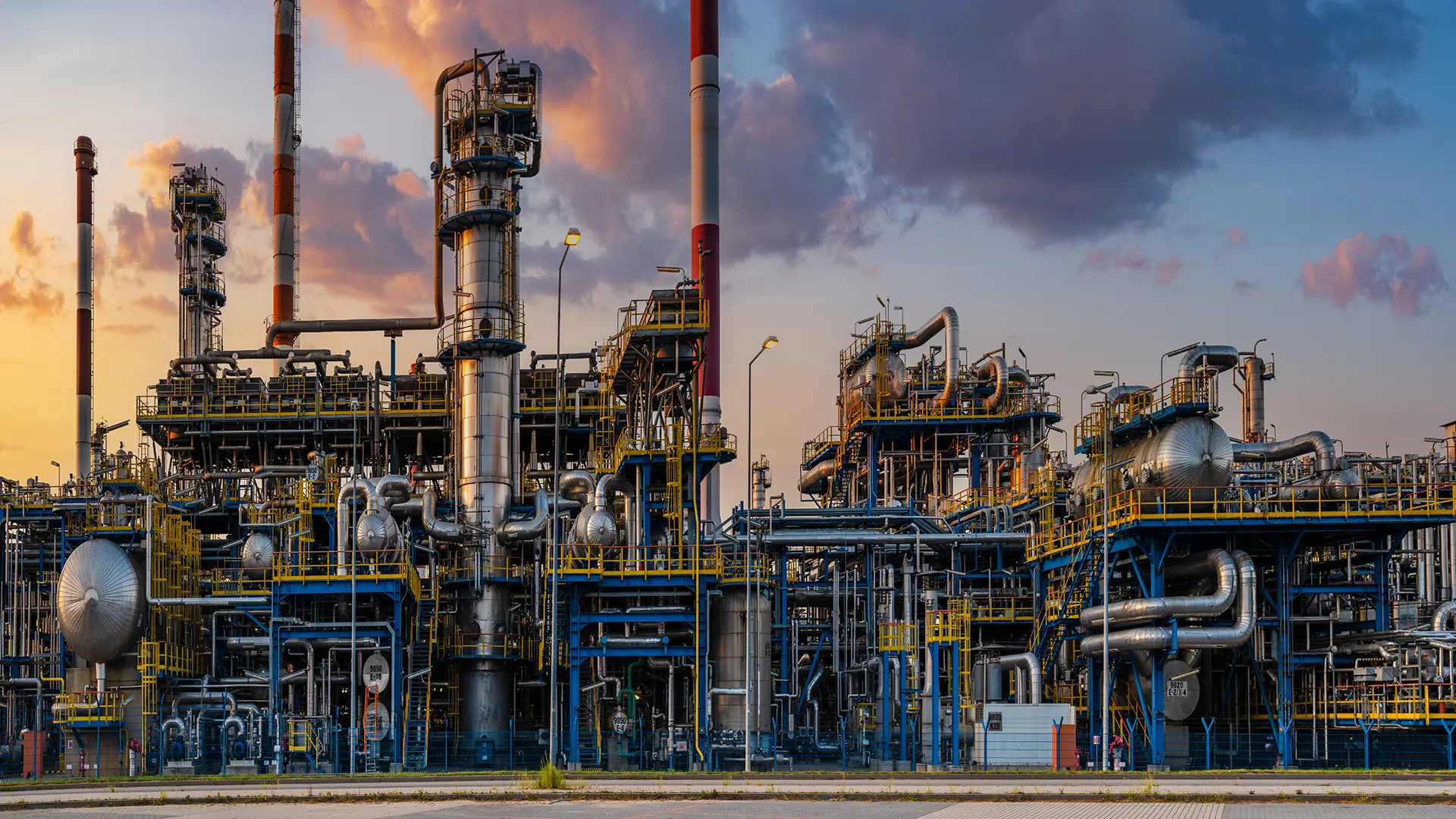
Researched by Industrial Info Resources (Sugar Land, Texas). Venezuelas state owned oil company, PDVSA, agreed with Indias government to send 2 billion barrels of crude oil to the country as a result of a negotiation process that started in 2000 during the first stages of the so called Plan de Siembra Petrolera 2006-2030. This improved the energy ties between Venezuela and India, which is the third largest crude oil consumer in Asia, with 70% of its petroleum requirements coming from imports.
PDVSAs Commerce and Supply Division agreed with India that the first delivery will be 4 million barrels of crude oil sent from TAEJ, Terminal de Almacenamiento y Embarque de Jose, in two shipments. The first shipment, in February, on the Very Large Crude Cargo (VLCC), also known as Venus Glory, carrying 1 million barrels of 16 API Merey oil and 1 million barrels of 30 API Mesa light crude oil obtained from combining fossil fuel of Venezuelas East region. The second shipment, about 1.3 million barrels of Mesa 30 API and 700,000 barrels of Merey, departed from Terminal de Almacenamiento y Embarque de Jose (TAEJ) on the VLCC Eagle Vermont, from the Anzoátegui State in Northeastern Venezuela to the Sikka Port in India on April 5, 2006.
TAEJ is a terminal with a storage capacity of 2.25 million barrels and a dispatch capacity of 400,000 barrels per day of crude oil. It has made some improvements that will boost its performance. It is the only terminal with a platform structure in Venezuela and one of the most important in the world due to its high flow and loading capability. It has eleven loading arms which handle 25,000 barrels per hour and it can dislodge crude oil at three docks simultaneously. Production surplus will be sent to the oriental region. Two million barrels of oil will be shipped monthly to India, which will increase the TAEJ marine terminal monthly cargo volume.
Venezuela is the only Latin American member of the Organization of Petroleum Exporting Countries (OPEC) and produces some 3.2 million barrels of oil per day, of which 1.5 million is sold to the United States. Currently, the country provides 15% of the oil supply of the United States, making Venezuela Americas 4th largest supplier, after Saudi Arabia, Canada, and Mexico.
Venezuelas president has sought to reduce the country's dependence on oil exports to the United States by seeking other export markets and creating new geopolitical relationships with key regional powers. Apart from the agreement with India, there are connections with countries such as members of the BRIC (Brazil, Russia, India and China), which is a new regional coalition. These are examples of Chavezs goal of trying to diversify the countrys oil trade and of trying to create strong economic partnerships with other countries centered around oil.
This new Venezuelan energy policy, expected to be fully implemented by the year 2030, involves diversification throughout the world in order to gain entrance into new markets as well as take advantage of the worldwide increase in demand for all petroleum products. Venezuelas new energy policy was implemented by President Hugo Chavez, and it consists of two stages: one from 2005 to 2012 and the other from 2012 to 2030. It includes six major projects that will be performed in conjunction with Petrocaribe and Petrosur: The Magna Reserve, to assess and to certify the Orinoco oil reserves at Franja del Orinoco; and the the Orinoco Project, 27 areas that have been chosen to undertake this project together with private companies to develop enterprises and housing in the Orinoco area to ensure the proper oil exploitation. The Delta-Caribbean Project presents gas as part of Venezuelas energy proposal and it will be carried out outside Plataforma Deltana (Delta Platform, Venezuela). The Refining Projects purpose is to improve Venezuelas refining capacity. On the other hand, the Infrastructure Project is for the motive of creating more product pipelines to guarantee oil supply for the whole country while The Integration Project is to ensure Venezuelas integration with other countries.
Industrial Info Resources (IIR) is a Marketing Information Service company that has been doing business for over 23 years. IIR is respected as the leader in providing comprehensive market intelligence pertaining to the industrial processing, heavy manufacturing, and energy-related industries throughout the world.
/news/article.jsp
false
Want More IIR News Intelligence?
Make us a Preferred Source on Google to see more of us when you search.
Add Us On GoogleAsk Us
Have a question for our staff?
Submit a question and one of our experts will be happy to assist you.

Forecasts & Analytical Solutions
Where global project and asset data meets advanced analytics for smarter market sizing and forecasting.
Explore Our Solutions
Industrial Project Opportunity Database and Project Leads
Get access to verified capital and maintenance project leads to power your growth.
Discover Our DatabaseIndustry Intel
-
Innovations Shaping the Next Era of Power GenerationPodcast Episode / May 22, 2026
-
The Role of Contract Manufacturing in Global Pharma GrowthPodcast Episode / May 8, 2026
-
2026 North American Labor OutlookPodcast Episode / Apr 24, 2026
-
2026 European Metals & Minerals Project Spending OutlookPodcast Episode / Apr 7, 2026
-
The Age of Critical Minerals in the AmericasPodcast Episode / Mar 20, 2026