Power
DOE's Grid-Reliability Report Forecasts Dire Shortfalls Under Existing System
On Monday, the Department of Energy issued its 'Report on Evaluating U.S. Grid Reliability and Security,' predicting dire consequences if fossil-fueled power plants continue to close and intermittent renewable generation maintains its track record of growth.
Released Wednesday, July 09, 2025
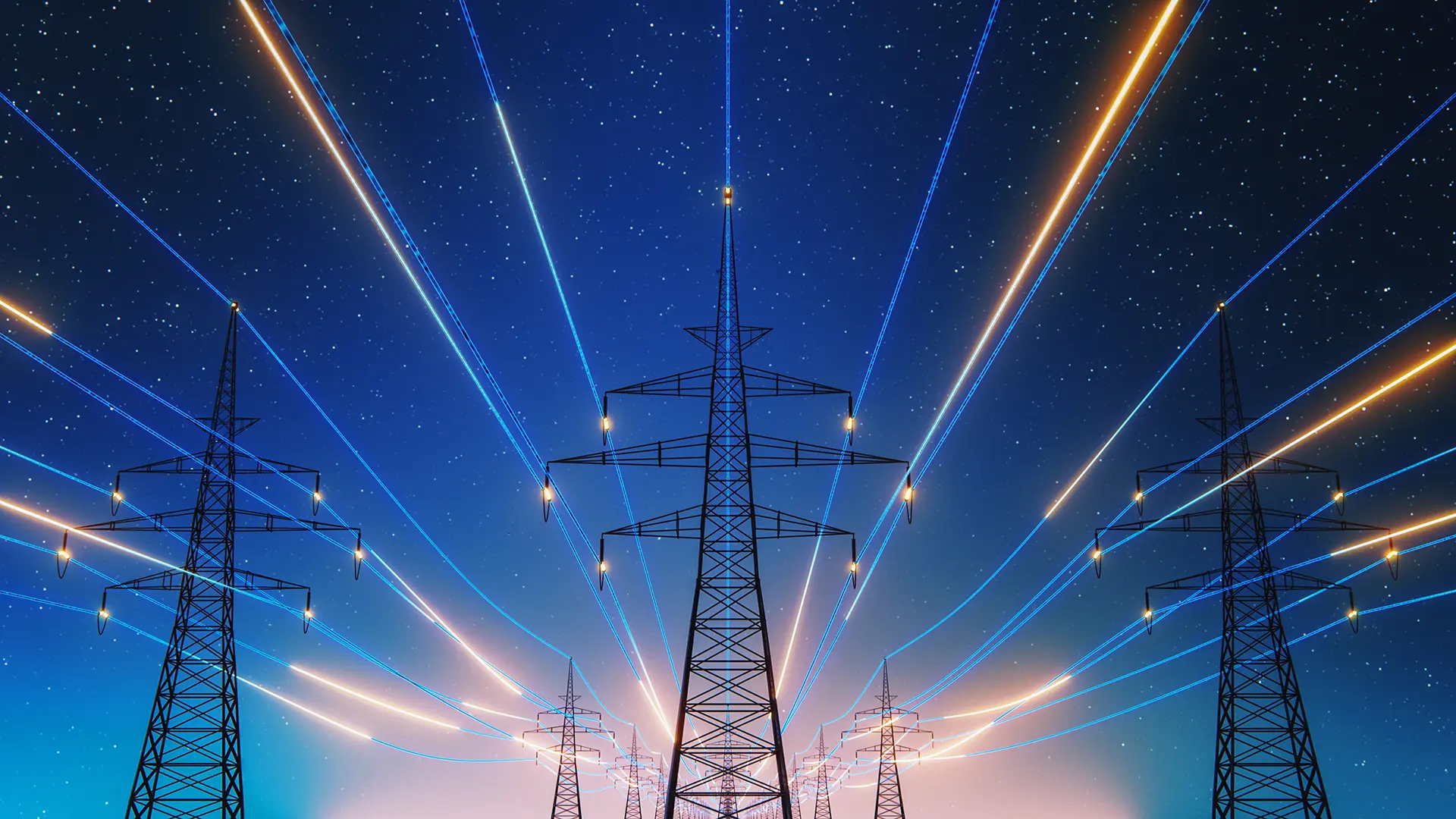
Researched by Industrial Info Resources (Sugar Land, Texas)--On Monday, the Department of Energy issued its "Report on Evaluating U.S. Grid Reliability and Security," predicting dire consequences if fossil-fueled power plants continue to close and intermittent renewable generation maintains its track record of growth.
One of the report's key talking points is the rollout of artificial intelligence (AI)-capable data centers, noting their substantial power use. Firmly guiding the government toward action rather than maintaining the status quo, the report reads: "Absent intervention, it is impossible for the nation's bulk power system to meet the AI growth requirements while maintaining a reliable power grid and keeping energy costs low for our citizens."
While the report doesn't provide much in the way of specific actions for the interventions that might be used, the overarching theme is to:
- Slow or halt the planned retirements of coal and older natural gas-fired plants
- Build more fossil-fueled plants
- Quash the dominance of wind and solar power in the nation's current power construction
Of course, the dire prediction of this scenario is somewhat negated when the report notes that it "is not an indication that reliability coordinators would allow this level of load growth to jeopardize the reliability of the system," but the overarching suggestion is that "the status quo of more generation retirements and less dependable replacement generation is neither consistent with winning the AI race and ensuring affordable energy for all Americans, nor with continued grid reliability."
Noting that several consultancies found broad variation on the estimates for future data center demand growth, ranging from 35 to 108 GW of average load increase by 2030, the DOE's modelling team adopted a midpoint assumption of approximately 50 GW demand growth from data centers by that time.
The DOE's "Plant Closures" scenario accounts not only for retirements, but also planned capacity additions that are planned to occur by 2030. Even with the predicted additions of 20 GW of new natural gas, 31 GW of battery energy storage, 124 GW of solar and 32 GW of wind, most U.S. regions were anticipated to experience shortfalls and loss of load hours. This changes markedly under the "No Plant Closures" scenario, in which none of the planned retirements occur, which shows most regions avoiding loss-of-load events, with a few exceptions.
The difference between the two scenarios clearly opens the way toward avoiding the 104 GW of retirements planned by 2030. An April executive order from U.S. President Donald Trump, to which the DOE's report this is a response, suggests the Federal Power Act of 1935, specifically section 202(c), meant for use in emergencies, as a means for the Secretary of Energy "to ensure any generation resource identified as critical within an at-risk region is appropriately retained as an available generation resource" and to prevent "an identified generation resource in excess of 50 megawatts of nameplate capacity from leaving the bulk-power system" or performing a fuel conversion that would lower generating capacity. This opens the door for the administration to stop any retirements (presumably from coal- or gas-fired plants) that it deems inappropriate. In addition, the use of the act could in theory prevent some of the 25 U.S. coal-to-gas conversions being tracked by Industrial Info and that account for more than $1.7 billion in planned spending.
The administration invoked the act's section 202(c) in late May, when it ordered Constellation Energy Corporation (Baltimore, Maryland) to continue operating two oil- and gas-fired units installed more than 50 years ago at the Eddystone Generating Station in Pennsylvania on the day before their planned retirement.
A separate executive order from Trump issued Monday further cements an anticipated decline in renewables by calling for an end to tax credits perhaps sooner than even the recently passed "One Big, Beautiful Bill" mandates. The first section of the order is worth quoting in full for its clarity on the administration's stance toward energy policy:
"For too long, the Federal Government has forced American taxpayers to subsidize expensive and unreliable energy sources like wind and solar. The proliferation of these projects displaces affordable, reliable, dispatchable domestic energy sources, compromises our electric grid, and denigrates the beauty of our Nation's natural landscape. Moreover, reliance on so-called 'green' subsidies threatens national security by making the United States dependent on supply chains controlled by foreign adversaries. Ending the massive cost of taxpayer handouts to unreliable energy sources is vital to energy dominance, national security, economic growth, and the fiscal health of the Nation."
The order calls for the Secretary of the Treasury within 45 days of the tax and spending bill's implementation (July 4) to "take all action as the Secretary of the Treasury deems necessary and appropriate to strictly enforce the termination of the clean electricity production and investment tax credits" and tightening the safe harbor provisions that developers can use to be considered to have started construction of a renewable energy project. For more on these safe harbor provisions, see July 2, 2025, article - Senate Bill Tightens Deadline on Renewable Energy Production Tax Credit. Under the recently passed legislation, to receive the credits developers must start projects within one year of the bill's passage or have their projects in service by the end of 2027. The credits were previously set to last through 2032.
Both Monday's DOE grid report and the president's executive order point the way toward an extreme change in the U.S. power industry as it stands. In stark opposition to the Biden administration's energy policies, renewable forms of energy will become increasingly difficult and costlier to build, while priority will be given toward "dispatchable" generation that can provide consistent baseload power to meet the demand growth that already is beginning to be seen throughout much of the U.S. and that is set to accelerate in the coming years.
Industrial Info Resources (IIR) is the leading provider of industrial market intelligence. Since 1983, IIR has provided comprehensive research, news and analysis on the industrial process, manufacturing and energy related industries. IIR's Global Market Intelligence (GMI) helps companies identify and pursue trends across multiple markets with access to real, qualified and validated plant and project opportunities. Across the world, IIR is tracking over 200,000 current and future projects worth $17.8 trillion (USD).
Want More IIR News Intelligence?
Make us a Preferred Source on Google to see more of us when you search.
Add Us On GoogleAsk Us
Have a question for our staff?
Submit a question and one of our experts will be happy to assist you.
Forecasts & Analytical Solutions
Where global project and asset data meets advanced analytics for smarter market sizing and forecasting.
Explore Our SolutionsRelated Articles

PECWeb Global Market Intelligence Platform
Identify opportunities, anticipate change, and execute with confidence. PECWeb connects the industrial intelligence you need, from projects and assets to operational events, all in one platform.
Discover PecwebIndustry Intel
-
Global Chemical Industry Outlook 2026: Ethylene, Hydrogen, CapExPodcast Episode / Nov 6, 2026
-
Southern Cone Investment Radar: Argentina, Chile & UruguayPodcast Episode / Oct 30, 2026
-
Mining Capital Spending 2026: Copper, Rare Earths, AluminumPodcast Episode / Oct 23, 2026
-
Brazil Critical Minerals 2027: Rare Earths, Lithium, CopperPodcast Episode / Oct 16, 2026
-
US Craft Labor Outlook 2026: Wages, Per Diems, Data CentersPodcast Episode / Oct 16, 2026