Power
India and Russia Sign Civil Nuclear Power Agreement
Recent talks between Indian Prime Minister Dr. Manmohan Singh and Russian President Dmitry Medvedev culminated a civil nuclear agreement that will guarantee India transfer of ...
Released Wednesday, December 16, 2009
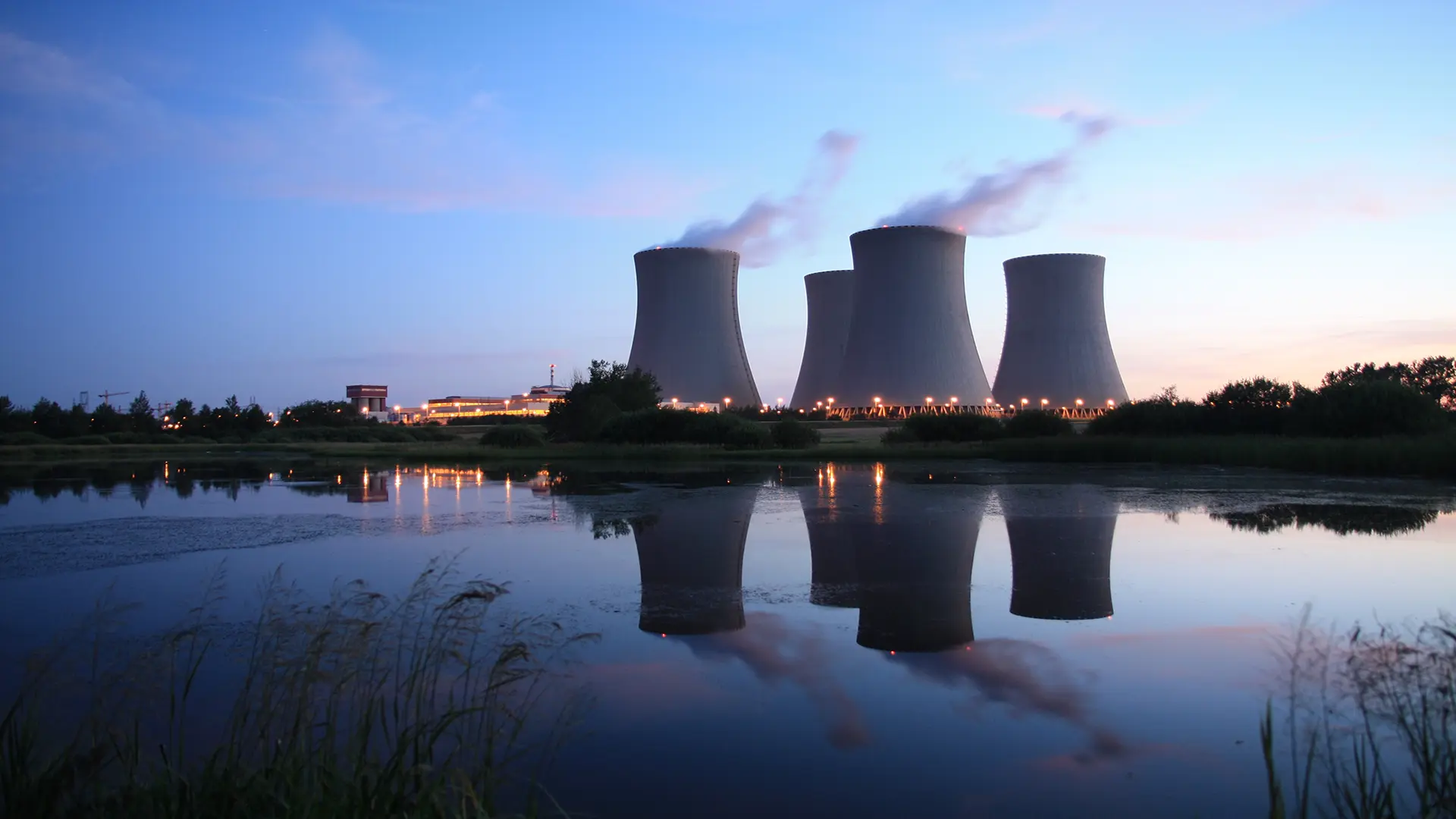
Researched by Industrial Info Resources (Sugar Land, Texas)--The recent talks between Indian Prime Minister Dr. Manmohan Singh and Russian President Dmitry Medvedev, held at the Kremlin in Moscow, culminated in the two nations' signing a civil nuclear agreement that will guarantee India transfer of technology and a secure supply of uranium for its atomic reactors. The agreement also provides for the joint design and development of next-generation reactors.
A site for the development of four new Russian reactors has been identified at Haripur in West Bengal. Other sites being considered are in the states of Andhra Pradesh, Gujarat and Maharashtra. The Haripur site is likely to generate between 6,000 and 10,000 MW of electricity. Srikumar Bannerjee, chief of India's Atomic Energy Commission (New Delhi), said that the sites are part of a series of nuclear parks spread across the country. The two countries already have a nuclear cooperation agreement in place, under which Russia will supply India's Kudankulam nuclear power plant in Tamil Nadu with four third-generation VVER-1200 reactors. The agreement is expected to strengthen the existing relationship between the two nations.
The new Russian reactors will be built using an advanced flow-line technology that will effectively reduce costs 25% to 30% and reduce construction time. Rather than building the reactors in succession, the Russian technology allows for work on all the reactors to begin simultaneously. Thus, each unit can be constructed in four years instead of six, and one unit can be commissioned every year.
The agreement is being seen as a much more productive one for India in comparison to the 123 atomic agreement signed with the U.S. in 2008. The latter does not guarantee an uninterrupted supply of uranium. Atomic fuel imports from Russia are set to increase, and the new pact provides for supplies to continue even if bilateral ties between the two nations are terminated. The pact provides for transfer of both enrichment as well as nuclear technology, another provision not included in the agreement with the U.S. Under the new agreement, India also has been provided with rights to reprocess spent fuel, another provision not included in the 123 agreement.
Russia hopes to strengthen its foothold in the $100 billion Indian nuclear market ahead of U.S. competition for projects in the nuclear power sector of India. In a joint press conference with President Medvedev, the Indian Prime Minister said, "Today we have signed an agreement that broadens the reach of our cooperation beyond supplies of nuclear reactors to areas of research and development and a whole range of areas in nuclear energy." Medvedev said that both nations wanted peaceful nuclear technology to remain under the jurisdiction of the International Atomic Energy Agency (IAEA) (Vienna, Austria).
Other defense-related agreements provide for cooperation in military and technology for a decade, and joint development of a multi-role transport aircraft. Russia has agreed to offer India a more systematic after-sale support for its military systems. An age-old bone of contention between the two nations had been the cost of refitting Admiral Gorshkov, an aircraft carrier. The recent talks saw the possibility of finalizing an agreed-upon price.
The two nations also released a joint declaration that set out the priorities for cooperation in several fields. A $100 million credit line was announced and trade areas such as diamonds, hydrocarbons, information technology, and pharmaceuticals were identified as areas with scope for expansion. A trade target of $20 billion by 2015 was agreed upon. Trade between the two nations is currently worth about $7 billion. The two leaders also spoke about the potential for Indian pharmaceutical companies to supply affordable products to Russia.
The two leaders reiterated the seriousness of both nations to strengthen their relationship, and the agreements symbolize the political commitment of both nations to enhance the strength of their strategic partnership. Both countries agreed on several issues, including the need to deal with terrorism emanating from Afghanistan and Pakistan, on the economy, and even on the need to develop a successful and workable plan at the climate-change meeting at Copenhagen.
View Project Report - 89001528
Industrial Info Resources (IIR) is the leading provider of global market intelligence specializing in the industrial process, heavy manufacturing and energy related markets. For more than 26 years, Industrial Info has provided plant and project opportunity databases, market forecasts, high resolution maps, and daily industry news.
/news/article.jsp
false
Want More IIR News Intelligence?
Make us a Preferred Source on Google to see more of us when you search.
Add Us On GoogleAsk Us
Have a question for our staff?
Submit a question and one of our experts will be happy to assist you.

Forecasts & Analytical Solutions
Where global project and asset data meets advanced analytics for smarter market sizing and forecasting.
Explore Our SolutionsRelated Articles
-
Europe's Mild Winter Outlook Tests Natural Gas PreparednessOctober 16, 2026
-
South Korea's US$747 Billion Energy Transition PlanOctober 16, 2026

PECWeb Global Market Intelligence Platform
Identify opportunities, anticipate change, and execute with confidence. PECWeb connects the industrial intelligence you need, from projects and assets to operational events, all in one platform.
Discover PecwebIndustry Intel
-
Brazil Critical Minerals 2027: Rare Earths, Lithium, CopperPodcast Episode / Oct 16, 2026
-
US Craft Labor Outlook 2026: Wages, Per Diems, Data CentersPodcast Episode / Oct 16, 2026
-
Latin America Data Center Outlook 2026: Power, Hubs & GrowthPodcast Episode / Oct 9, 2026
-
Food and Beverage CapEx Outlook 2026: Tariffs, AI, AfricaPodcast Episode / Oct 9, 2026
-
North America Refining 2026: New Pipelines to PADD 5Podcast Episode / Oct 2, 2026