Metals & Minerals
Iron Production by Direct Reduction Process Increases Worldwide
There has been a very large worldwide increase of DRI production in the last thirty-five years - from one million tons in 1970 to sixty million tons in 2005.
Released Friday, May 06, 2005
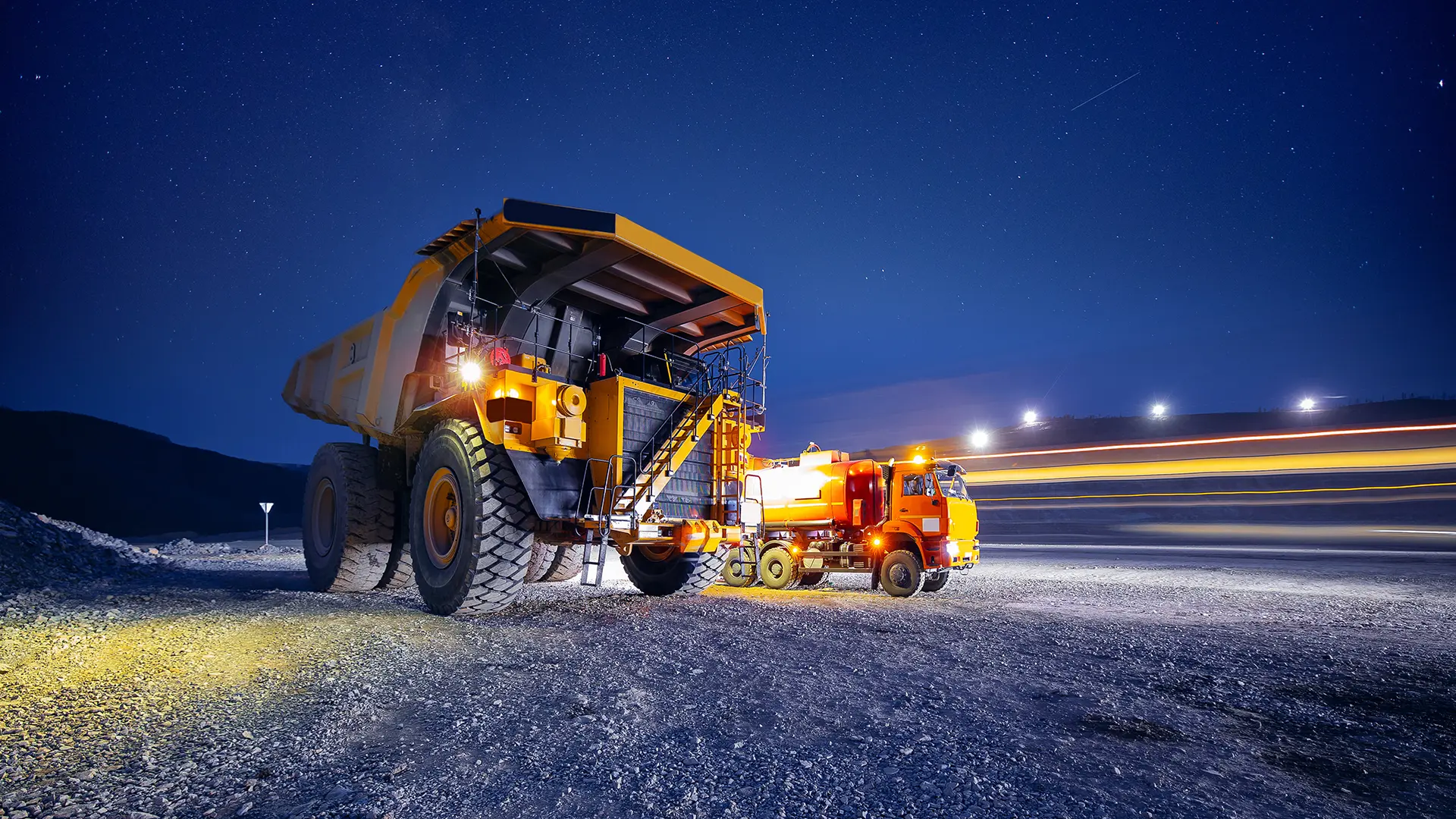
Researched by Industrialinfo.com (Industrial Information Resources, Incorporated; Houston, Texas). The Direct Reduced Iron (DRI) process produces iron from iron ore by passing natural gas through a bed of this ore. It competes with making pig iron in a blast furnace, and where there is cheap natural gas, it is more economical of the two processes. A worldwide upturn in steel making is putting pressure on raw material supply. As steel making companies grapple with rising raw material and energy costs, more and more companies are looking at DRI as a viable alternative iron process.
There has been a very large worldwide increase of DRI production in the last thirty-five years - from one million tons in 1970 to sixty million tons in 2005. In 2005, in continuation of this trend, five new plants are being constructed: in Qatar, Saudi Arabia, Malaysia, Russia, and Oman. Each of these plants is rated at 1.5 million tons per year capacity. All of these plants use Midrex technology.
Worldwide, there are approximately 112 operational DRI plants, but only one currently operating in the U.S., at Mittal's (formerly ISG) Georgetown steel mill in South Carolina. The Georgetown DRI plant has the capability to produce 550,000 tons per year of DRI. The cost of operation in the U.S. is prohibitive to the construction of new DRI plants due to the high price of natural gas. Of the 112 plants, 33 are Midrex design, 16 are HYL design, and three use the Finnmelt process. The capacities of these plants range from 0.5 to 1.5 million tons per year. In addition to the above-mentioned plants, there are 61 small plants with average capacities of 200,000 tons per year.
The Midrex, HYL, and Finnmelt plants are built with a stack configuration, whereby the iron ore and gas react in a stack (or tower). The small plants utilize a rotary kiln to perform the reaction. Most of small plants are in India.
In terms of geographic location of DRI plants, Latin America, including Mexico, is the largest DRI iron producer, followed in order of production, by the Middle East, Asia, Russia, Africa, and Europe.
In common nomenclature, Direct Reduction Iron is referred to as a process where "the iron ore is reduced by natural gas." Actually, methane (natural gas) is non-reactive with iron ore (Fe2O3 ). The gas must be converted over a catalyst prior to use (a process referred to as reforming) to a mixture of carbon monoxide and hydrogen. Each of these gases is a reducing agent that reacts with iron ore to reduce it to iron.
As mentioned previously, most worldwide DRI capacity utilizes the Midrex process, which is owned by Kobe Steel in Japan. Midrex supplies engineering for Midrex plants. Equipment procurement and construction supervision for building these plants is supplied by Kobe Steel. The U.S. office for Kobe and Midrex is in Charlotte, North Carolina. Inquiries for opportunities for U.S. firms to obtain subcontracts to supply equipment, or to build a DRI plant, should be directed to the Charlotte office.
The iron made by DRI plants is mostly utilized as a feed to electric arc furnaces to replace scrap iron that is ordinarily used. DRI iron has the advantage of being pure iron, whereas scrap iron is of inconsistent composition. There are usually electric furnaces located near DRI plants.
Industrial Information Resources (IIR) is a Marketing Information Service company that has been in business for over 22 years. IIR is respected as a leader in providing comprehensive market information pertaining to the industrial processing, heavy manufacturing and energy related industries throughout the world.
/news/article.jsp
false
Want More IIR News Intelligence?
Make us a Preferred Source on Google to see more of us when you search.
Add Us On GoogleAsk Us
Have a question for our staff?
Submit a question and one of our experts will be happy to assist you.

Forecasts & Analytical Solutions
Where global project and asset data meets advanced analytics for smarter market sizing and forecasting.
Explore Our SolutionsRelated Articles
-
Canada to Talk Trade During EU Summit in MontrealOctober 27, 2026
-
Europe Dominates Global Glass Container SpendingOctober 27, 2026
-
Grupo México registra una utilidad neta de US$1.970 millones...October 27, 2026
-
BHP's Quarterly Copper Output Dropped by 19% Driven by Lower...October 26, 2026

PECWeb Global Market Intelligence Platform
Identify opportunities, anticipate change, and execute with confidence. PECWeb connects the industrial intelligence you need, from projects and assets to operational events, all in one platform.
Discover PecwebIndustry Intel
-
Mining Capital Spending 2026: Copper, Rare Earths, AluminumPodcast Episode / Oct 23, 2026
-
Brazil Critical Minerals 2027: Rare Earths, Lithium, CopperPodcast Episode / Oct 16, 2026
-
US Craft Labor Outlook 2026: Wages, Per Diems, Data CentersPodcast Episode / Oct 16, 2026
-
Latin America Data Center Outlook 2026: Power, Hubs & GrowthPodcast Episode / Oct 9, 2026
-
Food and Beverage CapEx Outlook 2026: Tariffs, AI, AfricaPodcast Episode / Oct 9, 2026