Power
Jellyfish, Heat and Drought Sting European Power Generation
Jellyfish disruptions at France's Gravelines nuclear plant add another layer of risk as extreme heat, drought and low river flows constrain nuclear and hydropower generation across Europe.
Released Thursday, August 13, 2026
Reports related to this article:
Plant(s): View 1 related plant in PECWeb
Written by Aaron Studwell, Ph.D., Energy Meteorologist & Analyst (Sugar Land, Texas)
Summary
Industrial Info Resources examines how jellyfish, heat and drought are disrupting European power generation, placing 11.3 GW of French generation at risk.A swarm of jellyfish has again disrupted nuclear generation in northern France. This adds "unusual marine hazard" to the more familiar heat and drought problems already challenging European electricity production this summer.
French utility Electricité de France S.A. shut three reactors at the Gravelines Nuclear Power Station after jellyfish entered the facility's cooling-water system. Units 2, 3 and 4 were taken offline, while Unit 1 was reduced to approximately half output as a precaution. Unit 5 was already offline for scheduled maintenance, leaving Unit 6 as the plant's only reactor operating normally. EDF said the event presented no danger to plant personnel, the public, or the environment.
Jellyfish Return to Gravelines
Gravelines, one of France's largest nuclear facilities, draws cooling water from a canal connected to the North Sea. Large concentrations of jellyfish have overwhelmed intake screens and filters, reducing the flow of cooling water and forced operators to curtail some and shut other units. This curtailment represents a total of 4 gigawatts (GW) being offline.The problem is becoming familiar; jellyfish caused all four operating Gravelines reactors to shut in August 2025. Since then, EDF has added monitoring and mitigation measures, including fixed cameras and coordination with maritime organizations to provide earlier warning of approaching swarms. During this week's event, fishing vessels were deployed and vacuum trucks were used to remove jellyfish that reached the plant.
Heat and Drought Add Pressure
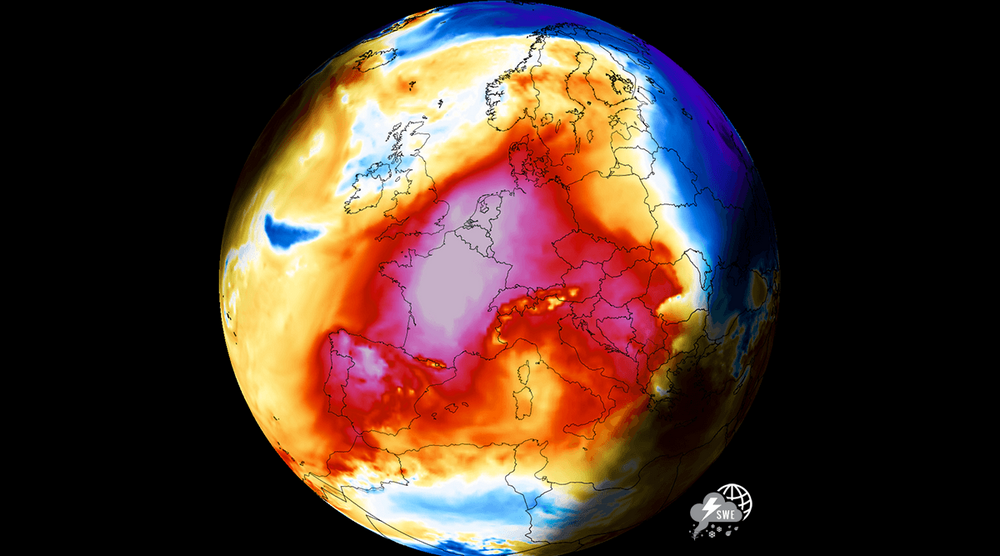
The disruption comes as EDF is already managing heat-related constraints elsewhere in its 57-reactor fleet. Extreme temperatures have warmed rivers used for reactor cooling, while drought has reduced flows. Environmental regulations limit how much additional heat nuclear facilities may discharge into waterways. These restrictions have forced reactors to reduce output or shut even when the generating equipment itself remains capable of operating.Earlier this summer, reactors at Golfech, Bugey and Chooz were taken offline because of elevated river temperatures. During the latest heatwave, as much as 7.3 GW of French nuclear capacity faced potential heat-related restrictions. French day-ahead electricity prices consequently jumped more than 20% Tuesday as nuclear constraints coincided with weak German wind generation and elevated cooling demand.
The problem extends beyond France. Persistent drought has lowered river and reservoir levels across Europe, affecting hydropower production while also constraining cooling-water availability for thermal and nuclear generation. Drought conditions have expanded across France and remain present across portions of Germany, Italy, the Alps and Balkans. Low flows along the Rhine and Danube also are affecting transportation and industrial supply chains.
The combination illustrates an increasingly important energy-system vulnerability: heat and drought can simultaneously increase electricity demand while reducing the availability of nuclear, hydroelectric and wind generation.
 Source: Severe Weather Europe
Not Just a French Problem
While jellyfish-related generation disruptions are unusual, they are hardly unprecedented nor restricted to Europe. Both reactors at Scotland's Torness Nuclear Power Station were manually shut in June 2011 after large numbers of jellyfish-clogged seawater intake filters and reduced cooling-water flows. In August 2011, jellyfish clogged cooling-water intake screens at Florida's Saint Lucie Nuclear Power Station, forcing the 839-megawatt Unit 1 offline and reducing Unit 2 output by 30%.Two years later, Sweden's 1,400-megawatt Oskarshamn Unit 3 was shut after tons of moon jellyfish clogged its Baltic Sea cooling-water intake. Operators cleaned the system and prepared to restart the reactor several days later.
For European power markets, jellyfish themselves remain a localized operational hazard. The broader concern is the convergence of multiple weather- and climate-sensitive constraints.
Extreme heat, warm rivers, drought-depleted waterways, reduced hydroelectric generation, and occasionally unfavorable wind conditions have impacted several generating resources simultaneously. This convergence makes what once appeared to be isolated environmental problems increasingly relevant to grid reliability and electricity markets.
Key Takeaways
- Jellyfish forced multiple reactors offline at France's Gravelines Nuclear Power Station.
- Extreme heat and warm rivers are constraining nuclear cooling and thermal-discharge limits.
- Similar jellyfish-related nuclear disruptions have occurred previously in Florida, Scotland, and Sweden.
- Multiple weather-sensitive generation sources can be constrained at the same time, increasing grid and market risk.
About Industrial Info Resources
Industrial Info Resources (IIR) is the leading provider of industrial market intelligence. Since 1983, IIR has provided comprehensive research, news and analysis on the industrial process, manufacturing and energy related industries. IIR's Global Market Intelligence (GMI) helps companies identify and pursue trends across multiple markets with access to real, qualified and validated plant and project opportunities. Across the world, Industrial Info Resources is tracking over 250,000 current and future projects worth $30.2 Trillion (USD).
/news/article.jsp
false
Want More IIR News Intelligence?
Make us a Preferred Source on Google to see more of us when you search.
Add Us On GoogleAsk Us
Have a question for our staff?
Submit a question and one of our experts will be happy to assist you.

Forecasts & Analytical Solutions
Where global project and asset data meets advanced analytics for smarter market sizing and forecasting.
Explore Our SolutionsRelated Articles
-
France Advances Nuclear Power ExpansionSeptember 09, 2026
-
French Nuclear Reactor Granted 10-Year Life ExtensionMarch 19, 2024
-
France's Macron Picks Sites for EPR2 Nuclear ReactorsJuly 24, 2023
-
EDF to Restart Nine French Nuclear ReactorsJanuary 23, 2017
-
France Brings Nuclear Reactors Back Online to Avoid Winter O...December 20, 2016

PECWeb Global Market Intelligence Platform
Identify opportunities, anticipate change, and execute with confidence. PECWeb connects the industrial intelligence you need, from projects and assets to operational events, all in one platform.
Discover PecwebIndustry Intel
-
Latin America Data Center Outlook 2026: Power, Hubs & GrowthPodcast Episode / Oct 9, 2026
-
Food and Beverage CapEx Outlook 2026: Tariffs, AI, AfricaPodcast Episode / Oct 9, 2026
-
North America Refining 2026: New Pipelines to PADD 5Podcast Episode / Oct 2, 2026
-
Biomanufacturing Onshoring 2026: GLP-1, CDMO and ReshoringPodcast Episode / Oct 2, 2026
-
2026 US Data Center Outlook: Power, Land & CoolingPodcast Episode / Sep 18, 2026