Production
Macquarie Analyst: LNG Export Facility Investments Hampered by Uncertainties of Price, Embargo Future
With the fourth-largest natural gas reserves in the world, the U.S. has had the resources to help Europe manage the embargoes of Russian supplies that were enacted after that country's 2022 invasion of Ukraine.
Released Wednesday, June 28, 2023
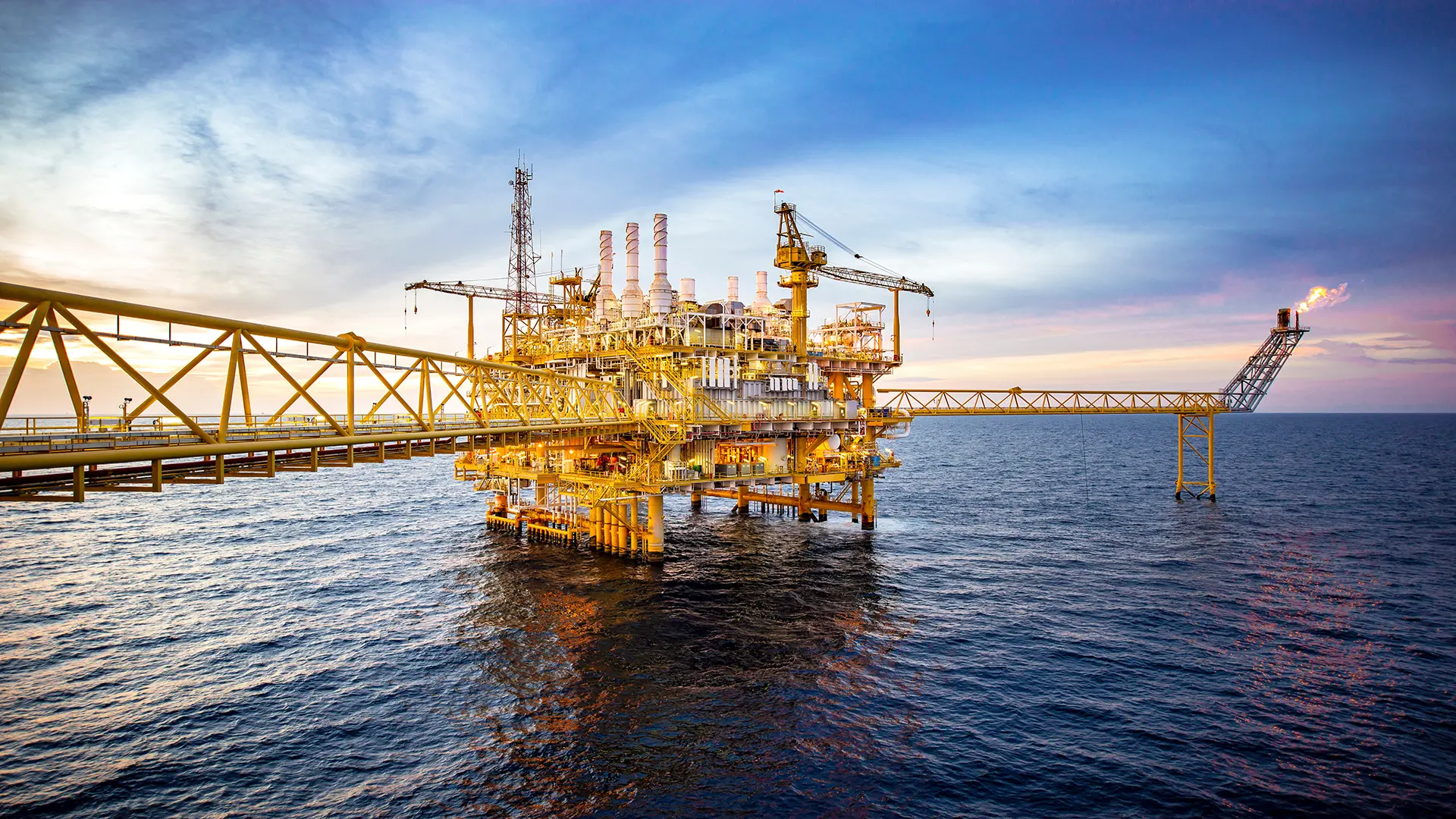
Written by Paul Wiseman for Industrial Info Resources (Sugar Land, Texas)--With the fourth-largest natural gas reserves in the world, the U.S. has had the resources to help Europe manage the embargoes of Russian supplies that were enacted after that country's 2022 invasion of Ukraine. A flurry of interest in building out liquefaction plants in the U.S. and regasification facilities in Europe quickly followed the embargoes.
But, said Michael Bennett, managing director of global liquefied natural gas (LNG) for Macquarie Bank (Sydney, Australia), subsequent commodity price drops and uncertainties about whether embargoes will last long enough to repay the multi-billion-dollar facility investments has since put the brakes on investment. Bennett, part of a panel discussion entitled "LNG: 2023-2024 Will Be Pivotal" at the recent Louisiana Energy Conference in New Orleans, said those brakes are being applied by investment banks taking a hard look at upfront costs and return-on-investment (ROI) issues.
"There's a lot of talk about U.S. gas going to Europe," he said. "But what we're seeing in the U.S. is really a slowdown in the development of projects." And while "There are a number of projects being spoken of in the next decade," he added, "None of them have gotten to FID (final investment decision)." FID is defined as the stage during the life cycle of a project where a company decides to move forward or withhold the project.
So, he mused, with such high LNG demand, why is it harder to get to FID? He sees three main issues.
Issue one, said Bennett, is the ballooning costs of facilities. He noted that "they're a lot more expensive than when Cheniere (Houston, Texas) (the U.S. LNG industry leader) was first building them," just a few years ago. A typical facility now may cost upwards of $20 billion, "And that money needs to come from somewhere." For those recent projects the equity-debt ratio was 50-50, "the first time we've seen that." Equity-debt ratio shows the relationship between the portion of a project financed by creditors (debt) vs. the portion financed by stockholders (equity).
Historically, the ratio would be closer to 70% financing and 30% equity. But banks are becoming more reluctant to put up the tens of billions to build a new facility, he said. And few single entities even have that kind of money. So LNG companies assemble a collection of banks to pitch in, and the number required is rising. Just a year or so ago, 17 banks would be typical. Now it's risen to more than 20.
The second issue is the natural gas price collapse, he said. "What we saw last year, with the new projects, was a bit of a race to bottom in global market pricing."
Combining that price collapse with the cost escalations listed in issue one is deadly to deal makers. "So at those levels it doesn't make sense," Bennett explained. "We saw low prices and we saw high costs at the same time. EPC (engineering, procurement and construction) costs have risen to $1,000 a ton, when not long ago it was $600 a ton. So all of a sudden, the bank's getting a lot more nervous about the long-term viability of these facilities."
The third issue is also ROI-related, regarding the long-term viability of the LNG projects. Will Russian embargoes last long enough for these massive investments to pay off? Should they end soon, the low price of Russian gas simply piped in, without the ongoing expense of degasification, may be too enticing for European importers to resist. That would thereby obsolete the still-young LNG plants.
A regime change, an end to the Ukrainian activities or some other resolution could reopen Russian imports--in spite of the fact, Bennett said, "Some people are adamant that it's never going back. It's my opinion; I believe it will be coming back, just maybe not at full flow." He points out that, before the invasion, European gas demand was already dropping as a result of green initiatives. He doubts that there will be enough demand to require both Russian and western gas.
Speaking of regime changes, the coup attempt in Russia last weekend, although quickly aborted, suddenly elevates that as a possibility. Immediate investor concerns, however, were more about supply disruptions of oil exports than about any easing of natural gas embargoes.
Industrial Info Resources (IIR) is the leading provider of industrial market intelligence. Since 1983, IIR has provided comprehensive research, news and analysis on the industrial process, manufacturing and energy related industries. IIR's Global Market Intelligence (GMI) helps companies identify and pursue trends across multiple markets with access to real, qualified and validated plant and project opportunities. Across the world, IIR is tracking over 200,000 current and future projects worth $17.8 Trillion (USD).
/news/article.jsp
false
Want More IIR News Intelligence?
Make us a Preferred Source on Google to see more of us when you search.
Add Us On GoogleAsk Us
Have a question for our staff?
Submit a question and one of our experts will be happy to assist you.

Forecasts & Analytical Solutions
Where global project and asset data meets advanced analytics for smarter market sizing and forecasting.
Explore Our SolutionsRelated Articles
-
U.S. LNG Near Record High Amid Global Supply IssuesNovember 20, 2026
-
Surplus Signal Drag Oil Prices Lower, But Global Risks Remai...November 19, 2026

PECWeb Global Market Intelligence Platform
Identify opportunities, anticipate change, and execute with confidence. PECWeb connects the industrial intelligence you need, from projects and assets to operational events, all in one platform.
Discover PecwebIndustry Intel
-
Global Chemical Industry Outlook 2026: Ethylene, Hydrogen, CapExPodcast Episode / Nov 6, 2026
-
Southern Cone Investment Radar: Argentina, Chile & UruguayPodcast Episode / Oct 30, 2026
-
Mining Capital Spending 2026: Copper, Rare Earths, AluminumPodcast Episode / Oct 23, 2026
-
Brazil Critical Minerals 2027: Rare Earths, Lithium, CopperPodcast Episode / Oct 16, 2026
-
US Craft Labor Outlook 2026: Wages, Per Diems, Data CentersPodcast Episode / Oct 16, 2026