Production
Might as Well Burn Money, World Bank Says on Gas Flaring
Urgent action is needed to eliminate routine flaring of natural gas by 2030, the World Bank said after global levels increased by 7% in 2023
Released Monday, June 24, 2024
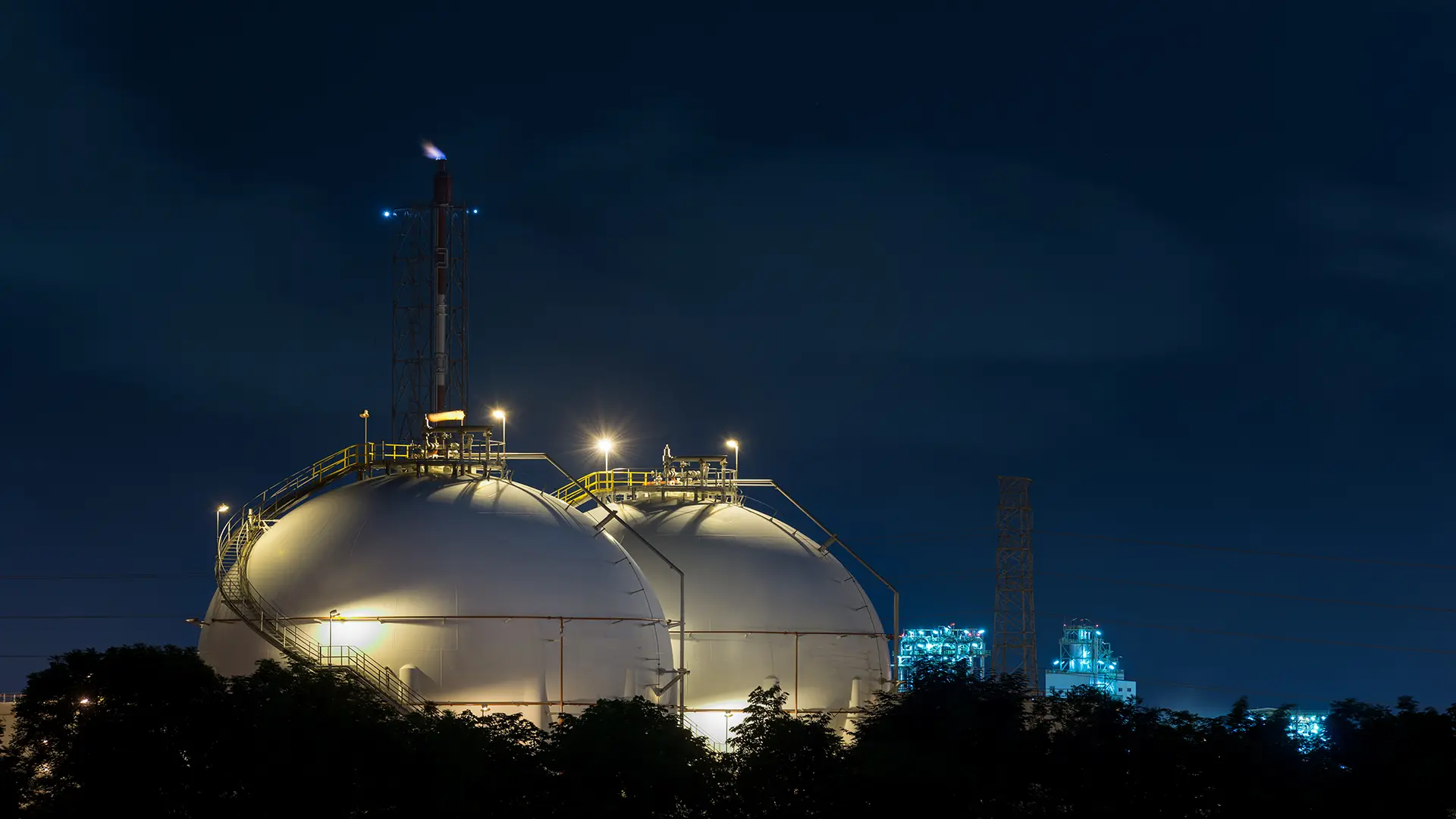
Written by Daniel Graeber for Industrial Info Resources (Sugar Land, Texas)--Urgent action is needed to eliminate routine flaring of natural gas by 2030, the World Bank said after global levels increased by 7% in 2023.
The World Bank said in a report on global gas flaring, published Friday, that flaring volumes hit 148 billion cubic meters last year, an increase from the prior year and a return to levels not seen since 2019, before the COVID-19 pandemic hit North America.
"At the current price of gas, the potential market value of the overall amount of gas flared in 2023 could have been between $9 billion and $48 billion," said Zubin Bamji, the program director for the flaring and methane reduction partnership at the World Bank. "Eliminating gas flaring would avert at least 381 million tonnes of carbon dioxide (CO2) equivalent emissions being released into the atmosphere each year."
Enough gas is flared each year to meet the demand of all sub-Saharan Africa, the bank estimated.
Gas flaring is the burning of the natural gas that's associated with oil deposits. Flaring is prevalent where the political will to avoid it is lacking; when market conditions are not conducive to capturing that gas; or due to a lack of the necessary infrastructure.
And the World Bank is naming names. Just nine countries--Russia, Iran, Iraq, the U.S., Venezuela, Algeria, Libya, Nigeria and Mexico--accounted for 75% of the world's total flared volumes last year, even though they combined for only 46% of the total global oil production.
Of those, the U.S. is the most advanced economy, and the most lucrative oil and gas producer by far.
For flaring in the U.S., the World Bank said its intensity was most pronounced in the Permian and Eagle Ford shale basins. Scientists at the U.S. space agency NASA had once observed a 2-mile plume of methane emanating from the Permian.
"In the Permian, the increases were a result of the pressures put on the energy systems by unusually hot weather and ongoing maintenance of, and reliability issues with, midstream infrastructure," the World Bank found. "This led to an increase in overall flaring intensity in the U.S. of 11%, although the U.S. remains one of the countries with the lowest flaring intensities in the world."
Flaring intensity is the amount of gas flared per barrel of oil produced from a particular basin.
A separate report from the U.S. Energy Department said North Dakota, Wyoming, California and the U.S. territorial waters of the Gulf of Mexico are the primary basins for flared gas. North Dakota, however, has worked diligently on curbing the practice. In its Director's Cut for June, the North Dakota Department of Mineral Resources reported a 95% capture rate for gas.
It was Russia that was the worst offender, the World Bank found. Flaring intensity increased by 13% last year, even though Russia saw a decline in production. The increase, the bank said, was "likely the result of a deterioration of oil and gas infrastructure due to a limited availability of equipment and the continuation of oil production without corresponding investments in the infrastructure to recover and utilize the associated gas."
Some of that deterioration could be attributed to Western-backed sanctions on Russia in response to the war in Ukraine. Drone attacks from Ukraine, meanwhile, frequently target Russia's oil and gas infrastructure.
IIR Energy can now report that the Illskiv Refinery in Russia is on fire following a drone attack.
"The fire broke out in the utilities area and has already been extinguished," a plant alert issued Friday read. "Processing units appear unaffected."
The World Bank said flaring intensity is the highest in countries affected by conflict and violence.
The burning of natural gas, which comprises mostly methane, releases CO2 into the atmosphere, as well as some unburned methane. Methane is a potent greenhouse gas with a warming potential that's 28 times greater than that of CO2.
The World Bank estimated the 148 billion cubic meters of natural gas flared last year released about 381 million metric tons of carbon dioxide, and 45 million metric tons of unburned methane.
Apart from the potential contributions to global warming, the World Bank said routing flaring is a lost opportunity to advance energy security with a cleaner source of energy than crude oil alone.
"This business-as-usual practice of pursuing oil production with little consideration for the potential use of associated gas is not just polluting, it is immensely wasteful," said the World Bank's Bamji.
Industrial Info Resources (IIR) is the leading provider of industrial market intelligence. Since 1983, IIR has provided comprehensive research, news and analysis on the industrial process, manufacturing and energy related industries. IIR's Global Market Intelligence (GMI) platform helps companies identify and pursue trends across multiple markets with access to real, qualified and validated plant and project opportunities. Across the world, IIR is tracking more than 200,000 current and future projects worth $17.8 trillion (USD).
/news/article.jsp
false
Want More IIR News Intelligence?
Make us a Preferred Source on Google to see more of us when you search.
Add Us On GoogleAsk Us
Have a question for our staff?
Submit a question and one of our experts will be happy to assist you.

Forecasts & Analytical Solutions
Where global project and asset data meets advanced analytics for smarter market sizing and forecasting.
Explore Our SolutionsRelated Articles
-
YPF Seeks Argentina RIGI Incentives for Bajo del Toro Oil & ...November 10, 2026
-
YPF presenta una solicitud bajo el RIGI para su proyecto Baj...November 10, 2026
-
Texas Oil & Gas Industry Sings 'Blues' After ElectionNovember 09, 2026
-
Enbridge is Upbeat about its FutureNovember 09, 2026
-
Pemex produjo 1,64 millones bpd de petróleo y reportó una pé...November 06, 2026

PECWeb Global Market Intelligence Platform
Identify opportunities, anticipate change, and execute with confidence. PECWeb connects the industrial intelligence you need, from projects and assets to operational events, all in one platform.
Discover PecwebIndustry Intel
-
Global Chemical Industry Outlook 2026: Ethylene, Hydrogen, CapExPodcast Episode / Nov 6, 2026
-
Southern Cone Investment Radar: Argentina, Chile & UruguayPodcast Episode / Oct 30, 2026
-
Mining Capital Spending 2026: Copper, Rare Earths, AluminumPodcast Episode / Oct 23, 2026
-
Brazil Critical Minerals 2027: Rare Earths, Lithium, CopperPodcast Episode / Oct 16, 2026
-
US Craft Labor Outlook 2026: Wages, Per Diems, Data CentersPodcast Episode / Oct 16, 2026