Production
The Carrots and Sticks of Fossil Fuel Methane Abatement
The fossil fuel industry could generate billions of dollars in new revenue annually, reduce energy poverty and slow global warming if it captured and sold methane emissions that currently escape into the atmosphere from its operations or abandoned wells and mines.
Released Thursday, May 15, 2025
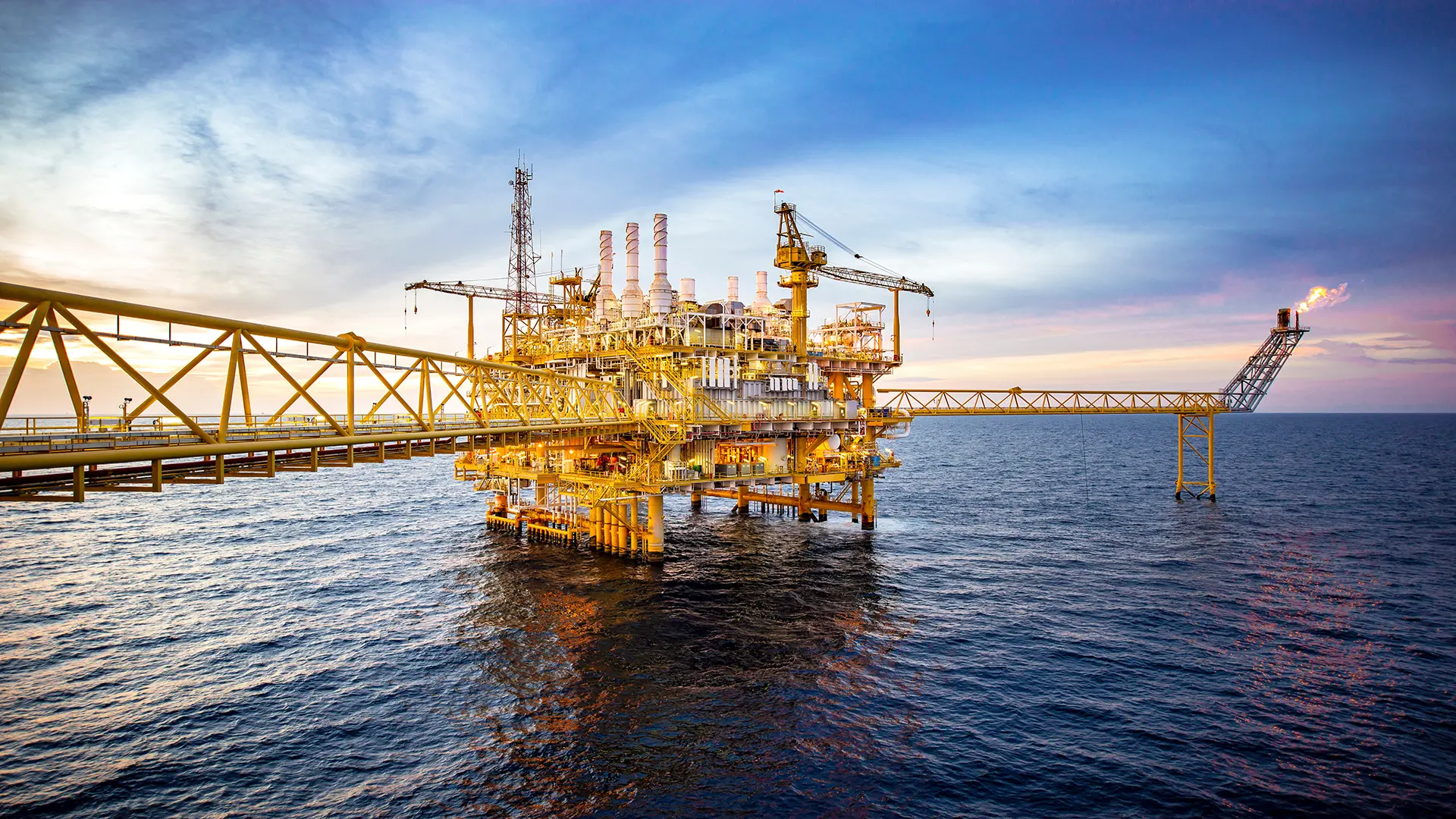
Written by John Egan for Industrial Info Resources (Sugar Land, Texas)--The fossil fuel industry could generate billions of dollars in new revenue annually, reduce energy poverty and slow global warming if it captured and sold methane emissions that currently escape into the atmosphere from its operations or abandoned wells and mines. So says a new report for the International Energy Agency (IEA) (Paris, France), titled "Global Methane Tracker 2025."
The report, released May 7, looked at worldwide, man-made methane emissions. Methane is a global warming concern because it traps far more heat than carbon dioxide (CO2) over its shorter lifespan in the atmosphere.
Globally, man-made methane emissions from three segments of the economy -- agriculture, energy and waste -- totaled about 380 million metric tons (MT) in 2024, the IEA report estimated. While agriculture emitted more methane than the energy industry, the energy industry -- including oil and gas production, transportation, processing, coal mining and bioenergy -- has far greater potential to lower its methane emissions compared to agriculture or waste, IEA said.
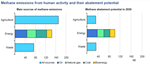 Click on the image at right to see a graphic on global methane emissions from various industries and the methane abatement potential of those industries to 2030.
Worldwide oil and gas production accounted for about 60 MT of methane emissions in 2024, while downstream oil and gas operations, satellite-detected large emissions and abandoned oil and gas facilities added about 25 MT. Coal mining -- including thermal, lignite and metallurgical -- totaled about 35 MT last year. Oil and gas methane emissions have risen slightly since 2010 while coal methane emissions have declined slightly over that 15-year period.
Those estimates may still under-count manmade methane emissions, as the systems used to measure emissions are still evolving. But the IEA said its estimates were significantly higher than the industry's self-reported numbers. "Little or no measurement-based data is used to report methane emissions in most parts of the world," the agency said. "This is a major issue because measured emissions tend to be higher than reported emissions."
In the oil and gas sector, the report said, abatement solutions include upgrading equipment that emits by design, such as replacing wet compressor seals with dry seals, and using vapor recovery units to recover low-pressure methane flows. For coal, emissions could be reduced by installing coal mine methane utilization equipment.
"Methane is responsible for around 30% of the rise in global temperatures since the Industrial Revolution, and rapid and sustained reductions in methane emissions are key to limiting near-term global warming and improving air quality," the "Global Methane Tracker 2025" report said. The energy sector for more than 35% of methane emissions from human activity and has some of the best opportunities to cut these emissions, it added.
The global methane report continued: "The fossil fuel sector likely offers the greatest potential for rapid and low-cost reductions in methane emissions. We estimate that around 70% of methane emissions from this sector could be reduced with existing technology. Oil and gas methane emissions can be reduced by around 75% through well-known measures such as leak detection and repair (LDAR) programs, upgrading leaky and high-emitting equipment or plugging leaky wells."
In the coal sector, the report projected methane emissions "could be halved through effective coal mine methane utilization in mines, or by deploying flaring or oxidation technologies when energy recovery is not viable."
The energy agency estimated that about 30% of the fossil fuel industry's methane emissions could be captured at net-zero costs, as the gas captured could be used or sold. The IEA report said the fossil fuel industry emitted about 200 billion cubic meters (Bcm) of methane in 2024, which is approximately 3.5 trillion cubic feet (Tcf). It said about half of that could be captured and sold. At a selling price of $3 per million British thermal units (MMBtu), selling all 3.5 Tcf of that captured gas that works out to more than $10 billion of new revenue per year.
Capturing and selling methane that today escapes into the atmosphere could also go a long wan to reducing energy poverty in the developing world, an issue on which Energy Secretary Chris Wright has spoken eloquently. For more on that, see October 4, 2024, article - Conference Speakers Decry 'False Narratives' on Global Warming, Oil & Gas.
The IEA report estimated that there are more than 2 billion people in developing economies who heat their homes and cook their food with wood, charcoal or animal dung. "This contributes to nearly 3 million premature deaths annually, with women and children most at risk," the report observed. "Universal access to modern, clean cooking (fuels) would deliver substantial gains in equality, health and economic well-being. It would also cut down on a major source of methane emissions" that comes from the burning of wood, charcoal and animal dung.
The report recognizes that some methane abatement measures have high upfront capital costs. In many cases there is no route for bringing captured gas to markets, requiring investment in new infrastructure or means of gas transport. But many abatement options can still pay for themselves within a year, it asserted: "In the oil and gas sector, around 30% of the industry's emissions today could be avoided with measures offering rates of return of more than 25% -- well above the usual returns sought by oil and gas companies when considering new capital investment."
Why aren't more fossil fuel companies rushing to take advantage of the benefits of methane abatement? The "Global Methane Tracker 2025" report lists several possible explanations, including:
- Companies could be unaware of the scale of the problem or the available solutions.
- There may be higher-profile opportunities competing for investment resources.
- Corporate leaders might perceive methane abatement as more costly than it is.
- Securing capital for required upfront investments could be difficult, especially in developing economies.
- Companies may struggle to deploy sufficient staff or secure the necessary services to tackle the problem
- Companies may not have identified an effective pathway or business case for bringing captured gas to productive use.
The U.S. under President Donald Trump, with the backing of fossil fuel companies, is working to undo a variety of energy and environmental rules issued by the Biden administration. For more on that, see March 14, 2025, article - EPA Will Reconsider 31 Energy and Environmental Rules from Trump's Predecessors. Irrespective of how those efforts turn out, and there is indication that legal challenges await those repeal efforts, U.S. fossil fuel companies could face a potential loss of export markets for liquefied natural gas (LNG) and coal because their products do not meet the global warming requirements of foreign governments.
Industrial Info Resources (IIR) is the leading provider of industrial market intelligence. Since 1983, IIR has provided comprehensive research, news and analysis on the industrial process, manufacturing and energy related industries. IIR's Global Market Intelligence (GMI) platform helps companies identify and pursue trends across multiple markets with access to real, qualified and validated plant and project opportunities. Across the world, IIR is tracking over 200,000 current and future projects worth $17.8 Trillion (USD).
Want More IIR News Intelligence?
Make us a Preferred Source on Google to see more of us when you search.
Add Us On GoogleAsk Us
Have a question for our staff?
Submit a question and one of our experts will be happy to assist you.

Forecasts & Analytical Solutions
Where global project and asset data meets advanced analytics for smarter market sizing and forecasting.
Explore Our SolutionsRelated Articles
-
Deal in the Works for Sale Lukoil's Non-Russian Global Energ...November 23, 2026
-
Keyera Acquires, Expands NGL Capacity in Western CanadaNovember 23, 2026
-
U.S. LNG Near Record High Amid Global Supply IssuesNovember 20, 2026
-
Surplus Signal Drag Oil Prices Lower, But Global Risks Remai...November 19, 2026

PECWeb Global Market Intelligence Platform
Identify opportunities, anticipate change, and execute with confidence. PECWeb connects the industrial intelligence you need, from projects and assets to operational events, all in one platform.
Discover PecwebIndustry Intel
-
Global Chemical Industry Outlook 2026: Ethylene, Hydrogen, CapExPodcast Episode / Nov 6, 2026
-
Southern Cone Investment Radar: Argentina, Chile & UruguayPodcast Episode / Oct 30, 2026
-
Mining Capital Spending 2026: Copper, Rare Earths, AluminumPodcast Episode / Oct 23, 2026
-
Brazil Critical Minerals 2027: Rare Earths, Lithium, CopperPodcast Episode / Oct 16, 2026
-
US Craft Labor Outlook 2026: Wages, Per Diems, Data CentersPodcast Episode / Oct 16, 2026