Metals & Minerals
Ban on Exports of Iron Ore and Steel Products Likely as India Continues To Battle Steel Price Hikes
Steel prices in India have increased almost 50% since January 2008, helping cause inflation to reach a 13-year high of almost 12%.
Released Friday, July 25, 2008
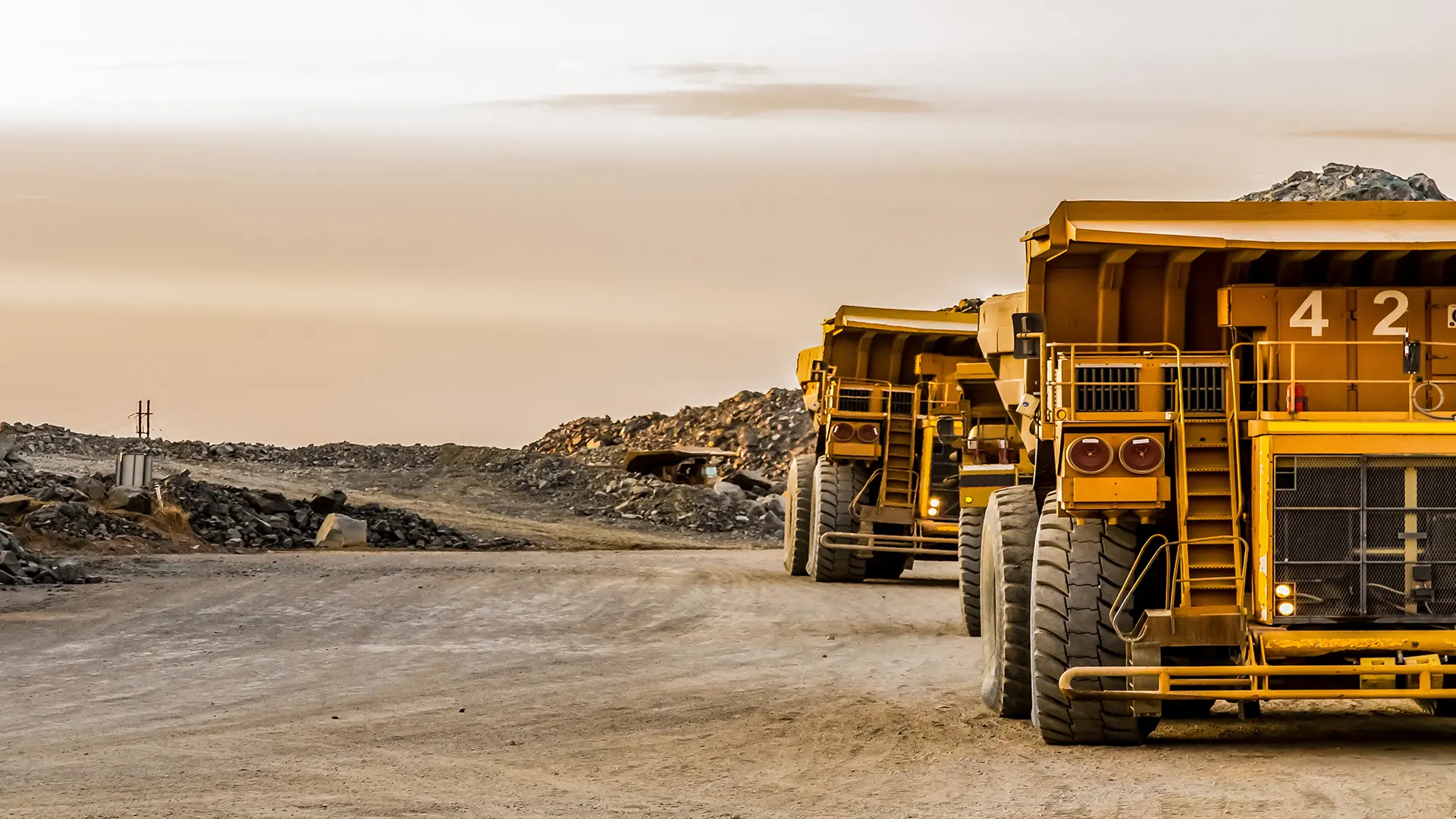
Researched by Industrial Info Resources (Sugar Land, Texas)--Steel prices in India have increased almost 50% since January 2008, helping cause inflation to reach a 13-year high of almost 12%. In a bid to check rising inflation, increase the domestic availability of steel and help control prices, the government is considering the possibility of either banning the export of flat steel products or increasing its export duty. The government may also have to consider the prospect of increasing export duty on long steel products and banning iron ore exports.
The three-month moratorium that large steel producers imposed on themselves in order to help stop rising prices expires in early August, at which time the central government may have to step in with its own policies. There is a very strong likelihood that steel prices will rise once the industry's own moratorium is over. During the moratorium period, prices of raw materials used in steel manufacturing, such as iron ore and coal, have shot up by about 10%. In view of this, steel producers feel that an increase in the price of steel is justified. Further, the rise in inflation could not be checked in spite of the moratorium.
The rising steel prices have caused a great deal of discontent among small- and medium-scale manufacturers and the construction sector. Earlier this year, steel consumers across several industrial segments strongly protested against the price hikes. Unable to afford the increased prices, a large number of small units in several states closed down. Several export-oriented engineering businesses have had to face losses, as they cannot risk accepting large orders for fear of future price hikes. Construction of several low- and middle-income group housing projects have been halted since builders cannot afford to procure steel products without passing on the cost to the buyer. In spite of the numerous price increases, steel prices in India are about 25% to 30% lower than average international prices.
India presently produces about 59 million tons of steel each year, and current predictions put that number at about 124 million tons per year by 2011-12, and 200 million tons per year by 2020. The government has planned an investment of over $350 billion in steel industries related to construction and infrastructure. Global steel giant ArcelorMittal (NYSE:MT) (Luxembourg) is investing $20 billion to set up two 12 million-ton-per-year steel plants in Jharkhand and Orissa. Tata Steel Limited (BOM:500470) (Mumbai) will be doubling its capacity by 2015 with the addition of another 35 million-ton-per-year plant. Steel Authority of India Limited (BOM:500113) (SAIL) (New Delhi), India's largest steel manufacturer, plans to double its capacity to 24.98 million tons per year by 2011-12. Vedanta Resources plc (LSE: VED) (London ) plans to invest about $6 billion in a 5 million-ton-per-year steel plant in Orissa.
In a move that is likely to affect its bottom line, SAIL has agreed to a threefold increase in the price of imported coking coal from Australia. Earlier, SAIL paid Australian miners $98 per ton of coking coal and now it is paying $300 per ton, the contract having come into effect July 1. The price hike was unavoidable, since international prices of coking coal have skyrocketed.
In 2007-08, SAIL imported around 9.7 million tons of coking coal and obtained about 4 million tons from domestic sources. SAIL expects to import about 12.5 million tons in 2008-09, as its total requirement is expected to go up to 15.7 million tons. According to industry experts, the steel industry will have to import almost 200 million tons of coking coal by 2020 to meet its planned production figure of 200 million tons per year.
India fulfills almost 70% of its coking coal requirement through imports, Australia being the main supplier. In an attempt to reduce its dependence on imported coking coal, SAIL has been in talks with Bharat Coking Coal Limited (Dhanbad, Jharkhand) to jointly develop the Kapuria Coal Block in Jharkhand, which has reserves estimated at 150 million tons.
Coal Ventures International Limited (CVIL) is a joint venture of five public sector companies looking for both thermal and metallurgical coal assets abroad. The venture is formed by SAIL, and Rashtriya Ispat Nigam Limited (Vishakapatnam, Andhra Pradesh), Coal India Limited (CIL) (Calcutta), power generator National Thermal Power Corporation Limited (New Delhi), and the National Mineral Development Corporation Limited (Hyderabad, Andhra Pradesh). CVIL, which has equity contributions of $900 million from the five promoters and about $1.8 billion in debt, is looking at assets in Australia, Canada, Indonesia, Mozambique, South Africa, the U.S., and Zimbabwe. The coal procured is to be used in the domestic power and steel sectors. CIL's overseas wing is reportedly looking for coalmines in Australia and Mozambique.
View Project Report - 89001111
Industrial Info Resources (IIR) is a marketing information service specializing in industrial process, energy and financial related markets with products and services ranging from industry news, analytics, forecasting, plant and project databases, as well as multimedia services.
/news/article.jsp
false
Want More IIR News Intelligence?
Make us a Preferred Source on Google to see more of us when you search.
Add Us On GoogleAsk Us
Have a question for our staff?
Submit a question and one of our experts will be happy to assist you.

Forecasts & Analytical Solutions
Where global project and asset data meets advanced analytics for smarter market sizing and forecasting.
Explore Our SolutionsRelated Articles
-
Gulf Coast Industries Brace for Hurricane IsaiasOctober 09, 2026
-
Worthington Steel Notches Growth After Kloeckner AcquisitionOctober 09, 2026

PECWeb Global Market Intelligence Platform
Identify opportunities, anticipate change, and execute with confidence. PECWeb connects the industrial intelligence you need, from projects and assets to operational events, all in one platform.
Discover PecwebIndustry Intel
-
Latin America Data Center Outlook 2026: Power, Hubs & GrowthPodcast Episode / Oct 9, 2026
-
Food and Beverage CapEx Outlook 2026: Tariffs, AI, AfricaPodcast Episode / Oct 9, 2026
-
North America Refining 2026: New Pipelines to PADD 5Podcast Episode / Oct 2, 2026
-
Biomanufacturing Onshoring 2026: GLP-1, CDMO and ReshoringPodcast Episode / Oct 2, 2026
-
2026 US Data Center Outlook: Power, Land & CoolingPodcast Episode / Sep 18, 2026