Power
Bolivia's Reserves Key Element in Volatile Game of Competitive Gas Price
In the last week of March, Argentina's energy minister Daniel Cameron announced plans in preparation for cuts and rationing of natural gas exports in order to avoid domestic market shortages in winter.
Released Monday, April 05, 2004
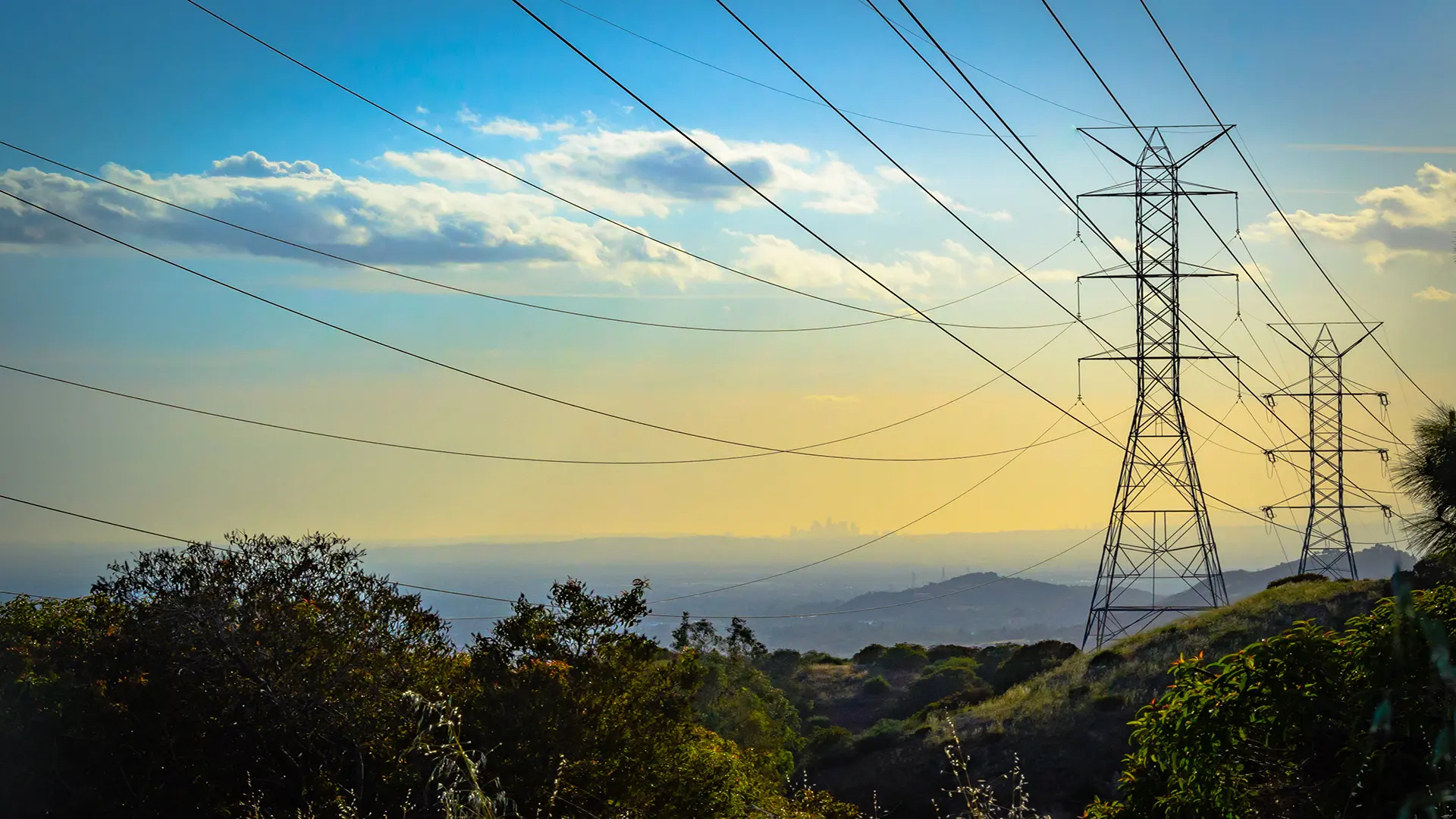
Researched by Industrialinfo.com (Industrial Information Resources Incorporated; Houston, Texas). Gas has earned the reputation of being a volatile commodity. It crosses borders through pipelines, which can be turned off and on, and have the flow direction reversed. It can be transmuted into different forms of energy feedstock and chemical plant feed. It can be compressed, frozen, liquefied, and re-gasified and transported in tankers both at sea and onshore. It can also have its development as a commodity complicated by politics and regional supply, demand, cost pressures, and competition from other energy feedstocks.
All these factors are at work in the central and southern American gas markets, as events in the past month will testify.
In the last week of March, Argentina's energy minister Daniel Cameron announced plans in preparation for cuts and rationing of natural gas exports in order to avoid domestic market shortages in winter. Neighboring states Uruguay and Brazil are both importers of Argentinean gas, but the country which will be most affected is Chile which takes 90% of Argentina's gas exports.
Urgent talks are taking place and officials from both countries are calming fears that there could be a sudden cut off in supplies which feed Chilean power stations supplying about 50% of the country's power. Contingency plans are under discussion to prevent any threat of abrupt strangulation for Chile's supply.
Petrobras (NYSE:PBR) (Rio de Janiero, Brazil) has said that it may be able to increase exports of fuel oil to Chile as a substitute for natural gas supplies that Argentina may cut to handle its domestic energy crisis.
Gas exports are not the real problem for Argentina, reports BNamericas. The reasons for the crisis lie with gas transport problems from the Neuquen gas fields to Buenos Aires and the lack of investment in the industry stemming from the frozen prices for gas, which, in turn, prevents investment in exploration and development of reserves. The government is waving a big stick at the industry to make investments but the industry remains stand- offish waiting for price increases.
This scenario of squeeze and cuts comes after the announcement at the beginning of March that Argentina and Bolivia would proceed with the $2 billion Argentine Gasoducto del Noreste Argentino (GNA) pipeline project to transport gas from Bolivia to northeastern Argentina.
Bolivia has experienced local political storms over its strategic plans to export gas to North America and these pressures have led the government to look closer neighbors for markets and to that extent Argentina's lack of domestic investment has increased the demand potential for Bolivian gas. The country is sitting on an estimated 55 trillion cu ft of gas reserves.
A final agreement between Bolivia and Argentina should be signed in mid April, which will see the GNA project using part of an existing pipeline and new $1 billion construction beginning in 2006 of a 1,500 kilometer pipeline, which will start operating at a capacity of ten million cubic meters a day (mcm/d) and could be enlarged to 30 mcm/d.
Techint (Buenos Aires, Argentina) who will construct the pipeline, are investing $750 million in the project with the balance coming from the Argentinean government. The pipeline will connect to local gas networks and may be extended to Paraguay and Brazil at some future date. Upstream investment of another $700 million will be needed to provide gas supply for the pipeline and this will be handled by Techint with possible partners coming from Petrobras, Repsol (NYSE:REP) (Madrid, Spain) and interested Russian companies.
Bolivia is also pushing a gas sales agreement with Mexico that would be between government agencies and exclude private companies from the negotiations. Again, this is a result of painful political scar tissue from Bolivia's experience with private bidding for national resources. Mexico continues to exercise a clear sense of ambiguity when the prospect of the privatization of energy sources is the subject. Bolivia has a national referendum on gas exports planned for sometime in May or June and a new hydrocarbons bill to go through congress.
When all these matters are settled Bolivia could be exporting 30 million cubic meters a day to regasification plants on Mexicos Pacific coast, including Repsol's proposed LNG terminal at Lazaro Cardenas.
Looking north. gas is being pushed out of power generation plant plans by coal that in Illinois claims a price benefit of a factor of five over gas - $1.14/million Btu for coal against $5.87/m Btu for gas. The state has ten coal-fired projects with a combined output of 10,000 MW under consideration. Countrywide in the U.S., various reports put the number of coal-fired power stations planned at somewhere between 90 and 105. These could provide about 10% of total U.S. power capacity with an investment needed of over $75 billion.
Energy consulting firm, McIlvaine says that fuel costs for gas-fired plants are as high as four cents per kWh, while coal comes in at one cent/kWh. The breaking point is somewhere around $3/m Btus of natural gas. Below $3, gas fired generation is more attractive than coal. Gas plants are cheaper to build and cleaner to operate, so the strong environmental and gas industry lobby is well motivated to attempt to keep the advance of coal at bay.
McIlvaine says that over the next ten years the U.S. will need about 140,000 MW of increased power with about 50% or more to come from coal-fired plants.
To go back to the beginning. Gas as a commodity experiences volatile price shifts. If Bolivian gas gets to Mexico and to LNG plants and if Argentina's resources are developed through renewed investment, more Bolivian sourced gas could become available to move north by way of Mexico's pipelines and gas terminals to the Mexico's major trading partner at a competitive price. The threat on Chile's gas supply would be lifted in the process. Remember a week is a long time in gas politics. Today's 'No' usually means tomorrow's 'Yes.'
All the companies and countries in the above report have cross interests in the energy markets of the region and, as in the Middle East, the surest way to try to follow the plot is to follow the pipelines, and in this case, the gas terminals.
/news/article.jsp
false
Want More IIR News Intelligence?
Make us a Preferred Source on Google to see more of us when you search.
Add Us On GoogleAsk Us
Have a question for our staff?
Submit a question and one of our experts will be happy to assist you.

Forecasts & Analytical Solutions
Where global project and asset data meets advanced analytics for smarter market sizing and forecasting.
Explore Our SolutionsRelated Articles
-
Winter 2026-27 Outlook: Strong El Niño Expected to Shape Nor...October 23, 2026
-
U.S. Remains Key to Iberdrola's Power Sector BuildoutOctober 22, 2026

PECWeb Global Market Intelligence Platform
Identify opportunities, anticipate change, and execute with confidence. PECWeb connects the industrial intelligence you need, from projects and assets to operational events, all in one platform.
Discover PecwebIndustry Intel
-
Brazil Critical Minerals 2027: Rare Earths, Lithium, CopperPodcast Episode / Oct 16, 2026
-
US Craft Labor Outlook 2026: Wages, Per Diems, Data CentersPodcast Episode / Oct 16, 2026
-
Latin America Data Center Outlook 2026: Power, Hubs & GrowthPodcast Episode / Oct 9, 2026
-
Food and Beverage CapEx Outlook 2026: Tariffs, AI, AfricaPodcast Episode / Oct 9, 2026
-
North America Refining 2026: New Pipelines to PADD 5Podcast Episode / Oct 2, 2026