Metals & Minerals
China's New Rare Earth Baotou IDZ Sustains High Volume, Low Price
The future of new companies looking to enter the Rare Earths (RE) mining sector is faced with continued downward price pressures.
Released Friday, October 04, 2002
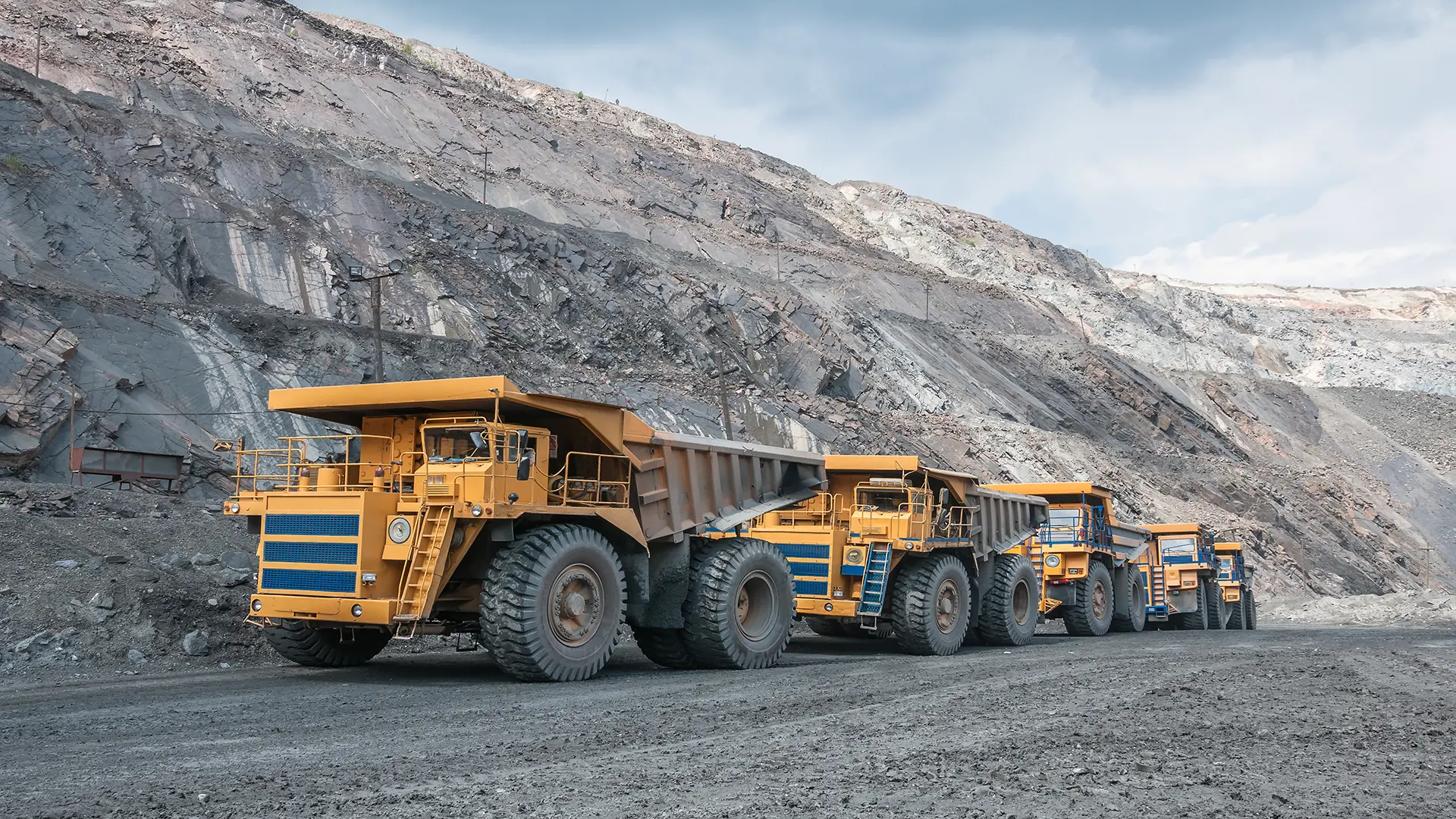
Researched by Industrialinfo.com (Industrial Information Resources Incorporated; Houston Texas). The future of new companies looking to enter the Rare Earths (RE) mining sector is faced with continued downward price pressures.
The end user markets are there for industrial applications and are growing in variety and volume. Growth in autocatalysts, to control auto emission levels, has seen a parallel growth in demand for RE magnets. Magnet demand grew at an annual rate of 21% between 1997 and 2000. Despite risks, new ventures worldwide, perhaps attracted by the fact that 'rare' usually means 'value', continue to float proposals in the face of China's dominance of the market and ability to put volume and turnover before price.
2000 estimates have China supplying 85% to 95% of global demand in rare earth magnets. Growth in rare earth demand through to 2006 is in the range of 4 to 9%, which means that world demand could top 100,000 tons of ore per year for the first time in 2004. In 2000 China is estimated to have mined ores containing 75,500 tons of rare earth ores. This represented 88% of world production equivalent of 85,900 tons of REO.
The source of this Chinese dominance is the world's largest known rare earth deposit in North China's Inner Mongolia Autonomous region, which has its focus in Baotou City. The deposit represents 53% of the world's proven reserves. In 2001 output from the Baotou region reached 46,600 tons representing 51% of global output. This year the Chinese government has invested $7.23 million in the development of functional rare earth materials and another $21.7 million in the construction of a 28 story 'Rare Earth Plaza' in Baotou. The creation of a "Rare Earth Valley" Industrial Development Zone (IDZ) consisting of five parks - education, science and technology, pioneering and light logistics parks - is planned to be a production and development base which will be fully established and mature, including international input, by 2015.
By 2010 the 50 sq km park is expected to be outputting a gross $5.1 billion of which more than half will be generated by the rare earth industry from basic raw material production to the manufacture of integrated products. RE consist of a grouping of 17 elements (plus 13 man-made derivative compounds), which are used, in catalysts, glass, polishing, metal alloys, magnets, phosphors and pigments, ceramics, lasers, superconductor, solar energy, medicine, agriculture, and microwave technologies. The RE elements are split 50/50 between the Lanthanide and Actinide series.
Roskill reports that phosphors (including pigments) is the largest sector of the rare earths market by value, with gross sales estimated at $300 million in 2000. This is out of an estimated total RE market turnover of $830 million per annum. This sector is anticipating steady growth with continued demand for phosphors in TVs, computer screens, and energy-efficient tricolor lamps.
Baotou city (population 1.3 million) has a 6,000 year history and houses the mausoleum of Ghengis Khan. The city has three advanced education institutions and the Baotou Research Institute for Rare Earth. It is also an industrial base for energy, metallurgy, machinery, trucks, and chemistry. By the end of 2001 over 200 Chinese and foreign enterprises had settled in the IDZ with a combined registered capital of $80 million. These included companies from the USA, Japan, Korea, Britain, Spain, Canada, and Russia. The establishment of another ten enterprises has been approved in 2002. To gain competitive edge, the IDZ has established ties with Indian software companies and the China Netcom and sought technological help from the USA and Japan.
As the Chinese share of world supplies has increased and real volumes have gone up, prices have come down. In the period 1994 to 2001, RE production increased by 33% and in the same period the US share of the world market dropped from 32% to 6%, while the Chinese share increased from 47% to 82%. Over the last decade, magnet imports into the US increased by 16%. The Chinese share increased from 7.7% to 34% and the Japanese share dropped from 44% to 32%. In 1990 neodymium metal sold for $50/kg. It is now selling for under $10/kg; this is representative of the average fall of RE prices in the period. There is potential for price increases over the next 3-5 years only if the Chinese government controls output volumes. But if Molycorp (Brea, California) resumes full capacity production at Mountain Pass, California, there could be a further fall in prices.
Methods used to separate uranium for the first atomic bomb by the Manhattan Project during World War II were first developed using RE's and in turn led to improved techniques to allow greater volumes to be available for industry. The first discovery of a rare earth having permanent ferromagnetic properties was made in 1935 with gadolinum. Subsequent uses of RE's have spread through hi tech applications and produced compaction, miniaturization, performance, and finish in consumer products.
The magnet industry, which is said to be secretive, currently has factions backing various applications and investments in new compounds and rejuvenating established formula. There is a rare old buzz in Baotou.
/news/article.jsp
false
Want More IIR News Intelligence?
Make us a Preferred Source on Google to see more of us when you search.
Add Us On GoogleAsk Us
Have a question for our staff?
Submit a question and one of our experts will be happy to assist you.

Forecasts & Analytical Solutions
Where global project and asset data meets advanced analytics for smarter market sizing and forecasting.
Explore Our SolutionsRelated Articles
-
Global Copper, Nickel Prices Could Double in 10 YearsOctober 23, 2026
-
Australia's Lithium Comeback Boosted by Pilgangoora Expansio...October 23, 2026
-
Africa's Gold Boom: Rising Prices Strengthen State Control a...October 23, 2026

PECWeb Global Market Intelligence Platform
Identify opportunities, anticipate change, and execute with confidence. PECWeb connects the industrial intelligence you need, from projects and assets to operational events, all in one platform.
Discover PecwebIndustry Intel
-
Mining Capital Spending 2026: Copper, Rare Earths, AluminumPodcast Episode / Oct 23, 2026
-
Brazil Critical Minerals 2027: Rare Earths, Lithium, CopperPodcast Episode / Oct 16, 2026
-
US Craft Labor Outlook 2026: Wages, Per Diems, Data CentersPodcast Episode / Oct 16, 2026
-
Latin America Data Center Outlook 2026: Power, Hubs & GrowthPodcast Episode / Oct 9, 2026
-
Food and Beverage CapEx Outlook 2026: Tariffs, AI, AfricaPodcast Episode / Oct 9, 2026