Production
Dallas Fed Survey Shows Greater Uncertainty for Oil & Gas Industry
The U.S. oil and gas industry is feeling more uncertain about its future
Released Thursday, December 21, 2023
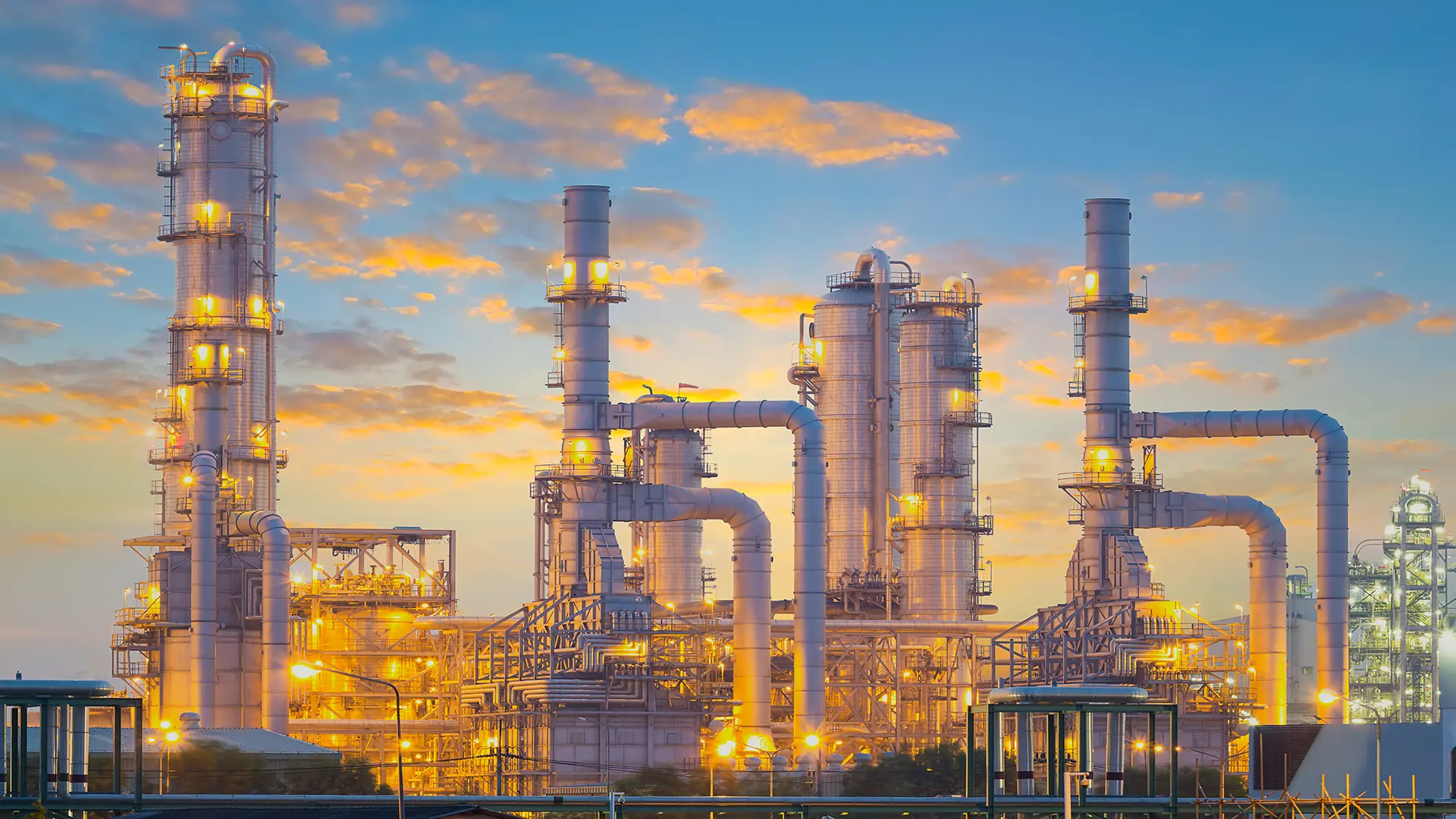
Written by John Egan for Industrial Info Resources (Sugar Land, Texas)--The U.S. oil and gas industry is feeling more uncertain about its future, according to a new quarterly survey from the Federal Reserve Bank of Dallas. The survey results, released December 20, showed the uncertainty index for companies operating in Texas, Oklahoma and parts of Louisiana jumped 39 points to 46.1, suggesting greater uncertainty. The survey, conducted December 6-14, drew 144 responses. It was fielded during a two-month slide in crude oil prices.
Each quarter, the Dallas Fed surveys oil and gas producers and service firms operating in the 11th District, which includes Texas, Oklahoma and parts of Louisiana. Survey responses are used to calculate an index for each indicator. Each index is calculated by subtracting the percentage of respondents reporting a decrease from the percentage reporting an increase. When the share of firms reporting an increase exceeds the share reporting a decrease, the index will be greater than zero, suggesting the indicator has increased over the previous quarter. If the share of firms reporting a decrease exceeds the share reporting an increase, the index will be below zero, suggesting the indicator has decreased over the previous quarter.
Respondents reported plunging sentiment about the future: The company outlook index in the fourth quarter sank 48 points, to -12.4 from 36 in the prior quarter, when oil prices were higher. Exploration & production (E&P or upstream) companies had a bleaker outlook about their companies than oilfield service firms.
This dour view came as prices were falling but oil and natural gas production was rising, and as the Israel-Hamas conflict was raging. The survey's business activity index, the broadest measure of conditions facing energy firms in the 11th District, remained positive but slipped from 10.9 in the third quarter to 3.6 in the fourth quarter. The business activity index was 7.5 for E&P firms versus -4.2 for services firms, suggesting activity slightly grew for E&P firms, but declined slightly for service firms.
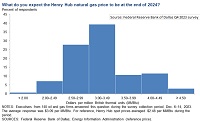
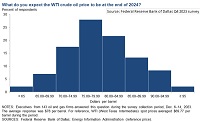
When asked about price expectations for the end of next year, executives from 143 E&P firms said they expected West Texas Intermediate crude oil to average about $78 per barrel--higher than the $70 spot price when the survey was conducted. Gas prices will average about $3.09 per million British thermal units (MMBtu) at Henry Hub, Louisiana, at year-end 2024, 140 executives predicted. That is significantly higher than the $2.48 per MMBtu that existed during the survey period.
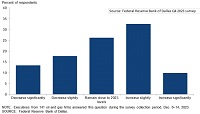
One-third (33%) of upstream executives said they expected their firms to slightly increase their capital outlays in 2024 compared to 2023, but one-quarter (26%) felt their capital spending would remain close to 2023 levels, the Dallas Fed reported. Smaller percentages said their capital expenditures would either increase significantly or decrease significantly from 2023.
There was an interesting split between large E&P firms and their smaller brethren on the top goals for 2024. Executives were given eight potential goals for 2024 and asked to select their firm's top goal. The most-selected response among large firms was "acquire assets" (35% of respondents), followed by "reduce debt" (20% of respondents). However, smaller producers said their top goal was to "grow production" (41% of respondents), followed by "maintain production" (25% of respondents).
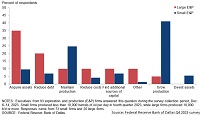
Verbatim comments from upstream respondents included:
- The big question is, will OPEC+ be able to keep the price of crude oil up?
- The rumored thawing of investor appetite has yet to be seen by our firm. Many, or most, large-scale institutional investors have abandoned energy on moral grounds, which is difficult, if not impossible, to reverse. ... Simply put, no one wants to invest. It's hard to blame them.
- Weakening oil prices below $70 per barrel and near-zero residue gas prices in the Permian, along with weak natural gas liquids prices, will limit capital investment in 2024, as it is determined by operating cash flow.
- The administration's continued war on the petroleum industry has an effect for sure, but we're seeing that the real world needs our industry, and the public is trumping the downward pressure the administration is trying to maintain.
- We are still worried about the current political climate and turmoil in the Middle East.
- Significant downward pressure and volatility in commodity prices since February 2022 without commensurate decreases in service costs is driving margin erosion and difficulty in budgeting and/or planning.
- Access to goods and services has improved, albeit at a higher cost. The hidden costs of doing business are going through the roof.
- As usual, pricing for our products is in someone else's hands. Political uncertainty is the biggest variable, but the honeymoon with electric vehicles is over, and the recognition of reliance on fossil fuels will be in our favor.
- The outlook is good, and work is continuing in leasing.
- Consolidation by the producers and/or oil companies has had a direct impact on the rig count and need for our services.
- The recent decline in the oil price and a more negative economic outlook are possible headwinds for clients' budgets in 2024.
- Regulatory policies in the U.S. continue to have negative effects on demand for our services and rising operating costs.
/news/article.jsp
false
Want More IIR News Intelligence?
Make us a Preferred Source on Google to see more of us when you search.
Add Us On GoogleAsk Us
Have a question for our staff?
Submit a question and one of our experts will be happy to assist you.

Forecasts & Analytical Solutions
Where global project and asset data meets advanced analytics for smarter market sizing and forecasting.
Explore Our SolutionsRelated Articles

PECWeb Global Market Intelligence Platform
Identify opportunities, anticipate change, and execute with confidence. PECWeb connects the industrial intelligence you need, from projects and assets to operational events, all in one platform.
Discover PecwebIndustry Intel
-
North America Refining 2026: New Pipelines to PADD 5Podcast Episode / Oct 2, 2026
-
Biomanufacturing Onshoring 2026: GLP-1 Drives CapexPodcast Episode / Oct 2, 2026
-
2026 US Data Center Outlook: Power, Land & CoolingPodcast Episode / Sep 18, 2026
-
2026 Global Power Demand Outlook: Gas, Nuclear & RenewablesPodcast Episode / Sep 18, 2026
-
2026 Oil & Gas CapEx Outlook: Middle East, LNG & PermianPodcast Episode / Sep 4, 2026