Power
Tennessee Valley Constructing Dry Cask Storage System at Sequoyah Nuclear Power Station
Spent nuclear fuel is used fuel from a reactor that is no longer efficient in creating electricity, because its fission process has slowed. This material remains thermally hot, highly...
Released Wednesday, October 02, 2002
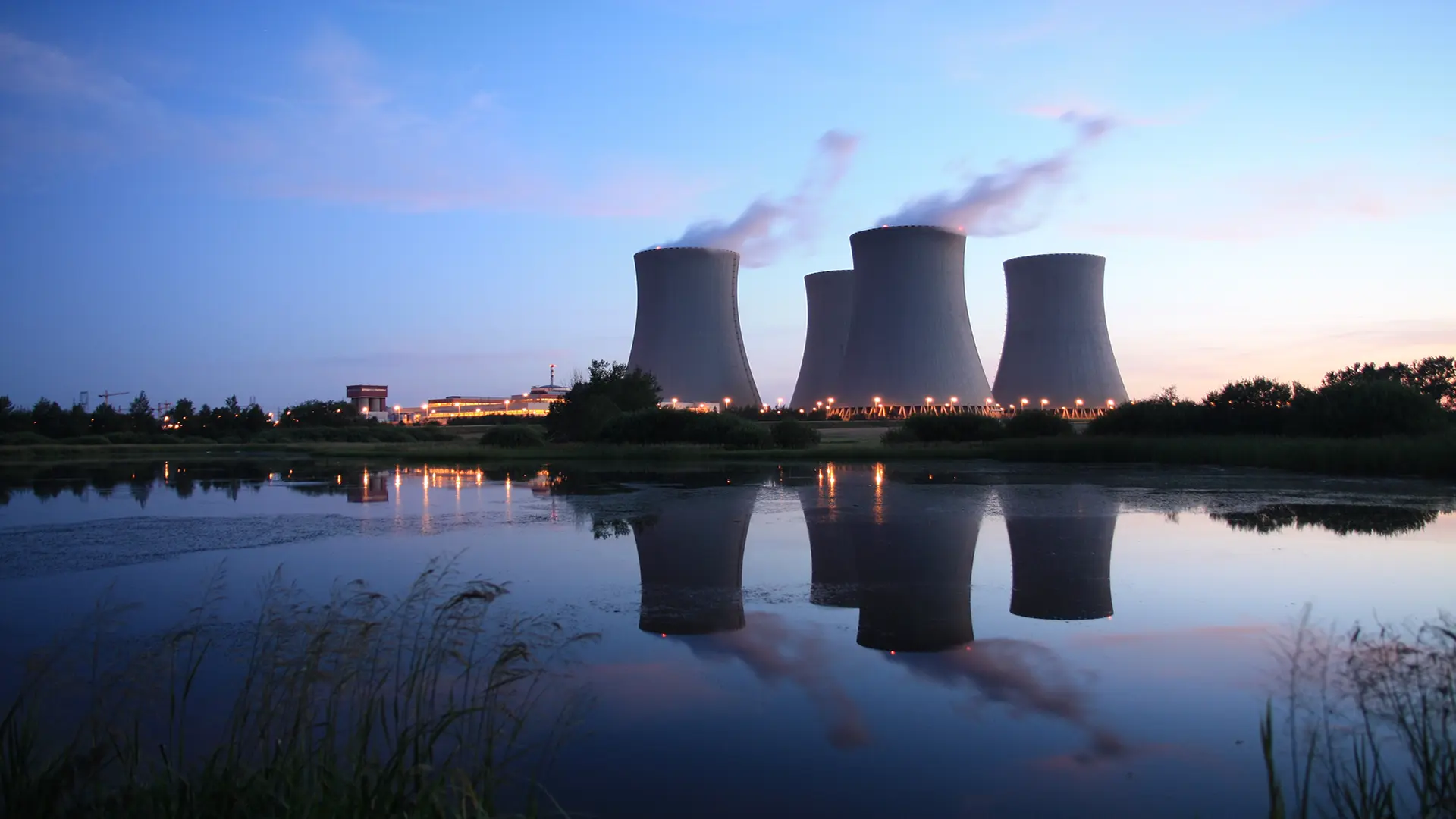
Researched by Industrialinfo.com (Industrial Information Resources, Incorporated; Houston, Texas). The Tennessee Valley Authority (NYSE:TVC) (Knoxville, TN) is constructing a dry cask storage system to store spent reactor fuel at the 2,296 megawatt (MW) Sequoyah Nuclear Power Station near Soddy-Daisy, Tennessee.
Spent nuclear fuel is used fuel from a reactor that is no longer efficient in creating electricity, because its fission process has slowed. This material remains thermally hot, highly radioactive, and potentially dangerous. Due to lack of a permanent disposal repository, as defined in the Nuclear Waste Policy Act of 1982, spent fuel is stored onsite at one hundred thirty one temporary disposal sites in thirty-nine states. The amount of the spent fuel at each site continuously increases as each operating nuclear power reactor in the United States performs a refueling outage on an average cycle of every 18 months. Initially fuel is stored in specially designed pools at each reactor location but as spent fuel pools near their capacity, licensees may move towards the use of dry cask storage systems. Dry cask storage allows fuel that has been cooled in the spent fuel pools for at least one year to be surrounded by inert gas and stored inside a container called a cask.
Construction of the storage system at Sequoyah started earlier this year and must be completed by the fall of 2003 for the plant to continue generating electricity. Design and equipment are being supplied by Holtec International Incorporated (Marlton, New Jersey) with Stone & Webster Incorporated, a company of The Shaw Group Incorporated (NYSE:SGR) (Baton Rouge, Louisiana), directing construction activities. The dry cask storage area will be designed to contain over ninety casks or enough capacity to store spent fuel for the remaining licensed life of the plant.
After more than 20 years and $4 billion in scientific study, Congress approved and President Bush signed House Joint Resolution 87 paving the way for the United States Department of Energy to develop the Yucca Mountain Project in Nye County, Nevada as the nation's first permanent high level nuclear waste disposal facility. This is not an immediate solution to nuclear waste storage problems however as the project still faces heavy opposition from the State of Nevada and other interests. The earliest that Yucca Mountain could begin to accept radioactive waste is 2010.
The Tennessee Valley Authority (TVA) was formed by the United States Government (TVA Act 1933) and today is America's largest public power company with a generating capacity of over 30,000 MW. TVA operates forty-nine power plants including three nuclear generating stations.
/news/article.jsp
false
Want More IIR News Intelligence?
Make us a Preferred Source on Google to see more of us when you search.
Add Us On GoogleAsk Us
Have a question for our staff?
Submit a question and one of our experts will be happy to assist you.
Forecasts & Analytical Solutions
Where global project and asset data meets advanced analytics for smarter market sizing and forecasting.
Explore Our SolutionsRelated Articles
-
NextEra Eyes Strong Backlog, Data Center Hub StrategyOctober 23, 2026
-
Winter 2026-27 Outlook: Strong El Niño Expected to Shape Nor...October 23, 2026
-
U.S. Remains Key to Iberdrola's Power Sector BuildoutOctober 22, 2026

PECWeb Global Market Intelligence Platform
Identify opportunities, anticipate change, and execute with confidence. PECWeb connects the industrial intelligence you need, from projects and assets to operational events, all in one platform.
Discover PecwebIndustry Intel
-
Brazil Critical Minerals 2027: Rare Earths, Lithium, CopperPodcast Episode / Oct 16, 2026
-
US Craft Labor Outlook 2026: Wages, Per Diems, Data CentersPodcast Episode / Oct 16, 2026
-
Latin America Data Center Outlook 2026: Power, Hubs & GrowthPodcast Episode / Oct 9, 2026
-
Food and Beverage CapEx Outlook 2026: Tariffs, AI, AfricaPodcast Episode / Oct 9, 2026
-
North America Refining 2026: New Pipelines to PADD 5Podcast Episode / Oct 2, 2026