Pharmaceutical & Biotech
To Build or Not To Build? How Many Pharma-Biotech Capital Projects Actually Make Construction?
The latest Gap Measurement figures from August 2007 revealed that the Pharmaceutical-Biotech Industry has 463 projects carrying a total investment value (TIV) of $15.8 billion ...
Released Monday, October 01, 2007

Reported by Annette Kreuger, Industrial Info Resources (Sugar Land, Texas)--When considering reported pharmaceutical-biotech capital project spending for any given year, it is important to analyze what becomes of the projects after they are first reported. Utilizing analysis tools, such as Gap Measurement and Project Fallout, help to illuminate an accurate view of project-spending patterns. Project Fallout represents projects that have been delayed or canceled for various reasons, with some simply moved to another year because of funding and regulatory issues. The less Project Fallout, the healthier the industry.
The latest Gap Measurement figures from August 2007 revealed that the Pharmaceutical-Biotech Industry has 463 projects carrying a total investment value (TIV) of $15.8 billion firmly set to start construction in 2007. Although these figures reflect a Project Gain of 69 projects over the 396 that were originally reported, the TIV experienced a $298 million drop, down from the originally forecast $16.1 billion TIV. The changes resulted in a Gap Measurement for the year thus far of -1.84 percent in terms of TIV. Simply put, those projects were either delayed or canceled, or the entire project was reconfigured, resulting in a lower TIV. Projects have been added throughout the year, which account for the net gain of 69 projects, resulting in more projects but with a lesser per-project TIV. Based on August figures, the average 2007 project TIV is $34 million, a drop from the initially forecast average of $40.6 million.
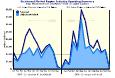 Click on the image at right to view the Pharma-Biotech Industry 2006 vs. 2007 Gap Measurement Chart for August.
When comparing these figures to the same period in 2006, there is a definite improvement in the numbers of projects and TIV, with 2007s 463 projects illustrating an increase of 146, or 46 percent, over the 2006 figure of 317. It is only when considering the TIV does a gap emerge, with the 2007 figures for August revealing a drop of $620 million, down to $15.8 billion from last years $16.4 billion. Overall, it is still a relatively small gap figure of -1.8 percent loss of TIV, and these figures will change as each month is reviewed throughout the end of the year.
An even more revealing analysis is found when considering the August 2005 figures, which just serve to underline the consistent growth of the industry as a whole. When comparing August 2007 to August 2005, the industry is ahead by 110 projects, or 37 percent, from 2005s 353 projects. In terms of TIV, the numbers jumped $2.55 billion, or 19 percent, from the $13.5 billion reported of two years ago.
Project and TIV fluctuation occur for many reasons. The TIV often drops for a major project when companies decide to seek an existing space and remodel it or to contract with a real estate investment trust (REIT) to handle construction, eventually leasing the space after completion. Factors affecting projects moving forward as originally planned tend to vary depending on the individual project, with a healthy majority eventually being built in one variation or another. Now, the most dramatic examples of scrapping a project include Eli Lillys halting construction on a $325 million insulin plant in Virginia because of a major reorganization shift within the company. For more information, view related January 15, 2007, article - Market Shift Pushes Lilly to Abandon Construction of $325 Million Insulin Plant in Virginia. Biotech has not escaped unscathed, as evidenced by Amgens recent stunner of a major reorganization, resulting in the halting of numerous capital projects and job layoffs. For more information, view related August 20, 2007, article - No More Rumors: Amgen Slashing $2 Billion Capital Investments and 2,500 Employees.
One would be remiss to ignore the continued growth abroad, particularly in Asia, when considering the industry. Virtually every major player in the industry is laying down footprints in the form of research centers and manufacturing plants from Singapore to China. Some alarms have been set off, such as the recent announcement by AstraZeneca that all of its domestic (U.S. and European) operations would be shut down and moved to Asia. But after the ensuing uproar, the company hastily retracted the statement and said it meant it would only expand in those areas while not abandoning domestic operations.
The burgeoning demand for drug products and devices is global. That is a simple statement of fact. It will take years to put in place the required infrastructure overseas to meet those countries growing needs. All the while, because of the unassailable required nature of the industry, there will be no permanent abatement on the domestic front in product demand and the facilities required to develop, produce and distribute them. Interestingly, just as domestic companies expand overseas, international companies are expanding here. It would appear that all want to be in place to capture a piece of a market sector that has virtually every human being on the planet as a potential customer.
Industrial Info Resources (IIR) provides marketing communication services ranging from industrial database solutions to market forecasting, custom analytics, and specialty promotions that support high-level image campaigns.
/news/article.jsp
false
Want More IIR News Intelligence?
Make us a Preferred Source on Google to see more of us when you search.
Add Us On GoogleAsk Us
Have a question for our staff?
Submit a question and one of our experts will be happy to assist you.

Forecasts & Analytical Solutions
Where global project and asset data meets advanced analytics for smarter market sizing and forecasting.
Explore Our SolutionsRelated Articles
-
Latin America's CMO, CDMO Segments Gain GroundOctober 21, 2026
-
Upgrades, Additions a Big Driver of U.S. Packaging Construct...October 19, 2026
-
Europe's Mild Winter Outlook Tests Natural Gas PreparednessOctober 16, 2026
-
High Global Fuel Prices Are About Refinery Issues as Much as...October 14, 2026

PECWeb Global Market Intelligence Platform
Identify opportunities, anticipate change, and execute with confidence. PECWeb connects the industrial intelligence you need, from projects and assets to operational events, all in one platform.
Discover PecwebIndustry Intel
-
Mining Capital Spending 2026: Copper, Rare Earths, AluminumPodcast Episode / Oct 23, 2026
-
Brazil Critical Minerals 2027: Rare Earths, Lithium, CopperPodcast Episode / Oct 16, 2026
-
US Craft Labor Outlook 2026: Wages, Per Diems, Data CentersPodcast Episode / Oct 16, 2026
-
Latin America Data Center Outlook 2026: Power, Hubs & GrowthPodcast Episode / Oct 9, 2026
-
Food and Beverage CapEx Outlook 2026: Tariffs, AI, AfricaPodcast Episode / Oct 9, 2026