Petroleum Refining
U.S. Refineries Can do More, Energy Secretary Says
With imports of heavier slates of crude oil sparse because of ongoing fighting in the Middle East, the U.S. energy secretary said he was pressing domestic refiners to do more.
Released Wednesday, August 19, 2026
Written by Daniel Graeber for IIR News Intelligence (Sugar Land, Texas)
Summary
Refineries are already running near peak capacity and maintenance isn't much of an issue, though with inflationary pressures persisting, the U.S. energy secretary told an audience in Midland, Texas, that more was needed to offset supply-side issues in the Middle East.Turn 'Em On Full Blast
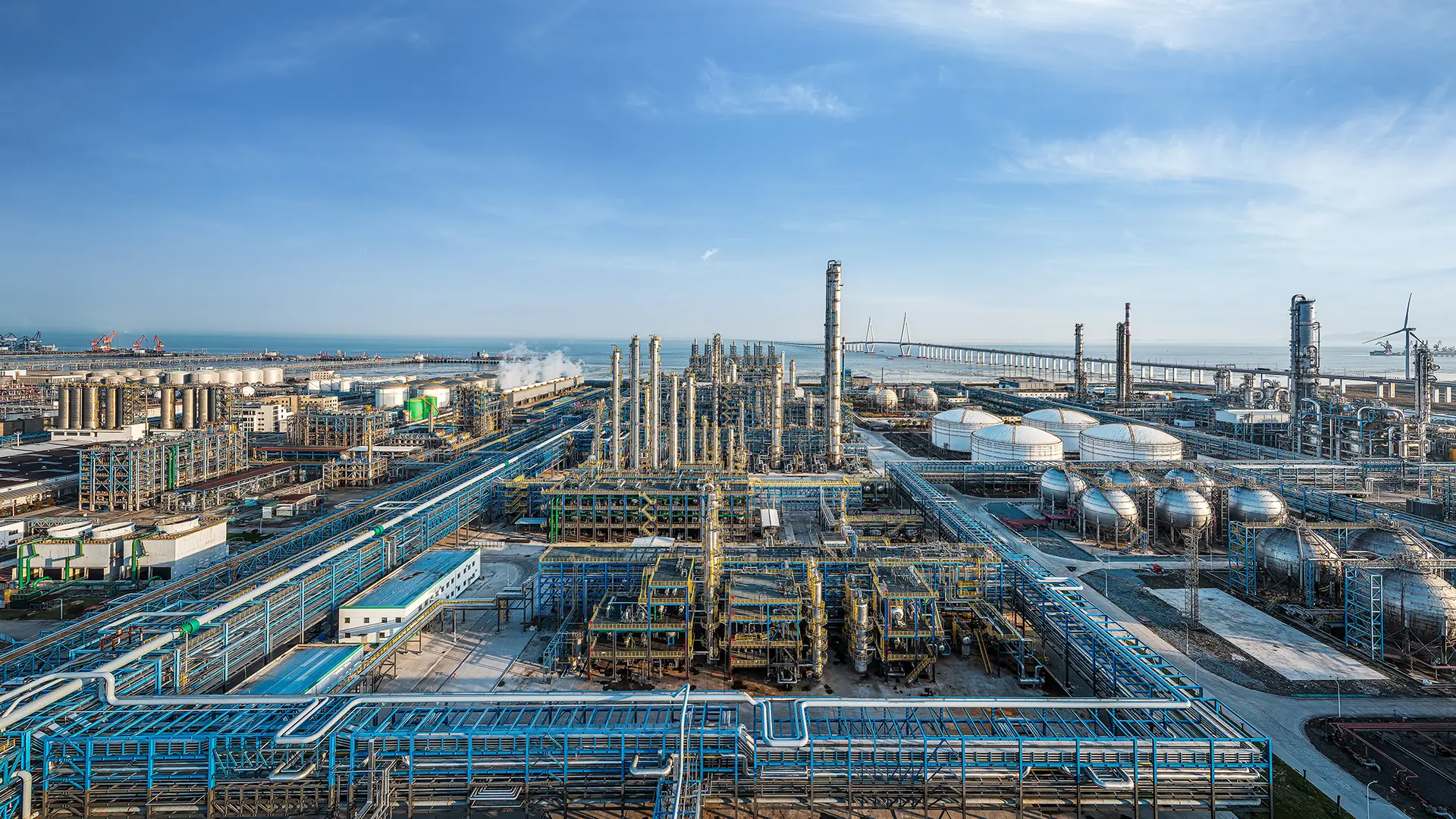
With imports of heavier slates of crude oil sparse because of ongoing fighting in the Middle East, the U.S. energy secretary said he was pressing domestic refiners to do more.U.S. Energy Secretary Chris Wright was in Midland, Texas, on Monday to discuss the state of the nation's energy sector. Speaking to reporters, Wright said he was in discussions with representatives from the domestic refinery sector to review how to improve throughput levels.
"The United States refineries are running at record high, but we have refineries in the Middle East that are turned down," he added.
Indeed, U.S. refiners are running hot. Federal data for the week ending August 7 show refinery inputs averaged 17.2 million barrels per day (bpd), up 26,000 bpd from the prior week. Refineries were also running about 96% of their peak operating capacity, showing there's not much room for improvement. IIR Energy reported U.S. crude outages below 200,000 bpd for week ending August 14, the second week in a row.
Elsewhere, according to the U.S. Energy Information Administration (EIA), commercial crude oil inventories increased by 17.4 million barrels from the prior week, but remain about 2% below the five-year average for this time of year.
"Both finished gasoline and blending component inventories decreased last week," analysts at the EIA wrote in a report published August 12.
Industrial Info Resources data show more than 100 crude oil refineries in the U.S., which are home to US$15 billion worth of active and planned projects. The IIR Global Market Intelligence (GMI) Refining Plant and Project Databases offer full list of plant profiles and project reports.
There have been few unplanned outages so far in August that would cause major disruptions to the nation's refinery sector, said Hillary Stevenson, a vice president for energy intelligence at Industrial Info Resources.
One of the more recent disruptions was due to a mechanical issue at the Borger Refinery in Texas, operated by Phillips 66. The company restarted its fluid catalytic cracking unit, which contributes to gasoline production, at the refinery on August 13, three days after an instrument failure. Borger can process 146,000 bpd.
Elsewhere, imports of the heavier crude oil slates preferred by many U.S. refiners are impacted by the war in the Middle East. Federal data show Saudi imports during the week ending August 7 were down 63% from the same time last year, Libyan imports were down 59.2%, while Iraqi imports were down 100%, showing U.S. refiners are drawing on crude oil from the Americas for most of their feedstock.
Higher runs, meanwhile, could dampen the nation's ability to respond to future supply-side shocks.
"We expect commercial crude oil inventories in the United States to be below the five-year (2021--2025) low through the end of 2026 because of high refinery runs and lower net imports," the EIA reported in its monthly market report for August.
Wright Wants Lower Prices at the Pump
Speaking from Midland, Wright said improvements at the U.S. refining sector would lead to improvements in the U.S. economy as retail gasoline prices are one of the more ubiquitous signs of consumer-level inflation.On Tuesday, travel club AAA put the national average retail price at $4.06 for a gallon of regular unleaded, compared to year-ago levels of $3.14 per gallon.
Stevenson, however, said that domestic refiners can only do so much, particularly if they're already running at close to peak capacity.
"The issue with gasoline prices is that it is a global commodity," she said. "Even if the U.S. were to turn up refining rates, it doesn't necessarily mean that gasoline prices would decrease significantly for the U.S. consumer because excess production would see demand from foreign and domestic buyers."
On top of that, crude oil prices account for about half of what the consumer sees at the pump, with the rest attributed to taxes, transportation costs and other items.
On Tuesday, a day after yet-another attack on shippers moving through the Strait of Hormuz, crude oil prices were on the rise. West Texas Intermediate, the U.S. benchmark for the price of crude oil, was up around 1% as of 11 a.m EDT to trade at $84.49 per barrel.
By the Numbers
- 96% capacity for U.S. refinery throughout
- 2% below the five-year average for commercial crude oil inventories
Key Takeaways
- There's only so much U.S. refineries can do.
- Commodity prices are a global issue.
About Industrial Info Resources
Industrial Info Resources (IIR) is the leading provider of industrial market intelligence. Since 1983, IIR has provided comprehensive research, news and analysis on the industrial process, manufacturing and energy related industries. IIR's Global Market Intelligence (GMI) helps companies identify and pursue trends across multiple markets with access to real, qualified and validated plant and project opportunities. Across the world, Industrial Info Resources is tracking over 250,000 current and future projects worth $30.2 Trillion (USD).
/news/article.jsp
false
Want More IIR News Intelligence?
Make us a Preferred Source on Google to see more of us when you search.
Add Us On GoogleAsk Us
Have a question for our staff?
Submit a question and one of our experts will be happy to assist you.

Forecasts & Analytical Solutions
Where global project and asset data meets advanced analytics for smarter market sizing and forecasting.
Explore Our SolutionsRelated Articles
-
U.S. Refineries to Run Lower Amid Regular Maintenance PeriodSeptember 18, 2026
-
Climate Risk Emerges as Power-Plant Design QuestionSeptember 18, 2026
-
Some U.S. Refiners Deferring Maintenance from 2026 to 2027September 17, 2026
-
Saudi Arabia Yanbu Refinery Still Operating, Industrial Info...September 17, 2026
-
Key Saudi Oil Pipeline Damaged in Drone AttackSeptember 14, 2026

PECWeb Global Market Intelligence Platform
Identify opportunities, anticipate change, and execute with confidence. PECWeb connects the industrial intelligence you need, from projects and assets to operational events, all in one platform.
Discover PecwebIndustry Intel
-
2026 US Data Center Outlook: Power, Land & CoolingPodcast Episode / Sep 18, 2026
-
2026 Global Power Demand Outlook: Gas, Nuclear & RenewablesPodcast Episode / Sep 18, 2026
-
2026 Oil & Gas CapEx Outlook: Middle East, LNG & PermianPodcast Episode / Sep 4, 2026
-
The Answer Age Starts with Trusted Data: Introducing IIR Envoy™ MCPPodcast Episode / Sep 1, 2026
-
European Chemicals and Transport Fuels OutlookPodcast Episode / Jul 10, 2026