Mining's Role in the Global Energy Transition
Video Language
Sponsored by

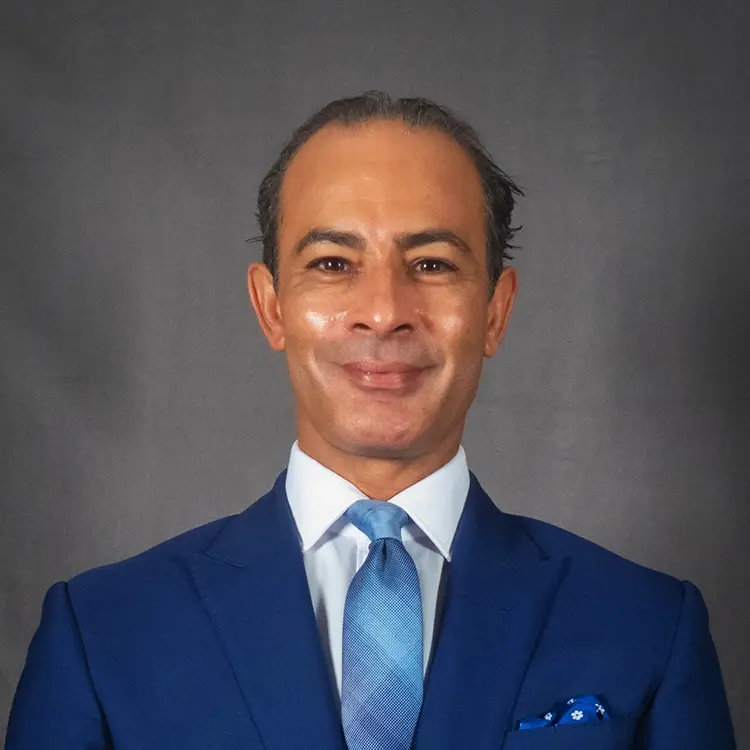
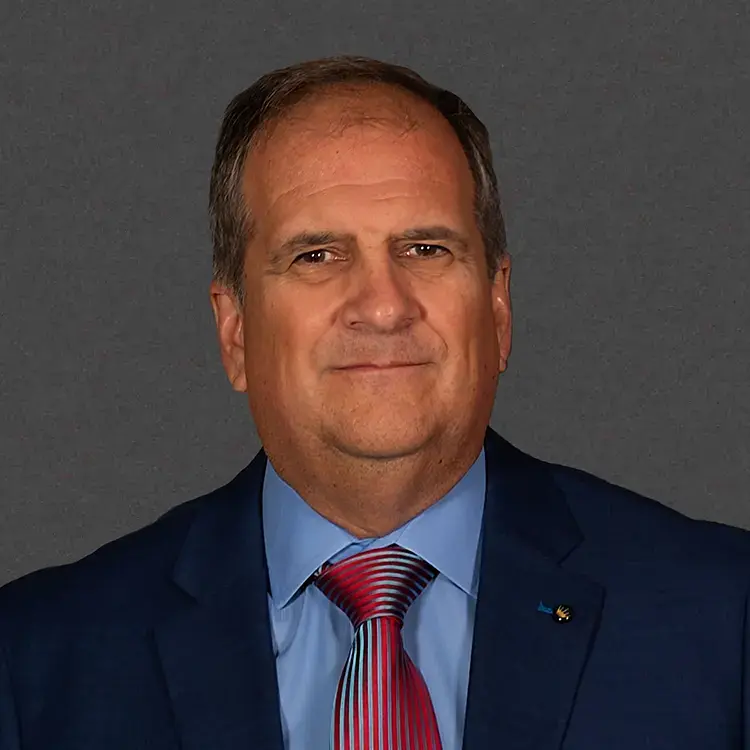
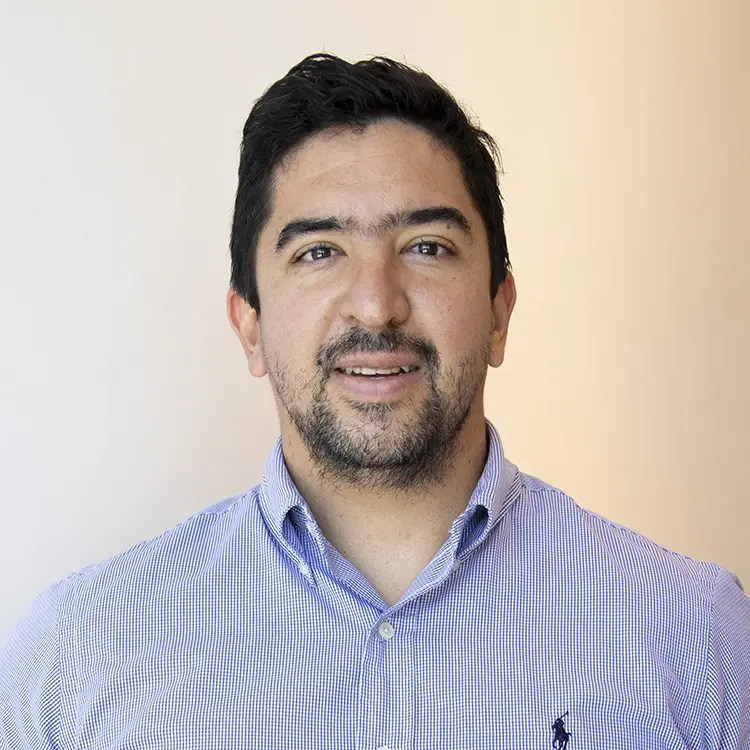
In this episode of Navigating the Currents of Change, host Shaheen Chohan explores the complex dynamics reshaping global mining investment with Joe Govreau, IIR's VP of Metals and Minerals Research, and Renzo Castillo, Assistant VP for Latin America Metals and Minerals Research.
[Intro] (00:00):
The continued pace in demand for critical metals and minerals to support the energy transition, on top of the demand from existing manufacturing sectors, is putting pressure on mining companies and their downstream processing counterparts to rise to the challenge — all at a time when the pressure to do so in the most sustainable way is also increasing. So are we seeing a new cycle of capital investments now emerging, or are there still headwinds in place that could see us fall short of some of those most needed metals and minerals?
Shaheen Chohan (00:51):
Welcome to Navigating the Currents of Change. My name is Shaheen Chohan and I lead Global Analytics here at Industrial Info Resources. For over 40 years we have been providing market intelligence, data, analytics and geospatial solutions to those companies involved in the design, the construction and maintenance of plants and facilities across energy, mining and heavy industrial sectors across the world. Now, to help me unpack some of the trends we are seeing, I am delighted to be joined by two of our subject matter experts. We have Joe Govreau, who is global head of Metals and Minerals Research. Welcome, Joe. And also in the hot seat is Renzo Castillo, Assistant VP and Regional Manager for Metals and Minerals Research in Latin America. Welcome, gentlemen.
Before we dive in, I would like to say a very big thank you to our podcast sponsors, HILCO. HILCO is the world leader in motion control and filtration systems. Since 1905, HILCO filtration systems have been the industry standard. HILCO brings fluid contamination problems under control cost-effectively with a full range of engineered filters, cartridges, reclaimer coolant recyclers and fluid conditioning systems.
Now, Joe, I'd like to start with the big question first — are we seeing mining project activity picking up again?
Joe Govreau (02:18):
Yeah, I think we are to a certain extent, and it's definitely a regional situation. Project activity has been on an upward trend for several years — really since 2014 — and it's actually peaking right now. CapEx for eight of the largest global mining firms — Anglo American, Barrick, BHP Group, Freeport-McMoRan, Glencore, Newmont, Rio Tinto and Vale — is on pace to rise 2.5% this year. So these eight companies are spending about $49.6 billion this year. So we're kind of seeing spending levels plateauing, I think. And it's looking like they will drop a little bit next year, but still elevated historically based on what these majors are doing right now. Growth in construction activity, when we look at those numbers, is up about 1.9% this year, compared to 3.4% last year. So I think we're seeing a slowdown in growth, but still growth at a relatively high level of spend historically.
Some regions have experienced increased spending, such as the US, which is getting a lot of government support for infrastructure and mining projects, while other regions have seen declines — such as Australia and Latin America. In Australia, for example, there have been marked slowdowns in construction activity, mainly due to increased competition and a slowdown or change in supply situation to China and other Asian countries. BHP has laid off employees at its coal mines in Queensland, Australia, as well as Nickel West operations.
Shaheen Chohan (04:10):
Now I'd like to bring in Renzo Castillo, who's our Assistant VP for Latin America Research. So, Renzo, what's the status of mining projects in Latin America right now?
Renzo Castillo (04:22):
Thanks for the introduction and for having me here. The investment structure in mining across Latin America remains broadly stable, following similar patterns to past years. Chile, Brazil and Peru continue to be the major mining markets, followed by Argentina, Mexico and Colombia. Right now, we are tracking well over $300 billion in metals and minerals projects in the region. Your observation, Joe, is correct — several large projects have entered the construction phase over the last 2 to 3 years, especially in lithium, copper and iron. But over the past year, we are seeing something of a plateau in terms of how many of those project commitments actually make it all the way to the construction phase. In terms of increased activity, there is a relative reactivation of copper projects in Peru and Chile, very strong growth in lithium investments especially in Argentina, and we are seeing renewed exploration in Mexico in the last year. These are being driven by international demand, electricity transmission, favorable commodity prices and also by policy shifts in many countries.
Shaheen Chohan (05:36):
Thanks, Renzo, for your input there. Joe, coming back to you — as I highlighted in my opening statement, decarbonization and most specifically electrification of everything has been a major motivator in stoking a lot of this new mining CapEx activity that we've been seeing. Certainly it's a different profile to the past mining boom, which was really all about supporting China's industrialization. Now, obviously, the energy transition has taken the lead role. Is this still the case, and if so, which mining commodities are you seeing the biggest uptick in CapEx activity at the moment?
Joe Govreau (06:18):
Yeah, I really believe it's still the case. The energy transition has been the main driver of demand, not only for copper and other battery metals, but also for aluminum and steel. While the energy transition has slowed somewhat, the need for metals to supply new energy transition technologies has not slowed. And copper seems to be really the commodity of greatest interest right now, followed by gold. We're seeing a lot of gold projects and rare earths. Of course, coal and iron ore continue to be big markets as well. In the US, there's been a resurgence in coal mine activity as the Trump administration has brought forward support. Decarbonization of the industry is a major focus for mining companies and a major driver of spending. Renewable energy projects are common in the industry, and much has been done to move mining fleets away from fossil fuels in terms of battery electric vehicles, trolley assist projects and other technologies. Although there's been some slowdown in projects involving electrification of mining fleets that we've seen recently, with companies like BHP announcing they were delaying their electrification efforts due to delays in technology deployment.
Shaheen Chohan (07:31):
Now, over the last 12 to 18 months, we've seen much of the world go into elections — I think we had 50 elections over the course of that period. And obviously with every new administration that comes online, we see some kind of adjustments to policy, both negative and positive, in supporting decarbonization and the energy transition, but also all of the supporting infrastructure that needs to come through to support that. How would you say that today's geopolitical events, and again coming back to that issue of resource nationalism, are changing the direction of mining projects and the composition or location of where we're seeing those investments occurring?
Joe Govreau (08:20):
Yeah, I think it's really had a profound impact. And the Trump administration has purposely disrupted the industrial market with tariffs, with a goal to boost trade bargaining positions and attract reshoring to the US. This is encouraging domestic production, and we've seen evidence that reshoring is happening as a number of projects have arisen. But at the same time, changing policies such as increasing tariffs causes uncertainty in markets and rearranges supply chains — has impacted downstream products and consumer costs. So this generally results in project delays, a shifting in location of projects, and puts inflationary pressure on project costs, which continue to increase. The industry needs stable policy in order to make important long-term investment decisions.
Resource nationalism is nothing new, and it appears we're in an era of hyper resource nationalism, I would say, where critical mineral supply has become a major driver of project activity in the interest of national security. Resource nationalism has an important impact on project activity — especially we're seeing increased activity in areas like Africa. Some African countries and Latin American countries are most impacted with this trend. Nations must protect their resources and make sure they are getting the best deal for their people. Latin America is a region that has a long history of resource nationalism, going back to the nationalization of the copper industry in Chile in the 1960s and '70s.
Shaheen Chohan (10:01):
Renzo, what are you seeing today in the market for Latin America?
Renzo Castillo (10:08):
Yes. The political events and the growing emphasis on resource security are having a major impact in Latin America. Resource nationalism is no longer just rhetoric — in several countries, it is shaping real regulatory and investment changes. Mexico is a clear example. The previous government declared lithium a national strategic resource, which created uncertainty and delayed private investments. In Chile, the recent agreement between Codelco, the state-owned copper company, and SQM marked a turning point, as the state is now directly entering lithium production through a public-private partnership. By contrast, Argentina is not following this trend. While companies continue to monitor policy signals, the country has been more open to commercial opportunities, which is drawing international interest in its lithium sector. This relative openness stands out in the region and is encouraging firms to expand their participation in Argentine projects. The interest is also reinforced by global concerns over supply chains for batteries, electric vehicles and clean energy.
Shaheen Chohan (11:22):
Thanks, Renzo, for your views and perspectives on that — very important questions. But I would like to come back to you, Joe. Specifically around what is accelerating or potentially decelerating project activity. A lot of that momentum that we've seen is really down to having more supportive government frameworks in place. What are some of the current measures or indeed policies that are in place to support more mining development worldwide? But more particularly, what are we seeing in the US?
Joe Govreau (11:53):
Yeah, there's a lot of public policy discussion around critical minerals and their importance to national security, and how to secure supply domestically and abroad, given the long and costly process to permit new mines. Programs like the Fast 41 permitting program in the US was created several years ago to support large infrastructure projects from the Infrastructure Bill. It's been expanded to include mining projects — having just one mining project on it a year ago. Enter the Trump administration, and they have added 46 projects to the list since the beginning of the year. Canada also is fast-tracking the permitting process for major infrastructure projects and has created what it calls the Major Projects Office, which now has six projects on the list, including two mining projects — Newmont's Red Cross Mine Expansion in British Columbia and Fording Mining's McIlvaine Bay copper mine in Saskatchewan. In Europe, they have the Critical Raw Materials Act. The European Commission has selected 60 projects for critical minerals supply — 47 of those projects are within Europe and 13 are outside of Europe. These include mining, refining and recycling projects.
Shaheen Chohan (13:17):
Renzo, in Latin America — are you seeing any new policies which are impacting project spending in Argentina?
Renzo Castillo (13:24):
One of the most relevant new policies is the Large Investment Incentive Regime — or RIGI in Spanish. This program provides tax and customs benefits, long-term stability, and even international arbitration rights for large-scale mining and mineral projects, especially those that can export and bring in foreign currency. To give you a sense of scale — the Rio Tinto Rincón Lithium project in Salta was approved under RIGI for an investment of about $2.5 billion. Another example is the Galan Lithium project in Catamarca, approved for around $270 million, with plans to produce more than 20,000 tonnes of lithium carbonate per year by 2027. There is also room for improvement — for example, Guangfeng has merged with Argentina Lithium in order to merge their three flagship projects to be approved under RIGI.
What stands out is that based on official data and company announcements, Argentina could actually surpass Chile in lithium production within the next five years — there will be a historic shift in regional dynamics, driven by the number of grassroots and expansion projects already moving forward. Now, if we look at Chile, the picture is different. The new Codelco-SQM partnership, which will take effect starting in 2025, signals a stronger state role in lithium. As I mentioned earlier, this shift in policy has cooled private investments and created a more cautious outlook for new projects. On the other hand, we have Brazil — which, despite political transition in recent years, the mining sector has continued to advance with relative stability. Iron ore remains a global driver, but there is also growing activity in copper and in critical minerals exploration like lithium and rare earth.
Shaheen Chohan (15:27):
Now, guys, I would like to come back to the age-old issue around mine permitting, which has obviously been a big headache for mining companies for several years. Are you starting to see the mining majors accelerate their CapEx commitments to align with the growing demand for critical inputs such as copper, nickel, cobalt and lithium needed to feed into the energy transition? And are we seeing any kinds of improvements in the way that new mines are being permitted? The US has notoriously the longest, most elongated process compared to, let's say, Canada or Australia. Are we seeing any improvements there?
Joe Govreau (16:13):
Yeah, I would say that there's a lot of attention on improving the permitting process. But really, because of the long permitting process, the focus has been on optimizing existing operations, expansions of existing mines and brownfields — those are generally easier to permit. It's understood that grassroots mines are needed to replace depleting resources and meet demand growth. So grassroots mine development accounts for the majority of what we're tracking when you look at it by value — with $131 billion currently under construction, compared to $79 billion worth of expansion and additions. However, when you look at the project count, expansions and additions are much higher — 856 projects versus 551 new grassroots projects.
And so the costs for grassroots mines are skyrocketing. We've seen an example of that in the Reko Diq project in Pakistan, which is now under construction — Barrick has increased spending there to about $5.6 billion. I think this is one of the reasons we're seeing increased merger and acquisition activity — it's cheaper for companies to acquire than grow organically in some cases. Recently, Anglo American and Teck are planning to merge, creating the new Anglo Teck Company. This combined company will have 80–89 mines and other processing plants with a strong presence in the Americas, Africa and Europe. Teck has previously announced plans to delay new copper projects in Peru and Mexico in order to focus on its Quebrada Blanca asset and bring that up to speed.
Shaheen Chohan (18:02):
Renzo, do you agree with this assessment?
Renzo Castillo (18:09):
Certainly some of what you describe is happening in Latin America. To start, we are seeing that most companies prefer expanding existing mines rather than taking on new grassroots projects — it is generally less risky in terms of both permitting and costs. In Mexico, for example, there is an ongoing debate about banning open pit mining, even though it is not a law yet. The uncertainty has already slowed investments and pushed companies to rethink project designs, often at higher costs. Across the region, permitting has become more demanding — environmental demands are stricter, with greater focus on biodiversity, tailings storage facilities, community consultation and water use, like the use of desalinated water, which can cause higher costs for project spending. On top of that, community opposition or social conflict can still delay projects even after permits are secure. As we have seen in the past, all of this means that grassroots developments face more obstacles while expansions are viewed as the safer path. The challenge, of course, is that the demand for copper, lithium and other critical minerals keeps growing, and without more predictable permitting and stronger community engagement, Latin America risks falling short on its production potential.
Shaheen Chohan (19:30):
Thank you, Renzo. Now, Joe, I'd like to come back to you. As mining companies continuously seek out new ways to match mined output with obviously growing demand — are we seeing any trends emerging between the volume and pace of spending going into aboveground mines versus underground mines? And bearing in mind the focus on minimizing the environmental impact and footprint in extracting more commodities — my assumption would be that below-ground activity would probably have a lower environmental footprint. Would that be correct?
Joe Govreau (20:16):
I would agree with that. And we're seeing increased activity for underground development as companies expand the easy-to-access surface reserves. Many mines are expanding underground from open pits, or going deeper underground from existing underground mines. And some aspects of underground mines are easier to permit due to less surface area disturbance.
Shaheen Chohan (20:42):
Renzo, what are you seeing in the Latin American market for this?
Renzo Castillo (20:43):
This is a really interesting point. The trend toward underground mining is definitely being discussed more, but whether a project goes underground or stays as an open pit depends on a mix of permitting and technical factors. For example, in Mexico, the ongoing debate about banning open pit mining has already pushed some companies to redesign projects and consider underground alternatives. Beyond regulation, it really comes down to the ore body — its depth, shape and ore conditions. If the geology works, underground can be an option, and technology is making a difference — things like automation and new mining methods are helping make underground mining safer and more competitive. So it is not just a business trend, but rather something we'll see applied case by case.
Shaheen Chohan (21:38):
Now, I would like to shift gears a little and talk about project execution. Obviously, the EPC firms are very integral to the global metals and minerals projects. Are we seeing any sort of changes in the landscape of engineering firms right now?
Joe Govreau (21:57):
Yeah, mining is one of the industries where consultants and engineering firms play a major role in developing the mine — from the earliest exploration stages to the feasibility, FEED and EPC stages of the projects. This graphic shows the top 20 engineering firms for active mining projects that we're tracking. These top engineering firms are involved with 955 mining projects globally, representing about 27% of the value of all projects that we're tracking. It includes companies involved with early-stage exploration studies like SRK Consulting, to major EPC firms such as Fluor, Orenco and Worley.
Shaheen Chohan (22:35):
What are you seeing for engineering firms in the Latin America market?
Renzo Castillo (22:42):
Thanks, Joe. In Latin America, the landscape for EPC firms is mixed. Large international players like Bechtel, Fluor and SNC-Lavalin remain active in the biggest grassroots and expansion projects, particularly in copper, iron and lithium processing. We are also seeing changes in how projects are executed, with a stronger participation from regional contractors — especially in countries where the mining industry is more advanced, like Chile, Peru and Brazil. That said, there are also cases where Chinese companies build their projects bringing their workforce and equipment. This approach can limit opportunities for local and international firms, but it also shows how diverse the contracting models in the region have become.
Shaheen Chohan (23:26):
Now, gentlemen, in closing — I guess it is fair to say that the outlook for mining is looking quite favorable, certainly in terms of strong long-term demand fundamentals. We obviously saw the last mining boom back in 2012, off the sheer size of demand that was coming out of China as it ramped up its industrialization. Now, would it be fair to say that we could be entering something of a super cycle for the mining industry, certainly in terms of strong demand and hopefully elevated commodity prices?
Joe Govreau (24:07):
I think we've been in a supercycle for many years now, which is being driven by the energy transition and critical mineral security. Although we're seeing a slowdown in growth, we remain at a high level of spending historically, and that will continue in 2026 and in subsequent years.
Renzo Castillo (24:21):
I know some will say that we have already been living in a supercycle for many years. Mining has been a backbone for many Latin American economies and its contribution to GDP is massive. What is different now is the role that the region can play in the energy transition. With the growing demand for copper and lithium to power electrification, Latin America isn't just supplying raw materials — it could become the centerpiece of a new global supercycle.
Shaheen Chohan (24:58):
Thank you. That brings us to the conclusion of our discussion today. A couple of thank yous before we close — firstly to the folks over at HILCO, thanks for your support. And to you, Joe and Renzo, a very big thanks to you both for sharing your insights and perspectives today. If any of you have any further questions about some of the points that were raised today, then please do reach out to myself, Joe or indeed Renzo via the contact details you can see here. And then finally, a very big thanks to all of you who have joined us today. I hope we have helped you all better navigate some of those currents of change that we're seeing.
The continued pace in demand for critical metals and minerals to support the energy transition, on top of the demand from existing manufacturing sectors, is putting pressure on mining companies and their downstream processing counterparts to rise to the challenge — all at a time when the pressure to do so in the most sustainable way is also increasing. So are we seeing a new cycle of capital investments now emerging, or are there still headwinds in place that could see us fall short of some of those most needed metals and minerals?
Shaheen Chohan (00:51):
Welcome to Navigating the Currents of Change. My name is Shaheen Chohan and I lead Global Analytics here at Industrial Info Resources. For over 40 years we have been providing market intelligence, data, analytics and geospatial solutions to those companies involved in the design, the construction and maintenance of plants and facilities across energy, mining and heavy industrial sectors across the world. Now, to help me unpack some of the trends we are seeing, I am delighted to be joined by two of our subject matter experts. We have Joe Govreau, who is global head of Metals and Minerals Research. Welcome, Joe. And also in the hot seat is Renzo Castillo, Assistant VP and Regional Manager for Metals and Minerals Research in Latin America. Welcome, gentlemen.
Before we dive in, I would like to say a very big thank you to our podcast sponsors, HILCO. HILCO is the world leader in motion control and filtration systems. Since 1905, HILCO filtration systems have been the industry standard. HILCO brings fluid contamination problems under control cost-effectively with a full range of engineered filters, cartridges, reclaimer coolant recyclers and fluid conditioning systems.
Now, Joe, I'd like to start with the big question first — are we seeing mining project activity picking up again?
Joe Govreau (02:18):
Yeah, I think we are to a certain extent, and it's definitely a regional situation. Project activity has been on an upward trend for several years — really since 2014 — and it's actually peaking right now. CapEx for eight of the largest global mining firms — Anglo American, Barrick, BHP Group, Freeport-McMoRan, Glencore, Newmont, Rio Tinto and Vale — is on pace to rise 2.5% this year. So these eight companies are spending about $49.6 billion this year. So we're kind of seeing spending levels plateauing, I think. And it's looking like they will drop a little bit next year, but still elevated historically based on what these majors are doing right now. Growth in construction activity, when we look at those numbers, is up about 1.9% this year, compared to 3.4% last year. So I think we're seeing a slowdown in growth, but still growth at a relatively high level of spend historically.
Some regions have experienced increased spending, such as the US, which is getting a lot of government support for infrastructure and mining projects, while other regions have seen declines — such as Australia and Latin America. In Australia, for example, there have been marked slowdowns in construction activity, mainly due to increased competition and a slowdown or change in supply situation to China and other Asian countries. BHP has laid off employees at its coal mines in Queensland, Australia, as well as Nickel West operations.
Shaheen Chohan (04:10):
Now I'd like to bring in Renzo Castillo, who's our Assistant VP for Latin America Research. So, Renzo, what's the status of mining projects in Latin America right now?
Renzo Castillo (04:22):
Thanks for the introduction and for having me here. The investment structure in mining across Latin America remains broadly stable, following similar patterns to past years. Chile, Brazil and Peru continue to be the major mining markets, followed by Argentina, Mexico and Colombia. Right now, we are tracking well over $300 billion in metals and minerals projects in the region. Your observation, Joe, is correct — several large projects have entered the construction phase over the last 2 to 3 years, especially in lithium, copper and iron. But over the past year, we are seeing something of a plateau in terms of how many of those project commitments actually make it all the way to the construction phase. In terms of increased activity, there is a relative reactivation of copper projects in Peru and Chile, very strong growth in lithium investments especially in Argentina, and we are seeing renewed exploration in Mexico in the last year. These are being driven by international demand, electricity transmission, favorable commodity prices and also by policy shifts in many countries.
Shaheen Chohan (05:36):
Thanks, Renzo, for your input there. Joe, coming back to you — as I highlighted in my opening statement, decarbonization and most specifically electrification of everything has been a major motivator in stoking a lot of this new mining CapEx activity that we've been seeing. Certainly it's a different profile to the past mining boom, which was really all about supporting China's industrialization. Now, obviously, the energy transition has taken the lead role. Is this still the case, and if so, which mining commodities are you seeing the biggest uptick in CapEx activity at the moment?
Joe Govreau (06:18):
Yeah, I really believe it's still the case. The energy transition has been the main driver of demand, not only for copper and other battery metals, but also for aluminum and steel. While the energy transition has slowed somewhat, the need for metals to supply new energy transition technologies has not slowed. And copper seems to be really the commodity of greatest interest right now, followed by gold. We're seeing a lot of gold projects and rare earths. Of course, coal and iron ore continue to be big markets as well. In the US, there's been a resurgence in coal mine activity as the Trump administration has brought forward support. Decarbonization of the industry is a major focus for mining companies and a major driver of spending. Renewable energy projects are common in the industry, and much has been done to move mining fleets away from fossil fuels in terms of battery electric vehicles, trolley assist projects and other technologies. Although there's been some slowdown in projects involving electrification of mining fleets that we've seen recently, with companies like BHP announcing they were delaying their electrification efforts due to delays in technology deployment.
Shaheen Chohan (07:31):
Now, over the last 12 to 18 months, we've seen much of the world go into elections — I think we had 50 elections over the course of that period. And obviously with every new administration that comes online, we see some kind of adjustments to policy, both negative and positive, in supporting decarbonization and the energy transition, but also all of the supporting infrastructure that needs to come through to support that. How would you say that today's geopolitical events, and again coming back to that issue of resource nationalism, are changing the direction of mining projects and the composition or location of where we're seeing those investments occurring?
Joe Govreau (08:20):
Yeah, I think it's really had a profound impact. And the Trump administration has purposely disrupted the industrial market with tariffs, with a goal to boost trade bargaining positions and attract reshoring to the US. This is encouraging domestic production, and we've seen evidence that reshoring is happening as a number of projects have arisen. But at the same time, changing policies such as increasing tariffs causes uncertainty in markets and rearranges supply chains — has impacted downstream products and consumer costs. So this generally results in project delays, a shifting in location of projects, and puts inflationary pressure on project costs, which continue to increase. The industry needs stable policy in order to make important long-term investment decisions.
Resource nationalism is nothing new, and it appears we're in an era of hyper resource nationalism, I would say, where critical mineral supply has become a major driver of project activity in the interest of national security. Resource nationalism has an important impact on project activity — especially we're seeing increased activity in areas like Africa. Some African countries and Latin American countries are most impacted with this trend. Nations must protect their resources and make sure they are getting the best deal for their people. Latin America is a region that has a long history of resource nationalism, going back to the nationalization of the copper industry in Chile in the 1960s and '70s.
Shaheen Chohan (10:01):
Renzo, what are you seeing today in the market for Latin America?
Renzo Castillo (10:08):
Yes. The political events and the growing emphasis on resource security are having a major impact in Latin America. Resource nationalism is no longer just rhetoric — in several countries, it is shaping real regulatory and investment changes. Mexico is a clear example. The previous government declared lithium a national strategic resource, which created uncertainty and delayed private investments. In Chile, the recent agreement between Codelco, the state-owned copper company, and SQM marked a turning point, as the state is now directly entering lithium production through a public-private partnership. By contrast, Argentina is not following this trend. While companies continue to monitor policy signals, the country has been more open to commercial opportunities, which is drawing international interest in its lithium sector. This relative openness stands out in the region and is encouraging firms to expand their participation in Argentine projects. The interest is also reinforced by global concerns over supply chains for batteries, electric vehicles and clean energy.
Shaheen Chohan (11:22):
Thanks, Renzo, for your views and perspectives on that — very important questions. But I would like to come back to you, Joe. Specifically around what is accelerating or potentially decelerating project activity. A lot of that momentum that we've seen is really down to having more supportive government frameworks in place. What are some of the current measures or indeed policies that are in place to support more mining development worldwide? But more particularly, what are we seeing in the US?
Joe Govreau (11:53):
Yeah, there's a lot of public policy discussion around critical minerals and their importance to national security, and how to secure supply domestically and abroad, given the long and costly process to permit new mines. Programs like the Fast 41 permitting program in the US was created several years ago to support large infrastructure projects from the Infrastructure Bill. It's been expanded to include mining projects — having just one mining project on it a year ago. Enter the Trump administration, and they have added 46 projects to the list since the beginning of the year. Canada also is fast-tracking the permitting process for major infrastructure projects and has created what it calls the Major Projects Office, which now has six projects on the list, including two mining projects — Newmont's Red Cross Mine Expansion in British Columbia and Fording Mining's McIlvaine Bay copper mine in Saskatchewan. In Europe, they have the Critical Raw Materials Act. The European Commission has selected 60 projects for critical minerals supply — 47 of those projects are within Europe and 13 are outside of Europe. These include mining, refining and recycling projects.
Shaheen Chohan (13:17):
Renzo, in Latin America — are you seeing any new policies which are impacting project spending in Argentina?
Renzo Castillo (13:24):
One of the most relevant new policies is the Large Investment Incentive Regime — or RIGI in Spanish. This program provides tax and customs benefits, long-term stability, and even international arbitration rights for large-scale mining and mineral projects, especially those that can export and bring in foreign currency. To give you a sense of scale — the Rio Tinto Rincón Lithium project in Salta was approved under RIGI for an investment of about $2.5 billion. Another example is the Galan Lithium project in Catamarca, approved for around $270 million, with plans to produce more than 20,000 tonnes of lithium carbonate per year by 2027. There is also room for improvement — for example, Guangfeng has merged with Argentina Lithium in order to merge their three flagship projects to be approved under RIGI.
What stands out is that based on official data and company announcements, Argentina could actually surpass Chile in lithium production within the next five years — there will be a historic shift in regional dynamics, driven by the number of grassroots and expansion projects already moving forward. Now, if we look at Chile, the picture is different. The new Codelco-SQM partnership, which will take effect starting in 2025, signals a stronger state role in lithium. As I mentioned earlier, this shift in policy has cooled private investments and created a more cautious outlook for new projects. On the other hand, we have Brazil — which, despite political transition in recent years, the mining sector has continued to advance with relative stability. Iron ore remains a global driver, but there is also growing activity in copper and in critical minerals exploration like lithium and rare earth.
Shaheen Chohan (15:27):
Now, guys, I would like to come back to the age-old issue around mine permitting, which has obviously been a big headache for mining companies for several years. Are you starting to see the mining majors accelerate their CapEx commitments to align with the growing demand for critical inputs such as copper, nickel, cobalt and lithium needed to feed into the energy transition? And are we seeing any kinds of improvements in the way that new mines are being permitted? The US has notoriously the longest, most elongated process compared to, let's say, Canada or Australia. Are we seeing any improvements there?
Joe Govreau (16:13):
Yeah, I would say that there's a lot of attention on improving the permitting process. But really, because of the long permitting process, the focus has been on optimizing existing operations, expansions of existing mines and brownfields — those are generally easier to permit. It's understood that grassroots mines are needed to replace depleting resources and meet demand growth. So grassroots mine development accounts for the majority of what we're tracking when you look at it by value — with $131 billion currently under construction, compared to $79 billion worth of expansion and additions. However, when you look at the project count, expansions and additions are much higher — 856 projects versus 551 new grassroots projects.
And so the costs for grassroots mines are skyrocketing. We've seen an example of that in the Reko Diq project in Pakistan, which is now under construction — Barrick has increased spending there to about $5.6 billion. I think this is one of the reasons we're seeing increased merger and acquisition activity — it's cheaper for companies to acquire than grow organically in some cases. Recently, Anglo American and Teck are planning to merge, creating the new Anglo Teck Company. This combined company will have 80–89 mines and other processing plants with a strong presence in the Americas, Africa and Europe. Teck has previously announced plans to delay new copper projects in Peru and Mexico in order to focus on its Quebrada Blanca asset and bring that up to speed.
Shaheen Chohan (18:02):
Renzo, do you agree with this assessment?
Renzo Castillo (18:09):
Certainly some of what you describe is happening in Latin America. To start, we are seeing that most companies prefer expanding existing mines rather than taking on new grassroots projects — it is generally less risky in terms of both permitting and costs. In Mexico, for example, there is an ongoing debate about banning open pit mining, even though it is not a law yet. The uncertainty has already slowed investments and pushed companies to rethink project designs, often at higher costs. Across the region, permitting has become more demanding — environmental demands are stricter, with greater focus on biodiversity, tailings storage facilities, community consultation and water use, like the use of desalinated water, which can cause higher costs for project spending. On top of that, community opposition or social conflict can still delay projects even after permits are secure. As we have seen in the past, all of this means that grassroots developments face more obstacles while expansions are viewed as the safer path. The challenge, of course, is that the demand for copper, lithium and other critical minerals keeps growing, and without more predictable permitting and stronger community engagement, Latin America risks falling short on its production potential.
Shaheen Chohan (19:30):
Thank you, Renzo. Now, Joe, I'd like to come back to you. As mining companies continuously seek out new ways to match mined output with obviously growing demand — are we seeing any trends emerging between the volume and pace of spending going into aboveground mines versus underground mines? And bearing in mind the focus on minimizing the environmental impact and footprint in extracting more commodities — my assumption would be that below-ground activity would probably have a lower environmental footprint. Would that be correct?
Joe Govreau (20:16):
I would agree with that. And we're seeing increased activity for underground development as companies expand the easy-to-access surface reserves. Many mines are expanding underground from open pits, or going deeper underground from existing underground mines. And some aspects of underground mines are easier to permit due to less surface area disturbance.
Shaheen Chohan (20:42):
Renzo, what are you seeing in the Latin American market for this?
Renzo Castillo (20:43):
This is a really interesting point. The trend toward underground mining is definitely being discussed more, but whether a project goes underground or stays as an open pit depends on a mix of permitting and technical factors. For example, in Mexico, the ongoing debate about banning open pit mining has already pushed some companies to redesign projects and consider underground alternatives. Beyond regulation, it really comes down to the ore body — its depth, shape and ore conditions. If the geology works, underground can be an option, and technology is making a difference — things like automation and new mining methods are helping make underground mining safer and more competitive. So it is not just a business trend, but rather something we'll see applied case by case.
Shaheen Chohan (21:38):
Now, I would like to shift gears a little and talk about project execution. Obviously, the EPC firms are very integral to the global metals and minerals projects. Are we seeing any sort of changes in the landscape of engineering firms right now?
Joe Govreau (21:57):
Yeah, mining is one of the industries where consultants and engineering firms play a major role in developing the mine — from the earliest exploration stages to the feasibility, FEED and EPC stages of the projects. This graphic shows the top 20 engineering firms for active mining projects that we're tracking. These top engineering firms are involved with 955 mining projects globally, representing about 27% of the value of all projects that we're tracking. It includes companies involved with early-stage exploration studies like SRK Consulting, to major EPC firms such as Fluor, Orenco and Worley.
Shaheen Chohan (22:35):
What are you seeing for engineering firms in the Latin America market?
Renzo Castillo (22:42):
Thanks, Joe. In Latin America, the landscape for EPC firms is mixed. Large international players like Bechtel, Fluor and SNC-Lavalin remain active in the biggest grassroots and expansion projects, particularly in copper, iron and lithium processing. We are also seeing changes in how projects are executed, with a stronger participation from regional contractors — especially in countries where the mining industry is more advanced, like Chile, Peru and Brazil. That said, there are also cases where Chinese companies build their projects bringing their workforce and equipment. This approach can limit opportunities for local and international firms, but it also shows how diverse the contracting models in the region have become.
Shaheen Chohan (23:26):
Now, gentlemen, in closing — I guess it is fair to say that the outlook for mining is looking quite favorable, certainly in terms of strong long-term demand fundamentals. We obviously saw the last mining boom back in 2012, off the sheer size of demand that was coming out of China as it ramped up its industrialization. Now, would it be fair to say that we could be entering something of a super cycle for the mining industry, certainly in terms of strong demand and hopefully elevated commodity prices?
Joe Govreau (24:07):
I think we've been in a supercycle for many years now, which is being driven by the energy transition and critical mineral security. Although we're seeing a slowdown in growth, we remain at a high level of spending historically, and that will continue in 2026 and in subsequent years.
Renzo Castillo (24:21):
I know some will say that we have already been living in a supercycle for many years. Mining has been a backbone for many Latin American economies and its contribution to GDP is massive. What is different now is the role that the region can play in the energy transition. With the growing demand for copper and lithium to power electrification, Latin America isn't just supplying raw materials — it could become the centerpiece of a new global supercycle.
Shaheen Chohan (24:58):
Thank you. That brings us to the conclusion of our discussion today. A couple of thank yous before we close — firstly to the folks over at HILCO, thanks for your support. And to you, Joe and Renzo, a very big thanks to you both for sharing your insights and perspectives today. If any of you have any further questions about some of the points that were raised today, then please do reach out to myself, Joe or indeed Renzo via the contact details you can see here. And then finally, a very big thanks to all of you who have joined us today. I hope we have helped you all better navigate some of those currents of change that we're seeing.
Please Select A Language
*This episode is brought to you by Industrial Info's Latin American Office in Argentina.