Strategic Shifts in Power: Gas, Grids, and Renewables
Video Language
Sponsored by

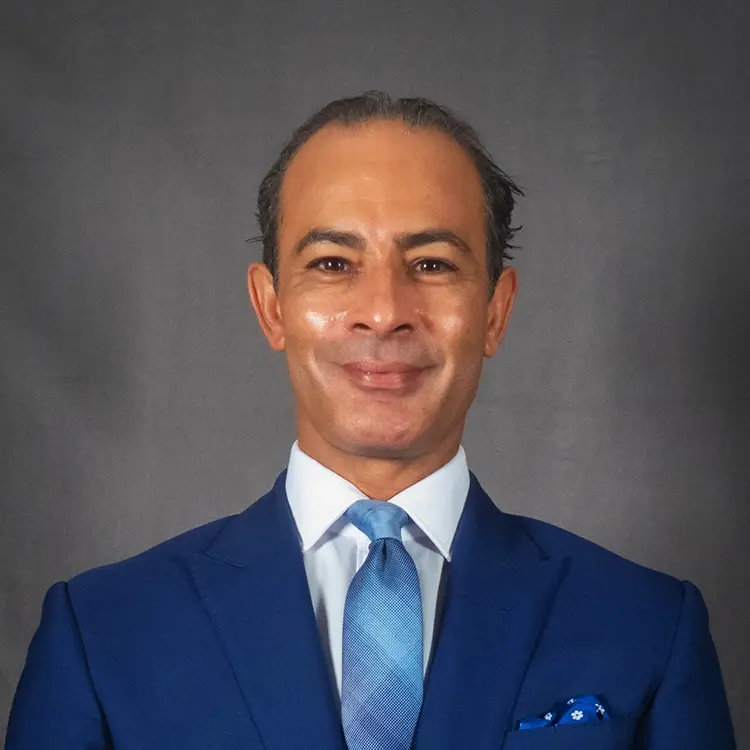
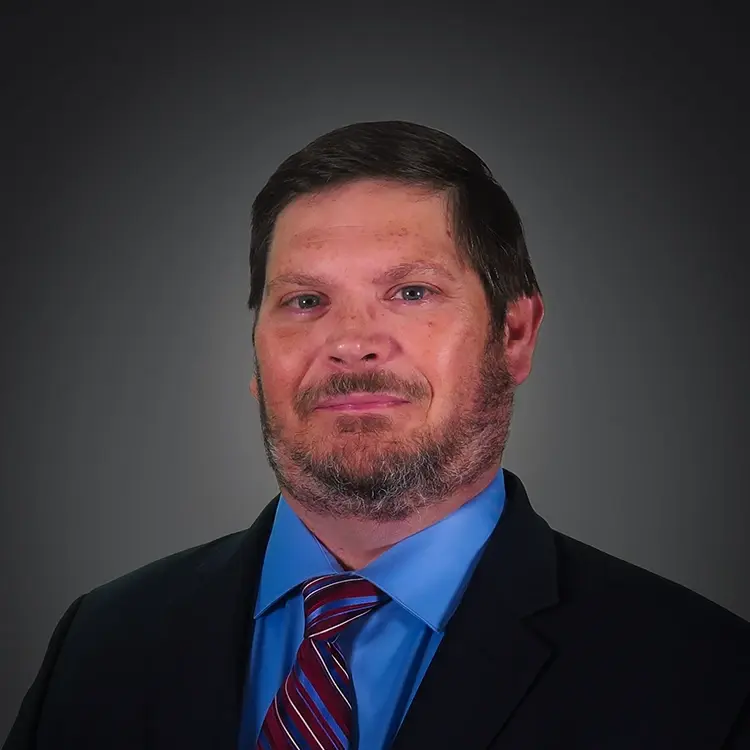
In this episode of Navigating the Currents of Change, host Shaheen Chohan sits down with Britt Burt, IIR's Senior VP of Research for the power industry, to decode the unprecedented changes reshaping energy markets worldwide. From China and India's explosive growth in electricity demand, to the surprising renaissance of nuclear power, Burt reveals the forces behind today's multi-billion-dollar energy investments.
[Intro] (00:00):
As the world continues to see increases in electricity demand, the ongoing challenge to achieve that fine balance between energy security and the provision of cost-effective and reliable supply — whilst also doing so in the lowest emission way — remains front and center of both policymakers, operators and suppliers. And this all comes at a time when pressure continues to mount over the cost and thus the feasibility of renewables. So has the renewable momentum slowed at all, and if so, where are some of the new capital spending growth hotspots emerging?
Shaheen Chohan (00:54):
Welcome to Navigating the Currents of Change. My name is Shaheen Chohan and I lead Global Analytics here at Industrial Info Resources. For over 40 years, we have been providing market intelligence, data analytics and geospatial solutions to those companies involved in the design, construction and maintenance of plants and facilities across power, energy and heavy industrial sectors across the world. Now joining me today is Britt Burt, global head of Power Research. And together we will dive into the current trends being seen in project spending around the world.
But before we do that, I would like to say a very big thank you to our podcast sponsors, HILCO. HILCO is the world leader in motion control and filtration systems. Since 1905, HILCO filtration systems have been the industry standard. HILCO brings fluid contamination problems under control cost-effectively with a full range of engineered filters, cartridges, reclaimer coolant recyclers and fluid conditioning systems.
Now, Britt, if we could start by taking a very top-level look at the current spending across different geographies. There are obviously different drivers at play, let's say, between emerging markets and developed ones. Would that be correct?
Britt Burt (02:22):
That's a very fair statement. We're seeing demand growth worldwide — actually led by China, India, and the United States, but it's widespread — parts of the Middle East, Southeast Asia. So it's a mixture of developing and emerging markets and economies as well as established economies. If China and India are experiencing electricity demand growth of 6% per year, parts of Southeast Asia such as Indonesia and Vietnam 7% per year — but if you look at the US, where electricity demand has been stagnant for many, many years, we're looking at about 2% demand growth now, so that's huge.
Shaheen Chohan (03:14):
And I guess, Britt, in the past we have seen — certainly in the US and Europe as well — very mature energy and power markets. We've seen typically sub-1% electricity growth. But in particular we've seen a big spike in the US. What is causing this kind of new surge in electricity demand?
Britt Burt (03:34):
Primarily the development of data centers is causing a boom in demand for electricity. There are other factors as well, such as industrial growth and population growth. But primarily data centers is the big driver.
Shaheen Chohan (03:54):
Now, obviously renewables have always been — certainly in the last few years — front and foremost of most of the CapEx spending that you and your researchers have been tracking across the world. Are we therefore seeing renewable spending and deployments of operational capacity across these developing nations occurring at pace, or have we seen a little bit of a slowdown? Because obviously, to try and meet this increase in baseload power, renewables may not actually be the right option.
Britt Burt (04:25):
No, we're still seeing development of renewables moving forward very aggressively worldwide — that's going to continue. It's global in nature. Solar continues to lead the way, followed by wind. And we're seeing a lot of offshore wind outside the United States — we're seeing a lot of growth there as well in Europe and Asia.
Shaheen Chohan (04:53):
Now picking up on that topic of offshore wind — yes, Europe is a very big market, and the US was just really starting to see some of those projects starting to come through. Clearly, we've had a big change mid-year. The Trump administration has made some fairly sizable policy adjustments. Can you just talk a little bit about the impact of those?
Britt Burt (05:11):
The new administration came in and immediately put a pause on development for offshore wind. So we say that for practical purposes it's at a standstill right now in the US — it's still there. And I think eventually we will see offshore wind be developed here and move forward. Right now the big markets are in Europe and in Asia, primarily around decarbonization — the industry continues to really focus in on that.
Shaheen Chohan (05:50):
I would like to talk a little bit about the nuclear sector — something that in the past hasn't really got much airplay, I guess. But would it be right to say that we're now seeing a new wave of more elevated capital spending in the nuclear sector? And what's driving that?
Britt Burt (06:10):
Well, it's the growth in electricity demand and the continued push towards decarbonization — looking for reliable sources of low-carbon electricity, and nuclear is the obvious choice for that. Again, it's something that we see unfolding worldwide. Certainly a lot of development in China and India. But the US — we see a tremendous amount of nuclear capacity in development. Just recently, President Trump and the Prime Minister of the UK announced development of new nuclear projects in the UK, Eastern Europe, the Middle East — you name it. We're seeing nuclear capacity being developed in countries that don't currently have nuclear power. And I think that's something that's going to continue forward very aggressively.
Shaheen Chohan (07:10):
But we're also seeing, I guess, a shift in the type of technologies. In past years, these projects were billion-dollar, multiples-of-billions-of-dollars, very complex, very big projects. And with that, we often saw a degree of cost overrun and slippage to completion dates. Are you seeing an adjustment from a technology perspective — are we seeing new types of nuclear power coming to market?
Britt Burt (07:35):
We are. At the forefront of that is small modular reactor technology — usually smaller units that are in the 350 megawatt range, rather than the large conventional reactors, which are more in the gigawatt range — 1,000 megawatts each. The SMR seems to be dominating what is moving forward or in development or in pre-construction stages right now. I think we're going to see development of some conventional reactors as well. Westinghouse has announced deployment of ten conventional reactors by the early 2030s. And as far as the cost overruns and the construction delays and things like that — we're hoping that some of that goes away with development of the SMR. That's the intent, because many of these components are constructed in-house in a fab shop and transported to the job site. So we're hoping that that changes, but I think that's still yet to be seen how that pans out.
Shaheen Chohan (08:53):
Now Britt, if I could just stay with renewables for a while — like all new technologies, really the way to get the private sector involved, you see technology innovation and that ultimately keeps driving the cost of these technologies down. And all that's really been propelled and stimulated by policy and having attractive tax incentives in place. Are renewables now getting to the point where they're on a more comparable cost base with, let's say, coal and gas?
Britt Burt (09:28):
More so, probably. There are a lot of tax incentives and government programs out there encouraging development of new nuclear capacity — I believe 20-plus countries around the world have some sort of tax incentives or other government programs to bolster development of nuclear capacity. So yes, it is becoming more and more competitive with some of the other forms of traditional power generation.
Shaheen Chohan (09:59):
So I guess staying with that — wind and solar are no longer new technologies, right? They've been around for quite some time. Do you think wind and solar still require tax incentives to keep them moving forward?
Britt Burt (10:10):
Wind and solar over the past several years have become more and more competitive with natural gas and coal-fired power generation. However, I think it's still important that the tax incentives stay in place for a bit longer — this is doing it to offset some of the front-end cost. It encourages new players into the industry and it bolsters the financial backing of these projects, so they're more competitive. Yes, I think at the end of the day, tax credits or no tax credits — because we need the power — we're going to see renewable energy move forward at an aggressive pace. It's going to get built, tax credits or no tax credits.
Shaheen Chohan (10:56):
Coming to transmission and distribution — an important component of the whole renewable story. How much of the volume of renewables being planned, all of that investment that's still coming through the pipeline — how much is almost coming to completion and needs to be connected to the grid? How much of the availability or lack of availability of transmission and distribution infrastructure is a big impediment?
Britt Burt (11:28):
That's one of the big constraints right now, and this is a worldwide issue as well. Having the transmission infrastructure in place to support renewable energy — not only renewable energy, but electricity as a whole. So it's the need to expand the grid as well as modernize much of the grid that is 40 or 50 years old or older. The US and Canada both need to double the size of their power grids to support all the renewable energy that is being proposed over the long term. And when I'm talking long term, I'm talking about for some of the 2045 goals and beyond. But yes, there's major investment needed in the electricity transmission grid.
Shaheen Chohan (12:20):
Now, just turning a little to battery storage — some of that I guess sits in the T&D space and some of it sits with the generation side. Can you tell us a little bit about whether the cost of the battery storage solutions is improving, and whether the technology itself is improving? Could you just explain a little bit about the types of battery storage or energy storage solutions that you and your team are tracking?
Britt Burt (12:43):
Yeah, well, lithium-ion technology continues to dominate the market in terms of battery storage systems. There are some other technologies that are aggressively being developed and tested around the world — sodium-ion technology is a promising technology. Some of the flow batteries that are being developed, as well as iron-air technology called Iron Air. There are some pilot-scale facilities that have been built and more on the horizon. Lithium-ion is definitely still dominating that space right now.
Shaheen Chohan (13:30):
And on the battery side, are you starting to see improvements in technology? It was always an issue about the storage capacity and how long that energy can be stored. Is that improving? And are we now starting to see the cost of those battery storage solutions falling as well?
Britt Burt (13:46):
Gradually the cost is falling. The other technologies that I mentioned outside lithium-ion are what we call long-duration storage systems — the flow batteries, the sodium-ion, and iron-air. Iron Air has indicated that there is a possibility that they would have 100-hour storage or more. So right now lithium-ion is four-hour storage. So yes, that's a major issue and a challenge to overcome as well.
Shaheen Chohan (14:18):
Now Britt, I would like to turn to fossil fuels. In the past we obviously saw — for many years — some softening really in gas-fired investments, certainly the volume of grassroots developments. Part of that was really because new-build gas-fired power generation was giving way to new-build wind and solar. Now, are we starting to see a shift in sentiment and favor back towards gas-fired capital investments?
Britt Burt (14:47):
We are, because we need dispatchable power rather than the intermittent type power that comes from solar and wind. So we are seeing a shift towards natural gas-fired generation. And again, this is something we're seeing occurring around the globe. Development in China. Development in Germany — Germany intends to bring 20GW online by the end of 2030. Some of the collection of Eastern European countries is anywhere from 9 to 24GW by the early 2030s. Here in the US, I think we'll see well over 18GW come online by the end of 2028. And beyond that, we're tracking well over 100GW that is in development. The Middle Eastern countries, Brazil — we're seeing a lot of natural gas development take place. There are some constraints to that, but there are some constraints affecting the natural gas-fired industry as well.
Shaheen Chohan (15:52):
And I guess really, in any market where you see a plateauing or softening in demand and then you start to see this ramp-up in interest, that puts some stress on supply chains. How are the equipment OEMs and technology providers responding to this sort of new surge in gas-fired power spending?
Britt Burt (16:22):
Yeah, well, some of the OEMs are adding additional manufacturing space — GE, Siemens are adding additional manufacturing space. But these are very complex machines and it takes time to build them. Right now we're seeing delivery time on some of the smaller aeroderivative machines in the 2 to 3 year timeframe. Some of the advanced technology, high-efficiency combustion and turbine systems — the delivery time is more in the five-year, even up to seven-year range. And then some of the legacy combustion turbines, like the F-class turbines, more in the 2 to 3.5 year delivery times. So they are adding manufacturing capacity, but again there are constraints just due to the fact that it takes a long time to build these machines and the demand for them is very high — it's through the roof right now.
Shaheen Chohan (17:22):
Now finally, Britt, I guess in conclusion — we continue to hear a lot about the pushback on coal-fired capacity, that coal doesn't really get invited to the party anymore, and we're seeing that increasingly in Europe and North America. Do you think coal can still have a role to play in the energy mix going forward? And if it does, what do coal operators need to do or implement to try and remain relevant, certainly in a lower-carbon environment?
Britt Burt (17:48):
Yeah. Well, we'll talk about new build first — and that's most of what we've talked about before as being done in China and India. I don't see that slowing down anytime soon. It's going to come with ultra-supercritical technologies. That's going to come with carbon capture, I believe, going forward for the operating facilities that we have in place. I mean, we're seeing plants that are scheduled to retire over the next few years that are being pushed further and further out into the future due to electricity demand. I don't see carbon capture moving forward aggressively — we're tracking some carbon capture projects around the globe for existing facilities, but I don't think we're going to see a boom in that activity, I really don't. But the longer these plants run, the more necessary it becomes to replace equipment and have major in-plant capital projects to modernize and extend the lives of those facilities. And of course, with that, many times there are efficiency upgrades to keep them operating as cleanly and as efficiently and safely as they possibly can.
Shaheen Chohan (19:13):
Thank you very much, Britt, for sharing your perspectives. I'd just like to say a big thanks to you. And also a couple of additional thank yous — firstly to the folks over at HILCO, thanks for your support today. If any of you have any further questions about any of the points that we've discussed today, then please do reach out to myself or Britt via the contact details you can see here. And finally, a very big thanks to all of you who have joined us today. I hope we have helped you all better navigate some of the currents of change that we're seeing.
As the world continues to see increases in electricity demand, the ongoing challenge to achieve that fine balance between energy security and the provision of cost-effective and reliable supply — whilst also doing so in the lowest emission way — remains front and center of both policymakers, operators and suppliers. And this all comes at a time when pressure continues to mount over the cost and thus the feasibility of renewables. So has the renewable momentum slowed at all, and if so, where are some of the new capital spending growth hotspots emerging?
Shaheen Chohan (00:54):
Welcome to Navigating the Currents of Change. My name is Shaheen Chohan and I lead Global Analytics here at Industrial Info Resources. For over 40 years, we have been providing market intelligence, data analytics and geospatial solutions to those companies involved in the design, construction and maintenance of plants and facilities across power, energy and heavy industrial sectors across the world. Now joining me today is Britt Burt, global head of Power Research. And together we will dive into the current trends being seen in project spending around the world.
But before we do that, I would like to say a very big thank you to our podcast sponsors, HILCO. HILCO is the world leader in motion control and filtration systems. Since 1905, HILCO filtration systems have been the industry standard. HILCO brings fluid contamination problems under control cost-effectively with a full range of engineered filters, cartridges, reclaimer coolant recyclers and fluid conditioning systems.
Now, Britt, if we could start by taking a very top-level look at the current spending across different geographies. There are obviously different drivers at play, let's say, between emerging markets and developed ones. Would that be correct?
Britt Burt (02:22):
That's a very fair statement. We're seeing demand growth worldwide — actually led by China, India, and the United States, but it's widespread — parts of the Middle East, Southeast Asia. So it's a mixture of developing and emerging markets and economies as well as established economies. If China and India are experiencing electricity demand growth of 6% per year, parts of Southeast Asia such as Indonesia and Vietnam 7% per year — but if you look at the US, where electricity demand has been stagnant for many, many years, we're looking at about 2% demand growth now, so that's huge.
Shaheen Chohan (03:14):
And I guess, Britt, in the past we have seen — certainly in the US and Europe as well — very mature energy and power markets. We've seen typically sub-1% electricity growth. But in particular we've seen a big spike in the US. What is causing this kind of new surge in electricity demand?
Britt Burt (03:34):
Primarily the development of data centers is causing a boom in demand for electricity. There are other factors as well, such as industrial growth and population growth. But primarily data centers is the big driver.
Shaheen Chohan (03:54):
Now, obviously renewables have always been — certainly in the last few years — front and foremost of most of the CapEx spending that you and your researchers have been tracking across the world. Are we therefore seeing renewable spending and deployments of operational capacity across these developing nations occurring at pace, or have we seen a little bit of a slowdown? Because obviously, to try and meet this increase in baseload power, renewables may not actually be the right option.
Britt Burt (04:25):
No, we're still seeing development of renewables moving forward very aggressively worldwide — that's going to continue. It's global in nature. Solar continues to lead the way, followed by wind. And we're seeing a lot of offshore wind outside the United States — we're seeing a lot of growth there as well in Europe and Asia.
Shaheen Chohan (04:53):
Now picking up on that topic of offshore wind — yes, Europe is a very big market, and the US was just really starting to see some of those projects starting to come through. Clearly, we've had a big change mid-year. The Trump administration has made some fairly sizable policy adjustments. Can you just talk a little bit about the impact of those?
Britt Burt (05:11):
The new administration came in and immediately put a pause on development for offshore wind. So we say that for practical purposes it's at a standstill right now in the US — it's still there. And I think eventually we will see offshore wind be developed here and move forward. Right now the big markets are in Europe and in Asia, primarily around decarbonization — the industry continues to really focus in on that.
Shaheen Chohan (05:50):
I would like to talk a little bit about the nuclear sector — something that in the past hasn't really got much airplay, I guess. But would it be right to say that we're now seeing a new wave of more elevated capital spending in the nuclear sector? And what's driving that?
Britt Burt (06:10):
Well, it's the growth in electricity demand and the continued push towards decarbonization — looking for reliable sources of low-carbon electricity, and nuclear is the obvious choice for that. Again, it's something that we see unfolding worldwide. Certainly a lot of development in China and India. But the US — we see a tremendous amount of nuclear capacity in development. Just recently, President Trump and the Prime Minister of the UK announced development of new nuclear projects in the UK, Eastern Europe, the Middle East — you name it. We're seeing nuclear capacity being developed in countries that don't currently have nuclear power. And I think that's something that's going to continue forward very aggressively.
Shaheen Chohan (07:10):
But we're also seeing, I guess, a shift in the type of technologies. In past years, these projects were billion-dollar, multiples-of-billions-of-dollars, very complex, very big projects. And with that, we often saw a degree of cost overrun and slippage to completion dates. Are you seeing an adjustment from a technology perspective — are we seeing new types of nuclear power coming to market?
Britt Burt (07:35):
We are. At the forefront of that is small modular reactor technology — usually smaller units that are in the 350 megawatt range, rather than the large conventional reactors, which are more in the gigawatt range — 1,000 megawatts each. The SMR seems to be dominating what is moving forward or in development or in pre-construction stages right now. I think we're going to see development of some conventional reactors as well. Westinghouse has announced deployment of ten conventional reactors by the early 2030s. And as far as the cost overruns and the construction delays and things like that — we're hoping that some of that goes away with development of the SMR. That's the intent, because many of these components are constructed in-house in a fab shop and transported to the job site. So we're hoping that that changes, but I think that's still yet to be seen how that pans out.
Shaheen Chohan (08:53):
Now Britt, if I could just stay with renewables for a while — like all new technologies, really the way to get the private sector involved, you see technology innovation and that ultimately keeps driving the cost of these technologies down. And all that's really been propelled and stimulated by policy and having attractive tax incentives in place. Are renewables now getting to the point where they're on a more comparable cost base with, let's say, coal and gas?
Britt Burt (09:28):
More so, probably. There are a lot of tax incentives and government programs out there encouraging development of new nuclear capacity — I believe 20-plus countries around the world have some sort of tax incentives or other government programs to bolster development of nuclear capacity. So yes, it is becoming more and more competitive with some of the other forms of traditional power generation.
Shaheen Chohan (09:59):
So I guess staying with that — wind and solar are no longer new technologies, right? They've been around for quite some time. Do you think wind and solar still require tax incentives to keep them moving forward?
Britt Burt (10:10):
Wind and solar over the past several years have become more and more competitive with natural gas and coal-fired power generation. However, I think it's still important that the tax incentives stay in place for a bit longer — this is doing it to offset some of the front-end cost. It encourages new players into the industry and it bolsters the financial backing of these projects, so they're more competitive. Yes, I think at the end of the day, tax credits or no tax credits — because we need the power — we're going to see renewable energy move forward at an aggressive pace. It's going to get built, tax credits or no tax credits.
Shaheen Chohan (10:56):
Coming to transmission and distribution — an important component of the whole renewable story. How much of the volume of renewables being planned, all of that investment that's still coming through the pipeline — how much is almost coming to completion and needs to be connected to the grid? How much of the availability or lack of availability of transmission and distribution infrastructure is a big impediment?
Britt Burt (11:28):
That's one of the big constraints right now, and this is a worldwide issue as well. Having the transmission infrastructure in place to support renewable energy — not only renewable energy, but electricity as a whole. So it's the need to expand the grid as well as modernize much of the grid that is 40 or 50 years old or older. The US and Canada both need to double the size of their power grids to support all the renewable energy that is being proposed over the long term. And when I'm talking long term, I'm talking about for some of the 2045 goals and beyond. But yes, there's major investment needed in the electricity transmission grid.
Shaheen Chohan (12:20):
Now, just turning a little to battery storage — some of that I guess sits in the T&D space and some of it sits with the generation side. Can you tell us a little bit about whether the cost of the battery storage solutions is improving, and whether the technology itself is improving? Could you just explain a little bit about the types of battery storage or energy storage solutions that you and your team are tracking?
Britt Burt (12:43):
Yeah, well, lithium-ion technology continues to dominate the market in terms of battery storage systems. There are some other technologies that are aggressively being developed and tested around the world — sodium-ion technology is a promising technology. Some of the flow batteries that are being developed, as well as iron-air technology called Iron Air. There are some pilot-scale facilities that have been built and more on the horizon. Lithium-ion is definitely still dominating that space right now.
Shaheen Chohan (13:30):
And on the battery side, are you starting to see improvements in technology? It was always an issue about the storage capacity and how long that energy can be stored. Is that improving? And are we now starting to see the cost of those battery storage solutions falling as well?
Britt Burt (13:46):
Gradually the cost is falling. The other technologies that I mentioned outside lithium-ion are what we call long-duration storage systems — the flow batteries, the sodium-ion, and iron-air. Iron Air has indicated that there is a possibility that they would have 100-hour storage or more. So right now lithium-ion is four-hour storage. So yes, that's a major issue and a challenge to overcome as well.
Shaheen Chohan (14:18):
Now Britt, I would like to turn to fossil fuels. In the past we obviously saw — for many years — some softening really in gas-fired investments, certainly the volume of grassroots developments. Part of that was really because new-build gas-fired power generation was giving way to new-build wind and solar. Now, are we starting to see a shift in sentiment and favor back towards gas-fired capital investments?
Britt Burt (14:47):
We are, because we need dispatchable power rather than the intermittent type power that comes from solar and wind. So we are seeing a shift towards natural gas-fired generation. And again, this is something we're seeing occurring around the globe. Development in China. Development in Germany — Germany intends to bring 20GW online by the end of 2030. Some of the collection of Eastern European countries is anywhere from 9 to 24GW by the early 2030s. Here in the US, I think we'll see well over 18GW come online by the end of 2028. And beyond that, we're tracking well over 100GW that is in development. The Middle Eastern countries, Brazil — we're seeing a lot of natural gas development take place. There are some constraints to that, but there are some constraints affecting the natural gas-fired industry as well.
Shaheen Chohan (15:52):
And I guess really, in any market where you see a plateauing or softening in demand and then you start to see this ramp-up in interest, that puts some stress on supply chains. How are the equipment OEMs and technology providers responding to this sort of new surge in gas-fired power spending?
Britt Burt (16:22):
Yeah, well, some of the OEMs are adding additional manufacturing space — GE, Siemens are adding additional manufacturing space. But these are very complex machines and it takes time to build them. Right now we're seeing delivery time on some of the smaller aeroderivative machines in the 2 to 3 year timeframe. Some of the advanced technology, high-efficiency combustion and turbine systems — the delivery time is more in the five-year, even up to seven-year range. And then some of the legacy combustion turbines, like the F-class turbines, more in the 2 to 3.5 year delivery times. So they are adding manufacturing capacity, but again there are constraints just due to the fact that it takes a long time to build these machines and the demand for them is very high — it's through the roof right now.
Shaheen Chohan (17:22):
Now finally, Britt, I guess in conclusion — we continue to hear a lot about the pushback on coal-fired capacity, that coal doesn't really get invited to the party anymore, and we're seeing that increasingly in Europe and North America. Do you think coal can still have a role to play in the energy mix going forward? And if it does, what do coal operators need to do or implement to try and remain relevant, certainly in a lower-carbon environment?
Britt Burt (17:48):
Yeah. Well, we'll talk about new build first — and that's most of what we've talked about before as being done in China and India. I don't see that slowing down anytime soon. It's going to come with ultra-supercritical technologies. That's going to come with carbon capture, I believe, going forward for the operating facilities that we have in place. I mean, we're seeing plants that are scheduled to retire over the next few years that are being pushed further and further out into the future due to electricity demand. I don't see carbon capture moving forward aggressively — we're tracking some carbon capture projects around the globe for existing facilities, but I don't think we're going to see a boom in that activity, I really don't. But the longer these plants run, the more necessary it becomes to replace equipment and have major in-plant capital projects to modernize and extend the lives of those facilities. And of course, with that, many times there are efficiency upgrades to keep them operating as cleanly and as efficiently and safely as they possibly can.
Shaheen Chohan (19:13):
Thank you very much, Britt, for sharing your perspectives. I'd just like to say a big thanks to you. And also a couple of additional thank yous — firstly to the folks over at HILCO, thanks for your support today. If any of you have any further questions about any of the points that we've discussed today, then please do reach out to myself or Britt via the contact details you can see here. And finally, a very big thanks to all of you who have joined us today. I hope we have helped you all better navigate some of the currents of change that we're seeing.
Please Select A Language
*This episode is brought to you by Industrial Info's Latin American Office in Argentina.