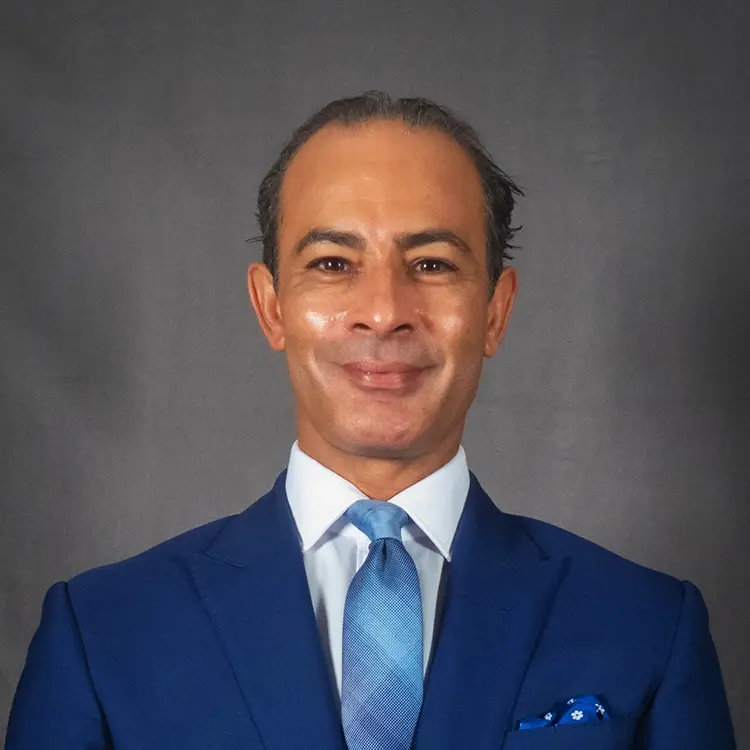

In this episode of Navigating the Currents of Change, Shaheen Chohan is joined by Annette Kreuger, IIR’s Senior Vice President of Research for Pharma & Biotech, to explore how Pharmaceuticals and biotech remain two of the most active sectors for global capital investment heading into 2025. From explosive growth in GLP-1 weight-loss drug production to the expansion of biologics and cell & gene therapies, the project pipeline is strong, but not without challenges.
Shaheen Chohan (00:16):
Hello and welcome. This podcast is brought to you by Industrial Info Resources. Since 1983, we've been providing global market intelligence on the industrial and the energy markets. Through the combination of our trusted data, which is validated and qualified direct from source, and our analytics and forecasting tools and solutions, we help our customers stay connected and in tune with the latest project and investment opportunities and those trends that are occurring across the world. My name is Shaheen Chohan. I'm the Vice President of Global Analytics at Industrial Info Resources. I'm based in our Dubai office, and I've been with the company now for 15 years.
Now, to help unveil some of the trends we are seeing from our global research, I am delighted to introduce Annette Kreuger. Annette is our Senior Vice President of Pharma and Biotech Research. Welcome, Annette.
Now, before we get into the discussions — which I'm very much looking forward to — maybe you could just give folks who have tuned in a little bit of an education or an explanation as to what are some of the products and the sectors that you cover within your industry.
Annette Kreuger (01:37):
I'm glad to be here. Thank you so much. What we cover under the pharmaceutical and biotech industry umbrella are those things monitored by the FDA that are to heal, cure, or alleviate any malady that a human might have. And then we also cover, beyond biological drugs, pharmaceuticals — which are your regular everyday products — medical devices, all the laboratories both public and private, and commercial labs. And we also do cosmetics, which is a huge booming industry, and we have that under our umbrella. We scope out packaging, life science packaging, because it's a very important field that is sometimes specialized in our industry.
Shaheen Chohan (02:20):
Okay. Thank you. Now, shifting gears, let's get into the fun part of the discussion. When you and I last discussed some of the trends that you were seeing — certainly around the capital spending you were expecting to see this year — in general the consensus from your research was that spending levels for this year were going to be roughly about similar to what you saw last year. Right. Right now, pharma has managed somehow, I guess, to swerve some of the current round of tariffs that we've seen announced. Now there has been a 90-day pause on that situation. Could we expect to see some erosion or slowdown in some of that spending that you'd previously been expecting?
Annette Kreuger (03:15):
Not in North America — that is not going to happen. We had already seen that our growth in North America — well, really globally — was going to come from the very valuable drugs: weight loss drugs, all of those, the GLP-1s. They were already at low capacity — they didn't have enough capacity — so they were investing vast amounts of money. And they did so regionally, because your moneymaker, you don't want to rely on supply chain problems. So we had seen a spike in that, and that's where we thought the growth would come from: that class of drugs, as well as genetic therapies, gene therapies, and that whole viral vectors field — without getting too technical.
But then along came the new administration, who shook everything up, and it showed really what goes on in the industry: they're going to be loyal and build where they get the best tax breaks. And we have had more project announcements in the past month — clients are like, well, there's a $500 million project. No, it's a $50 billion project. And you name every major drug company right now — they have all pulled the trigger on these. They're worried about the tariffs, but they're not really, because as you said there's a pause. You name the major drug companies: Eli Lilly, Novartis, even the CDC, HMOs, the contract manufacturers Thermo Fisher, Roche, Lonza — they're all making plans and untangling what those plans are.
Shaheen Chohan (04:51):
So I guess part of the exclusion that pharma has had from those tariffs by Mr. Trump is, I guess, due to the US still having a pretty heavy dependency — certainly on both European and Indian API ingredients. Would that be correct?
Annette Kreuger (05:11):
Oh, absolutely. And I've never been that worried about any. The tariff fight between China, India and the US — I've never been that worried about the tariffs in regards to China, India and the US. In the interim, yes, there's some impact, but it's guaranteeing mutual destruction if we don't find a way to come together, because we are both so heavily reliant. They need our business because the United States and North America is still the largest market for prescription drugs and over-the-counter medications for any kind of medication you could think of. And how much we get from China — people don't understand. You might say on the books, oh, it's only 40%, but no, it's closer to 60 or 70% for the active pharmaceutical ingredients. They hide some through India with their trade agreement with India, and then we get the finished product in the generics. That's where the biggest market is for us — our generics — because those cost pennies to make, and they don't really want to make them here, but they will and they can.
Shaheen Chohan (06:24):
I'd actually like to get a kind of a regional perspective. And if I may, I'm going to bring in Misha. Misha is our head of research for European pharma and biotech. Misha, have you seen any curb in spending in Europe due to a response or reaction to the tariffs that have been announced? And secondly, which countries in particular are seeing the biggest impact?
Misha (06:57):
Thank you, Shaheen. At this stage we haven't seen any noticeable direct curb in pharmaceutical spending across Europe as a result of proposed tariffs. We're currently tracking over 1,700 pharmaceutical projects across Europe, with a total investment value reaching over $89 billion USD, which is indicating sustained activity. However, there is a noticeable caution among major pharmaceutical players, and while projects are not being canceled or paused, we're seeing delays in announcing new investments — most likely caused by companies waiting for more clarity from the US administration, with potential tariffs being imposed and discussed reportedly as high as 50% on certain drug categories. Uncertainty is clearly influencing strategic decision making.
And going into your second question — we haven't seen measurable impact yet. But the countries most exposed to tariffs, if tariffs go ahead, are Ireland, the UK, and the DACH region, which includes Germany, Austria, and Switzerland. These countries are critical hubs for pharmaceutical manufacturing and exports to the US. External sources suggest that nearly a quarter of European pharma exports are US-bound. If tariffs are imposed, any trade barriers could have real consequences in these regions, and we could see a sharp drop in export volumes and a slowdown in future investment announcements, particularly from firms with significant operations in these areas.
Shaheen Chohan (08:55):
Thanks, Misha, for your time — very much appreciated. So, Annette, coming back to you. You've in the past talked about a real desire by the US to restore some of the production capacity that we've sort of moved elsewhere around the world. Have you actually seen any of this materialize? Have you seen any momentum behind that reshoring? If not, why not? And do you actually expect to see some now moving forward under the guidance of the new Trump administration?
Annette Kreuger (09:33):
Oh, there's no denial — they're couching it under the terms of reshoring. But 90% of the largest projects that we have here, both for research — because the US has always been the leader in research, that's where all the money is spent, the bulk of it. There are research centers all over the world, but these drugs are 80, 90% developed here in the United States. But virtually all of the big spenders — it's to protect their golden goose. Their most profitable drugs. And they're ready to go to the mat and make price concessions. The $35 insulin that's been in play for decades — I mean, they're willing to do anything because those drugs do not cost much to make. So what we're seeing is the newest move by the FDA — they're trying to get the weight loss drugs approved on Medicare. So no, that's reassuring, but that was already the curve that we were seeing. What remains to be seen is what we get back in the drugs that aren't so popular but still make money for them. So yes, I'm seeing it, but it's to protect the profit centers.
Shaheen Chohan (10:40):
So if we could just pivot a little bit away from the components or the sectors within your industry and focus a little bit on where some of the big dollars are flowing — I guess that could be particular sectors trending right now, or indeed a certain type of project that we're starting to see taking a little bit more momentum. Where are you seeing some of the dollars flow?
Annette Kreuger (11:10):
The bulk is in bulk drug product, which is for biologicals — the active ingredient. You'll hear "APIs," which stands for active pharmaceutical ingredient in biological drugs. And the only difference between a biological and a pharmaceutical — an easy explanation is that a biological has a life component in its process, while a pharmaceutical is chemical-based. I mean, that's simple, but it really is effective. They've got to protect that bulk drug product, and that's where the bulk of the spending is.
And then the final formulation — whether it's in a vial fill-and-finish — what's good about that is with these new plants, these new smart plants and single-use systems and modular components, these can be scaled up very rapidly and you can change product lines much easier and much quicker. Their flex factory is in fact more flexible than typical APIs. That's another large sector though for standard pharmaceuticals. Think about your blood pressure drugs and cardiovascular statins — so many people are on them, and those are consistent moneymakers. But those two sectors — the biologicals — SIC code 2836, the standard industry classification. Those are the key areas.
Shaheen Chohan (12:39):
Now, when I — prior to our discussion — I took a look at the numbers and the projects that you were tracking in the project tracking database, and I recall from our previous discussions that past spending trends that you have seen have been very much focused on plant expansions as opposed to grassroots. In your industry, expansions account for quite a large proportion of the type of spending that you see. Why is that?
Annette Kreuger (13:10):
When a company makes an initial investment — $500 million, even $100 million — they very seldom find themselves landlocked if they're in an area where they can buy a large amount of land. Or the opportunity for growth — they're not planning on putting little plants all over. They are going back to the campus style that we thought was gone, and it was in 2009 when everybody moved away from the United States. Now they're kind of going back to that, where their whole campuses are concentrated. So while they've always been neck and neck — there's been expansions and then new plant construction, neck and neck — expansions lead the way because once I've made that investment, I want to keep expanding and I want to expand in place.
And it's not just the ingredients now — we could do the final formulation where we put the drug to ship it off. I know when Amgen had built a major plant in California for the ingredients, but then they put their fill-and-finish plant in Washington — that was kind of the trend of where things were. Now they're putting them back into these huge campuses right now.
Shaheen Chohan (14:25):
Your industry continues to innovate. We're going to talk a little bit about some of the changes to production processes and automation and that kind of thing. But in the past, you always used to talk about the growth in CMOs and CDMOs. For folks who've tuned in, please explain the difference between those two — and is this indeed still a CapEx trend that you're seeing?
Annette Kreuger (14:52):
Absolutely. When I first started reporting on this and tracking it almost 30 years ago, they were a part of the industry. It's a contract manufacturing organization — CMO. And then there's CDMO — contract development and manufacturing organization — and those sort of companies just do what it says: they help develop the drugs, they help produce the drugs. It wasn't that popular because it's a very private thing to have a formulation for a drug and hand it to someone else to make.
And are they doing this for a single brand? Multiple brands — but some of them are completely for one brand. You're Pfizer, you hire me and say I want you to give me four production lines to make this drug, because some of the more expensive drugs — ideally you have a really expensive drug taken by a lot of people, but some of the really expensive drugs are only a quarterly dose or monthly dose. So it's a limited capacity they need and it's just not worth it to them to add the capacity. But it was always a part of the drug industry. It really exploded with COVID — it was rising in prominence, they had these wonderful agreements and it made sense. COVID went insane because nobody could keep up with capacity, and they were spending as much as the drug companies to do it. Some of the big players like Catalent, Lonza, Thermo Fisher — these are massive companies and the trust was built. Obviously you're not going to be making a drug worth billions to a company and steal it — although it does happen, but not by those companies. So it curbed after COVID when it waned — we saw a lot of sell-offs, huge projects canceled when the vaccine train kind of ended. And now it's starting to ramp up again because everybody wants a piece of the pie.
Shaheen Chohan (17:00):
Right now, I want to turn to some of the other types of in-plant capital investment themes that you're seeing that are on trend at the moment. Can you shed some light on what your researchers are starting to track in terms of some of those hotspots and automation?
Annette Kreuger (17:16):
Without a doubt — the best way to make a drug is to have no human near it. To have nobody able to disrupt any part of that process, and also to be able to track and trace the product from start to finish. It's the blockchain — that was so popular a few years ago — everybody is doing Pharma 4.0 to track a drug from the time it's designed, from developing the drug, all the way till the time your doctor prescribes it to you. They can track it. It's a better, more efficient way. Less people are involved. Anything to do with automation — whether it's process controls, whether it's an individual unit control, building management, manufacturing execution systems — and then we get to AI. We're seeing a lot of that. We just reported on one the other day — they're putting in a new manufacturing execution system, which is just what it says it is. It's software put into the equipment to utilize artificial intelligence to help with both the production process and the maintenance. And then we're not even going to get started on what it can do for research. And then we're not even going to get started on what it can do for research. So yes, anything to do with software automation — robotics are huge, just like you saw in the auto industry.
Shaheen Chohan (18:39):
So I guess still a very interesting outlook for this year, certainly, and a lot to play for. And I think what would be great is to catch up in 90 days and see exactly what tariffs have landed and see what kind of impact that is. So I look forward to that discussion again with you, Annette. Just in summary, give us a quick few seconds as to what you would advise folks to keep an eye on and what you are seeing as some of those key trends.
Annette Kreuger (19:10):
I would say now is the time to get your foot in the door — cement your relationships with this industry. Do not be scared of it. They are in dire need of input on every level in these plants, and you've got a lot of new people in the C-suite. So a lot of old-term contracts have gone the way. There are companies that always said, I'm not going to bid on this, they've used those people for years — that's not the case any longer. And incentives are tied into sometimes using local firms. You'll see big-name firms — they've got the project, but they've got to bring along a local. So it's a very good time in the industry. No matter what you're hearing in the news, pharma is never going to go away. It's always interesting.
Shaheen Chohan (20:00):
That's great, good to hear. So that brings us to the conclusion of our podcast today. A very big thanks to you, Annette, for sharing your insights and your perspectives. As always, if any of you have got any questions that you'd like to ask of myself or Annette, then you can see our contact details there. I hope you've enjoyed the discussion as much as I have, and I hope we have helped you all better navigate some of the currents of change that we're certainly seeing at the moment. Thank you.
Hello and welcome. This podcast is brought to you by Industrial Info Resources. Since 1983, we've been providing global market intelligence on the industrial and the energy markets. Through the combination of our trusted data, which is validated and qualified direct from source, and our analytics and forecasting tools and solutions, we help our customers stay connected and in tune with the latest project and investment opportunities and those trends that are occurring across the world. My name is Shaheen Chohan. I'm the Vice President of Global Analytics at Industrial Info Resources. I'm based in our Dubai office, and I've been with the company now for 15 years.
Now, to help unveil some of the trends we are seeing from our global research, I am delighted to introduce Annette Kreuger. Annette is our Senior Vice President of Pharma and Biotech Research. Welcome, Annette.
Now, before we get into the discussions — which I'm very much looking forward to — maybe you could just give folks who have tuned in a little bit of an education or an explanation as to what are some of the products and the sectors that you cover within your industry.
Annette Kreuger (01:37):
I'm glad to be here. Thank you so much. What we cover under the pharmaceutical and biotech industry umbrella are those things monitored by the FDA that are to heal, cure, or alleviate any malady that a human might have. And then we also cover, beyond biological drugs, pharmaceuticals — which are your regular everyday products — medical devices, all the laboratories both public and private, and commercial labs. And we also do cosmetics, which is a huge booming industry, and we have that under our umbrella. We scope out packaging, life science packaging, because it's a very important field that is sometimes specialized in our industry.
Shaheen Chohan (02:20):
Okay. Thank you. Now, shifting gears, let's get into the fun part of the discussion. When you and I last discussed some of the trends that you were seeing — certainly around the capital spending you were expecting to see this year — in general the consensus from your research was that spending levels for this year were going to be roughly about similar to what you saw last year. Right. Right now, pharma has managed somehow, I guess, to swerve some of the current round of tariffs that we've seen announced. Now there has been a 90-day pause on that situation. Could we expect to see some erosion or slowdown in some of that spending that you'd previously been expecting?
Annette Kreuger (03:15):
Not in North America — that is not going to happen. We had already seen that our growth in North America — well, really globally — was going to come from the very valuable drugs: weight loss drugs, all of those, the GLP-1s. They were already at low capacity — they didn't have enough capacity — so they were investing vast amounts of money. And they did so regionally, because your moneymaker, you don't want to rely on supply chain problems. So we had seen a spike in that, and that's where we thought the growth would come from: that class of drugs, as well as genetic therapies, gene therapies, and that whole viral vectors field — without getting too technical.
But then along came the new administration, who shook everything up, and it showed really what goes on in the industry: they're going to be loyal and build where they get the best tax breaks. And we have had more project announcements in the past month — clients are like, well, there's a $500 million project. No, it's a $50 billion project. And you name every major drug company right now — they have all pulled the trigger on these. They're worried about the tariffs, but they're not really, because as you said there's a pause. You name the major drug companies: Eli Lilly, Novartis, even the CDC, HMOs, the contract manufacturers Thermo Fisher, Roche, Lonza — they're all making plans and untangling what those plans are.
Shaheen Chohan (04:51):
So I guess part of the exclusion that pharma has had from those tariffs by Mr. Trump is, I guess, due to the US still having a pretty heavy dependency — certainly on both European and Indian API ingredients. Would that be correct?
Annette Kreuger (05:11):
Oh, absolutely. And I've never been that worried about any. The tariff fight between China, India and the US — I've never been that worried about the tariffs in regards to China, India and the US. In the interim, yes, there's some impact, but it's guaranteeing mutual destruction if we don't find a way to come together, because we are both so heavily reliant. They need our business because the United States and North America is still the largest market for prescription drugs and over-the-counter medications for any kind of medication you could think of. And how much we get from China — people don't understand. You might say on the books, oh, it's only 40%, but no, it's closer to 60 or 70% for the active pharmaceutical ingredients. They hide some through India with their trade agreement with India, and then we get the finished product in the generics. That's where the biggest market is for us — our generics — because those cost pennies to make, and they don't really want to make them here, but they will and they can.
Shaheen Chohan (06:24):
I'd actually like to get a kind of a regional perspective. And if I may, I'm going to bring in Misha. Misha is our head of research for European pharma and biotech. Misha, have you seen any curb in spending in Europe due to a response or reaction to the tariffs that have been announced? And secondly, which countries in particular are seeing the biggest impact?
Misha (06:57):
Thank you, Shaheen. At this stage we haven't seen any noticeable direct curb in pharmaceutical spending across Europe as a result of proposed tariffs. We're currently tracking over 1,700 pharmaceutical projects across Europe, with a total investment value reaching over $89 billion USD, which is indicating sustained activity. However, there is a noticeable caution among major pharmaceutical players, and while projects are not being canceled or paused, we're seeing delays in announcing new investments — most likely caused by companies waiting for more clarity from the US administration, with potential tariffs being imposed and discussed reportedly as high as 50% on certain drug categories. Uncertainty is clearly influencing strategic decision making.
And going into your second question — we haven't seen measurable impact yet. But the countries most exposed to tariffs, if tariffs go ahead, are Ireland, the UK, and the DACH region, which includes Germany, Austria, and Switzerland. These countries are critical hubs for pharmaceutical manufacturing and exports to the US. External sources suggest that nearly a quarter of European pharma exports are US-bound. If tariffs are imposed, any trade barriers could have real consequences in these regions, and we could see a sharp drop in export volumes and a slowdown in future investment announcements, particularly from firms with significant operations in these areas.
Shaheen Chohan (08:55):
Thanks, Misha, for your time — very much appreciated. So, Annette, coming back to you. You've in the past talked about a real desire by the US to restore some of the production capacity that we've sort of moved elsewhere around the world. Have you actually seen any of this materialize? Have you seen any momentum behind that reshoring? If not, why not? And do you actually expect to see some now moving forward under the guidance of the new Trump administration?
Annette Kreuger (09:33):
Oh, there's no denial — they're couching it under the terms of reshoring. But 90% of the largest projects that we have here, both for research — because the US has always been the leader in research, that's where all the money is spent, the bulk of it. There are research centers all over the world, but these drugs are 80, 90% developed here in the United States. But virtually all of the big spenders — it's to protect their golden goose. Their most profitable drugs. And they're ready to go to the mat and make price concessions. The $35 insulin that's been in play for decades — I mean, they're willing to do anything because those drugs do not cost much to make. So what we're seeing is the newest move by the FDA — they're trying to get the weight loss drugs approved on Medicare. So no, that's reassuring, but that was already the curve that we were seeing. What remains to be seen is what we get back in the drugs that aren't so popular but still make money for them. So yes, I'm seeing it, but it's to protect the profit centers.
Shaheen Chohan (10:40):
So if we could just pivot a little bit away from the components or the sectors within your industry and focus a little bit on where some of the big dollars are flowing — I guess that could be particular sectors trending right now, or indeed a certain type of project that we're starting to see taking a little bit more momentum. Where are you seeing some of the dollars flow?
Annette Kreuger (11:10):
The bulk is in bulk drug product, which is for biologicals — the active ingredient. You'll hear "APIs," which stands for active pharmaceutical ingredient in biological drugs. And the only difference between a biological and a pharmaceutical — an easy explanation is that a biological has a life component in its process, while a pharmaceutical is chemical-based. I mean, that's simple, but it really is effective. They've got to protect that bulk drug product, and that's where the bulk of the spending is.
And then the final formulation — whether it's in a vial fill-and-finish — what's good about that is with these new plants, these new smart plants and single-use systems and modular components, these can be scaled up very rapidly and you can change product lines much easier and much quicker. Their flex factory is in fact more flexible than typical APIs. That's another large sector though for standard pharmaceuticals. Think about your blood pressure drugs and cardiovascular statins — so many people are on them, and those are consistent moneymakers. But those two sectors — the biologicals — SIC code 2836, the standard industry classification. Those are the key areas.
Shaheen Chohan (12:39):
Now, when I — prior to our discussion — I took a look at the numbers and the projects that you were tracking in the project tracking database, and I recall from our previous discussions that past spending trends that you have seen have been very much focused on plant expansions as opposed to grassroots. In your industry, expansions account for quite a large proportion of the type of spending that you see. Why is that?
Annette Kreuger (13:10):
When a company makes an initial investment — $500 million, even $100 million — they very seldom find themselves landlocked if they're in an area where they can buy a large amount of land. Or the opportunity for growth — they're not planning on putting little plants all over. They are going back to the campus style that we thought was gone, and it was in 2009 when everybody moved away from the United States. Now they're kind of going back to that, where their whole campuses are concentrated. So while they've always been neck and neck — there's been expansions and then new plant construction, neck and neck — expansions lead the way because once I've made that investment, I want to keep expanding and I want to expand in place.
And it's not just the ingredients now — we could do the final formulation where we put the drug to ship it off. I know when Amgen had built a major plant in California for the ingredients, but then they put their fill-and-finish plant in Washington — that was kind of the trend of where things were. Now they're putting them back into these huge campuses right now.
Shaheen Chohan (14:25):
Your industry continues to innovate. We're going to talk a little bit about some of the changes to production processes and automation and that kind of thing. But in the past, you always used to talk about the growth in CMOs and CDMOs. For folks who've tuned in, please explain the difference between those two — and is this indeed still a CapEx trend that you're seeing?
Annette Kreuger (14:52):
Absolutely. When I first started reporting on this and tracking it almost 30 years ago, they were a part of the industry. It's a contract manufacturing organization — CMO. And then there's CDMO — contract development and manufacturing organization — and those sort of companies just do what it says: they help develop the drugs, they help produce the drugs. It wasn't that popular because it's a very private thing to have a formulation for a drug and hand it to someone else to make.
And are they doing this for a single brand? Multiple brands — but some of them are completely for one brand. You're Pfizer, you hire me and say I want you to give me four production lines to make this drug, because some of the more expensive drugs — ideally you have a really expensive drug taken by a lot of people, but some of the really expensive drugs are only a quarterly dose or monthly dose. So it's a limited capacity they need and it's just not worth it to them to add the capacity. But it was always a part of the drug industry. It really exploded with COVID — it was rising in prominence, they had these wonderful agreements and it made sense. COVID went insane because nobody could keep up with capacity, and they were spending as much as the drug companies to do it. Some of the big players like Catalent, Lonza, Thermo Fisher — these are massive companies and the trust was built. Obviously you're not going to be making a drug worth billions to a company and steal it — although it does happen, but not by those companies. So it curbed after COVID when it waned — we saw a lot of sell-offs, huge projects canceled when the vaccine train kind of ended. And now it's starting to ramp up again because everybody wants a piece of the pie.
Shaheen Chohan (17:00):
Right now, I want to turn to some of the other types of in-plant capital investment themes that you're seeing that are on trend at the moment. Can you shed some light on what your researchers are starting to track in terms of some of those hotspots and automation?
Annette Kreuger (17:16):
Without a doubt — the best way to make a drug is to have no human near it. To have nobody able to disrupt any part of that process, and also to be able to track and trace the product from start to finish. It's the blockchain — that was so popular a few years ago — everybody is doing Pharma 4.0 to track a drug from the time it's designed, from developing the drug, all the way till the time your doctor prescribes it to you. They can track it. It's a better, more efficient way. Less people are involved. Anything to do with automation — whether it's process controls, whether it's an individual unit control, building management, manufacturing execution systems — and then we get to AI. We're seeing a lot of that. We just reported on one the other day — they're putting in a new manufacturing execution system, which is just what it says it is. It's software put into the equipment to utilize artificial intelligence to help with both the production process and the maintenance. And then we're not even going to get started on what it can do for research. And then we're not even going to get started on what it can do for research. So yes, anything to do with software automation — robotics are huge, just like you saw in the auto industry.
Shaheen Chohan (18:39):
So I guess still a very interesting outlook for this year, certainly, and a lot to play for. And I think what would be great is to catch up in 90 days and see exactly what tariffs have landed and see what kind of impact that is. So I look forward to that discussion again with you, Annette. Just in summary, give us a quick few seconds as to what you would advise folks to keep an eye on and what you are seeing as some of those key trends.
Annette Kreuger (19:10):
I would say now is the time to get your foot in the door — cement your relationships with this industry. Do not be scared of it. They are in dire need of input on every level in these plants, and you've got a lot of new people in the C-suite. So a lot of old-term contracts have gone the way. There are companies that always said, I'm not going to bid on this, they've used those people for years — that's not the case any longer. And incentives are tied into sometimes using local firms. You'll see big-name firms — they've got the project, but they've got to bring along a local. So it's a very good time in the industry. No matter what you're hearing in the news, pharma is never going to go away. It's always interesting.
Shaheen Chohan (20:00):
That's great, good to hear. So that brings us to the conclusion of our podcast today. A very big thanks to you, Annette, for sharing your insights and your perspectives. As always, if any of you have got any questions that you'd like to ask of myself or Annette, then you can see our contact details there. I hope you've enjoyed the discussion as much as I have, and I hope we have helped you all better navigate some of the currents of change that we're certainly seeing at the moment. Thank you.
Please Select A Language
*This episode is brought to you by Industrial Info's Latin American Office in Argentina.