The Role of Contract Manufacturing in Global Pharma Growth
Video Language
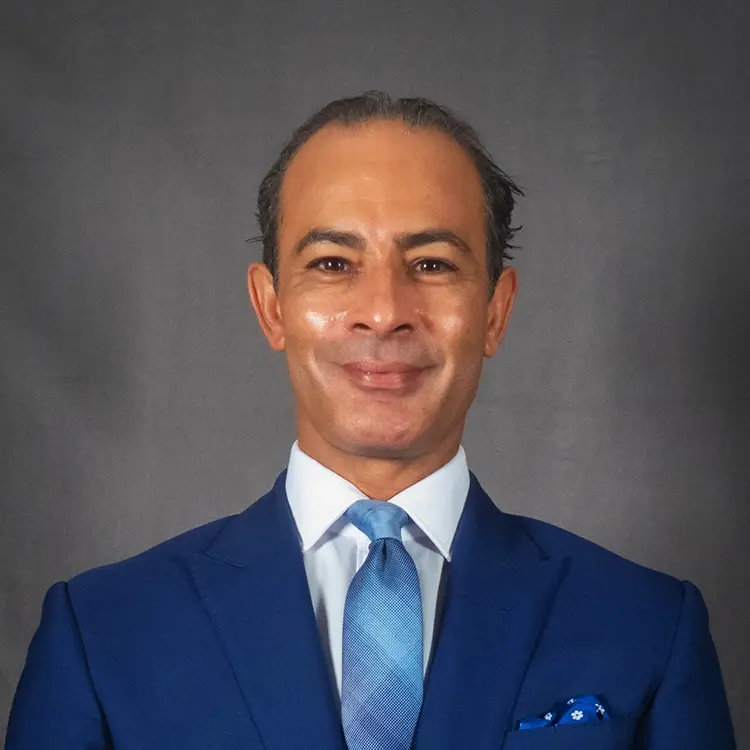
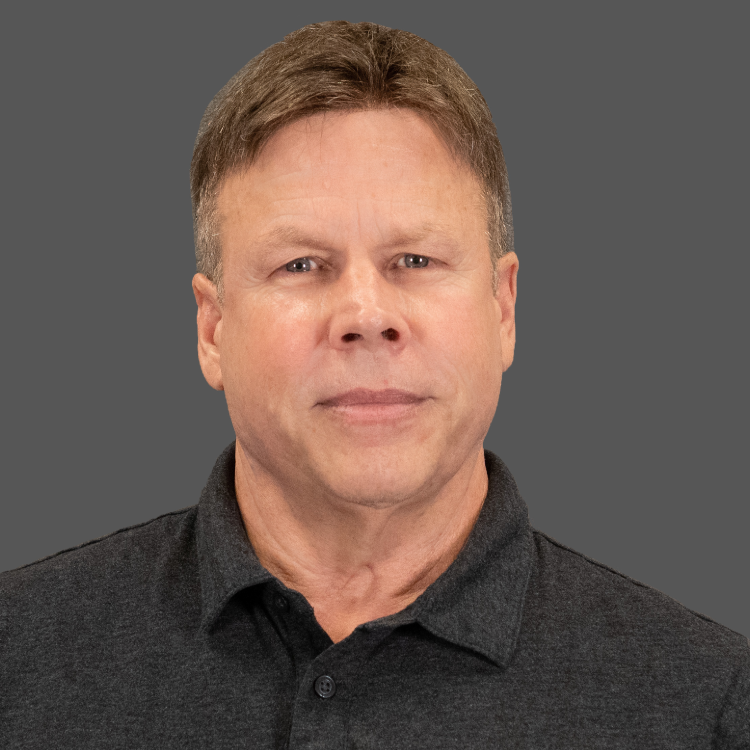
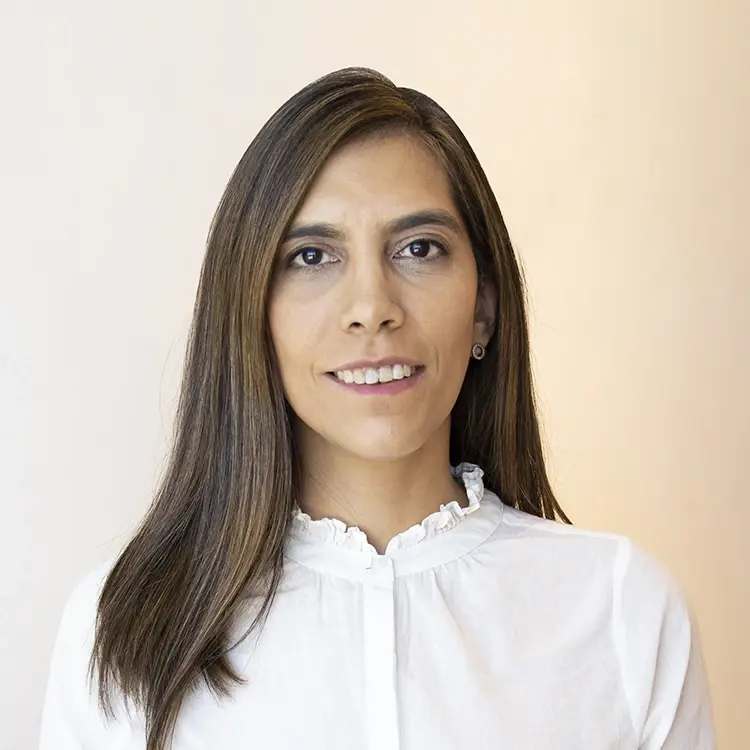

Are we witnessing a massive geographic shift in global pharmaceutical manufacturing, or just a post-pandemic recalibration? This episode covers the $333 billion capital spending surge, reshoring supply chains, and the critical role of CMOs and CDMOs in driving innovation. Join IIR experts Steve Leggett, Ximena Juarez, and Lubos Vozar as they explore how contract manufacturing is revolutionizing the global pharmaceutical industry.
[Intro] (00:00):
The pharma and biotech industry is expected to see some pretty robust capital spending levels for the next 48 months, with investments being planned across the full range of CapEx types, from new build activity through to brownfield developments and expansions on existing operational footprints, as well as Pharma 4.0 policies that are now driving the adoption of efficient technologies and automation, and certainly a lot more retooling of production processes and approaches. Now, many of these trends have been in play for a number of years now, but are we now seeing some regional shifts and reshoring of current supply chains, as Big Pharma seeks ways to stay ahead of the potential threat of disruptions from US tariffs?
Shaheen Chohan (01:05):
Welcome to Navigating the Currents of Change. My name is Shaheen Chohan and I lead Global Analytics here at Industrial Info Resources. For over 40 years, we have been providing market intelligence, data and analytics and geospatial solutions to those companies involved in the design, construction and maintenance of plants and facilities across the energy and heavy industrial sectors across the world. To help me unpack some of the trends we are seeing, I am delighted to be joined by not one, but three of our subject matter experts. I'd like to start with introducing Steve Leggett. Steve is IIR's VP of North America Pharma and Biotech Research, and we have Ximena Juarez, who is our assistant VP of Pharma and Biotech Research for Latin America. And finally, we are joined by Lubos Vozar, who is also in the hot seat. Lubos is our Director of Research Operations for Europe.
Now, Steve, I would like to start with you and to kick off the discussion. The US market in particular — probably the biggest pharma market in the world, accounting for, I guess, over a third of global sales in terms of drugs and pharmaceutical products, and then followed by Europe. Can you sort of kick things off and give us a sense of the kind of current levels of projected spending you and the team are now seeing, certainly for the next 24 to 48 months?
Steve Leggett (02:34):
Sure. Thank you, Shaheen. It's a very robust marketplace in the pharmaceutical industry, and this is really driven a lot by the weight loss drugs, the GLP-1s, with the mega campuses coming on board. But looking just over in North America, in the next two years we're going to have approximately 8,600 projects globally, with an estimated total investment value of $333 billion. Now, this is right out of our database, and this is dynamic — we're changing it daily, so this can change. But we anticipate a very robust and strong marketplace for all drugs, namely biologics — biologics such as cell and gene therapy, peptides, fill finish and other biologics. We're anticipating a very robust uptick in construction starts over the next 24 months as people start to mature in their markets, especially in Asia, Europe and Latin America.
Shaheen Chohan (03:34):
So, Steve, there are obviously some natural, current pharma and biotech hotspots around the world. We have Europe, we've got Japan, certainly the US. How does some of that $333 billion of currently active spending — how does that fall, or how is that distributed or located around the world? What do the different regions look like?
Steve Leggett (04:04):
Well, obviously the United States is the biggest manufacturer of drugs right now, Europe second, Latin America and Eurasia third. The fastest growing market is Asia-Pacific, as it always usually is. The United States and Canada are the largest manufacturers of drugs, and so you're seeing more uptick in that construction starts. And again, this is driven by the GLP-1 weight loss drugs — a company such as Eli Lilly are currently planning for mega campuses with multi-billion dollars in five states.
Along with that — and we'll talk about that later — are the contract manufacturers. And this is starting to be a very important part, especially since the pandemic, when the pandemic caused us to see the supply chain issues, the rapid response to any manufacturing that we needed to speed up — so contract manufacturers were used, starting to be identified as the go-to people. And that's kind of what we wanted to focus on here, is the importance of these contract manufacturers, especially since the pandemic, because the companies can concentrate on their core assets and then farm these out to vetted and regulated facilities that can make their drugs for them. So that's become a very important part. But the United States, really globally, we're starting to see a 7% overall uptick in construction starts, and the United States is right in line with that, from 6 to 6.8%. So it's very robust. There's venture capital — money is starting to come back into the equation. They were sitting kind of on the sidelines during the pandemic, of course, but then after the pandemic they wanted to kind of see what was going on. So the money is starting to flow, and there are still issues and constraints — supply chain issues, cost of steel, skilled labor shortages, just like any industry, but more so in pharmaceutical because of the specialized duties that they have. So there's still constraints, but it's plowing through that, and we're still going to see a very robust and good growth across the world, and namely in North America.
Shaheen Chohan (06:20):
Now, Steve, in the past you and I have had a conversation about project realization rates — typically, your industry tends to see higher levels of realization, and by that I mean projects actually successfully coming through planning and engineering and then to construction with, I guess, relatively limited volumes of project fallout. Would that still be the case?
Steve Leggett (06:44):
That is the case, and the reason being is that you don't see this like you would see in a massive chemical plant or a massive industrial plant — they need the drugs, they have to have these drugs. We need to get these to market, not just for profitability but to satiate the consumer. So that's what we're starting to see. It normally is — because there was a hiatus during the pandemic, and then a wait-and-see and supply chain issues and all the things that came after the dip from the pandemic — but that is ramping up. But people don't usually commit to this unless they're going to do it, because there's a long lead-in for these. We find these projects out in our platform early, but it takes 2 or 3 years for them to plan this — the logistics, the state, they want to get the right place, the right money from the location. And that's one thing — people used to pick the location by incentives that a state gave them, that would be the number one factor. But now they're looking at places like Alabama, Virginia, and they're looking at location for labor force, skilled labor force, not only to build the facilities, but to man the facilities, because once you get them built and there's no one skilled to do it, they have to be there. So it's changing that dynamic in the landscape — they're looking more for location of building it and for the skilled labor, but they want geography too. So they're not really just concentrated on state incentives, which is a big part, but there are other factors involved now. So that's where we stand on the construction starts.
Shaheen Chohan (08:29):
Now, I do want to pick up on that statement you made about changing landscapes. We've obviously seen a real focus by the Trump administration post-COVID — obviously, this is a result of the supply chain issue from COVID on drugs — to build more self-sufficiency, more domestic production. And I guess we've also seen a lot of quite big statements, big commitments from some of the big global pharma CEOs that they will commit to building more production capacity in the US market. Now these projects appear big — they're big campuses, right? Do you really see these all coming through?
Steve Leggett (09:06):
Great question, Shaheen. Because when all these announcements came out, they really came out all at once at the first of last year. Roche and Intech was going to build $20 billion, Merck's going to build $50 billion, Lantheus is going to do $2 billion and so forth. And we thought, just like a lot of times you see a lot of chest thumping and wanting to be in line with the political landscape — but we're finding these are starting to come to fruition, especially Eli Lilly. They were going to build $20 to $30 billion worth. They've already planned multibillion-dollar facilities in Wisconsin, Virginia, Alabama, Texas, plus a smaller facility in Pennsylvania for $1 billion. So those are coming to fruition. Merck is coming up in Delaware, just all over the country, and Johnson and Johnson in North Carolina — one of the hot spots in the United States for life science construction. And they're building $2 billion there. So there's a lot of billions going around — it's hard to keep up. But these aren't something that, "oh, we planned this, but now we don't have the money." They have money — there's capital available, and they're going through with these projects, which is nice for all of us, the consumer as well as the workforce and the vendors that want to service these companies.
Shaheen Chohan (10:36):
Now, Ximena, I would like to bring you into the discussion as well. Most Latin American countries have seen fairly robust public and private sector investments over the last few years, and I think a lot of that's been driven by strong government incentives and solid public health policies. Are you expecting to see a continuation of similar levels of capital spending as you have done in the past few years? Are you expecting to see that momentum continue to move forward?
Ximena Juarez (11:01):
Thanks for the introduction and for having me here. Well, in Latin America, we are currently tracking more than 1,300 projects representing an investment of over $11 billion. There are plans to kick off in the next two years. The main countries involved in these investments are Brazil and Mexico, but we have other main players such as Argentina and Costa Rica. Regarding the sectors in which we can see these investments going on, according to what our researchers are tracking, we have identified formulations, medical devices and cosmetics. And I think that here it's important to highlight that these investments are mainly driven by a combination of local and regional market demands and geopolitical strategies — the search for pharma and health self-sufficiency in some countries, with Mexico and Brazil leading in that way, and the need for more technological, efficient and sustainable operations.
Shaheen Chohan (12:07):
Lubos, welcome — I'd like to bring you into the discussion. Europe, another big pharma market, I guess narrowly averted a fresh wave of tariffs. And so far we have seen European pharma kind of avoid, I guess, the brunt of some of those tariff measures to date. But there is — I guess what I did read somewhere — there was a US-EU 15% tariff cap on European pharma exports. So that's kind of some kind of limitation or measure being put in place on European exports. Do you now see, because of the potential for heightened levels of trade tension and pressure on exports, any kind of adjustment to future capital spending patterns compared certainly to what you saw in previous years? And has some of this been down to a need now to shift some of those manufacturing supply chains over to the US, as Steve alluded to?
Lubos Vozar (13:09):
Thank you, Shaheen. I'm happy to report that the outlook for Europe's pharma and biotech industry over the next two years is rather good. Based on our research, we are expecting close to 1,400 projects with a total investment value of more than $42 billion to begin construction. Similar to Latin America, we are tracking the highest investment in the final formulation sector. However, we are also seeing significant investment in ingredients and laboratories. The bulk of the investment is taking place in Northern and Western Europe, with the United Kingdom, Germany and France being the dominant powers, and Ireland punching way above its weight. There are a lot of factors that play a role in these increased investments — these include a strong economy, strong scientific tradition, top-tier research infrastructure, supply chain security, but also an aging population, growing demand related to increased health consciousness, and of course governmental strategy. Finally, despite strict regulatory standards and rising costs, Europe remains an attractive option for manufacturing.
Shaheen Chohan (14:22):
Now, Steve, I want to come back and pick up on a theme that you highlighted earlier around how manufacturing production processes have continued to change and, I guess, adapt. Obviously, we continue to see pressure on drug pricing, right, and so there is obviously a need to build more margin improvement in some of the production processes. And I think you kind of highlighted that outsourcing is now a big component of how pharma manufacturing is moving. Can you just sort of explain a little bit about the different types of models, and whether you kind of see this as now the kind of business-as-usual way to scale manufacturing of drugs and medicines?
Steve Leggett (15:01):
Certainly, Shaheen, thank you. Yes, a big component. And it's not that it's hidden, but I don't think it's realized how important contract manufacturing organizations, or CMOs, and contract development and manufacturing organizations are to the pharma industry right now. At this point in North America, they account for almost 60% of the manufacturing of drugs. And this was something that you would think that, well, Merck's making their drugs in-house and they're doing this in-house — no, they need the scalability, and what they're doing instead, to a point, building some in-house capital, they're outsourcing this to these companies. And the reason being is that the outsource companies are scaled, they can do the contract, they're regulatory vetted, they can do it in a timely manner, while saving the capital expenditures for the company itself to bring new drugs to market.
So contract manufacturing organizations, the CMOs and the CDMOs, they've become such an important and integral part in the manufacturing process. And this really came to the fore during COVID, when Operation Warp Speed — we had to do the COVID vaccines just as an example — so you cannot scale up even with modular that quickly to start making these drugs in a timely manner, so they relied on contract manufacturers. And this has spilled over and really underscored the need for these CMOs, not just for quick production to market, but for capacity. You can see the drugs — when the pandemic, there was a dip after the pandemic with the supply chains, now it's coming back where they need the drugs. So instead of just building new facilities or in-house capital, they're going to these CMOs — and they have before, but now it's becoming more so. And the CMO can do everything — a CDMO, you can go to a CDMO with just an idea and they can formulate it all the way to commercial manufacturing. A CMO is usually you take them the product and they manufacture it for you, and they can do anything from clinical scale to commercial scale, the full lifecycle. And currently well over half of all global manufacturing products are produced in contract manufacturing environments today, with biopharmaceuticals far and away — including cell and gene therapy, mRNA vaccines, which was a COVID-type vaccine, ADCs and high-potency APIs — far outpacing the small molecule, which is your typical drug that you would find at a drug store. So that's become very important, and fill finish — they can do the fill finish, they can do all these things in a sterile environment because it's already in place. CMOs do the capital expenditures just as any other company would, and they make sure they can use modular and they're prepared to scale up as needed or scale down for the customer contract. So it's a very integral part — they have the worry, the sponsor company can use the time that they have to bring new drugs to market. Because the pharma biotech market is all about getting the next best thing, and you have to get that going. So this really gives them time to do that, while putting capital into their own plans — so don't think that it's total, but the contract manufacturing allows them freedom. So in the CMO, CDMO marketplace, the manufacturers — we're going to see robust growth in their capital expenditures. Right now we're seeing about $196 billion in market valuation, and we're expecting that to reach $268 billion by 2031, having a compound annual growth rate, or CAGR, of 6.5%. And again, biologics, cell and gene therapies — anything that's personalized medicine, anything made with the live product, is their go-to. And APIs make up the majority of this total. And the reason APIs, especially high-potency APIs — China has a lot of the API market for the small molecule, for instance — they have 90 to 95% market share of the small-molecule drugs. Since the transport and holding of biologics is more intense, that's best done locally, and that's why you're seeing the contract manufacturers in the US ramp up, and you'll see all these mainly biologic companies with the highest capital expenditures that we have in our platform.
Shaheen Chohan (20:13):
I guess, Steve, first impressions is that this was, you know, a fairly niche market, but clearly it is a very large component of the whole pharma supply chain. And I guess many of the companies who are involved on that side of the production process, this component of share of production — they're not really household names. So can you just reference a few of the big players who are providing this outsourcing service?
Steve Leggett (20:36):
Exactly. Thank you, Shaheen. And you would think contract manufacturers, like anything other — a sub, they're a lesser brand, they're just helping the big players. The major global contract manufacturers, just to name a few: Lonza, Merck, Thermo Fisher, WuXi AppTec, Fujifilm, Eurofins Scientific, AbbVie and Samsung. These are doing contract manufacturing for other major contract manufacturers. And just a caveat — it's become so important. Catalent used to be one of the largest players in the contract manufacturing segment. Novo Nordisk used to use them — they simply just bought them. So Novo Nordisk owns Catalent, and I think you're going to see a lot of that consolidation, not just from big companies to smaller, but equal people consolidating and joining forces to supply the needs of all the contracts that are needed.
Shaheen Chohan (21:42):
So, I mean, is this a trend that you're also seeing? What does the outlook for contract and outsourcing manufacturing look like for Latin America?
Ximena Juarez (21:47):
CMO and CDMO pharma companies are booming in Latin America, driven by the outsourcing of pharmaceutical production in countries such as Brazil, Mexico, Argentina, Costa Rica and Colombia. They offer comprehensive services ranging from development to final production, all in compliance with local, regional and also global regulations, which is one of the main reasons why this type of pharma segment is so popular. This phenomenon is driven in the region by the high demand for generic pharmaceutical forms, but also for cosmetics and medical devices, allowing the most complex and costly stages to be developed efficiently throughout the whole pharmaceutical production chain, such as the research and development stage and the approvals of regulatory control organisms of different countries or regions, all at a much more convenient cost. In terms of regional companies in this segment, we see the presence of big players such as EuroFarma, EMS, Aché, Blau Farmacêutica, Cristália in Brazil, and then we have Laboratorios Richmond, Bagó, Elea Phoenix in Argentina, or Landsteiner Scientific, PiSA or Genomma Lab in Mexico. And if we talk about investments, we are currently tracking more than 100 projects, investing over $350 million, projecting to kick off in the next 24 months. And just to mention some of them — Harmac is investing in medical devices in Mexico, Catalent in soft-gel capsule production in Brazil, as well as Coaspharma in Colombia or Amar Pharma in Argentina.
Shaheen Chohan (23:39):
Lubos, I would like to bring you back into the discussion. Europe's obviously sitting with some of the world's biggest pharma and biotech companies, certainly accounts for 17 to 20% of all global drug sales. I guess much of that is heavily dependent on exports to the US. Now, beyond the constant threat of trade tariffs, are there any other major headwinds that manufacturers in Europe are facing at the moment?
Lubos Vozar (24:11):
Well, the market appears to have strong tailwinds. There are also many challenges that need to be considered. A slow legislative process that has been largely based on a precautionary legal principle is transforming into a more adaptive form to allow for faster innovation. The proposed EU Biotech Act is designed to address these challenges and help the European pharmaceutical sector remain competitive in a rapidly changing market. We are also hearing about delays in delivery of specialized manufacturing equipment, which sometimes can push project delivery dates back by 6 to 12 months. Lastly, current global trade tensions create a lot of uncertainty in the market. If these tensions persist or worsen, they could impact industry activity.
Outsourcing your production to a CMO or CDMO company is becoming a strategic necessity. This partnership allows you to get your medicines faster to the market, access specialized know-how, and avoid massive upfront capital investment. This is particularly true for high-potency APIs, cell and gene therapy, and biologics. Our research is tracking nearly $5 billion in projects set to begin within the next 24 months. The largest investments being proposed in Europe during this period are from French, German and Lithuanian companies, such as Aster Partners, Vetter Pharma and Norvio Biotech, each with investments exceeding half a billion dollars.
Shaheen Chohan (25:43):
Similarly, in conclusion, could you just sort of sum up what some of the highlights are that you are expecting to see in Latin America over the next 12 to 24 months?
Ximena Juarez (25:50):
I would say that most statistics show the pharmaceutical sector in Latin America is experiencing growth. We see this primarily driven in the production of generic and biosimilar drugs, as well as CMOs and CDMOs. As I mentioned before, this indicates optimistic projections for the industry in the region, especially in Brazil, Mexico and Argentina. Key trends in the region also include those we see globally, such as the integration of AI automation, or the adaptation of Pharma 4.0, sustainability, export growth and the pursuit of national production. At the same time, the sector faces challenges related to sustainability regulations and authorizations, dependence on imported raw materials, and the cost of technology transfer. So the announcement of the Mercosur and European Union agreement sounds promising in this regard for the participating Latin American countries — so we will have to wait and see how this new opportunity evolves.
Shaheen Chohan (27:09):
Steve, I would like to come back to you and just get your views and perspectives in conclusion. All in all, clearly from what I've heard, the outlook for this year looks pretty solid — it's a very dynamic, constantly shifting kind of landscape, as you said. What would be some of the final takeaways for folks tuning in and listening in today, specific to the US market?
Steve Leggett (27:34):
Thank you, Shaheen. Speaking specifically of the contract manufacturing market, it's really in line with what we have in our platform — we're seeing a 7 to 8% growth in construction starts over the next two years. Contract manufacturers are seeing a progression of their construction starts in line with their CAGR of 6.5%, between 6 and 7%, which is very robust in this industry, because of the labor intensity, the supply chain issues and the skilled workforce that they have to keep up with. Like I said before, this allows the sponsor company that makes the contract to be freed up — lets them work on new products and divest some of their core facilities. Some are simply divesting all of it, segments, certain parts of it, to these companies, because it's just too hard to keep up with and move forward in their corporate goals. So tariffs, other social, political, geopolitical and economic instability may also have an impact on this, but we're seeing that tone down. I know it's a whipsaw environment, but we're seeing that it's just kind of bulldozing through that, and we think it's going to stay on track to the 7% or so.
This outsourcing segment is also incorporating Pharma 4.0. Just like you alluded to, Shaheen — you might think the outsourcing facility, "oh well, the standards are different, or they do it differently" — no, they're as much, if not more, than the sponsor company, because they live on contracts and they have a specialized adoption of the 4.0, which is just another way — Pharma 4.0 is just Industrial 4.0 applied to the industry, and it's a holistic operating model combining digital technology, automation, data analytics. And this optimizes the manufacturing, improves quality and ensures regulatory compliance. The administration is proposing a streamlined process for the FDA, which should help over here in North America. And all this 4.0 enables end-to-end connectivity across the value chain, so sponsor companies can get involved on their apps or their phones and see what's going on. And they utilize AI, Internet of Things and smart systems. So all that's being incorporated in the pharma biotech industry, just like any other industry, is preparing for AI and automation at breakneck speed. So that's kind of what we're seeing not only in contract manufacturing, but in the pharmaceutical biotech market as a whole.
Shaheen Chohan (30:21):
So that brings us to the conclusion of our discussion, and really just leaves me to say a couple of big thank yous. Firstly, to you, Steve, Lubos, and Ximena — a very big thanks to you all for sharing your insights and perspectives today. If any of you have got any questions about any of the discussion points that were raised today, then please do reach out to any one of us on the contact details you can see here. And finally, just a big thank you to all of you who've joined us today. I hope we have helped you all better navigate some of the currents of change that we're seeing.
The pharma and biotech industry is expected to see some pretty robust capital spending levels for the next 48 months, with investments being planned across the full range of CapEx types, from new build activity through to brownfield developments and expansions on existing operational footprints, as well as Pharma 4.0 policies that are now driving the adoption of efficient technologies and automation, and certainly a lot more retooling of production processes and approaches. Now, many of these trends have been in play for a number of years now, but are we now seeing some regional shifts and reshoring of current supply chains, as Big Pharma seeks ways to stay ahead of the potential threat of disruptions from US tariffs?
Shaheen Chohan (01:05):
Welcome to Navigating the Currents of Change. My name is Shaheen Chohan and I lead Global Analytics here at Industrial Info Resources. For over 40 years, we have been providing market intelligence, data and analytics and geospatial solutions to those companies involved in the design, construction and maintenance of plants and facilities across the energy and heavy industrial sectors across the world. To help me unpack some of the trends we are seeing, I am delighted to be joined by not one, but three of our subject matter experts. I'd like to start with introducing Steve Leggett. Steve is IIR's VP of North America Pharma and Biotech Research, and we have Ximena Juarez, who is our assistant VP of Pharma and Biotech Research for Latin America. And finally, we are joined by Lubos Vozar, who is also in the hot seat. Lubos is our Director of Research Operations for Europe.
Now, Steve, I would like to start with you and to kick off the discussion. The US market in particular — probably the biggest pharma market in the world, accounting for, I guess, over a third of global sales in terms of drugs and pharmaceutical products, and then followed by Europe. Can you sort of kick things off and give us a sense of the kind of current levels of projected spending you and the team are now seeing, certainly for the next 24 to 48 months?
Steve Leggett (02:34):
Sure. Thank you, Shaheen. It's a very robust marketplace in the pharmaceutical industry, and this is really driven a lot by the weight loss drugs, the GLP-1s, with the mega campuses coming on board. But looking just over in North America, in the next two years we're going to have approximately 8,600 projects globally, with an estimated total investment value of $333 billion. Now, this is right out of our database, and this is dynamic — we're changing it daily, so this can change. But we anticipate a very robust and strong marketplace for all drugs, namely biologics — biologics such as cell and gene therapy, peptides, fill finish and other biologics. We're anticipating a very robust uptick in construction starts over the next 24 months as people start to mature in their markets, especially in Asia, Europe and Latin America.
Shaheen Chohan (03:34):
So, Steve, there are obviously some natural, current pharma and biotech hotspots around the world. We have Europe, we've got Japan, certainly the US. How does some of that $333 billion of currently active spending — how does that fall, or how is that distributed or located around the world? What do the different regions look like?
Steve Leggett (04:04):
Well, obviously the United States is the biggest manufacturer of drugs right now, Europe second, Latin America and Eurasia third. The fastest growing market is Asia-Pacific, as it always usually is. The United States and Canada are the largest manufacturers of drugs, and so you're seeing more uptick in that construction starts. And again, this is driven by the GLP-1 weight loss drugs — a company such as Eli Lilly are currently planning for mega campuses with multi-billion dollars in five states.
Along with that — and we'll talk about that later — are the contract manufacturers. And this is starting to be a very important part, especially since the pandemic, when the pandemic caused us to see the supply chain issues, the rapid response to any manufacturing that we needed to speed up — so contract manufacturers were used, starting to be identified as the go-to people. And that's kind of what we wanted to focus on here, is the importance of these contract manufacturers, especially since the pandemic, because the companies can concentrate on their core assets and then farm these out to vetted and regulated facilities that can make their drugs for them. So that's become a very important part. But the United States, really globally, we're starting to see a 7% overall uptick in construction starts, and the United States is right in line with that, from 6 to 6.8%. So it's very robust. There's venture capital — money is starting to come back into the equation. They were sitting kind of on the sidelines during the pandemic, of course, but then after the pandemic they wanted to kind of see what was going on. So the money is starting to flow, and there are still issues and constraints — supply chain issues, cost of steel, skilled labor shortages, just like any industry, but more so in pharmaceutical because of the specialized duties that they have. So there's still constraints, but it's plowing through that, and we're still going to see a very robust and good growth across the world, and namely in North America.
Shaheen Chohan (06:20):
Now, Steve, in the past you and I have had a conversation about project realization rates — typically, your industry tends to see higher levels of realization, and by that I mean projects actually successfully coming through planning and engineering and then to construction with, I guess, relatively limited volumes of project fallout. Would that still be the case?
Steve Leggett (06:44):
That is the case, and the reason being is that you don't see this like you would see in a massive chemical plant or a massive industrial plant — they need the drugs, they have to have these drugs. We need to get these to market, not just for profitability but to satiate the consumer. So that's what we're starting to see. It normally is — because there was a hiatus during the pandemic, and then a wait-and-see and supply chain issues and all the things that came after the dip from the pandemic — but that is ramping up. But people don't usually commit to this unless they're going to do it, because there's a long lead-in for these. We find these projects out in our platform early, but it takes 2 or 3 years for them to plan this — the logistics, the state, they want to get the right place, the right money from the location. And that's one thing — people used to pick the location by incentives that a state gave them, that would be the number one factor. But now they're looking at places like Alabama, Virginia, and they're looking at location for labor force, skilled labor force, not only to build the facilities, but to man the facilities, because once you get them built and there's no one skilled to do it, they have to be there. So it's changing that dynamic in the landscape — they're looking more for location of building it and for the skilled labor, but they want geography too. So they're not really just concentrated on state incentives, which is a big part, but there are other factors involved now. So that's where we stand on the construction starts.
Shaheen Chohan (08:29):
Now, I do want to pick up on that statement you made about changing landscapes. We've obviously seen a real focus by the Trump administration post-COVID — obviously, this is a result of the supply chain issue from COVID on drugs — to build more self-sufficiency, more domestic production. And I guess we've also seen a lot of quite big statements, big commitments from some of the big global pharma CEOs that they will commit to building more production capacity in the US market. Now these projects appear big — they're big campuses, right? Do you really see these all coming through?
Steve Leggett (09:06):
Great question, Shaheen. Because when all these announcements came out, they really came out all at once at the first of last year. Roche and Intech was going to build $20 billion, Merck's going to build $50 billion, Lantheus is going to do $2 billion and so forth. And we thought, just like a lot of times you see a lot of chest thumping and wanting to be in line with the political landscape — but we're finding these are starting to come to fruition, especially Eli Lilly. They were going to build $20 to $30 billion worth. They've already planned multibillion-dollar facilities in Wisconsin, Virginia, Alabama, Texas, plus a smaller facility in Pennsylvania for $1 billion. So those are coming to fruition. Merck is coming up in Delaware, just all over the country, and Johnson and Johnson in North Carolina — one of the hot spots in the United States for life science construction. And they're building $2 billion there. So there's a lot of billions going around — it's hard to keep up. But these aren't something that, "oh, we planned this, but now we don't have the money." They have money — there's capital available, and they're going through with these projects, which is nice for all of us, the consumer as well as the workforce and the vendors that want to service these companies.
Shaheen Chohan (10:36):
Now, Ximena, I would like to bring you into the discussion as well. Most Latin American countries have seen fairly robust public and private sector investments over the last few years, and I think a lot of that's been driven by strong government incentives and solid public health policies. Are you expecting to see a continuation of similar levels of capital spending as you have done in the past few years? Are you expecting to see that momentum continue to move forward?
Ximena Juarez (11:01):
Thanks for the introduction and for having me here. Well, in Latin America, we are currently tracking more than 1,300 projects representing an investment of over $11 billion. There are plans to kick off in the next two years. The main countries involved in these investments are Brazil and Mexico, but we have other main players such as Argentina and Costa Rica. Regarding the sectors in which we can see these investments going on, according to what our researchers are tracking, we have identified formulations, medical devices and cosmetics. And I think that here it's important to highlight that these investments are mainly driven by a combination of local and regional market demands and geopolitical strategies — the search for pharma and health self-sufficiency in some countries, with Mexico and Brazil leading in that way, and the need for more technological, efficient and sustainable operations.
Shaheen Chohan (12:07):
Lubos, welcome — I'd like to bring you into the discussion. Europe, another big pharma market, I guess narrowly averted a fresh wave of tariffs. And so far we have seen European pharma kind of avoid, I guess, the brunt of some of those tariff measures to date. But there is — I guess what I did read somewhere — there was a US-EU 15% tariff cap on European pharma exports. So that's kind of some kind of limitation or measure being put in place on European exports. Do you now see, because of the potential for heightened levels of trade tension and pressure on exports, any kind of adjustment to future capital spending patterns compared certainly to what you saw in previous years? And has some of this been down to a need now to shift some of those manufacturing supply chains over to the US, as Steve alluded to?
Lubos Vozar (13:09):
Thank you, Shaheen. I'm happy to report that the outlook for Europe's pharma and biotech industry over the next two years is rather good. Based on our research, we are expecting close to 1,400 projects with a total investment value of more than $42 billion to begin construction. Similar to Latin America, we are tracking the highest investment in the final formulation sector. However, we are also seeing significant investment in ingredients and laboratories. The bulk of the investment is taking place in Northern and Western Europe, with the United Kingdom, Germany and France being the dominant powers, and Ireland punching way above its weight. There are a lot of factors that play a role in these increased investments — these include a strong economy, strong scientific tradition, top-tier research infrastructure, supply chain security, but also an aging population, growing demand related to increased health consciousness, and of course governmental strategy. Finally, despite strict regulatory standards and rising costs, Europe remains an attractive option for manufacturing.
Shaheen Chohan (14:22):
Now, Steve, I want to come back and pick up on a theme that you highlighted earlier around how manufacturing production processes have continued to change and, I guess, adapt. Obviously, we continue to see pressure on drug pricing, right, and so there is obviously a need to build more margin improvement in some of the production processes. And I think you kind of highlighted that outsourcing is now a big component of how pharma manufacturing is moving. Can you just sort of explain a little bit about the different types of models, and whether you kind of see this as now the kind of business-as-usual way to scale manufacturing of drugs and medicines?
Steve Leggett (15:01):
Certainly, Shaheen, thank you. Yes, a big component. And it's not that it's hidden, but I don't think it's realized how important contract manufacturing organizations, or CMOs, and contract development and manufacturing organizations are to the pharma industry right now. At this point in North America, they account for almost 60% of the manufacturing of drugs. And this was something that you would think that, well, Merck's making their drugs in-house and they're doing this in-house — no, they need the scalability, and what they're doing instead, to a point, building some in-house capital, they're outsourcing this to these companies. And the reason being is that the outsource companies are scaled, they can do the contract, they're regulatory vetted, they can do it in a timely manner, while saving the capital expenditures for the company itself to bring new drugs to market.
So contract manufacturing organizations, the CMOs and the CDMOs, they've become such an important and integral part in the manufacturing process. And this really came to the fore during COVID, when Operation Warp Speed — we had to do the COVID vaccines just as an example — so you cannot scale up even with modular that quickly to start making these drugs in a timely manner, so they relied on contract manufacturers. And this has spilled over and really underscored the need for these CMOs, not just for quick production to market, but for capacity. You can see the drugs — when the pandemic, there was a dip after the pandemic with the supply chains, now it's coming back where they need the drugs. So instead of just building new facilities or in-house capital, they're going to these CMOs — and they have before, but now it's becoming more so. And the CMO can do everything — a CDMO, you can go to a CDMO with just an idea and they can formulate it all the way to commercial manufacturing. A CMO is usually you take them the product and they manufacture it for you, and they can do anything from clinical scale to commercial scale, the full lifecycle. And currently well over half of all global manufacturing products are produced in contract manufacturing environments today, with biopharmaceuticals far and away — including cell and gene therapy, mRNA vaccines, which was a COVID-type vaccine, ADCs and high-potency APIs — far outpacing the small molecule, which is your typical drug that you would find at a drug store. So that's become very important, and fill finish — they can do the fill finish, they can do all these things in a sterile environment because it's already in place. CMOs do the capital expenditures just as any other company would, and they make sure they can use modular and they're prepared to scale up as needed or scale down for the customer contract. So it's a very integral part — they have the worry, the sponsor company can use the time that they have to bring new drugs to market. Because the pharma biotech market is all about getting the next best thing, and you have to get that going. So this really gives them time to do that, while putting capital into their own plans — so don't think that it's total, but the contract manufacturing allows them freedom. So in the CMO, CDMO marketplace, the manufacturers — we're going to see robust growth in their capital expenditures. Right now we're seeing about $196 billion in market valuation, and we're expecting that to reach $268 billion by 2031, having a compound annual growth rate, or CAGR, of 6.5%. And again, biologics, cell and gene therapies — anything that's personalized medicine, anything made with the live product, is their go-to. And APIs make up the majority of this total. And the reason APIs, especially high-potency APIs — China has a lot of the API market for the small molecule, for instance — they have 90 to 95% market share of the small-molecule drugs. Since the transport and holding of biologics is more intense, that's best done locally, and that's why you're seeing the contract manufacturers in the US ramp up, and you'll see all these mainly biologic companies with the highest capital expenditures that we have in our platform.
Shaheen Chohan (20:13):
I guess, Steve, first impressions is that this was, you know, a fairly niche market, but clearly it is a very large component of the whole pharma supply chain. And I guess many of the companies who are involved on that side of the production process, this component of share of production — they're not really household names. So can you just reference a few of the big players who are providing this outsourcing service?
Steve Leggett (20:36):
Exactly. Thank you, Shaheen. And you would think contract manufacturers, like anything other — a sub, they're a lesser brand, they're just helping the big players. The major global contract manufacturers, just to name a few: Lonza, Merck, Thermo Fisher, WuXi AppTec, Fujifilm, Eurofins Scientific, AbbVie and Samsung. These are doing contract manufacturing for other major contract manufacturers. And just a caveat — it's become so important. Catalent used to be one of the largest players in the contract manufacturing segment. Novo Nordisk used to use them — they simply just bought them. So Novo Nordisk owns Catalent, and I think you're going to see a lot of that consolidation, not just from big companies to smaller, but equal people consolidating and joining forces to supply the needs of all the contracts that are needed.
Shaheen Chohan (21:42):
So, I mean, is this a trend that you're also seeing? What does the outlook for contract and outsourcing manufacturing look like for Latin America?
Ximena Juarez (21:47):
CMO and CDMO pharma companies are booming in Latin America, driven by the outsourcing of pharmaceutical production in countries such as Brazil, Mexico, Argentina, Costa Rica and Colombia. They offer comprehensive services ranging from development to final production, all in compliance with local, regional and also global regulations, which is one of the main reasons why this type of pharma segment is so popular. This phenomenon is driven in the region by the high demand for generic pharmaceutical forms, but also for cosmetics and medical devices, allowing the most complex and costly stages to be developed efficiently throughout the whole pharmaceutical production chain, such as the research and development stage and the approvals of regulatory control organisms of different countries or regions, all at a much more convenient cost. In terms of regional companies in this segment, we see the presence of big players such as EuroFarma, EMS, Aché, Blau Farmacêutica, Cristália in Brazil, and then we have Laboratorios Richmond, Bagó, Elea Phoenix in Argentina, or Landsteiner Scientific, PiSA or Genomma Lab in Mexico. And if we talk about investments, we are currently tracking more than 100 projects, investing over $350 million, projecting to kick off in the next 24 months. And just to mention some of them — Harmac is investing in medical devices in Mexico, Catalent in soft-gel capsule production in Brazil, as well as Coaspharma in Colombia or Amar Pharma in Argentina.
Shaheen Chohan (23:39):
Lubos, I would like to bring you back into the discussion. Europe's obviously sitting with some of the world's biggest pharma and biotech companies, certainly accounts for 17 to 20% of all global drug sales. I guess much of that is heavily dependent on exports to the US. Now, beyond the constant threat of trade tariffs, are there any other major headwinds that manufacturers in Europe are facing at the moment?
Lubos Vozar (24:11):
Well, the market appears to have strong tailwinds. There are also many challenges that need to be considered. A slow legislative process that has been largely based on a precautionary legal principle is transforming into a more adaptive form to allow for faster innovation. The proposed EU Biotech Act is designed to address these challenges and help the European pharmaceutical sector remain competitive in a rapidly changing market. We are also hearing about delays in delivery of specialized manufacturing equipment, which sometimes can push project delivery dates back by 6 to 12 months. Lastly, current global trade tensions create a lot of uncertainty in the market. If these tensions persist or worsen, they could impact industry activity.
Outsourcing your production to a CMO or CDMO company is becoming a strategic necessity. This partnership allows you to get your medicines faster to the market, access specialized know-how, and avoid massive upfront capital investment. This is particularly true for high-potency APIs, cell and gene therapy, and biologics. Our research is tracking nearly $5 billion in projects set to begin within the next 24 months. The largest investments being proposed in Europe during this period are from French, German and Lithuanian companies, such as Aster Partners, Vetter Pharma and Norvio Biotech, each with investments exceeding half a billion dollars.
Shaheen Chohan (25:43):
Similarly, in conclusion, could you just sort of sum up what some of the highlights are that you are expecting to see in Latin America over the next 12 to 24 months?
Ximena Juarez (25:50):
I would say that most statistics show the pharmaceutical sector in Latin America is experiencing growth. We see this primarily driven in the production of generic and biosimilar drugs, as well as CMOs and CDMOs. As I mentioned before, this indicates optimistic projections for the industry in the region, especially in Brazil, Mexico and Argentina. Key trends in the region also include those we see globally, such as the integration of AI automation, or the adaptation of Pharma 4.0, sustainability, export growth and the pursuit of national production. At the same time, the sector faces challenges related to sustainability regulations and authorizations, dependence on imported raw materials, and the cost of technology transfer. So the announcement of the Mercosur and European Union agreement sounds promising in this regard for the participating Latin American countries — so we will have to wait and see how this new opportunity evolves.
Shaheen Chohan (27:09):
Steve, I would like to come back to you and just get your views and perspectives in conclusion. All in all, clearly from what I've heard, the outlook for this year looks pretty solid — it's a very dynamic, constantly shifting kind of landscape, as you said. What would be some of the final takeaways for folks tuning in and listening in today, specific to the US market?
Steve Leggett (27:34):
Thank you, Shaheen. Speaking specifically of the contract manufacturing market, it's really in line with what we have in our platform — we're seeing a 7 to 8% growth in construction starts over the next two years. Contract manufacturers are seeing a progression of their construction starts in line with their CAGR of 6.5%, between 6 and 7%, which is very robust in this industry, because of the labor intensity, the supply chain issues and the skilled workforce that they have to keep up with. Like I said before, this allows the sponsor company that makes the contract to be freed up — lets them work on new products and divest some of their core facilities. Some are simply divesting all of it, segments, certain parts of it, to these companies, because it's just too hard to keep up with and move forward in their corporate goals. So tariffs, other social, political, geopolitical and economic instability may also have an impact on this, but we're seeing that tone down. I know it's a whipsaw environment, but we're seeing that it's just kind of bulldozing through that, and we think it's going to stay on track to the 7% or so.
This outsourcing segment is also incorporating Pharma 4.0. Just like you alluded to, Shaheen — you might think the outsourcing facility, "oh well, the standards are different, or they do it differently" — no, they're as much, if not more, than the sponsor company, because they live on contracts and they have a specialized adoption of the 4.0, which is just another way — Pharma 4.0 is just Industrial 4.0 applied to the industry, and it's a holistic operating model combining digital technology, automation, data analytics. And this optimizes the manufacturing, improves quality and ensures regulatory compliance. The administration is proposing a streamlined process for the FDA, which should help over here in North America. And all this 4.0 enables end-to-end connectivity across the value chain, so sponsor companies can get involved on their apps or their phones and see what's going on. And they utilize AI, Internet of Things and smart systems. So all that's being incorporated in the pharma biotech industry, just like any other industry, is preparing for AI and automation at breakneck speed. So that's kind of what we're seeing not only in contract manufacturing, but in the pharmaceutical biotech market as a whole.
Shaheen Chohan (30:21):
So that brings us to the conclusion of our discussion, and really just leaves me to say a couple of big thank yous. Firstly, to you, Steve, Lubos, and Ximena — a very big thanks to you all for sharing your insights and perspectives today. If any of you have got any questions about any of the discussion points that were raised today, then please do reach out to any one of us on the contact details you can see here. And finally, just a big thank you to all of you who've joined us today. I hope we have helped you all better navigate some of the currents of change that we're seeing.
Please Select A Language
*This episode is brought to you by Industrial Info's Latin American Office in Argentina.