2026 European Metals & Minerals Project Spending Outlook
Video Language
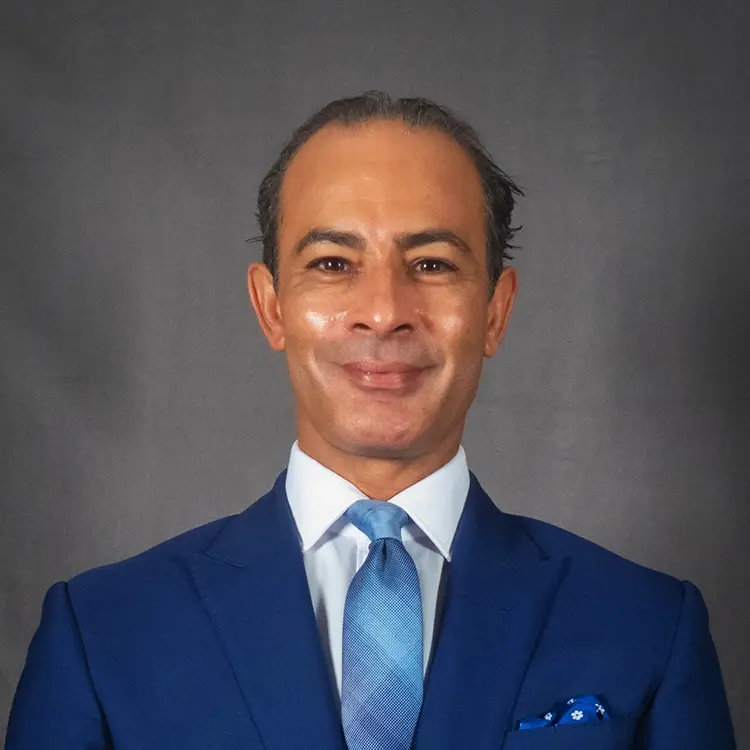
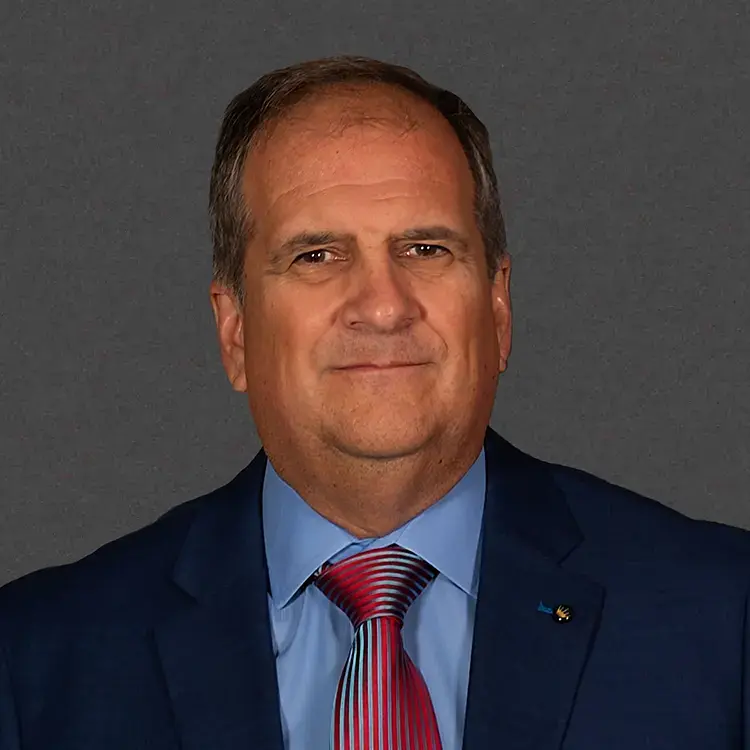
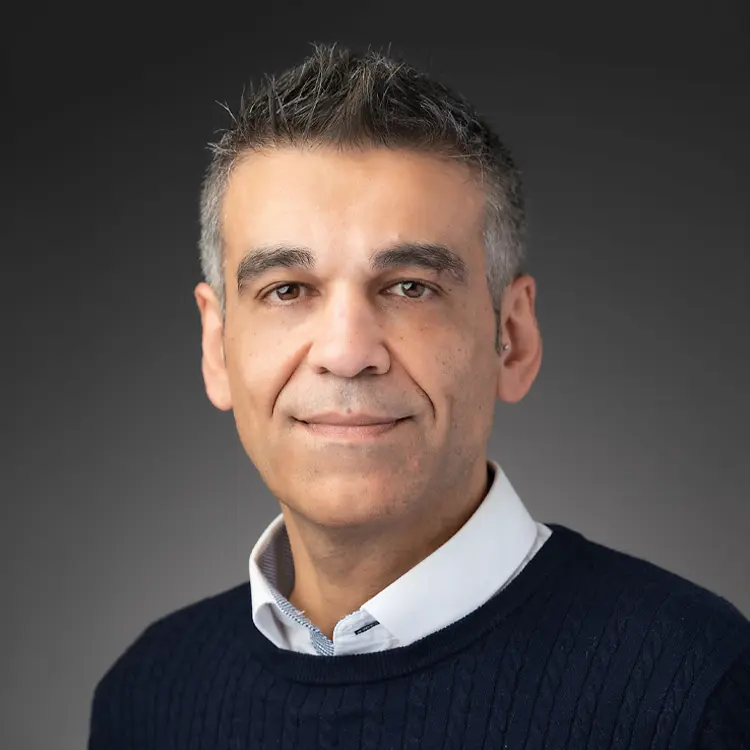
With critical mineral demand projected to quadruple by 2040, Europe faces a complex landscape of opposing economic and geopolitical forces. Join our experts Joe Govreau (Senior VP of Research – Metals & Minerals) and Cemal Mentes (European Regional Manager – Power, Metals & Minerals) as they unpack the current trajectory of the European metals and minerals market. This episode explores how structural energy costs are impacting traditional smelting, the reality behind delayed green steel projects, and how the Carbon Border Adjustment Mechanism (CBAM) is radically reshaping global trade behavior. Discover how the EU is shifting its industrial policy to secure strategic raw materials and what this means for future investments.
[Intro] (00:00):
With an outlook that projects demand for critical minerals potentially quadrupling by 2040, Europe is facing a number of opposing forces. On one side, continued acceleration in the deployment and ongoing development of renewable technologies and electric vehicles is coming head on with high downstream cost inflation and the prospect of supply chain constraints, certainly leading to an impact on high dependency on imports. So will we see a step change in spending activity, or will alternative strategies need to be adopted to meet future demand?
Shaheen Chohan (00:55):
Welcome to Navigating the Currents of Change. My name is Shaheen Chohan and I lead Global Analytics here at Industrial Info Resources. For over 40 years, we have been providing market intelligence, data analytics and geospatial solutions to those companies involved in the design, construction and maintenance of plants and facilities across energy, mining and heavy industrial sectors across the world. Now, to help me unpick some of the trends we are seeing, I am delighted to be joined by two of our subject matter experts. Joe Govreau is IIR's global head of metals and minerals research. And also in the hot seat is Cemal Mentes, Assistant VP for metals and minerals research in Europe. Welcome, gentlemen.
Now, Joe, just to start with you — given the current softer economic outlook for this year, although there has been something of an upgrade to global GDP this year, there still remains a lot of pressure on many aspects of the energy transition and certainly different decarbonization technologies. Now the big question is: will we see a slowdown or possibly a stall, or will we continue to see momentum and forward movement with many of these decarbonization and energy transition initiatives and certainly the associated spending? And what kind of impact will that have on upstream mining activity, but also in that very important segment in Europe — the downstream smelting?
Joe Govreau (02:29):
Yeah, interesting times indeed, Shaheen. I mean, we're actually seeing project activity increasing in Europe. The value of projects currently under construction has grown about 36% over the past year, increasing from $26 billion in 2025 to about $35.8 billion currently. Now that's significant, and it kind of surprised me. But one of the reasons for this increase, I think, is that projects are staying in construction phase for longer, as we've seen several delayed start-up dates due to financial or market reasons. This includes projects like HYBRIT's grassroots green steel project in Sweden, which has delayed construction while it looks for additional financing. And Keliber, which is developing lithium mines and a refinery in Finland, has also staggered its start-up dates for its projects.
So looking a little deeper at what's under construction — it's dominated by steel industry projects. The steel industry in Europe is in the midst of a modernization and shift away from coal-based production. This transition has slowed considerably under the current economic situation, but still there are notable projects moving forward. SSAB, for example, is electrifying its processes by building a new electric arc furnace melt shop in Luleå. Similar projects are planned throughout Europe, and there's another $20 billion in medium and high probability projects scheduled to begin construction over the next 12 months.
In my opinion, there are two major themes driving project activity in Europe. They are both related to the electrification and decarbonization efforts that we've been following for some time now. There's an upstream theme around the need to diversify supply chains for critical minerals — starting with mining and refining — and we see the same trend unfolding in the US, where resource security is a priority. This is driving a lot of policy decisions being made impacting mining and downstream refining sectors for critical minerals like copper, lithium and nickel. And there's another downstream theme around the economic situation — high energy costs and overcapacity issues, which are constraints to some of the more traditional building block metals such as steel and aluminum and other smelting sectors.
Shaheen Chohan (05:09):
Now I'd like to bring in Cemal, who heads up our research in Europe. Cemal, overcapacity and high energy costs are severely impacting activity in Europe. Can you explain this?
Cemal Mentes (05:28):
Yes. This is something we see every day in a lot of heavy industries. Europe simply has more capacity than current demand supports. When demand is weak and capacity is high, margins get squeezed and companies become very careful with new investments. And energy costs — on top of that — energy in Europe is structurally more expensive than in many other regions. For energy-intensive industries, electricity and gas costs can make or break a project. So when you put those two things together, it's not surprising that many projects are delayed or scaled down. What we see instead is a focus on efficiency improvements, life extensions or decarbonization projects that are supported by policy. So the market isn't frozen, but it's much more disciplined and selective.
Shaheen Chohan (06:05):
Okay, so selective projects for core industries, and project costs are rising. US tariffs and cheap foreign imports of steel from China and other countries has been noted as one of the problems — this has slowed development of decarbonization projects, and green steel projects involving hydrogen have been scaled back significantly.
Joe, if I could just get you to pause there and go back to that statement about pressure on green steel. Obviously across the board, green hydrogen costs are rising, and that's obviously put a lot of pressure on the downstream buyers of green hydrogen. Is that one of the main reasons for the pressure on the European steel sector as it looks to pivot towards production of cleaner end product — at a time when the market is still pretty well supplied with cheaper Chinese steel? Is that one of the big challenges Europe is seeing right now?
Joe Govreau (07:07):
Yeah, it's very expensive to produce green steel. The electrolysis process, which makes the hydrogen from renewable energy, is expensive, and there are some technological issues around the development that haven't been worked out yet. So we're seeing a lot of those plans being put on hold. Almost all the steelmakers in Europe have plans to electrify, but what they're doing is turning to transition fuels like natural gas to make the direct reduced iron instead of a hydrogen-based approach — which natural gas can also be used as a reductant to make the iron. So we're seeing a little bit of a shift right now and delay in a lot of those projects.
Shaheen Chohan (08:00):
And Joe, also — steel, cement, all the smelting sectors are very energy-intensive. Do you see the opportunity for maybe more carbon capture being put and applied to some of these operational smelters and steel mills?
Joe Govreau (08:12):
Well, there's definitely a lot of carbon capture projects being developed at cement plants, for example — that's where we're seeing the most development for carbon capture. There are some decarbonization projects like glass manufacturing using electric furnaces instead of natural gas, which is a predominant fuel in that industry. So yes, we're seeing quite a bit of development there as well.
I mentioned the struggles of HYBRIT earlier, which is a start-up green steel project. In an effort to level the playing field, the EU has implemented its own — what is essentially a tariff on imports — called CBAM, which went into effect at the beginning of the year. Cemal, can you explain what CBAM is and what its impact is on the market?
Cemal Mentes (09:04):
CBAM stands for Carbon Border Adjustment Mechanism, but at its core it's actually a pretty simple idea. European producers already pay for their carbon emissions — a lot of producers outside Europe don't. CBAM is meant to close that gap. It applies carbon costs to imports like steel, aluminum, cement and electricity, based on how carbon-intensive they are. So if something is produced with high emissions, it becomes more expensive when it comes into the European Union.
What's interesting is the impact — it's not just about the price, it's changing behavior. Companies are starting to rethink where they produce, how they produce and where they're investing in cleaner technologies. It suddenly makes sense sooner than expected. So CBAM is really less about trade barriers and more about reshaping supply chains and investment decisions.
Shaheen Chohan (09:53):
So when you're saying changing behaviors, Cemal — are you seeing more reshoring, like we are seeing in the US, or is it more about foreign suppliers changing their operations?
Cemal Mentes (10:05):
That's a good question. I would say it's more about operational adjustments than large-scale reshoring, at least for now. For example, we're seeing steel exporters into Europe — particularly from Turkey and parts of Asia — investing much more in carbon tracking and verification systems. They need reliable emissions data, because without it their products become less competitive under CBAM. In aluminum, exporters from China, India and the Middle East are increasingly aware that power mix matters — if production is tied to coal-based electricity, that shows up in the carbon intensity and affects pricing into Europe. That is pushing some producers to look at cleaner power sourcing or efficiency upgrades.
We are also seeing the shift at the investment level — when companies plan new capacity, whether it's a direct reduced iron facility, often referred to as DRI, or an aluminum smelter, carbon exposure is now built into the financial model. Five years ago that was often secondary — today it's central. So it's less about factories moving overnight, more about global producers repositioning themselves to stay competitive in a carbon-priced market.
Shaheen Chohan (11:09):
Okay, so it sounds like it's having an impact on producers outside of the EU for now. So let's discuss another major theme — critical minerals, which have become a geopolitical hotbed recently. Why is that, and how has it manifested in the EU?
Cemal Mentes (11:29):
If you look at the energy transition more broadly, critical minerals sit right at the center of it — batteries, electric vehicles, wind turbines, grid expansion. All of it depends on materials like lithium, rare earth elements, nickel and copper. The issue is that supply chains for many of those materials are highly concentrated. In some cases, one country dominates mining or processing — that creates obvious geopolitical exposure.
In the EU, this has triggered a real shift in thinking. Europe imports most of its critical minerals and often relies heavily on a single supplier — that is increasingly seen as a strategic vulnerability rather than just a trade issue. And that's where trade policy comes into the picture. The EU-Mercosur agreement — which is a trade deal between the European Union and Brazil, Argentina, Paraguay and Uruguay — was signed recently and is still going through ratification. Part of the rationale is strengthening access to raw materials from South America. Brazil, for example, is a major supplier of iron ore and bauxite. So diversification is clearly part of the strategy.
At the same time, the EU is implementing measures like CBAM that tie carbon intensity directly to market access. So what we are seeing is trade policy, climate policy and industrial policy becoming tightly connected. That is why critical minerals are no longer just mining topics — they are now central to competitiveness, supply security and geopolitics.
Shaheen Chohan (12:49):
Joe, stepping back a little bit — clearly critical minerals, and also those rare earth elements as well, are not ubiquitous. They're heavily concentrated in probably a more select number of countries around the world. Would that be right to say? And for me, as someone looking at Europe from the outside, Europe doesn't necessarily strike me as one of those big markets where we would see many of these critical metals and minerals. Where in particular are you seeing many of these European projects starting to occur from a geographical perspective — which countries?
Joe Govreau (13:23):
Yeah, it's mainly happening in the Nordics — I think Sweden and Finland — and they also have cheap hydroelectric power. In those countries, like in the US, the EU is heavily reliant on imports of critical minerals, especially refined critical minerals. The EU's critical mineral list includes 34 critical minerals. 17 of those have been designated as strategic raw materials because they're deemed more essential for the green and digital transition, as well as for defense and aerospace. Currently, we're tracking about 773 projects totaling $68 billion for critical mineral projects in Europe. The top five countries for project development are Finland, Poland, Spain, Germany and France, which account for about two thirds of the total activity. About 50% of these projects fall into the mining sector, and the remainder fall into downstream refining and processing.
One example of one of those projects is in Poland — it's a joint venture by the name of Iron Way, which is a venture between Umicore and PowerCo. It is nearing completion of a $1.8 billion lithium-ion battery cathode active material plant, and Fluor is the EPC on that. So that's a good example of the downstream products that they need, which are predominantly produced in China and other countries.
Shaheen Chohan (15:07):
Now, Joe, unlike rare earth elements — which are very much an elemental definition, they're rare — what is the actual definition of critical minerals? Because we've recently seen the US create, upgrade or revamp their list, which includes things like copper and even metallurgical coal. So clearly the definition of critical minerals is different for different geographies, different jurisdictions. How does something get put onto that list?
Joe Govreau (15:42):
Well, it's deemed necessary for defense security reasons, economic reasons — all tied to the electrification and digital transformation. So the difference between the US and European list — they're actually pretty close when you look at it, because the European list takes the light rare earths, of which there are several, and heavy rare earths, and puts them into two different categories. Whereas in the US they're spread out between the 17 rare earth elements. So when you look at it closer, it's actually fairly similar — you've got copper, aluminum, nickel, cobalt and lithium that are all on both lists, very similar.
And why that's important is once they are classified as critical, they're available for funding from government through grants and funding programs. So it's a stepping stone to additional funding and support. Similar to the US, the EU is implementing policies to support critical mineral development — most recently announcing the creation of a strategic stockpile. Prior policy included the creation of the Critical Raw Materials Act. Cemal, what is the status of the Critical Raw Materials Act?
Cemal Mentes (17:08):
The Critical Raw Materials Act is really the EU's way of turning that concern into action. The idea is to secure access to key materials by supporting mining, processing and recycling inside Europe, and by making it easier for strategic projects to move forward. The framework is now in place and implementation has started. We're beginning to see strategic projects being identified, especially in the Nordic region and parts of Southern and Eastern Europe. That said, this is not a quick fix — permitting, environmental concerns, public acceptance and financing all take time. The important point is that the policy direction is now clear. The EU has clearly moved from talking about the problem to actively trying to solve it.
Shaheen Chohan (17:49):
Thanks, Cemal. The European Commission has selected 60 projects for critical mineral supply — 47 projects are located within Europe and 13 outside of Europe. These include mining, refining and recycling projects for a range of critical minerals including alumina, copper and rare earths, to name a few.
Joe, coming back to the statement you've just made about recycling — bearing in mind that Europe still has a big dependency on imports of many of these critical minerals, do you think we will see an increase in recycling-type projects? And do you think because of that supply-demand shortfall, we could see some stimulus or incentive to move forward with recycling initiatives?
Joe Govreau (18:43):
Yeah, we definitely are seeing that all over, especially in Europe. The major smelting and recycling companies have expansion projects going on.
Shaheen Chohan (18:56):
So that brings us to a conclusion. Thank you, gentlemen. Clearly the downstream steel and non-ferrous metals sectors continue to operate under pressure from high energy costs, global oversupply, intense competition from subsidized foreign producers, and substantial capital investments really needed to transition to greener production methods. We're seeing all of that occurring in tandem and in parallel. Much will reside, therefore, on the policy support remaining intact to help deliver on the energy transition goals and those investments needed to provide the pull-through demand across the critical minerals supply chain. So all that is left for me to say is a couple of big thank yous. First to you, Joe and Cemal — a very big thanks to you both for sharing your insights and your perspectives today. If any of you have got any further questions about any of the points discussed today, then please do reach out to us via the contact details that you can see here. And finally, a big thanks to all of you who have taken the time out to join us today. I hope we have helped you all better navigate some of the currents of change that we're seeing.
With an outlook that projects demand for critical minerals potentially quadrupling by 2040, Europe is facing a number of opposing forces. On one side, continued acceleration in the deployment and ongoing development of renewable technologies and electric vehicles is coming head on with high downstream cost inflation and the prospect of supply chain constraints, certainly leading to an impact on high dependency on imports. So will we see a step change in spending activity, or will alternative strategies need to be adopted to meet future demand?
Shaheen Chohan (00:55):
Welcome to Navigating the Currents of Change. My name is Shaheen Chohan and I lead Global Analytics here at Industrial Info Resources. For over 40 years, we have been providing market intelligence, data analytics and geospatial solutions to those companies involved in the design, construction and maintenance of plants and facilities across energy, mining and heavy industrial sectors across the world. Now, to help me unpick some of the trends we are seeing, I am delighted to be joined by two of our subject matter experts. Joe Govreau is IIR's global head of metals and minerals research. And also in the hot seat is Cemal Mentes, Assistant VP for metals and minerals research in Europe. Welcome, gentlemen.
Now, Joe, just to start with you — given the current softer economic outlook for this year, although there has been something of an upgrade to global GDP this year, there still remains a lot of pressure on many aspects of the energy transition and certainly different decarbonization technologies. Now the big question is: will we see a slowdown or possibly a stall, or will we continue to see momentum and forward movement with many of these decarbonization and energy transition initiatives and certainly the associated spending? And what kind of impact will that have on upstream mining activity, but also in that very important segment in Europe — the downstream smelting?
Joe Govreau (02:29):
Yeah, interesting times indeed, Shaheen. I mean, we're actually seeing project activity increasing in Europe. The value of projects currently under construction has grown about 36% over the past year, increasing from $26 billion in 2025 to about $35.8 billion currently. Now that's significant, and it kind of surprised me. But one of the reasons for this increase, I think, is that projects are staying in construction phase for longer, as we've seen several delayed start-up dates due to financial or market reasons. This includes projects like HYBRIT's grassroots green steel project in Sweden, which has delayed construction while it looks for additional financing. And Keliber, which is developing lithium mines and a refinery in Finland, has also staggered its start-up dates for its projects.
So looking a little deeper at what's under construction — it's dominated by steel industry projects. The steel industry in Europe is in the midst of a modernization and shift away from coal-based production. This transition has slowed considerably under the current economic situation, but still there are notable projects moving forward. SSAB, for example, is electrifying its processes by building a new electric arc furnace melt shop in Luleå. Similar projects are planned throughout Europe, and there's another $20 billion in medium and high probability projects scheduled to begin construction over the next 12 months.
In my opinion, there are two major themes driving project activity in Europe. They are both related to the electrification and decarbonization efforts that we've been following for some time now. There's an upstream theme around the need to diversify supply chains for critical minerals — starting with mining and refining — and we see the same trend unfolding in the US, where resource security is a priority. This is driving a lot of policy decisions being made impacting mining and downstream refining sectors for critical minerals like copper, lithium and nickel. And there's another downstream theme around the economic situation — high energy costs and overcapacity issues, which are constraints to some of the more traditional building block metals such as steel and aluminum and other smelting sectors.
Shaheen Chohan (05:09):
Now I'd like to bring in Cemal, who heads up our research in Europe. Cemal, overcapacity and high energy costs are severely impacting activity in Europe. Can you explain this?
Cemal Mentes (05:28):
Yes. This is something we see every day in a lot of heavy industries. Europe simply has more capacity than current demand supports. When demand is weak and capacity is high, margins get squeezed and companies become very careful with new investments. And energy costs — on top of that — energy in Europe is structurally more expensive than in many other regions. For energy-intensive industries, electricity and gas costs can make or break a project. So when you put those two things together, it's not surprising that many projects are delayed or scaled down. What we see instead is a focus on efficiency improvements, life extensions or decarbonization projects that are supported by policy. So the market isn't frozen, but it's much more disciplined and selective.
Shaheen Chohan (06:05):
Okay, so selective projects for core industries, and project costs are rising. US tariffs and cheap foreign imports of steel from China and other countries has been noted as one of the problems — this has slowed development of decarbonization projects, and green steel projects involving hydrogen have been scaled back significantly.
Joe, if I could just get you to pause there and go back to that statement about pressure on green steel. Obviously across the board, green hydrogen costs are rising, and that's obviously put a lot of pressure on the downstream buyers of green hydrogen. Is that one of the main reasons for the pressure on the European steel sector as it looks to pivot towards production of cleaner end product — at a time when the market is still pretty well supplied with cheaper Chinese steel? Is that one of the big challenges Europe is seeing right now?
Joe Govreau (07:07):
Yeah, it's very expensive to produce green steel. The electrolysis process, which makes the hydrogen from renewable energy, is expensive, and there are some technological issues around the development that haven't been worked out yet. So we're seeing a lot of those plans being put on hold. Almost all the steelmakers in Europe have plans to electrify, but what they're doing is turning to transition fuels like natural gas to make the direct reduced iron instead of a hydrogen-based approach — which natural gas can also be used as a reductant to make the iron. So we're seeing a little bit of a shift right now and delay in a lot of those projects.
Shaheen Chohan (08:00):
And Joe, also — steel, cement, all the smelting sectors are very energy-intensive. Do you see the opportunity for maybe more carbon capture being put and applied to some of these operational smelters and steel mills?
Joe Govreau (08:12):
Well, there's definitely a lot of carbon capture projects being developed at cement plants, for example — that's where we're seeing the most development for carbon capture. There are some decarbonization projects like glass manufacturing using electric furnaces instead of natural gas, which is a predominant fuel in that industry. So yes, we're seeing quite a bit of development there as well.
I mentioned the struggles of HYBRIT earlier, which is a start-up green steel project. In an effort to level the playing field, the EU has implemented its own — what is essentially a tariff on imports — called CBAM, which went into effect at the beginning of the year. Cemal, can you explain what CBAM is and what its impact is on the market?
Cemal Mentes (09:04):
CBAM stands for Carbon Border Adjustment Mechanism, but at its core it's actually a pretty simple idea. European producers already pay for their carbon emissions — a lot of producers outside Europe don't. CBAM is meant to close that gap. It applies carbon costs to imports like steel, aluminum, cement and electricity, based on how carbon-intensive they are. So if something is produced with high emissions, it becomes more expensive when it comes into the European Union.
What's interesting is the impact — it's not just about the price, it's changing behavior. Companies are starting to rethink where they produce, how they produce and where they're investing in cleaner technologies. It suddenly makes sense sooner than expected. So CBAM is really less about trade barriers and more about reshaping supply chains and investment decisions.
Shaheen Chohan (09:53):
So when you're saying changing behaviors, Cemal — are you seeing more reshoring, like we are seeing in the US, or is it more about foreign suppliers changing their operations?
Cemal Mentes (10:05):
That's a good question. I would say it's more about operational adjustments than large-scale reshoring, at least for now. For example, we're seeing steel exporters into Europe — particularly from Turkey and parts of Asia — investing much more in carbon tracking and verification systems. They need reliable emissions data, because without it their products become less competitive under CBAM. In aluminum, exporters from China, India and the Middle East are increasingly aware that power mix matters — if production is tied to coal-based electricity, that shows up in the carbon intensity and affects pricing into Europe. That is pushing some producers to look at cleaner power sourcing or efficiency upgrades.
We are also seeing the shift at the investment level — when companies plan new capacity, whether it's a direct reduced iron facility, often referred to as DRI, or an aluminum smelter, carbon exposure is now built into the financial model. Five years ago that was often secondary — today it's central. So it's less about factories moving overnight, more about global producers repositioning themselves to stay competitive in a carbon-priced market.
Shaheen Chohan (11:09):
Okay, so it sounds like it's having an impact on producers outside of the EU for now. So let's discuss another major theme — critical minerals, which have become a geopolitical hotbed recently. Why is that, and how has it manifested in the EU?
Cemal Mentes (11:29):
If you look at the energy transition more broadly, critical minerals sit right at the center of it — batteries, electric vehicles, wind turbines, grid expansion. All of it depends on materials like lithium, rare earth elements, nickel and copper. The issue is that supply chains for many of those materials are highly concentrated. In some cases, one country dominates mining or processing — that creates obvious geopolitical exposure.
In the EU, this has triggered a real shift in thinking. Europe imports most of its critical minerals and often relies heavily on a single supplier — that is increasingly seen as a strategic vulnerability rather than just a trade issue. And that's where trade policy comes into the picture. The EU-Mercosur agreement — which is a trade deal between the European Union and Brazil, Argentina, Paraguay and Uruguay — was signed recently and is still going through ratification. Part of the rationale is strengthening access to raw materials from South America. Brazil, for example, is a major supplier of iron ore and bauxite. So diversification is clearly part of the strategy.
At the same time, the EU is implementing measures like CBAM that tie carbon intensity directly to market access. So what we are seeing is trade policy, climate policy and industrial policy becoming tightly connected. That is why critical minerals are no longer just mining topics — they are now central to competitiveness, supply security and geopolitics.
Shaheen Chohan (12:49):
Joe, stepping back a little bit — clearly critical minerals, and also those rare earth elements as well, are not ubiquitous. They're heavily concentrated in probably a more select number of countries around the world. Would that be right to say? And for me, as someone looking at Europe from the outside, Europe doesn't necessarily strike me as one of those big markets where we would see many of these critical metals and minerals. Where in particular are you seeing many of these European projects starting to occur from a geographical perspective — which countries?
Joe Govreau (13:23):
Yeah, it's mainly happening in the Nordics — I think Sweden and Finland — and they also have cheap hydroelectric power. In those countries, like in the US, the EU is heavily reliant on imports of critical minerals, especially refined critical minerals. The EU's critical mineral list includes 34 critical minerals. 17 of those have been designated as strategic raw materials because they're deemed more essential for the green and digital transition, as well as for defense and aerospace. Currently, we're tracking about 773 projects totaling $68 billion for critical mineral projects in Europe. The top five countries for project development are Finland, Poland, Spain, Germany and France, which account for about two thirds of the total activity. About 50% of these projects fall into the mining sector, and the remainder fall into downstream refining and processing.
One example of one of those projects is in Poland — it's a joint venture by the name of Iron Way, which is a venture between Umicore and PowerCo. It is nearing completion of a $1.8 billion lithium-ion battery cathode active material plant, and Fluor is the EPC on that. So that's a good example of the downstream products that they need, which are predominantly produced in China and other countries.
Shaheen Chohan (15:07):
Now, Joe, unlike rare earth elements — which are very much an elemental definition, they're rare — what is the actual definition of critical minerals? Because we've recently seen the US create, upgrade or revamp their list, which includes things like copper and even metallurgical coal. So clearly the definition of critical minerals is different for different geographies, different jurisdictions. How does something get put onto that list?
Joe Govreau (15:42):
Well, it's deemed necessary for defense security reasons, economic reasons — all tied to the electrification and digital transformation. So the difference between the US and European list — they're actually pretty close when you look at it, because the European list takes the light rare earths, of which there are several, and heavy rare earths, and puts them into two different categories. Whereas in the US they're spread out between the 17 rare earth elements. So when you look at it closer, it's actually fairly similar — you've got copper, aluminum, nickel, cobalt and lithium that are all on both lists, very similar.
And why that's important is once they are classified as critical, they're available for funding from government through grants and funding programs. So it's a stepping stone to additional funding and support. Similar to the US, the EU is implementing policies to support critical mineral development — most recently announcing the creation of a strategic stockpile. Prior policy included the creation of the Critical Raw Materials Act. Cemal, what is the status of the Critical Raw Materials Act?
Cemal Mentes (17:08):
The Critical Raw Materials Act is really the EU's way of turning that concern into action. The idea is to secure access to key materials by supporting mining, processing and recycling inside Europe, and by making it easier for strategic projects to move forward. The framework is now in place and implementation has started. We're beginning to see strategic projects being identified, especially in the Nordic region and parts of Southern and Eastern Europe. That said, this is not a quick fix — permitting, environmental concerns, public acceptance and financing all take time. The important point is that the policy direction is now clear. The EU has clearly moved from talking about the problem to actively trying to solve it.
Shaheen Chohan (17:49):
Thanks, Cemal. The European Commission has selected 60 projects for critical mineral supply — 47 projects are located within Europe and 13 outside of Europe. These include mining, refining and recycling projects for a range of critical minerals including alumina, copper and rare earths, to name a few.
Joe, coming back to the statement you've just made about recycling — bearing in mind that Europe still has a big dependency on imports of many of these critical minerals, do you think we will see an increase in recycling-type projects? And do you think because of that supply-demand shortfall, we could see some stimulus or incentive to move forward with recycling initiatives?
Joe Govreau (18:43):
Yeah, we definitely are seeing that all over, especially in Europe. The major smelting and recycling companies have expansion projects going on.
Shaheen Chohan (18:56):
So that brings us to a conclusion. Thank you, gentlemen. Clearly the downstream steel and non-ferrous metals sectors continue to operate under pressure from high energy costs, global oversupply, intense competition from subsidized foreign producers, and substantial capital investments really needed to transition to greener production methods. We're seeing all of that occurring in tandem and in parallel. Much will reside, therefore, on the policy support remaining intact to help deliver on the energy transition goals and those investments needed to provide the pull-through demand across the critical minerals supply chain. So all that is left for me to say is a couple of big thank yous. First to you, Joe and Cemal — a very big thanks to you both for sharing your insights and your perspectives today. If any of you have got any further questions about any of the points discussed today, then please do reach out to us via the contact details that you can see here. And finally, a big thanks to all of you who have taken the time out to join us today. I hope we have helped you all better navigate some of the currents of change that we're seeing.
Please Select A Language
*This episode is brought to you by Industrial Info's Latin American Office in Argentina.