Rare Earths & Critical Minerals: Supply Chains, Tariffs & Global Competition
Video Language

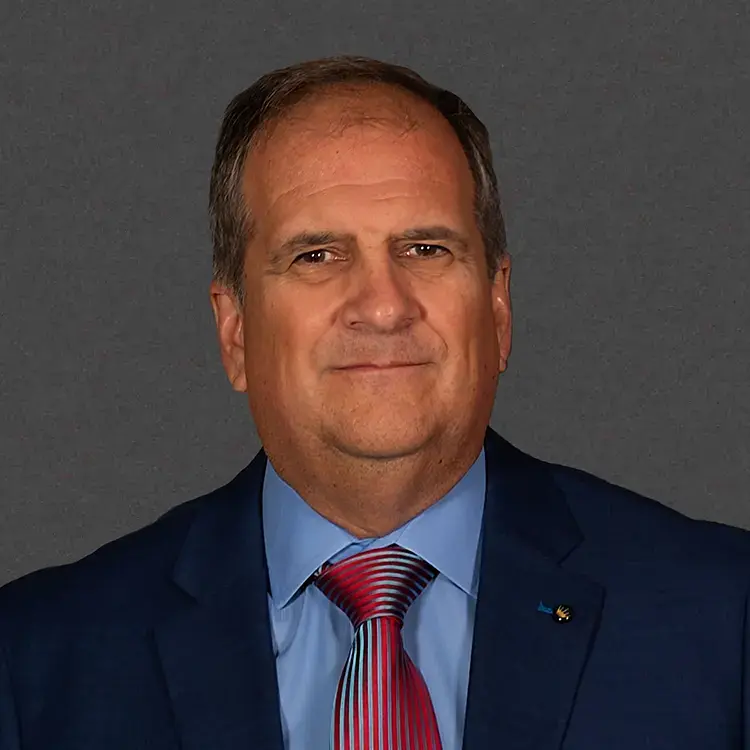
In this episode of Navigating the Currents of Change, host Shaheen Chohan is joined by Joe Govreau, IIR’s Senior Vice President of Research Operations for Metals & Minerals, to break down the data behind the headlines.
[Intro] (00:00):
As the world races towards electrification, digital infrastructure and defense readiness, securing access to rare earth minerals has become a top global priority. But which projects are real and which are just political talking points?
Shaheen Chohan (00:32):
Welcome to Navigating the Currents of Change. My name is Shaheen Chohan and I lead Global Analytics at Industrial Info Resources, a company recognized for over 40 years in delivering trusted industrial data, verified and constantly updated across more than 12 major industries worldwide. Today, to help me dissect what all this means, I am delighted to be joined by Joe Govreau, Senior Vice President of Research Operations for the Metals and Minerals Industry here at IIR. Welcome, Joe.
Joe has been with the company for nearly four decades and plays a key role in how we track and interpret industrial project activity, especially in those high-impact sectors like mining and materials. Together, we'll be exploring what rare earth mining and refining projects have currently been developed, how global policy from the US and other markets is influencing investment spending, and what the growing demand for magnets, batteries and other cleantech solutions means for the years ahead.
So with that, Joe, I'd like to bring you into the discussion. We've seen some developments — only very recently, we've seen some agreement between the Trump administration and their Chinese counterparts around rare earth minerals. What was discussed?
Joe Govreau (02:02):
Yeah. So there's been quite a few changes recently with the negotiations. So back in April, China suspended exports of seven rare earth metals as well as permanent magnets. This has a major impact on aerospace, automotive, semiconductor and defense industries — not just in the US, but in the EU, Japan and in other areas that are into those industries. The automotive industry, for example, relies heavily on magnets for engines and electric vehicles. So most recently, the US and China have agreed for China to supply rare earth and permanent magnets while reducing US tariffs on Chinese imports to 55%. China would apply a 10% tariff on US imports as well. So I think that's good news — things are headed in the right direction anyway for the industries mentioned. But the situation is still changing.
Shaheen Chohan (03:03):
Why has this agreement and this discussion with China been so important? Why is it that China in particular seems to be on the radar for the Trump administration in terms of discussions around rare earths?
Joe Govreau (03:21):
Yeah, China really dominates the rare earth space, especially from the processing and refining of rare earths. China controls 80 to 90% of the supply. It's a relatively small market — there are only about 40 operational mines and processing sites worldwide, and there's only one in the US: the MP Materials facility in California. So it's a very complicated process. It's a dirty process. It takes a long time to permit, and it's very difficult in certain areas to permit, especially in the US — it can take years. Rare earths processing is a hydrometallurgical process, and it's very corrosive, so it takes special stainless steel alloys for pumps, valves, piping and vessels. And rare earths are used in a variety of industries — defense, ceramics, EVs, and the automotive industry. So it's used in a growing number of industries around the energy transition and is seeing tremendous growth lately.
Shaheen Chohan (04:36):
Why do you think the US is focusing so much on this particular set of commodities? And where are the current mining and refining projects that your team are tracking globally? Where is the CapEx being concentrated at the moment?
Joe Govreau (04:55):
Rare earths are fairly abundant actually worldwide, but production is very limited — as I mentioned, certain areas come to mind like China and Australia. We're tracking about 187 active projects right now, for mining and refining projects, worth just over $23 billion. And then there's an additional $5.4 billion in projects for permanent magnet production, highly focused on China, Malaysia, North America and Europe.
Shaheen Chohan (05:29):
So clearly these commodities in particular have huge strategic importance — national security importance, certainly for the US. Are there any new policies or incentives that have been put in place to kind of support or stimulate more domestic production and supply?
Joe Govreau (05:55):
Yeah, I think there's a lot of interesting things going on for critical minerals in general. In the US, for example, the Trump administration just added 31 mining projects to the Fast 41 permitting list. The Fast 41 was created several years ago to speed up permitting for large infrastructure projects. A few years ago, one project was added that was mining-related, and now, just in the last couple of months, we've seen that list expand greatly. So we're tracking quite a bit of activity in this space.
Shaheen Chohan (06:40):
And I guess that Fast 41 permitting initiative is really critical, because yours is an industry where mining projects can take multiple decades. So this really should add a little bit of momentum to some of that CapEx activity, and certainly some new mine development. Would that be right?
Joe Govreau (06:57):
I would definitely see some reshoring of capacity, which could help alleviate the reliance on China.
Shaheen Chohan (07:05):
I guess also that rare earths are important for many other countries around the world who are looking at raising some of their defense-related spending and also to support clean technologies and decarbonization. Are you seeing any other types of policies being implemented around the world which could also stimulate and accelerate additional CapEx activity?
Joe Govreau (07:36):
Yeah. In Europe, they have what's called the Critical Raw Materials Act. And the European Commission has been expanding a list of projects that they've supported — it's up to 60 now. There are 47 projects located in Europe and then 13 outside of Europe. And these include not just mining but refining and recycling projects as well. So a lot of activity in that space.
Shaheen Chohan (08:10):
So we've got two markets which could be accelerating or increasing their mining and downstream refining CapEx as well — the US and Europe. Do you think if some of these projects start to come to market and complete, that could actually reduce the world's dependency on China's current dominance in this market space?
Joe Govreau (08:31):
Yeah, I think it's going to be a long time. It'll definitely alleviate some of the reliance, but it's going to take a long time to develop these projects and bring them up to speed. There are a couple of projects in the US, for example, that are shovel-ready but are just waiting for the financing side. They have permits in place, but it's a very difficult, long process. So I think China will continue to dominate for quite a while.
Shaheen Chohan (09:08):
Well, thank you, Joe. As always, that brings us to the conclusion of the podcast. A very big thanks to you, Joe, for sharing your insights and perspectives today. If any of you have any further questions about any of the points that we've discussed today, please reach out to myself or indeed Joe via the contact details you can see here. Finally, a very big thanks to all of you who've taken your time out to join us. I hope we have helped you all better navigate some of the currents of change that we're seeing. Thank you.
As the world races towards electrification, digital infrastructure and defense readiness, securing access to rare earth minerals has become a top global priority. But which projects are real and which are just political talking points?
Shaheen Chohan (00:32):
Welcome to Navigating the Currents of Change. My name is Shaheen Chohan and I lead Global Analytics at Industrial Info Resources, a company recognized for over 40 years in delivering trusted industrial data, verified and constantly updated across more than 12 major industries worldwide. Today, to help me dissect what all this means, I am delighted to be joined by Joe Govreau, Senior Vice President of Research Operations for the Metals and Minerals Industry here at IIR. Welcome, Joe.
Joe has been with the company for nearly four decades and plays a key role in how we track and interpret industrial project activity, especially in those high-impact sectors like mining and materials. Together, we'll be exploring what rare earth mining and refining projects have currently been developed, how global policy from the US and other markets is influencing investment spending, and what the growing demand for magnets, batteries and other cleantech solutions means for the years ahead.
So with that, Joe, I'd like to bring you into the discussion. We've seen some developments — only very recently, we've seen some agreement between the Trump administration and their Chinese counterparts around rare earth minerals. What was discussed?
Joe Govreau (02:02):
Yeah. So there's been quite a few changes recently with the negotiations. So back in April, China suspended exports of seven rare earth metals as well as permanent magnets. This has a major impact on aerospace, automotive, semiconductor and defense industries — not just in the US, but in the EU, Japan and in other areas that are into those industries. The automotive industry, for example, relies heavily on magnets for engines and electric vehicles. So most recently, the US and China have agreed for China to supply rare earth and permanent magnets while reducing US tariffs on Chinese imports to 55%. China would apply a 10% tariff on US imports as well. So I think that's good news — things are headed in the right direction anyway for the industries mentioned. But the situation is still changing.
Shaheen Chohan (03:03):
Why has this agreement and this discussion with China been so important? Why is it that China in particular seems to be on the radar for the Trump administration in terms of discussions around rare earths?
Joe Govreau (03:21):
Yeah, China really dominates the rare earth space, especially from the processing and refining of rare earths. China controls 80 to 90% of the supply. It's a relatively small market — there are only about 40 operational mines and processing sites worldwide, and there's only one in the US: the MP Materials facility in California. So it's a very complicated process. It's a dirty process. It takes a long time to permit, and it's very difficult in certain areas to permit, especially in the US — it can take years. Rare earths processing is a hydrometallurgical process, and it's very corrosive, so it takes special stainless steel alloys for pumps, valves, piping and vessels. And rare earths are used in a variety of industries — defense, ceramics, EVs, and the automotive industry. So it's used in a growing number of industries around the energy transition and is seeing tremendous growth lately.
Shaheen Chohan (04:36):
Why do you think the US is focusing so much on this particular set of commodities? And where are the current mining and refining projects that your team are tracking globally? Where is the CapEx being concentrated at the moment?
Joe Govreau (04:55):
Rare earths are fairly abundant actually worldwide, but production is very limited — as I mentioned, certain areas come to mind like China and Australia. We're tracking about 187 active projects right now, for mining and refining projects, worth just over $23 billion. And then there's an additional $5.4 billion in projects for permanent magnet production, highly focused on China, Malaysia, North America and Europe.
Shaheen Chohan (05:29):
So clearly these commodities in particular have huge strategic importance — national security importance, certainly for the US. Are there any new policies or incentives that have been put in place to kind of support or stimulate more domestic production and supply?
Joe Govreau (05:55):
Yeah, I think there's a lot of interesting things going on for critical minerals in general. In the US, for example, the Trump administration just added 31 mining projects to the Fast 41 permitting list. The Fast 41 was created several years ago to speed up permitting for large infrastructure projects. A few years ago, one project was added that was mining-related, and now, just in the last couple of months, we've seen that list expand greatly. So we're tracking quite a bit of activity in this space.
Shaheen Chohan (06:40):
And I guess that Fast 41 permitting initiative is really critical, because yours is an industry where mining projects can take multiple decades. So this really should add a little bit of momentum to some of that CapEx activity, and certainly some new mine development. Would that be right?
Joe Govreau (06:57):
I would definitely see some reshoring of capacity, which could help alleviate the reliance on China.
Shaheen Chohan (07:05):
I guess also that rare earths are important for many other countries around the world who are looking at raising some of their defense-related spending and also to support clean technologies and decarbonization. Are you seeing any other types of policies being implemented around the world which could also stimulate and accelerate additional CapEx activity?
Joe Govreau (07:36):
Yeah. In Europe, they have what's called the Critical Raw Materials Act. And the European Commission has been expanding a list of projects that they've supported — it's up to 60 now. There are 47 projects located in Europe and then 13 outside of Europe. And these include not just mining but refining and recycling projects as well. So a lot of activity in that space.
Shaheen Chohan (08:10):
So we've got two markets which could be accelerating or increasing their mining and downstream refining CapEx as well — the US and Europe. Do you think if some of these projects start to come to market and complete, that could actually reduce the world's dependency on China's current dominance in this market space?
Joe Govreau (08:31):
Yeah, I think it's going to be a long time. It'll definitely alleviate some of the reliance, but it's going to take a long time to develop these projects and bring them up to speed. There are a couple of projects in the US, for example, that are shovel-ready but are just waiting for the financing side. They have permits in place, but it's a very difficult, long process. So I think China will continue to dominate for quite a while.
Shaheen Chohan (09:08):
Well, thank you, Joe. As always, that brings us to the conclusion of the podcast. A very big thanks to you, Joe, for sharing your insights and perspectives today. If any of you have any further questions about any of the points that we've discussed today, please reach out to myself or indeed Joe via the contact details you can see here. Finally, a very big thanks to all of you who've taken your time out to join us. I hope we have helped you all better navigate some of the currents of change that we're seeing. Thank you.
Please Select A Language
*This episode is brought to you by Industrial Info's Latin American Office in Argentina.