Production
EPA Considering Steps to Cut Methane Emissions from Oil & Gas Facilities
The EPA will determine this fall how best to reduce methane emissions from sources in the oil and gas industry
Released Wednesday, July 30, 2014
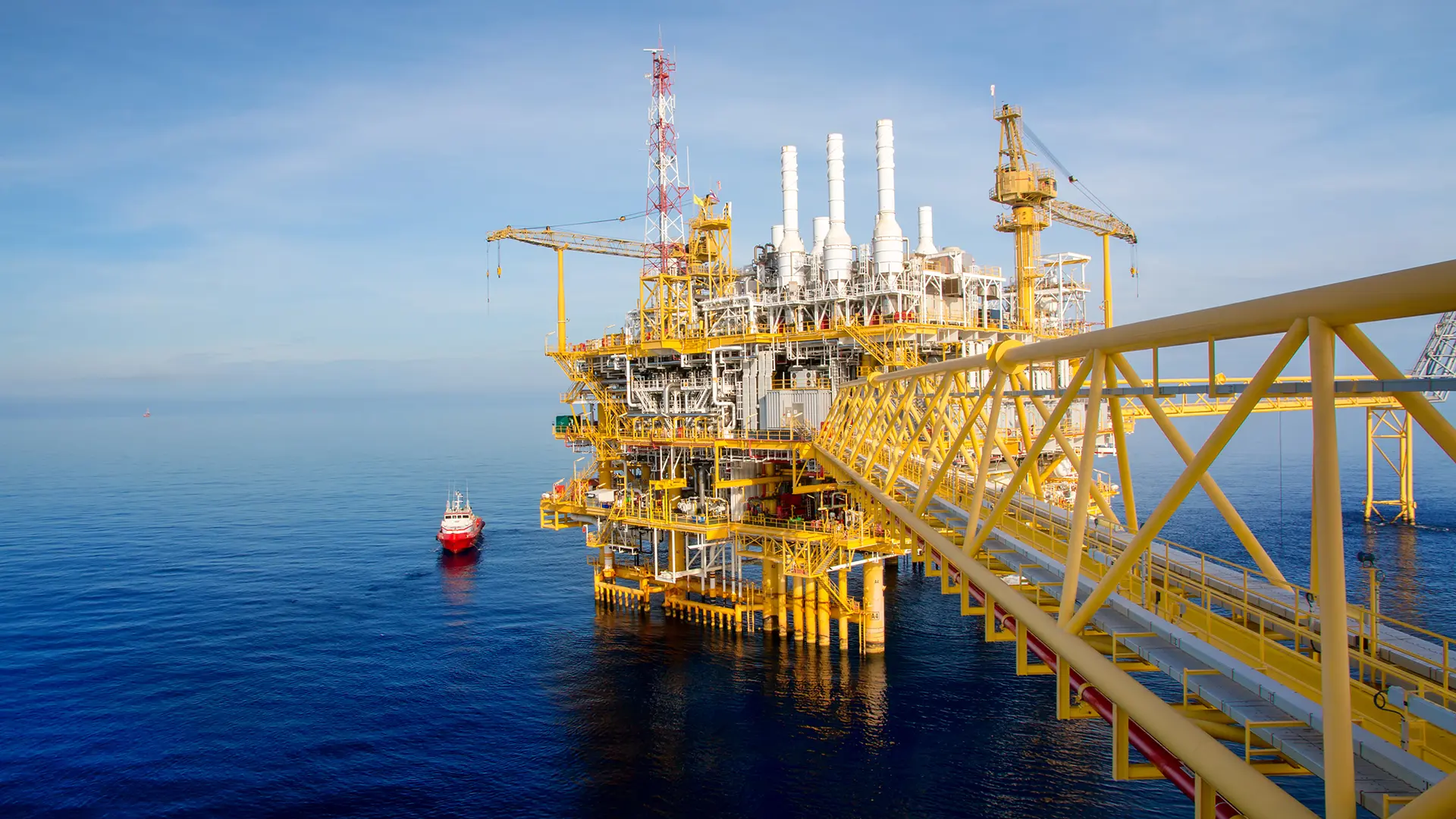
Written by John Egan for Industrial Info Resources (Sugar Land, Texas)--The Oil & Gas Industry is keeping a close eye on an important summer project under way at the U.S. Environmental Protection Agency (EPA) (Washington, D.C.). The agency is reviewing public comments and stakeholder input received this spring in response to five technical white papers on reducing methane emissions from all segments of the industry. The public comment period for these white papers ended in mid-June. In the fall, the agency will determine how best to reduce methane emissions from sources in the Oil & Gas Industry.
New rules are possible, as are an expansion of voluntary public-private partnerships to lower methane that escapes from oil and gas production, processing, transportation and storage.
The EPA is one of several federal agencies pursuing steps to reduce emissions of methane (CH4), a potent greenhouse gas, from industrial facilities, municipal landfills and agriculture. These methane-reduction actions are part of President Barack Obama's broader Climate Action Plan, announced in a speech last summer at Georgetown University. For more on that speech, see June 23, 2013, article - President Obama Unveils Ambitious Climate Action Plan.
Methane is a short-lived but potent greenhouse gas that is more efficient at trapping heat than carbon dioxide (CO2). Pound for pound, the comparative impact of CH4 on climate change is more than 20 times greater than CO2 over a 100-year period, the EPA said. In 2012, the oil & gas industry--including production, processing, storage, transportation and distribution--accounted for a larger share of methane emissions, about 29%, than any other sector, according to the EPA's greenhouse gas registry.
 Click the image at right to see a pie chart summarizing the sources of methane emissions in the U.S. in 2012.
Between 1990 and 2012, overall U.S. methane emissions fell about 11%. Emissions from oil and gas exploration and production fell during that period, while emissions from agricultural activities increased. In separate initiatives, the EPA is seeking to lower methane emissions in agriculture and municipal solid waste landfills.
On a carbon dioxide (CO2) equivalent basis, U.S. power plants emitted about 2.1 billion metric tons of greenhouse gases in 2012. Oil and gas facilities, by contrast, emitted about 217 million metric tons of CO2 equivalent that year. But unless measures are implemented to reduce emissions from oil and gas facilities, the industry's CO2 equivalent emissions could increase to more than 620 million metric tons by 2030, according to a blog post from Dan Utech, Obama's special assistant for energy and climate change. That post, dated March 28, announced a series of measures to be undertaken by various federal agencies to lower greenhouse gas emissions.
Those measures include:
- Draft rules from the EPA to lower power plant emissions of CO2, announced June 2, as well as two initiatives to lower emissions from municipal landfills, announced in early July. For more on the power plant draft rule, see June 3, 2014, article - EPA Releases Draft Carbon Dioxide Emissions Rule for Existing Power Plants.
- An initiative from the U.S. Department of the Interior (DOI) to reduce natural gas flaring from oil & gas development on public lands.
- New energy efficiency standards for appliances and equipment, to be issued by the U.S. Department of Energy (DoE).
- Development of a proposed program from the DOI's Bureau of Land Management Coal Mines for the capture and sale, or disposal, of waste mine methane on lands leased by the federal government.
- The U.S. Department of Agriculture, in conjunction with the EPA and DoE and in partnership with the dairy industry, will develop a "biogas roadmap" of voluntary steps to accelerate deployment of methane digesters and other cost-effective technologies at dairies.
- The DoE, as part of its Quadrennial Energy Review, and using a series of roundtables, will identify "downstream" methane reduction opportunities.
- Through its proposed Natural Gas STAR Gold program, the EPA will work with companies to track and earn recognition for their methane reductions facility-wide. The agency is taking comment on this voluntary program through September 30.
"Reducing methane emissions is a powerful way to take action on climate change; and putting methane to use can support local economies with a source of clean energy that generates revenue, spurs investment and jobs, improves safety, and leads to cleaner air," he continued. "When fully implemented, the policies in the methane strategy will improve public health and safety while recovering otherwise wasted energy to power our communities, farms, factories and power plants."
In the fall, the EPA is scheduled to decide how best to achieve further methane reductions from oil and gas facilities. If the EPA decides to formulate additional regulations, they would be finalized by year-end 2016, Utech wrote.
Accompanying Utech's blog post was President Obama's strategy to reduce methane emissions in the Oil & Gas Industry. It noted that natural gas activities accounted for about 127 million tons of CO2 equivalent emissions in 2012, while oil-related activities accounted for about 32 million tons of CO2 equivalent.
Within the natural gas industry, the largest emitter was transmission and storage activities, which accounted for about 34% of methane emissions. Gas production accounted for 31% of methane emissions while distribution contributed 20% and processing accounted for the remaining 15%.
"As our use of gas in manufacturing, transportation, and power generation increases--creating jobs, reducing costs, cutting carbon pollution, and reducing dependence on foreign oil--we must continue to build on progress in reducing methane emissions from this vital sector of our economy," Obama said in his strategy.
In 2012, EPA finalized a regulation to lower emissions of volatile organic compounds (VOCs) from gas wells that are hydraulically fractured. That rule also imposed standards on compressors and other sources of VOCs that had not been previously regulated at the federal level. When that rule is fully implemented in 2015, it is expected to significantly reduce methane emissions from natural gas activities.
Doug Hock, manager of media relations for Encana Services Company Limited (Denver, Colorado), told Industrial Info: "Colorado is ahead of the curve in its requirements of using infrared cameras to detect fugitive methane leaks (from oil and gas activities). That showed a lot of foresight. There is currently no other state that has this written into its regulations and EPA doesn't have such a requirement at this time."
For more on the collaborative effort behind Colorado's rule, see December 5, 2013, article - Oil & Gas Companies Collaborate with Environmental Group to Draft Tough New Air Quality Regulations in Colorado.
Encana, Environmental Defense and the University of Texas last year released a study of actual methane emissions at ground level from oil and gas activities. "This study is the first one to measure actual ground-level methane emissions," Hock said, noting that all other studies estimated those emissions based on various factors and assumptions. "In some cases, our study showed higher-than-estimated emissions, and in other cases the actual emissions were lower than other studies had estimated. We undertook that study because we need to get our arms around the size of the problem. Before we regulate further, we need to have a clear understanding of actual emissions from oil and gas activities."
Phase 2 of that study will be out later this year.
"From Encana's perspective," Hock continued, "we support regulations based on sound science where compliance is feasible. Many of the Obama administration's initiatives are still very early in development. We are providing comment both individually and through trade associates in an effort to make sure compliance with any future regulations is feasible and that the regulators understand the processes that they are trying to regulate. From an operations standpoint, Encana has been a leader and will continue to be a leader in championing new technologies to further reduce our emissions and impacts on the environment."
"The Obama administration's efforts to regulate methane emissions reminds me of the old saying, 'No good deed goes unpunished','" Jesus Davis, Industrial Info's vice president of research for the Oil & Gas Production, Pipelines and Terminals industries. "Natural gas has been a terrific success story, and the administration recognizes that. The benefits of increased domestic gas production are many: jobs, taxes, cleaner power, potential LNG exports and heightened domestic energy security. One hopes that won't be up-ended by whatever EPA decides."
Industrial Info Resources (IIR), with global headquarters in Sugar Land, Texas, three offices in North America and 10 international offices, is the leading provider of global market intelligence specializing in the industrial process, heavy manufacturing and energy markets. Industrial Info's quality-assurance philosophy, the Living Forward Reporting Principle, provides up-to-the-minute intelligence on what's happening now, while constantly keeping track of future opportunities.
/news/article.jsp
false
Want More IIR News Intelligence?
Make us a Preferred Source on Google to see more of us when you search.
Add Us On GoogleAsk Us
Have a question for our staff?
Submit a question and one of our experts will be happy to assist you.

Forecasts & Analytical Solutions
Where global project and asset data meets advanced analytics for smarter market sizing and forecasting.
Explore Our SolutionsRelated Articles
-
Can Canada Really Achieve its Oil Export Ambitions?May 22, 2026
-
UAE Sees New Pipeline Ready by 2027May 22, 2026

Industrial Project Opportunity Database and Project Leads
Get access to verified capital and maintenance project leads to power your growth.
Discover Our DatabaseIndustry Intel
-
Innovations Shaping the Next Era of Power GenerationPodcast Episode / May 22, 2026
-
The Role of Contract Manufacturing in Global Pharma GrowthPodcast Episode / May 8, 2026
-
2026 North American Labor OutlookPodcast Episode / Apr 24, 2026
-
2026 European Metals & Minerals Project Spending OutlookPodcast Episode / Apr 7, 2026
-
The Age of Critical Minerals in the AmericasPodcast Episode / Mar 20, 2026