Production
Cost-effective Water Recycling Key to Continued Growth of Shale Gas Drilling
A small Alberta-based company may have found the answer to one of the biggest challenges facing the fast-growing shale-drilling industry: what to do with the massive volumes of wastewater generated during the hydraulic fracturing process.
Released Tuesday, January 04, 2011
Written by John Egan for Industrial Info Resources (Sugar Land, Texas)--A small Alberta-based company may have found the answer to one of the biggest challenges facing the fast-growing shale-drilling industry: what to do with the massive volumes of wastewater generated during the hydraulic fracturing process.
Since 2004, Aqua-Pure Ventures Incorporated (TSXV:AQE) (Calgary, Alberta), working as a contractor to Devon Energy Corporation (NYSE:DVN) (Oklahoma City, Oklahoma), has recycled more than 700 million gallons of water used in shale drilling in the Barnett Formation, which lies under the Dallas/Fort Worth area, according to Brent Halldorson, Aqua-Pure's chief operating officer. Aqua-Pure's U.S. subsidiary, Fountain Quail Water Management LLC (Roanoke, Texas), provides services related to shale gas water recycling, while the parent company focuses on technology development.
"Drilling and fracturing each shale gas well in the Barnett requires 100,000-125,000 barrels of water," Halldorson told a hydraulic fracturing conference held in Denver last month by EUCI, an energy-industry events company. "That's an awful lot of water. And people are starting to get very concerned about hydraulic fracturing, particularly the chemicals used in the process. Regulatory and community concerns associated with water are one of the biggest challenges facing the industry."
Gas from shale formations, mainly the Barnett Shale, accounted for about 10% of all gas produced domestically in 2010. As larger formations like the Marcellus Shale ramp up production, shale gas is expected to account for up to 20% of all U.S. gas production by 2020. The gas is produced by hydraulic fracturing, in which large amounts of water, chemicals, and proppants like sand are injected at high pressure into a well to shatter the shale and release the gas.
But there is rising public, community and regulatory concerns over what fracking is doing, or could be doing, to local water supplies, livestock and the ecosystem. The city of Pittsburgh, Pennsylvania, has prohibited further fracking within city boundaries. New York state has issued a moratorium on fracking. The U.S. Environmental Protection Agency (EPA) (Washington, D.C.) is conducting a scientific assessment of the chemicals used in fracking. National news organizations including the New York Times, Wall Street Journal and CNN, among others, have carried prominent stories on the alleged environmental dangers of fracking.
Water issues are "the key issue" facing shale drillers and developers, Halldorson said. "Traditional oil and gas development views water as an after-thought. But with shale drilling, it's reversed: It all starts with water, because you use so much of it in the hydraulic fracturing process."
Aqua-Pure's technology could turn wastewater from fracking into drinkable water, and return it to the local ecosystem, Halldorson said in an interview with Industrial Info Resources. "Recycling water used in shale gas formations used to be seen as 'nice to do, but expensive.' But now it's different, at least in Pennsylvania, where it's very expensive to dispose of water used in shale gas wells. Today in Pennsylvania, it's cheaper to recycle water from shale wells and return it to the local ecosystem rather than disposing of it. Water recycling has gone from the high-cost option to the low-cost option, at least in the Marcellus Shale."
Halldorson explained that a significant percentage of water used in shale drilling comes back to the surface before gas is produced. That's called "flow-back water." Another sizable amount comes back to the surface as the gas is produced. That's called "produced water." And a certain portion of the water remains in the shale formation. Drillers can use flow-back and produced water to frack another well, dispose of it in a salt-water disposal (SWD) well, or treat it to meet drinkable standards and return it to local rivers and streams. At some point, water reused to frack multiple wells would require treatment to remove dissolved contaminants and other materials.
But Halldorson cautioned that "water issues are different in each shale play. What works in the Barnett Shale doesn't always work in the Marcellus Shale," because of local differences in geography, hydrology and regulation. "Each formation has its own unique set of challenges. The Barnett Shale is concentrated in a relatively small area that is characterized by flat terrain and a lot of wastewater disposal options, which keeps disposal costs low. But the Marcellus Shale is much larger geographically, there is a lot of hilly terrain, which makes transporting water expensive, and there are very few wastewater disposal options."
In the Barnett Shale, drillers can dispose of wastewater in one of the 50,000 SWD wells in Texas, Halldorson said. The state of Louisiana also has a large number of SWD wells, he added. But the state of Pennsylvania, which sits atop part of the Marcellus Shale, has a total of seven SWD wells, which means the wastewater from those shale wells has to be trucked to disposal sites in Ohio. That could take up to 11 hours round-trip, depending on where the SWD wells are located in Ohio. The Marcellus Shale has about 10 times the estimated recoverable shale gas reserves of the Barnett shale, making it especially attractive to developers. But limited wastewater disposal options could slow or halt future drilling there.
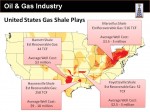 Click the image at right for a map of the major U.S. shale gas formations and their estimated economically recoverable reserves.
The all-in costs to dispose of wastewater from the Marcellus shale in north-central Pennsylvania is about $10 to $12 per barrel, Halldorson estimated. In Arkansas, water-disposal costs are $4 to $6 per barrel. Aqua-Pure's modular water treatment equipment could treat shale wastewater to drinkable water standards for $3 to $5 per barrel, he said. In the Lone Star State, with its abundance of SWD wells, it costs about $1.50 per barrel to dispose of shale waste water, he estimated.
"In Texas, the main competition to water recycling is low-cost SWD wells," Halldorson continued. "But in Pennsylvania our competition is trucking costs to out-of-state SWDs. The drive to recycle water in Pennsylvania is far stronger than anywhere else because there are very limited disposal options."
"We are an environmental company, and every drop of water that we can safely return to a local ecosystem is a drop of fresh water that isn't lost to hydraulic fracturing," he said. "We've gained a lot of valuable experience in the Barnett Shale, and we're poised to put that experience to use in the Marcellus Shale," where the company has been operating for about six months.
Halldorson noted that units of General Electric Company (NYSE:GE) (Fairfield, Connecticut) and Siemens AG (NYSE:SI) (Munich, Germany) have expressed interest in entering the shale gas water-recycling business. "They have a lot of experience in water treatment, but none in treating water from shale gas wells," Halldorson said. "Still, we welcome the competition because it will lead to a better result for all stakeholders."
Industrial Info Resources (IIR) is the leading provider of global market intelligence specializing in the industrial process, heavy manufacturing and energy markets. IIR's quality-assurance philosophy, the Living Forward Reporting Principle, provides up-to-the-minute intelligence on what's happening now, while constantly keeping track of future opportunities.
Want More IIR News Intelligence?
Make us a Preferred Source on Google to see more of us when you search.
Add Us On GoogleAsk Us
Have a question for our staff?
Submit a question and one of our experts will be happy to assist you.

Forecasts & Analytical Solutions
Where global project and asset data meets advanced analytics for smarter market sizing and forecasting.
Explore Our SolutionsRelated Articles

PECWeb Global Market Intelligence Platform
Identify opportunities, anticipate change, and execute with confidence. PECWeb connects the industrial intelligence you need, from projects and assets to operational events, all in one platform.
Discover PecwebIndustry Intel
-
European Chemicals and Transport Fuels OutlookPodcast Episode / Jul 10, 2026
-
2026 European Petroleum Refining Project OutlookPodcast Episode / Jun 26, 2026
-
Brazil: Efficiency, Innovation, and Opportunities in the Food & Beverage IndustryPodcast Episode / Jun 12, 2026
-
2026-2027 Investment Radar for Mexico, Central America & the CaribbeanPodcast Episode / May 29, 2026
-
Innovations Shaping the Next Era of Power GenerationPodcast Episode / May 22, 2026