Power
Differences in Japan's Hertz Frequencies Spur Power Crisis in Northeastern Areas
Eastern Japan, particularly the service areas of Tohoku Electric Power Company Incorporated and Tokyo Electric Power Company Incorporated, is currently lacking...
Released Monday, April 04, 2011
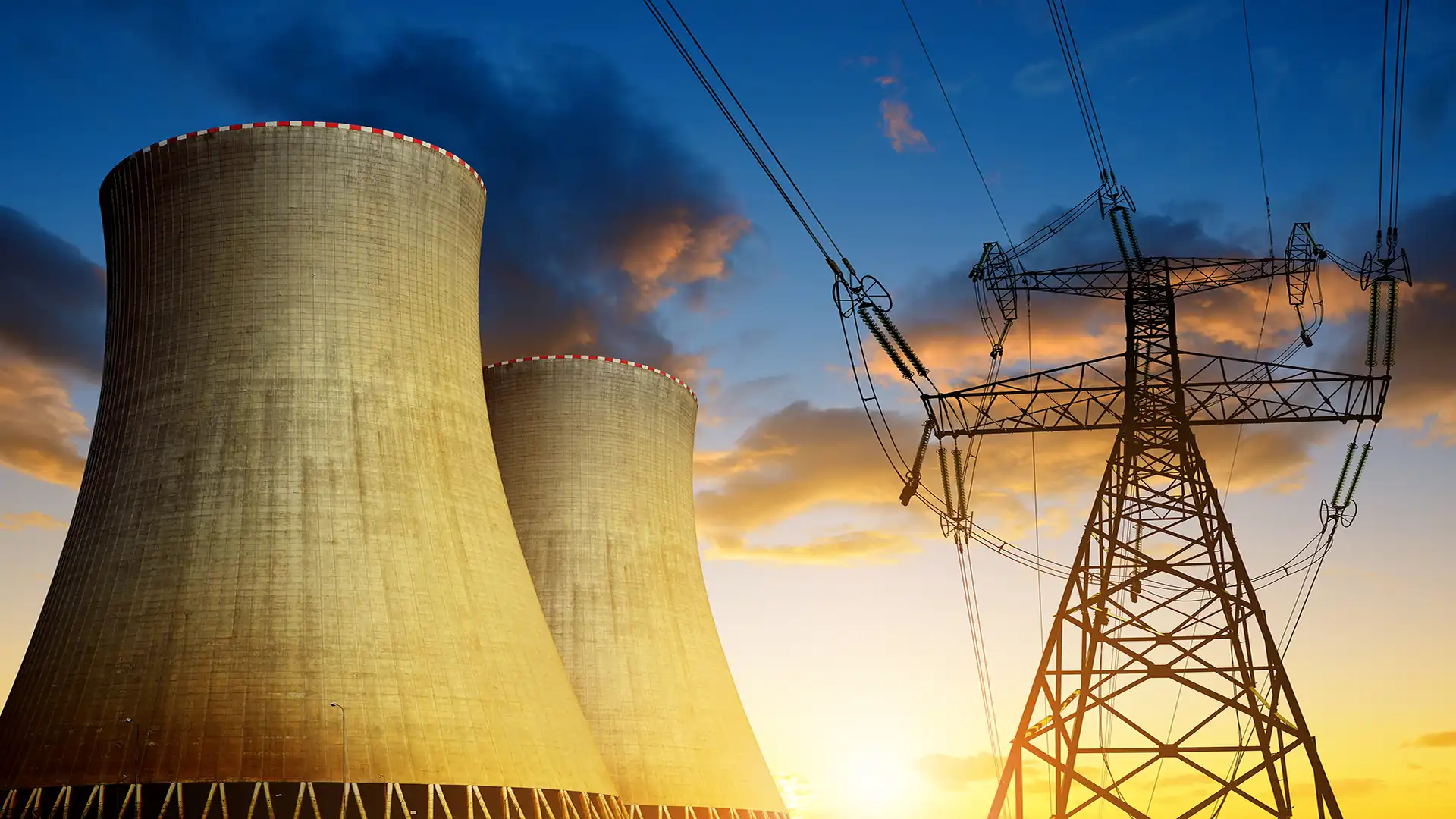
Researched by Industrial Info Resources East Asia (Kofu-shi, Japan)--Eastern Japan, particularly the service areas of Tohoku Electric Power Company Incorporated (TYO:9506) (Tokuden) (Sendai, Japan) and Tokyo Electric Power Company Incorporated (TYO:9501) (TEPCO) (Tokyo), is currently lacking in power due to March 11's earthquake. These two power providers lost approximately 40 gigawatts (GW) of operating capacity following the events on March 11, and both companies have called for public cooperation to limit power consumption. Both also have had to implement unprecedented rolling power outages.
Hokkaido Electric Power Company Incorporated (TYO:9509) (Hokuden) (Sapporo, Japan), which is Hokkaido's power provider, is lending TEPCO 600 megawatts (MW), but this is taxing the company, which serves a sparsely populated area. Both TEPCO and Tokuden need more power until sufficient substitutions can be found or affected power stations can be restarted. Despite sharing the same high-voltage direct current (HVDC), western Japan is unable to effectively aid eastern Japan through power lending. Kansai Electric Power Company Incorporated (TYO:9503) (Kanden) (Osaka, Japan), Kansai region's power provider, plans to redirect approximately 100 MW from two hydropower stations within its generation area. At this time, no other companies in western Japan have made plans to do power lending; however, several companies, including Kanden and Chubu Electric Power Company Incorporated (TYO:9502) (Chuden) (Nagoya, Japan), have sent or are sending fuel, such as liquefied natural gas (LNG) and crude oil, to TEPCO. For more information, see March 31, 2011, article Kansai Electric to Lend LNG to Struggling Tokyo Electric Power Company.
Japan's 47 prefectures are broken up into eight regions, and each of these regions has one or two corresponding power providers. Hokuden provides for the Hokkaido prefecture, which comprises the large northern island of the same name. Though it is technically part of the Kyushu region, the Okinawan islands, or Okinawa prefecture, are served by Okinawa Electric Power Company Incorporated (TYO:9511) (OEPC) (Urazoe, Japan). The remaining 45 prefectures are split among eight other power providers.
Tokuden:
- Tohoku region, northern Honshu Island
- Prefectures served: Akita, Aomori, Fukushima, Iwate, Miyagi, Yamagata
- Kanto region; northeastern Honshu Island, south of Tohoku region
- Prefectures served: Tochigi, Gunma, Tokyo, Ibaraki, Saitama, Kanagawa, eastern Shizuoka, Yamanashi (Note: Shizuoka and Yamanashi are technically part of Chubu region)
- Shinetsu and Tokai areas of Chubu region; central Honshu Island, west of Kanto
- Prefectures served: Niigata, Nagano, western Shizuoka, Aichi, southern Gifu, Mie (Note: Mie is technically part of Kansai region)
- Hokuriku area of Chubu region; central Honshu Island, west of Kanto region
- Prefectures served: Toyama, northern Fukui, Ishikawa, northwestern Gifu
- Kansai region; central Honshu Island, west of Chubu region
- Prefectures served: Mie, Osaka, Shiga, Kyoto, Wakayama, Hyogo, Nara
- Chugoku region; western Honshu Island
- Prefectures served: Hiroshima, Yamaguchi, Shimane, Tottori, Okayama
- Kyushu region; Kyushu Island, west of Honshu Island
- Prefectures served: Fukuoka, Saga, Kumamoto, Nagasaki, Oita, Kagoshima, Miyazaki
- Shikoku region; Shikoku Island, south of Honshu Island
- Prefectures served: Ehime, Tokushima, Kagawa, Kochi
This 10-Hz discrepancy between eastern and western Japan arose in the late 1800s, beginning when the now defunct Allgemeine Elektricitäts-Gesellschaft (AEG) (Frankfurt, Germany) installed its first 50-Hz generator in Tokyo in 1895. The next year, General Electric (NYSE:GE) (Fairfield, Connecticut) installed its first 60-Hz generator in Osaka, and from then on, the east and west developed separate grids.
These separate grids meet at four different HVDC back-to-back converter stations, which are along the "border" between eastern and western Japan; the Sakuma Dam converter station in the Aichi prefecture; the Higashi-Shimizu converter station in the Shizuoka prefecture; the Minami-Fukumitsu converter station in the Toyama prefecture; and the Shin Shinano converter station in the Nagano prefecture. Through these four converter stations, eastern and western Japan can effectively share only 1,500 MW, roughly the same amount of power provided by one advanced boiling water reactor.
Industrial Info Resources (IIR) is the leading provider of global market intelligence specializing in the industrial process, heavy manufacturing and energy markets. IIR's quality-assurance philosophy, the Living Forward Reporting Principle, provides up-to-the-minute intelligence on what's happening now, while constantly keeping track of future opportunities.
/news/article.jsp
false
Want More IIR News Intelligence?
Make us a Preferred Source on Google to see more of us when you search.
Add Us On GoogleAsk Us
Have a question for our staff?
Submit a question and one of our experts will be happy to assist you.

Forecasts & Analytical Solutions
Where global project and asset data meets advanced analytics for smarter market sizing and forecasting.
Explore Our SolutionsRelated Articles
-
Global Power Construction Spending Led by Nuclear, WindAugust 24, 2026
-
Duke Energy Files 2026 Carolinas' Resource PlanAugust 24, 2026
-
Denmark Drives Offshore Wind AmbitionsAugust 24, 2026

PECWeb Global Market Intelligence Platform
Identify opportunities, anticipate change, and execute with confidence. PECWeb connects the industrial intelligence you need, from projects and assets to operational events, all in one platform.
Discover PecwebIndustry Intel
-
European Chemicals and Transport Fuels OutlookPodcast Episode / Jul 10, 2026
-
2026 European Petroleum Refining Project OutlookPodcast Episode / Jun 26, 2026
-
Brazil: Efficiency, Innovation, and Opportunities in the Food & Beverage IndustryPodcast Episode / Jun 12, 2026
-
2026-2027 Investment Radar for Mexico, Central America & the CaribbeanPodcast Episode / May 29, 2026
-
Innovations Shaping the Next Era of Power GenerationPodcast Episode / May 22, 2026