Terminals
Encana Develops Techniques on Gas, Oil, and Bitumen Projects
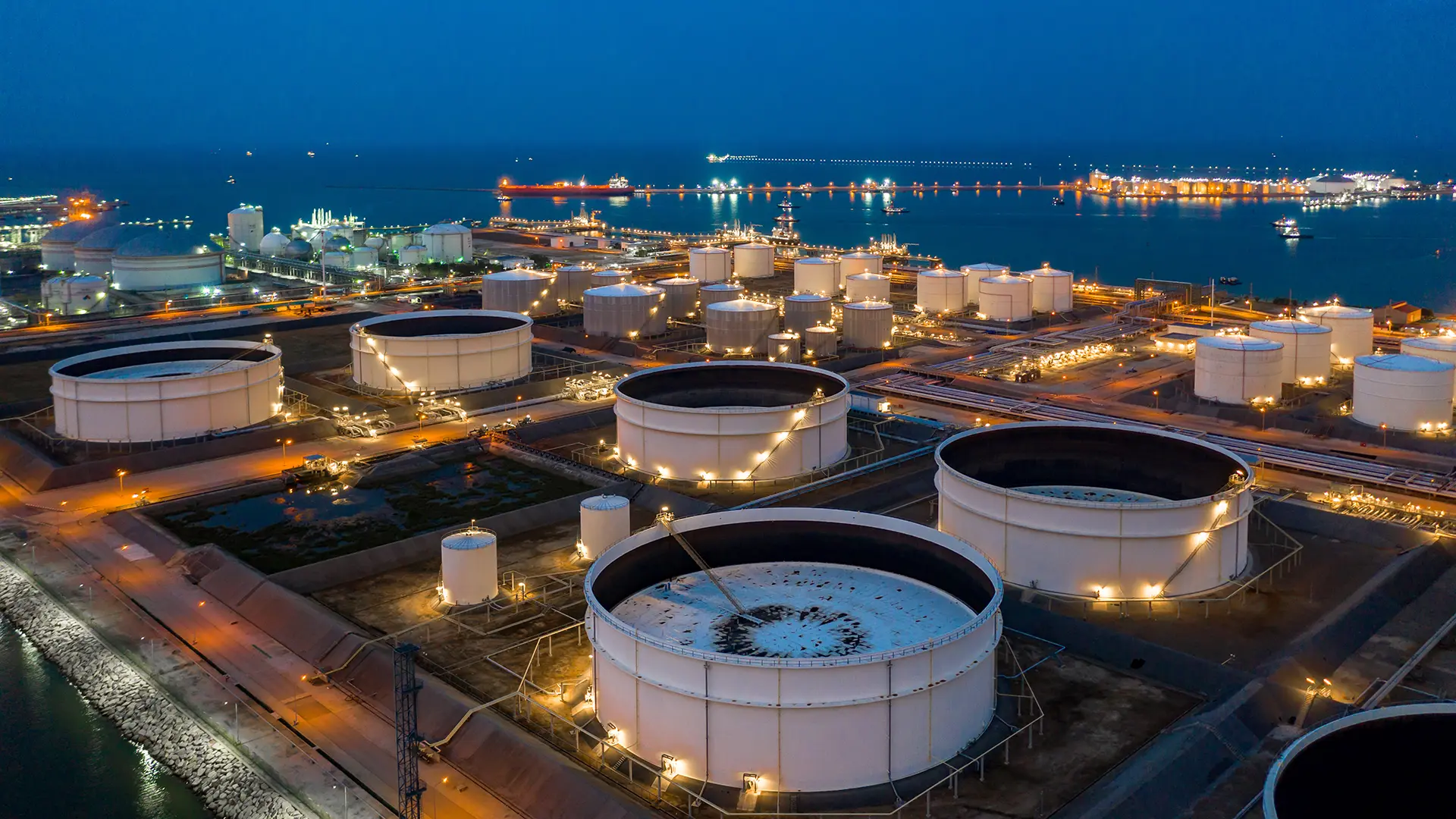
The Countess natural gas storage facility in Southeastern Alberta is designed for peak injections of 950 million cubic feet of gas per day and peak withdrawals of 1.25 billion cubic feet per day.
Released Wednesday, October 23, 2002
Researched by Industrialinfo.com (Industrial Information Resourced Incorporated; Houston, Texas). EnCana (TSX, NYSE:ECA) (Calgary, Alberta) has a number of major gas, oil, and bitumen projects developing at its Canadian operations, which will all be in production over the next five years.
The Countess natural gas storage facility in Southeastern Alberta is designed for peak injections of 950 million cubic feet of gas per day and peak withdrawals of 1.25 billion cubic feet per day. Two depleted underground natural gas reservoirs 85 kilometers east of Calgary will provide the storage and the first 10 billion cubic feet of new storage capacity is scheduled to be available in the second quarter of 2003. The full 40 billion cubic feet of space is expected to be available in April 2005.
The storage facility will be operated commercially as part of the AECO Hub, which is comprised of 85 billion cubic feet of gas storage capacity in Southeast Alberta and 10 million cubic feet in Northwest Alberta. It will increase EnCana's Western Canadian gas storage by about 40% to a total of 135 billion cubic feet. The new Countess storage will not only be used to help manage sales and optimize the value of the company's gas production, but it will also expand the Canadian capacity available to other producers and marketers for managing gas sales and supplies.
When the Countess facility is complete, EnCana will own and operate about 180 billion cubic feet of gas storage capacity across North America with storage in Alberta, California, and Oklahoma. Construction is currently underway to double the capacity of EnCana's Wild Goose facility in Northern California to 29 billion cubic feet. With Countess and Wild Goose complete by 2005, EnCana's total peak withdrawal capacity in North America is expected to grow to around 4 billion cubic feet per day.
Injection of gas is under way at the Weyburn CO2 miscible flood project that will add 25 years to the life of the oilfield which is one of the largest medium-sour crude oil reservoirs in Canada. The construction phase of the project was completed in September 2000. The carbon dioxide miscible flood differs from waterflood injection in that waterflood is used to increase reservoir pressure in an effort to improve production. A miscible flood is an enhanced oil recovery technique that injects a fluid into the reservoir.
The project will allow the production of an additional 120 million gross barrels of medium gravity oil by increasing the recovery rate. A production rate of 30,000 gross barrels per day is expected by 2008 and this is expected to be maintained through to 2011.
The CO2 used in the miscible flood is supplied from the Great Plains Synfuels plant in Beulah, North Dakota. The plant owner, Dakota Gasification Company (Bismarck, North Dakota), built and operated the 325-kilometer pipeline that carries CO2 to the Weyburn field.
Over the life of the project, it is estimated that net CO2 emissions will be reduced by 14 million tons. This is equivalent to taking about 3.2 million cars off the road for one year. The Weyburn project is the site of a major international research study conducted under the auspices of the International Energy Agency Gas R&D program. The CO2 monitoring project is unique because scientists and researchers collected background information before CO2 was injected. This information will enable them to compare before and after results and help them better understand the interaction and relationships between oil recovery and CO2 storage.
Steam assisted gravity drainage (SAGD) is being used on EnCana projects at Christina Lake in Northern Alberta and Foster Creek in Northeast Alberta. SAGD technology is simple in concept but complex in application. The overall concept sees steam injected into the production zone from the steam injection well. The heat melts the thick crude oil and allows it to flow more freely, with gravity's assistance, to the production well below. The heavy oil project at Foster Creek, which began operation in 2001, is scheduled to produce 20,000 bpd rising to 100,000 bpd by 2007.
The Christina Lake thermal project will see SAGD applied to EnCana's top quality Athabasca oil sands lease. Analysis indicates that this project is capable of profitably producing more than 70,000 bpd of bitumen over a 30-year period. An EnCana oil sands team is evaluating and developing technologies to enhance production quality and value by increasing the volume of oil produced relative to the amount of steam injected. EnCana is one of the leaders among the many companies who are researching, testing, and planning to use SAGD in commercial scale developments.
/news/article.jsp
false
Want More IIR News Intelligence?
Make us a Preferred Source on Google to see more of us when you search.
Add Us On GoogleAsk Us
Have a question for our staff?
Submit a question and one of our experts will be happy to assist you.

Forecasts & Analytical Solutions
Where global project and asset data meets advanced analytics for smarter market sizing and forecasting.
Explore Our SolutionsRelated Articles
-
Gulf Coast Industries Brace for Hurricane IsaiasOctober 09, 2026
-
Shell Expecting Dip in LNG VolumesOctober 08, 2026
-
Bolsonaro vs. Lula: What are their Energy, Mining Policies?October 08, 2026
-
Petrobras firma un acuerdo de compra de GNL a 22 años con Ch...October 07, 2026
-
Cenovus Eyes Athabasca in Major Canadian Oil Sands ShakeupOctober 06, 2026

PECWeb Global Market Intelligence Platform
Identify opportunities, anticipate change, and execute with confidence. PECWeb connects the industrial intelligence you need, from projects and assets to operational events, all in one platform.
Discover PecwebIndustry Intel
-
Latin America Data Center Outlook 2026: Power, Hubs & GrowthPodcast Episode / Oct 9, 2026
-
Food and Beverage CapEx Outlook 2026: Tariffs, AI, AfricaPodcast Episode / Oct 9, 2026
-
North America Refining 2026: New Pipelines to PADD 5Podcast Episode / Oct 2, 2026
-
Biomanufacturing Onshoring 2026: GLP-1, CDMO and ReshoringPodcast Episode / Oct 2, 2026
-
2026 US Data Center Outlook: Power, Land & CoolingPodcast Episode / Sep 18, 2026