Petroleum Refining
Explosion at Amuay Refinery in Venezuela has Worldwide Effect
On March 29, 2006, an explosion at the Amuay refinery of Venezuela triggered the immediate activation of the safe plant-shutdown protocol which brought about a large decrease in international supply, and particularly affected the USAs gasoline prices.
Released Thursday, April 20, 2006
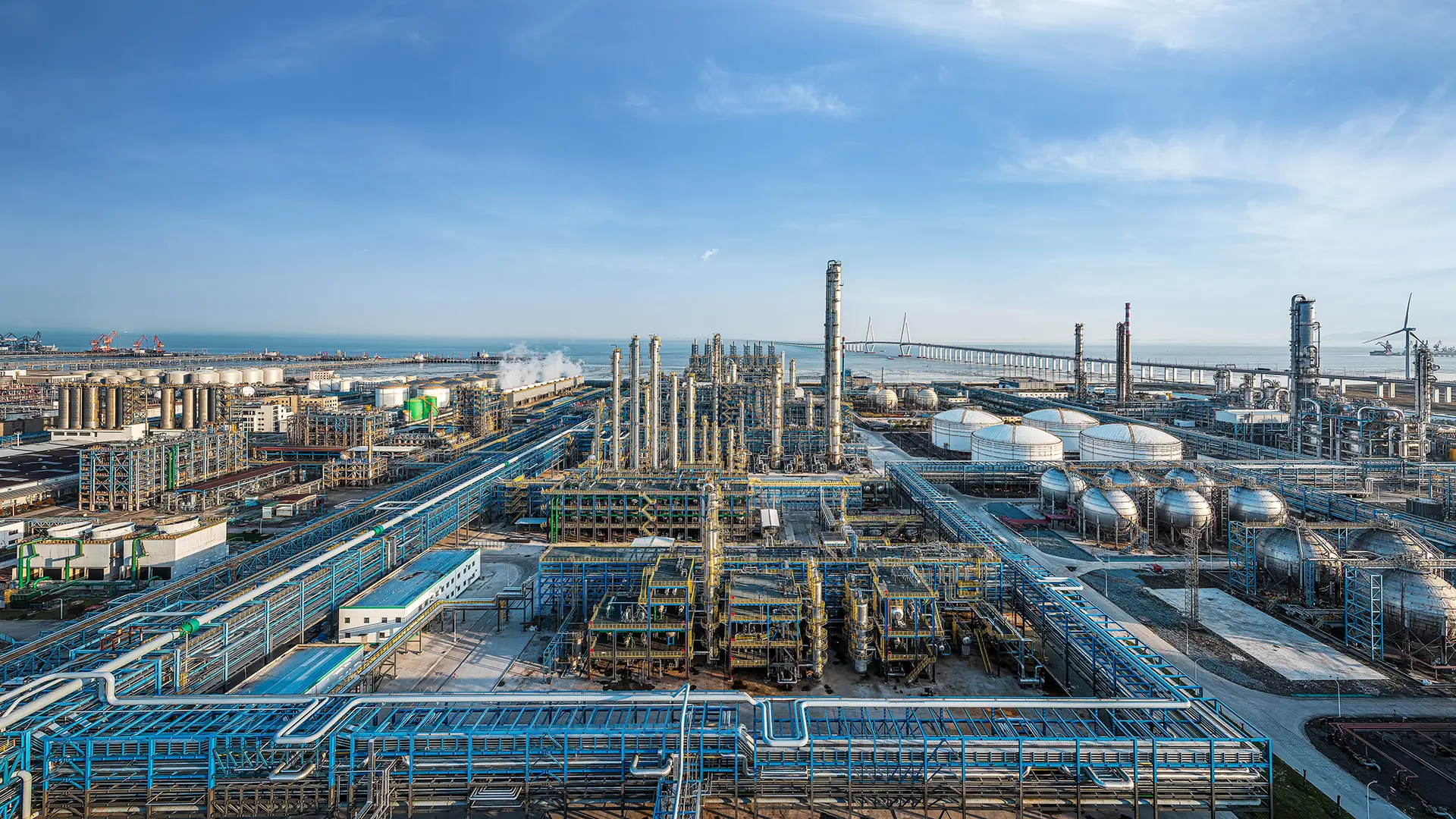
Researched by Industrial Info Resources (Sugar Land, Texas). On March 29, 2006, there was an explosion at the Amuay refinery located on the Paraguana Peninsula in the northwest of Venezuela. This explosion triggered the immediate activation of the safe plant-shutdown protocol, which brought about a large decrease in international supply, as well as particularly affecting the USAs gasoline prices. Amuay together with the Cardon refinery form the Centro de Refinacion Paraguana (Paraguana Refining Center), which is the largest refining center in the world with a total processing capacity of 940,000 barrels of crude oil per day.
According to Venezuelas state owned oil company, PDVSA, a gas leak may have been the cause of the explosion. This happened during a routine maintenance inspection where one of the hydrogen compressors was in the process of being shutdown. Due to this explosion, different units, such as other hydrotreaters and the Vacuum Gas-Oil (VGO) units were also forced to shutdown. This not only resulted in the production of a higher sulfur content in the refined products, but also brought about a domino effect in other areas consequently forcing other units to produce well below their normal capacity even to this day. Units such as the flexicracker, delayed Coker, VGO 2, and VGO 3 units were all affected. Moreover, due to the explosion and its consequent shutdowns, the normal rate of 635,000 barrels of crude oil per day was curtailed to nearly 469,000 barrels per day.
PDVSA guaranteed continued fuel supply to domestic and international markets since they claimed to have sufficient reserves to keep up regardless of the interruption. But, recent information shows that due to the interruption, the sulfur content could not be lowered in the final gasoline product, resulting in two cargoes carrying 300,000 barrels heading to the US needing to be deferred elsewhere. According to estimates, all the units at Amuay will return to normal rates as soon as the hydrotreater units 1 and 2, and the VGO unit returns to normal. Also, since there were three operators killed in the most recent explosion, as well as a total of seven deaths in the Paraguana Refining Center between 2005 and 2006, many are demanding that an investment be made in the safety and maintenance departments of the complex.
Antecedents
In April of 2005, a power failure at Venezuela's large Amuay oil refinery meant that the plant had to shutdown its processing units, thus reducing oil supplies significantly. The failure was caused by a breakdown in the supply system to the steam-generation boilers in the CRP block 29, which resulted in disturbances to the generation of electricity. Moreover, experts say this paralysis was due to the lack of experience in the maintenance of the flexicoker. This failure, in turn, affected all the production and transmission services: steam production, water, and electric energy, leading to an interruption of the whole complex. The accident took place while the major maintenance of the flexicoker, which reduces viscosity and metal content of heavy oils, was in progress. Due to the fact that this unit was down for more than three weeks as a result of the power outage it suffered in April of 2005, almost two million barrels of unleaded gasoline were lost due to the paralysis of the refinery.
In December of 2005, PDVSA shutdown two pipelines supplying nearly half the petroleum supply for the complex. These pipelines, which supplied the refinery with 400,000 barrels a day, were back in operation within four days. However, according to PDVSA, there was no interruption to production since the refinery maintains a five-day supply of crude on-site. Meanwhile, political speculation by the Minister of Energy continued to point at anti-government groups and their protests as the culprit to the outage that occurred earlier that year.
In such a major refinery complex, an interruption of operations no matter how brief, translates into global losses of millions of dollars. If something unusual happens in one of the systems within the refinery and it is not properly controlled as soon as possible, it tends to generate a domino effect involving all of its systems. Once the complex comes to a halt, it may take days to restart. Having to shutdown a substantial portion of this complex, especially in these days of high oil prices and demand, can easily cause a major catastrophe for the Venezuelan oil industry, and leaving a devastating impact on the world economy.
 Industrial Information Resources (IIR) is a Marketing Information Service company that has been doing business for over 23 years. IIR is respected as the leader in providing comprehensive market intelligence pertaining to the industrial processing, heavy manufacturing, and energy-related industries throughout the world.
Want More IIR News Intelligence?
Make us a Preferred Source on Google to see more of us when you search.
Add Us On GoogleAsk Us
Have a question for our staff?
Submit a question and one of our experts will be happy to assist you.

Forecasts & Analytical Solutions
Where global project and asset data meets advanced analytics for smarter market sizing and forecasting.
Explore Our SolutionsRelated Articles
-
El Sector de Refinación de Brasil Afrontará una Intensa Camp...October 23, 2026
-
Argentina se posiciona como hub de SAFOctober 23, 2026
-
Brazil's Refining Sector Faces Major Maintenance Wave in 202...October 22, 2026
-
An Independent Canada Struggles with Energy-Fueled InflationOctober 21, 2026

PECWeb Global Market Intelligence Platform
Identify opportunities, anticipate change, and execute with confidence. PECWeb connects the industrial intelligence you need, from projects and assets to operational events, all in one platform.
Discover PecwebIndustry Intel
-
Mining Capital Spending 2026: Copper, Rare Earths, AluminumPodcast Episode / Oct 23, 2026
-
Brazil Critical Minerals 2027: Rare Earths, Lithium, CopperPodcast Episode / Oct 16, 2026
-
US Craft Labor Outlook 2026: Wages, Per Diems, Data CentersPodcast Episode / Oct 16, 2026
-
Latin America Data Center Outlook 2026: Power, Hubs & GrowthPodcast Episode / Oct 9, 2026
-
Food and Beverage CapEx Outlook 2026: Tariffs, AI, AfricaPodcast Episode / Oct 9, 2026