Pipelines
How Pipelines Can Contribute to a Lower-Carbon Economy
'There is a silent 'T' that is missing in the CCS or CCUS acronym,' said Nick Medina, public and stakeholder engagement manager with Exxon Mobil Pipeline (NYSE:XOM) (Irving, Texas) at a Midland, Texas, meeting last week.
Released Friday, May 05, 2023
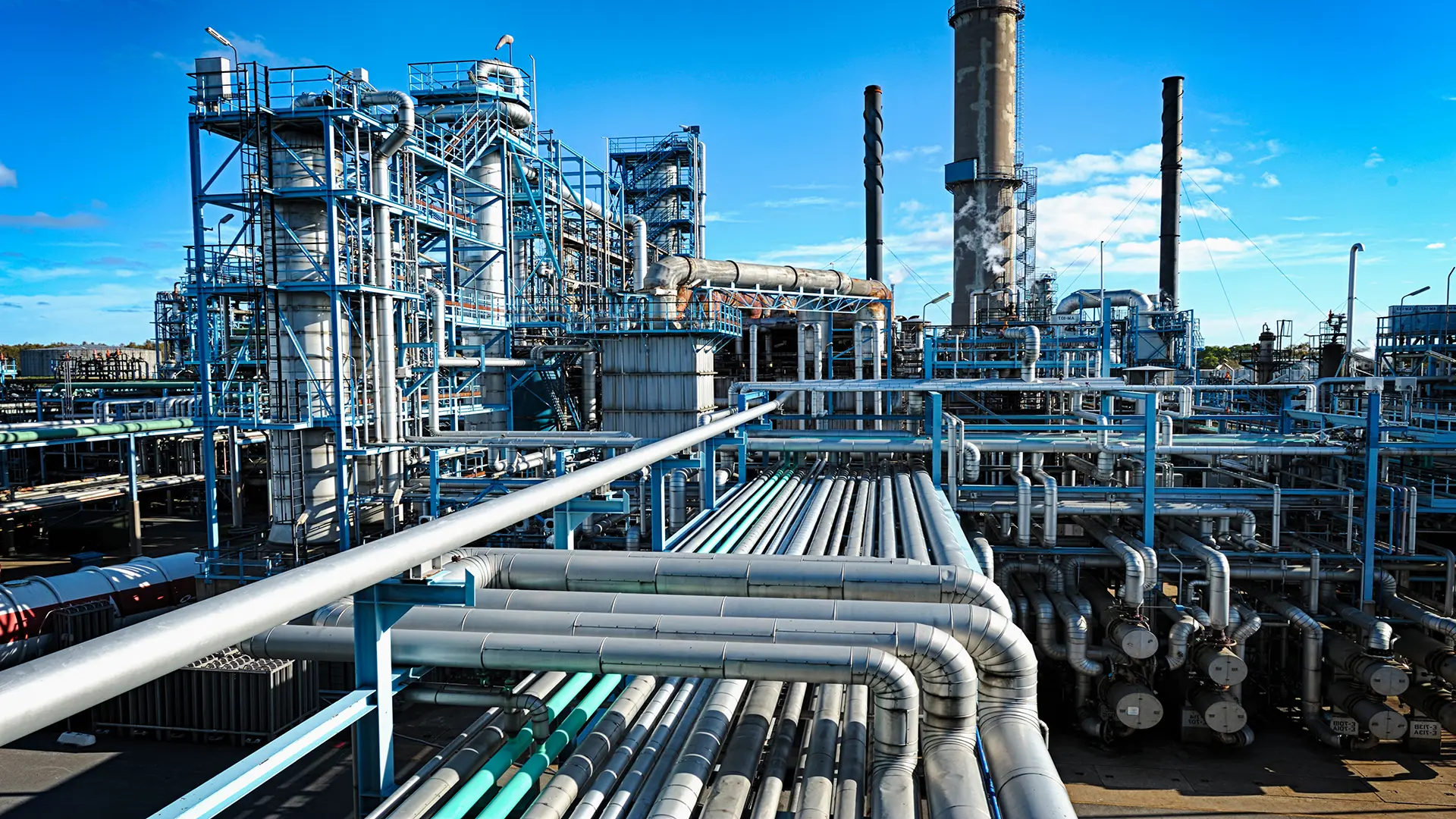
Written by Paul Wiseman for Industrial Info Resources (Sugar Land, Texas)--"There is a silent "T" that is missing in the CCS or CCUS acronym," said Nick Medina, public and stakeholder engagement manager with Exxon Mobil Pipeline (NYSE:XOM) (Irving, Texas) at a Midland, Texas, meeting last week. CCS and CCUS refer to carbon capture and storage, or carbon capture, utilization and storage, respectively. "That's because we can capture a lot of the carbon we want to capture, we can store it, you can utilize it a lot, but if we can't transport it, we won't be able to do much" of either.
With the release of the movie How to Blow Up a Pipeline, in which a group of young activists do what the title suggests in order to make a statement against the oil industry, the midstream sector is pushing back. They're doing so by pointing out the advantages of pipelines in transporting both oil and gas and low-carbon substances like hydrogen, captured carbon and others.
Last week, Midland-Odessa Transportation Alliance (MOTRAN) (Midland), which is geared toward raising funds for and improving the infrastructure of the Permian Basin area, addressed these issues in a meeting. MOTRAN President James Beauchamp invited Medina to address the role of pipelines in energy, both today and in the energy transition.
Noting that pipelines are subject to debate because they cross property lines much like highways, Medina said operators "earn people's trust every single day in the way that we operate those assets. As we look into a lower-carbon economy, we're going to have an incredible role to play in transporting carbon and many of the emerging fuels that we see coming on the horizon."
As for carbon dioxide (CO2), the U.S. has 5,300 of the world's total 5,600 feet of pipeline, mostly used for enhanced oil recovery (EOR). He expects that to give the U.S. a huge lead in experience versus the rest of the world when meeting that demand in the future, because globally, "That's the number we see growing exponentially in the next few years." CCUS allows the oil and gas industry to be part of the climate change solution instead of simply the problem, in Medina's view.
He quoted predictions saying U.S. CO2 pipelines will reach 69,000 miles by 2050, more than 10 times the current 5,300 miles. In some estimates, the number reaches 96,000 miles. Additionally, pipelines will likely be needed for hydrogen in various forms. That would include ammonia, methanol, hydrogen blended in various amounts with natural gas and other options, making total pipeline growth likely to be even greater.
Among potential carbon storage areas, he listed the Permian Basin and Louisiana at the top, along with areas on the Gulf Coast.
Carbon can be captured from many places, including factory smokestacks and from the air. But smokestack capture is site-specific, as is sequestration--requiring transportation from one to the other. Pipelines, said Medina, will be the safest and most efficient option for doing this, especially across long distances.
Pipeline Safety
Beauchamp pointed out that, in Texas, pipelines today carry 32% of the state's freight tonnage annually, and 20% of its freight value--tonnage that would otherwise populate roadways with more trucks or rail cars. On the safety side, while pipelines are not totally without incident, they are much less exposed to leakage incidents than are road-based trucks or railroads.
For Medina, safety is paramount no matter the cargo. "One thing we've learned (at ExxonMobil) in this industry from the get-go, is that safety must come as our number one priority. And at the very beginning of a new era, like the one we see coming in these low-carbon economies, we really want to make sure that we earn people's trust by showing we can do this safely."
Carbon dioxide has the advantage of not being flammable or explosive, but "in large quantities, can displace oxygen," making any large leak a danger to animal life. So pipelines near populated areas must still be tightly regulated and patrolled for safety.
Industrial Info Resources (IIR) is the leading provider of industrial market intelligence. Since 1983, IIR has provided comprehensive research, news and analysis on the industrial process, manufacturing and energy related industries. IIR's Global Market Intelligence (GMI) helps companies identify and pursue trends across multiple markets with access to real, qualified and validated plant and project opportunities. Across the world, IIR is tracking over 200,000 current and future projects worth $17.8 Trillion (USD).
/news/article.jsp
false
Want More IIR News Intelligence?
Make us a Preferred Source on Google to see more of us when you search.
Add Us On GoogleAsk Us
Have a question for our staff?
Submit a question and one of our experts will be happy to assist you.

Forecasts & Analytical Solutions
Where global project and asset data meets advanced analytics for smarter market sizing and forecasting.
Explore Our SolutionsRelated Articles
-
New Hydrocarbon Projects Move Forward Under Argentina's RIGIAugust 24, 2026
-
Permian's Drilling Laterals Extend Longer and LongerAugust 21, 2026

PECWeb Global Market Intelligence Platform
Identify opportunities, anticipate change, and execute with confidence. PECWeb connects the industrial intelligence you need, from projects and assets to operational events, all in one platform.
Discover PecwebIndustry Intel
-
European Chemicals and Transport Fuels OutlookPodcast Episode / Jul 10, 2026
-
2026 European Petroleum Refining Project OutlookPodcast Episode / Jun 26, 2026
-
Brazil: Efficiency, Innovation, and Opportunities in the Food & Beverage IndustryPodcast Episode / Jun 12, 2026
-
2026-2027 Investment Radar for Mexico, Central America & the CaribbeanPodcast Episode / May 29, 2026
-
Innovations Shaping the Next Era of Power GenerationPodcast Episode / May 22, 2026