Metals & Minerals
Let the Games Begin as China Looks to Dampen Steel Production and Iron Ore Prices
This figure comes from the CSIAs plan that is due to be released in January 2006, for the national 11th five-year plan (2006-2010) that aims to tackle the over production of steel in China.
Released Wednesday, November 30, 2005
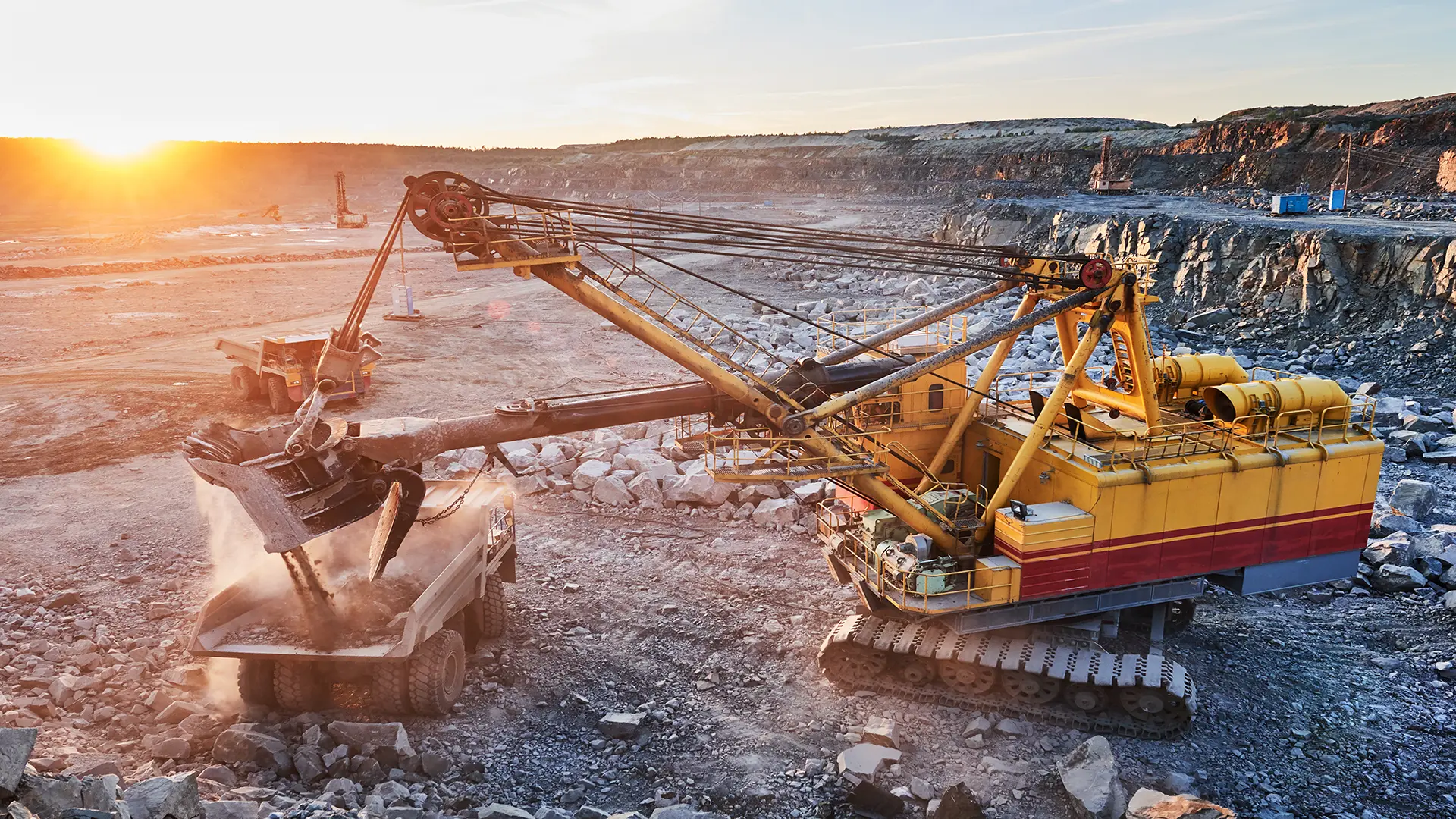
Researched by Industrialinfo.com (Industrial Information Resources Incorporated; Houston, Texas). In the last days of November, the Chinese press agency Xinhuanet quoted sources with the China Iron and Steel Association (CSIA) as saying that the worlds leading steel producing country would limit its annual production to a maximum of 450 million tons per year for the next five years.
This figure comes from the CSIAs plan that is due to be released in January 2006, for the national 11th five-year plan (2006-2010) that aims to tackle the over production of steel in China. Since April 2005, prices for domestic steel products have plunged and the price of hot rolled plates and rolls shrinking by 40% in some regions compared to the highest price levels attained in 2004.
The 450 million ton target should be seen as a good intention rather than a certain prediction. For the first ten months of 2005, the IISI (International Iron and Steel Institute) reported that China produced 286.8 million tons of crude steel, which shows a rise of 26.5% for the same period of 2004. Total world crude steel production for the ten months was 915.4 million tons representing only, compared to Chinas rate, a 6.2% growth over 2004. With Chinas annual total possibly topping the 350 million ton mark for 2005, the power of compound growth over a five-year period, even with a relative slow down, still leaves 450 million tons per year looking like a hopeful figure in terms of past 'slowdown' efforts.
The CSIA estimates Chinas current steel output capacity at 500 million tons per year, which is far in excess of domestic demand. The ability of the government and industry to curtail new projects and to take inefficient production units out of commission may stay the headlong capacity rush of recent years, but it will have to be sustained for the five years to have any real effect.
Another element which may increasingly skew Chinas production statistics is the statistics themselves. Increasing doubts are being cast on figures coming out of Chinas industries where hordes of low level bureaucratic number collators are often seen to serve the purposes of their masters in building empires and political positions based on sympathetic statistical outcomes. This phenomenon is not unknown in the West, but with a world agog at Chinas hurtling growth, major corrections could snowball into nervous perceptions of industrial performance.
Industry observer Yu Ke, in an article for China Economic Net, asks for a coherent futures market for steel to shake out dangerous peaks and lows and anomalies in medium and long-term pricing and planning. He says that at this critical moment for the developing prospects of Chinas steel industry steel futures should be introduced to avoid price risks, thus enabling enterprises to maintain stable production and operation. He says that the current situation in the Chinese steel industry has not only disturbed the normal formation of steel prices, but has also brought negative impact on the development of steel enterprises as well as the steel industry.
Baoshan Iron & Steel (Baosteel) (Shanghai, China), Chinas largest steel producer, plans to cut prices by an average of at least 10% in the first quarter of 2006. This will follow cuts of 15% three months ago and reflects weaker demand for steel, as well as over capacity.
Enter the Iron Ore Dragon, dipping and swirling as is its tradition, and at the same time seeking to reach even greater price heights year on year. Also in the best traditions of the annual price setting performance, are the remarks of Chip Goodyear, CEO of BHP Billiton, that he expects the annual iron ore negotiations to provide good entertainment value this year. After the companys AGM in Perth he told the press that, "We make a lot of things at BHP Billiton, but we dont make crystal balls. Iron ore is showing strong prices and the market will determine where prices go," he said.
Baosteel says that many Chinese steel mills are struggling to hold their heads above water after the 2005, 71.5% increase in the benchmark price of iron ore. Some industry sources are predicting a further 20% hike in iron ore prices for 2006 and they say that Japanese mills, which are traditionally the benchmark setters, will agree on a higher price. Others say that China, which has overtaken Japan as the worlds largest importer of iron ore, will not agree to higher prices and will instead push for price reduction.
Industry consultant Carlo Ciana said that as China grew its own domestic iron ore production it had more bargaining power. He is quoted by Industry Search as saying, "They will increase their own production because at crazy prices like we have today it is actually cheaper for them (the Chinese) to produce their own."
Baoshan estimates that iron ore supply will exceed demand by 17 million tons in 2005 and will grow by another 92 million tons in 2006. The Iron and Steel Institute estimates Chinas iron ore imports at 258 million tons this year and expanding to 301 million tons in 2006.
Ciana predicts a 20% reduction in iron ore prices in 2006, with China importing more ore from India, Brazil and Russia and reducing its intake from Australia. In 2004, India became the second biggest supplier of iron ore to China after Australia, overtaking Brazil. India took advantage of lower shipping rates and costs and exported $2.5 billion of ore in the year ending March 2005, which more than doubled the $1.1 billion for 2004.
But BHP (NYSE:BHP) (Perth, Australia), Rio Tinto (NYSE:RTP) (London, U.K.) and CVRD (NYSE:RIO) (Rio de Janeiro, Brazil) who, together account for more than 70% of the seaborne iron ore trade, are expected by most observers to win price hikes in the upcoming round of negotiations.
Whatever the price setting outcome is Australian iron producers are planning for a booming future with BHP Billiton announcing plans for a 20 million ton $1.3 billion expansion project at the Area C in Western Australia almost doubling capacity to 42 million tons per year. Currently, BHPs annual production is about 100 million tons per year and will rise to 129 million tons per year when expansions are complete. It is planning to spend a further $1 billion in production expansion and is continuing to pursue an iron ore deal in India after talks with South Koreas Posco fell through.
Rio Tinto is planning a $530 million expansion in the capacity of Hamersleys Yandicoogina mine from 36 million tons to 52 milliion tons per year and will put another $803 million into its Dampier iron ore loader and rolling stock to carry the ore from Pilbara to Dampier.
Xstrata, the worlds largest exporter of thermal coal and mines coking coal, has ranked iron ore with platinum group metals as the top picks of the mining and metals sector and is looking to find a way into the iron ore market.
 View Project Reports - 86000283 86000313 86000551 86000726
Industrial Information Resources (IIR) is a Marketing Information Service company that has been doing business for over 22 years. IIR is respected as a leader in providing comprehensive market intelligence pertaining to the industrial processing, heavy manufacturing, and energy-related industries throughout the world.
/news/article.jsp
false
Want More IIR News Intelligence?
Make us a Preferred Source on Google to see more of us when you search.
Add Us On GoogleAsk Us
Have a question for our staff?
Submit a question and one of our experts will be happy to assist you.

Forecasts & Analytical Solutions
Where global project and asset data meets advanced analytics for smarter market sizing and forecasting.
Explore Our SolutionsRelated Articles
-
Global Copper, Nickel Prices Could Double in 10 YearsOctober 23, 2026
-
Australia's Lithium Comeback Boosted by Pilgangoora Expansio...October 23, 2026
-
Africa's Gold Boom: Rising Prices Strengthen State Control a...October 23, 2026
-
ABB Builds Backlog with Canadian Mining, U.S. Tech WorkOctober 21, 2026

PECWeb Global Market Intelligence Platform
Identify opportunities, anticipate change, and execute with confidence. PECWeb connects the industrial intelligence you need, from projects and assets to operational events, all in one platform.
Discover PecwebIndustry Intel
-
Mining Capital Spending 2026: Copper, Rare Earths, AluminumPodcast Episode / Oct 23, 2026
-
Brazil Critical Minerals 2027: Rare Earths, Lithium, CopperPodcast Episode / Oct 16, 2026
-
US Craft Labor Outlook 2026: Wages, Per Diems, Data CentersPodcast Episode / Oct 16, 2026
-
Latin America Data Center Outlook 2026: Power, Hubs & GrowthPodcast Episode / Oct 9, 2026
-
Food and Beverage CapEx Outlook 2026: Tariffs, AI, AfricaPodcast Episode / Oct 9, 2026